
Simanaitis Says
On cars, old, new and future; science & technology; vintage airplanes, computer flight simulation of them; Sherlockiana; our English language; travel; and other stuff
AVIATION—100 YEARS AGO
AWHILE BACK, I BEGAN A CELEBRATION OF aviation’s Golden Age starting in the Roaring Twenties. See “Chronicle of Aviation,” SimanaitisSays, April 25, 2021; and “Aviation Highlights—A Century Ago,” April 5, 2022. What with one thing and another, then my aviation source book lay undisturbed on the shelf.
Partial responsible for this historical hiatus, I believe, was my time-gobbling hobby of GMax airplane construction, as described recently in “My Pearse Project,” October 8, 2026. In fact, I have a new/old aeroplane fresh on the to-do list, but it’ll be a while before its GMax completion (and SimanaitisSays appearance).
In the meantime, why not unshelf Chronicles and see what was happening back in 1926? Plenty, including an ominous abuse of the Treaty of Versailles, a famed aviator’s knowledge of military strategy being ignored, and another pilot finding a gig in an emerging industry.
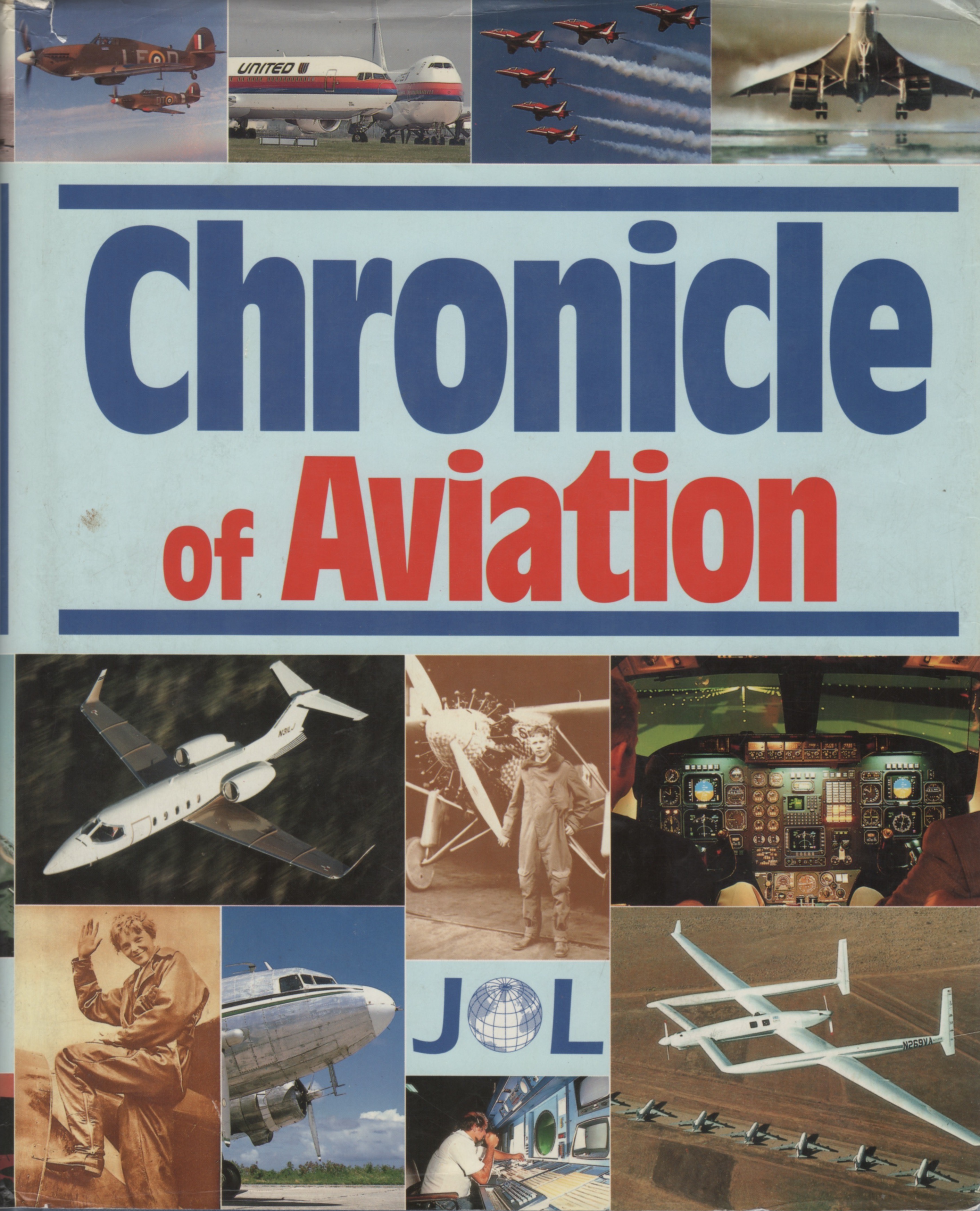
The quotes following identify tidbits gleaned from Chronicle of Flight; my musings appear unadorned.
Training Military Pilots. Russia, January 1. “Germany and the USSR sign a top-secret agreement to open a military flight center at Lipetsk, 240 miles from Moscow, to enable the Germans to train military pilots in defiance of the terms of the Treaty of Versailles.”
The Zeppelin-Staaken E-4/20 was another controversial aspect of the treaty.
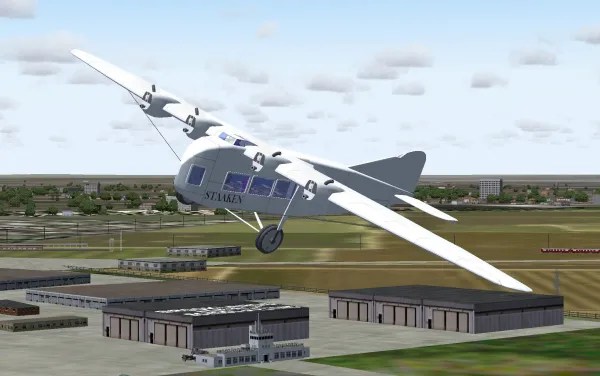
Deutsche Luft Hansa Formed. Berlin, April 6. “Three months to the day after its creation from the merger of two competing German airline consortia, Deutscher Aero Lloyd and Junkers Liftverkehr, German national airline Deutsche Luft Hansa today made its first commercial flight.”
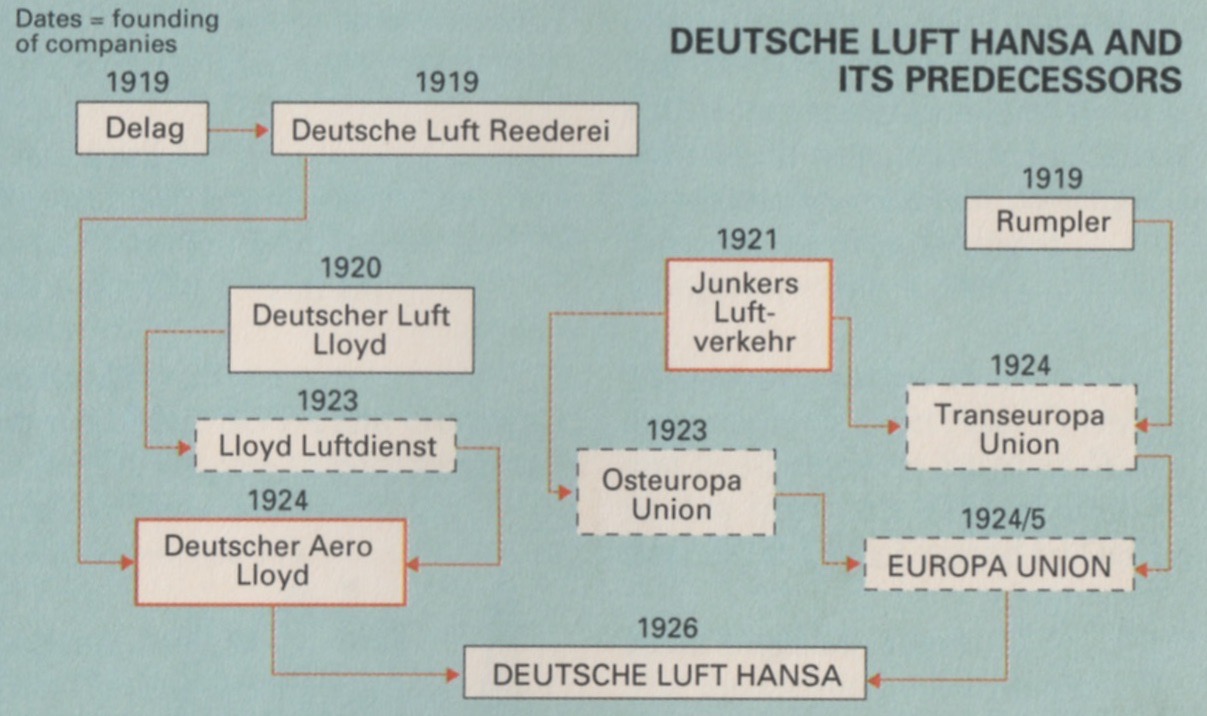
“Hansa” comes from the Hanseatic League which dominated maritime trade in the Baltic Sea area for hundreds of years, and is well regarded in Germany to this day, so says Wikipedia.
Bill Mitchell Resigns, Recommends Air Defense. Washington, D.C., February 1. “Secretary of War Dwight Davis accepts the resignation of ex-air chief Billy Mitchell from the U.S. Army Air Service.”
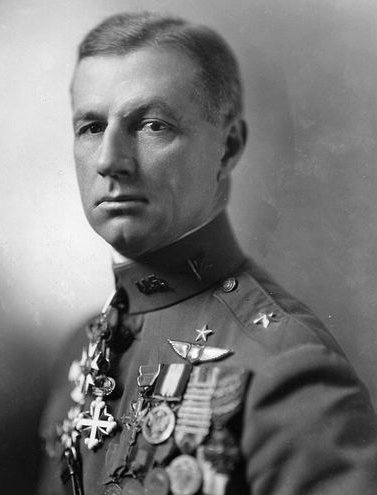
Washington, D.C., February 5. “Appearing as a civilian, Billy Mitchell urges the House Committee on Military Affairs to base a nation’s defense on airplanes rather than ships.”
Note, it wasn’t until 1949 when President Harry S Truman—with Congressional approval—changed the name to Department of Defense. Today’s pseudo-renaming/return to original came sans such legislative approval (as have so many other Trump/Hegseth signalings). [Ed.: A touchy word, that.]
Pearl Harbor, December 7, 1941, was to confirm, belatedly, Billy Mitchell’s wisdom. And “North American B-25 Mitchell—War Hero and Movie Star,” August 20, 2022, honors his memory.
See also “North to Alaska—By Aero,” another of my GMax projects. The canine passenger is historically correct.
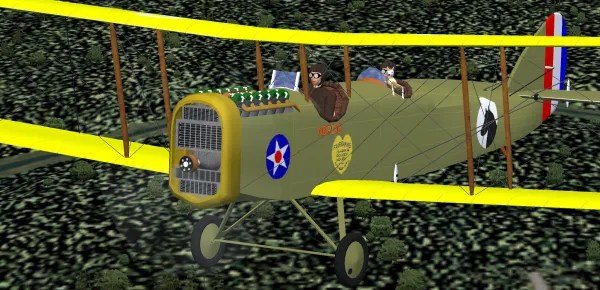
Delivering the Mail—by Air. Saint Louis, Missouri, April 10. “Charles Lindberg becomes chief pilot for Robertson Aircraft Corp, flying a Saint Louis to Chicago mail route.”
USA, April 10. “Airmail delivery has become big business in the United States. The last Contract Air Mail, or CAM route, has just been sold.… CAM-1, covering the lucrative New York City to Boston route, was sold to William Rockefeller, Cornelius Vanderbilt Whitney, and Juan Trippe, an ambitious young businessman.”
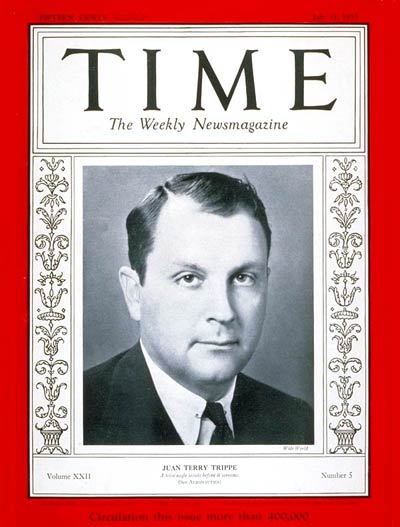
See also “Transpacific Air Locales,” May 31, 2015, for more on this “ambitious young businessman.” He’s also a major character in “The Aviator—Revisited, Recalled, With Mathematical Whimsy,” May 22, 2026.
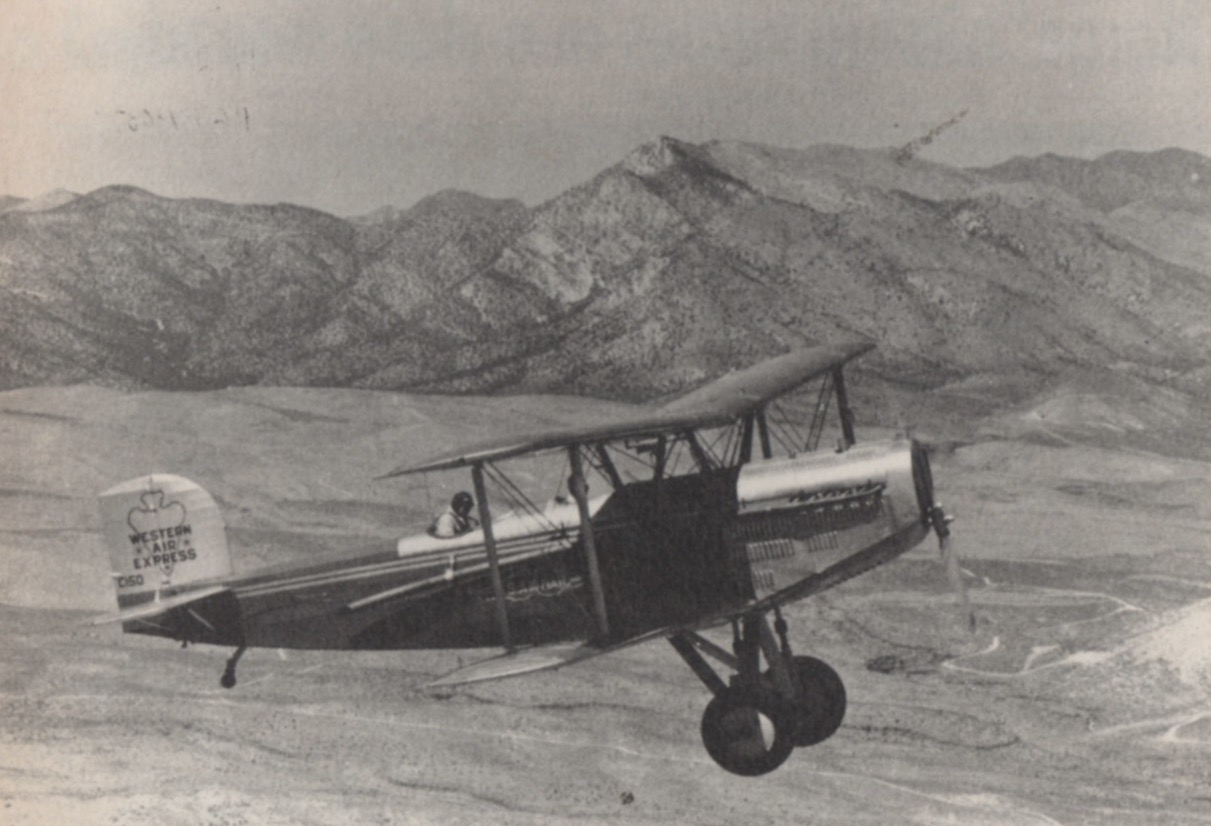
“Western Air Express purchased the CAM-4 route linking Los Angeles, California, to Salt Lake City, Utah, with money provided by Harry Chandler, publisher of the Los Angeles Times.”
Minnesota, October 1. “Northwest Airways begins regular air mail flights between Chicago, Illinois, and Minneapolis, using two rented open-cockpit biplanes.”
December 31. “Some of the CAM operators also carry passengers. However, should there be enough mail along the route to displace passengers, they must be prepared to leave the flight.”
See also “U.S. Airmail Tidbits,” June 29, 2023. And “Early Air Mail Snafus,” November 17, 2023.
Gee, no wonder I didn’t have time to dust off my Chronicles of Flight. ds
© Dennis Simanaitis, SimanaitisSays.com, 2026


The oversite of the democratically titled House Committee on Military Affairs managed to ensure Allied victory in War II, newly named Department of Defense in time for the 79-year cold war–a phrase coined by financier-statesman Bernard Baruch in 1947, advisor to presidents Woodrow Wilson and Franklin Delano Roosevelt– a cold war we thought we’d at long last won, only to lose this year thanks to the comedy stylings of Donald J. Trump and Pete Hegseth.
Providing some relief from the endless political bloviating that intrudes on the fine subjects of this blog, let me note two often overlooked almost century old aircraft that are still not only flying, but still in limited production.
First is the Piper Cub J-3, evolving with mostly engine changes from the 1929 Taylor Cub E-2, initially powered by a 20 hp Brownback “Tiger Kitten” engine. Since the young offspring of the tiger is called a cub, the name followed … and stuck, though the engine was a dud.
Over 23,500 Cubs were built across the main Piper and Taylor Cub series starting from the early Taylor designs, now including 700 units of the modernized Carbon Cub. Piper/Taylor produced them in four US factories, with other production in Canada and Brazil as well as many suppliers of parts, enough to assemble a complete aircraft.
Taylor Cub – Wikipedia
Then there’s the Russian biplane Polikarpov Po-2, The prototype, then designated the U-2, powered by a 74 kW (99 hp) Shvetsov M-11 air-cooled five-cylinder radial engine, first flew on June 24, 1927. It initially was a transport or trainer, evolving into crop dusting, glider tugging, ambulance, ski/floatplane, and becoming best known as the aircraft used by the WWII 588th Night Bomber Regiment, composed of all-woman “Night Witches” pilots and ground crew. The unit became famous for daring low-altitude harassment bombing (including rockets, grenades and even Molotov Cocktails) night raids on German rear-area positions.
It was also used in Korea in that role, even officially credited with a “maneuver kill” against a then super high tech U.S. Air Force Lockheed jet F-94 Starfire which crashed while slowing down under 100 mph trying to intercept the slow-flying wooden biplane, dropping below its stall speed. Although a USMC AD-4 from VMC-1 shot down a Po-2, the only documented Skyraider air victory of the war.
The Po-2 was widely exported, not only to Russian bloc countries, but all over the world, especially useful in developing nations. An estimated 20,000 to 33,000 Polikarpov Po-2 biplanes were officially built, though total production figures—including unlicensed and workshop-rebuilt airframes—are widely believed by historians to reach 40,000 or more, easily making it the most produced aircraft ever.
The Po-2 was in and out of Russian production in three plants as late as the 1990s but has been supplemented by parts and full aircraft production in many countries where it is heavily used, including local flying clubs and technical groups continuing assembling or building replacement airframes in Russia and other countries to this day.
https://en.wikipedia.org/wiki/Polikarpov_Po-2
Bragging a bit, I got to fly a single seat Po-2 used as a glider tug at RAF Cranbrook. My check out by the regular Russian speaking pilot was a cursory gesturing run through the few instruments, all with Cyrillic markings, and then using pilot style hand gestures, he inclined his hand upward, with “hondred kilometre,” then level with “hondred kilometre,” and of course in a descent with “hondred kilometre … you fly!”
In an attempt to get back to the wonderful topics on this excellent site without deviating into political bloviating, let me note two often overlooked almost century old aircraft that are not only still flying, but even still in limited production!!
First is the Piper Cub J-3, evolving with mostly engine changes from the 1929 Taylor Cub E-2, initially powered by a 20 hp Brownback “Tiger Kitten” engine. Since the young offspring of the tiger is called a cub, the name followed … and stuck, though the engine was a dud.
Over 23,500 Cubs were built across the main Piper and Taylor Cub series starting from the early Taylor designs, now including 700 units of the modernized Carbon Cub. Piper/Taylor produced them in four US factories, with other production in Canada and Brazil as well as many suppliers of parts, enough to assemble a complete aircraft.
The CubCrafters Carbon Cub is a lightweight, backcountry-optimized redesign of the classic Piper Super Cub, featuring roughly 50% fewer parts and weighing over 300 pounds less than traditional models. It uses a high-strength chromoly steel fuselage cage, carbon fiber components, glass panel, Titan CC340 180-hp, modified Lycoming O-320, or even a TurboTech TP-R90 turbine, thus extreme Short Takeoff and Landing (STOL) performance.
Taylor Cub – Wikipedia
Then there’s the Russian biplane Polikarpov Po-2, The prototype, then designated the U-2, powered by a 74 kW (99 hp) Shvetsov M-11 air-cooled five-cylinder radial engine, first flew on June 24, 1927. It initially was a transport or trainer, evolving into crop dusting, glider tugging, ambulance, ski/floatplane, and becoming best known as the aircraft used by the WWII 588th Night Bomber Regiment, composed of all-woman “Night Witches” pilots and ground crew. The unit became famous for daring low-altitude harassment bombing (including rockets, grenades and even Molotov Cocktails) night raids on German rear-area positions.
It was also used in Korea in that role, even officially credited with a “maneuver kill” against a then super high-tech U.S. Air Force Lockheed jet F-94 Starfire which crashed while slowing down under 100 mph trying to intercept the slow-flying wooden biplane, dropping below its stall speed. Although a USMC AD-4 from VMC-1 shot down a Po-2, the only documented Skyraider air victory of the war.
The Po-2 was widely exported, not only to Russian bloc countries, but all over the world, especially useful in developing nations. An estimated 20,000 to 33,000 Polikarpov Po-2 biplanes were officially built, though total production figures—including unlicensed and workshop-rebuilt airframes—are widely believed by historians to reach 40,000 or more, easily making it the most produced aircraft ever.
The Po-2 was in and out of Russian production in three plants as late as the 1990s but has been supplemented by parts and full aircraft production in many countries where it is heavily used, including local flying clubs and technical groups continuing assembling or building replacement airframes in Russia and other countries to this day.
Polikarpov Po-2 – Wikipedia
https://ww2aircraft.net/forum/attachments/po-2-night-witches-jpg.900158/
Bragging a bit, I got to fly a single seat Po-2 used as a glider tug at RAF Cranbrook. My check out, by the regular Russian speaking pilot, was a cursory gesturing run through the few instruments, all with Cyrillic markings. And then, using pilot style hand gestures, he inclined his hand upward, with “hondred kilometre,” then level with “hondred kilometre,” and of course in a descent with “hondred kilometre … you fly!”
Pingback: TRIPPIN’—GOOD AND BAD – Simanaitis Says
Perhaps worth a mention, my favorite early aeronautical person, Hugo Junkers. Not only groundbreaking aeronautical work, but incredibly, an engine designer as well, famous for his two-stroke opposed piston, diesel aircraft engines. Sales literature for these engines 100 years ago included the claim of a decreased likelihood of fire if a forced landing occurred.
Wikipedia:
Hugo Junkers (3 February 1859 – 3 February 1935) was a German aircraft engineer and aircraft designerwho pioneered the design of all-metal airplanes and flying wings. His company, Junkers Flugzeug- und Motorenwerke AG (Junkers Aircraft and Motor Works), was one of the mainstays of the German aircraft industry in the years between World War I and World War II.
In addition to aircraft, Junkers also built both diesel and petrol engines and held various thermodynamic and metallurgical patents.
. . . the Junkers Ju 52, affectionately nicknamed “Tante Ju”, one of the most famous airliners of the 1930s.
Through a variety of business initiatives, Junkers was active in founding and developing airlines around the globe, initially intending to sell them aircraft. Airlines where Junkers played a pivotal role in early phases of their development include Deutsche Luft Hansa and Lloyd Aéreo Boliviano.