
Simanaitis Says
On cars, old, new and future; science & technology; vintage airplanes, computer flight simulation of them; Sherlockiana; our English language; travel; and other stuff
MY PEARSE PROJECT
READERS MAY RECALL “NEW ZEALANDER RICHARD PEARSE—FIRST TO FLY?,” SimanaitisSays, March 22, 2014: “There’s evidence that on March 31, 1903—more than eight months before the Wright bros. epic flight—New Zealander Richard Pearse flew his craft, albeit with only a modicum of control, for several hundred yards. On May 11, 1903, he took off, flew left, then right for a flight of nearly 1000 yards.”
“Why are Pearse’s achievements so obscure?,” I wrote. “It’s partly because of the isolation of Waitohi, the site of his flights, about 95 miles southwest of Christchurch, New Zealand—and half a world away from technical advancements of the Northern Hemisphere. And partly because Richard Pearse was a mad scientist, known for the oddity of his farm machinery inventions. Plus, Pearse was not the sort to seek notoriety.”
“Nevertheless,” I concluded, “New Zealander Richard Pearse deserves recognition as a significant pioneer of aviation.”
So Why Not Build a GMax Pearse Craft? As recorded here at SimanaitisSays, I’ve used GMax’s computer-aided design software to build (and write about) quite a few aircraft, the most recent “Couzinet 10—A Short Tale, a Lengthy Project,” August 11, 2025.
Agg! Then Came a Microsoft Upgrade!! Not long after completing the Couzinet 10, I began setting up a GMax/FS9 Pearse—but didn’t get very far: An automatically scheduled upgrade of my Dell screwed up the precarious export linkage of these two relatively ancient software. I was left with the alternative of building the GMax Pearse but never seeing it fly in FS9. This depressing prospect put paid to the Pearse project. At least temporarily.
Online research revealed possible workarounds, but requiring a depth of computer finesse far beyond mine. A pity, but there you are.
Aha! Why Not a Phantom Pearse? Solution to my quandary proved easy-peasy: There were several default FS9 aircraft I’d never fooled with, the Extra stunt plane, for instance. Why not export the Pearse .mdl file into FS9 masquerading as an extra300S.mdl? After suitable modification of other Extra files, the Pearse model replaced the unused craft.
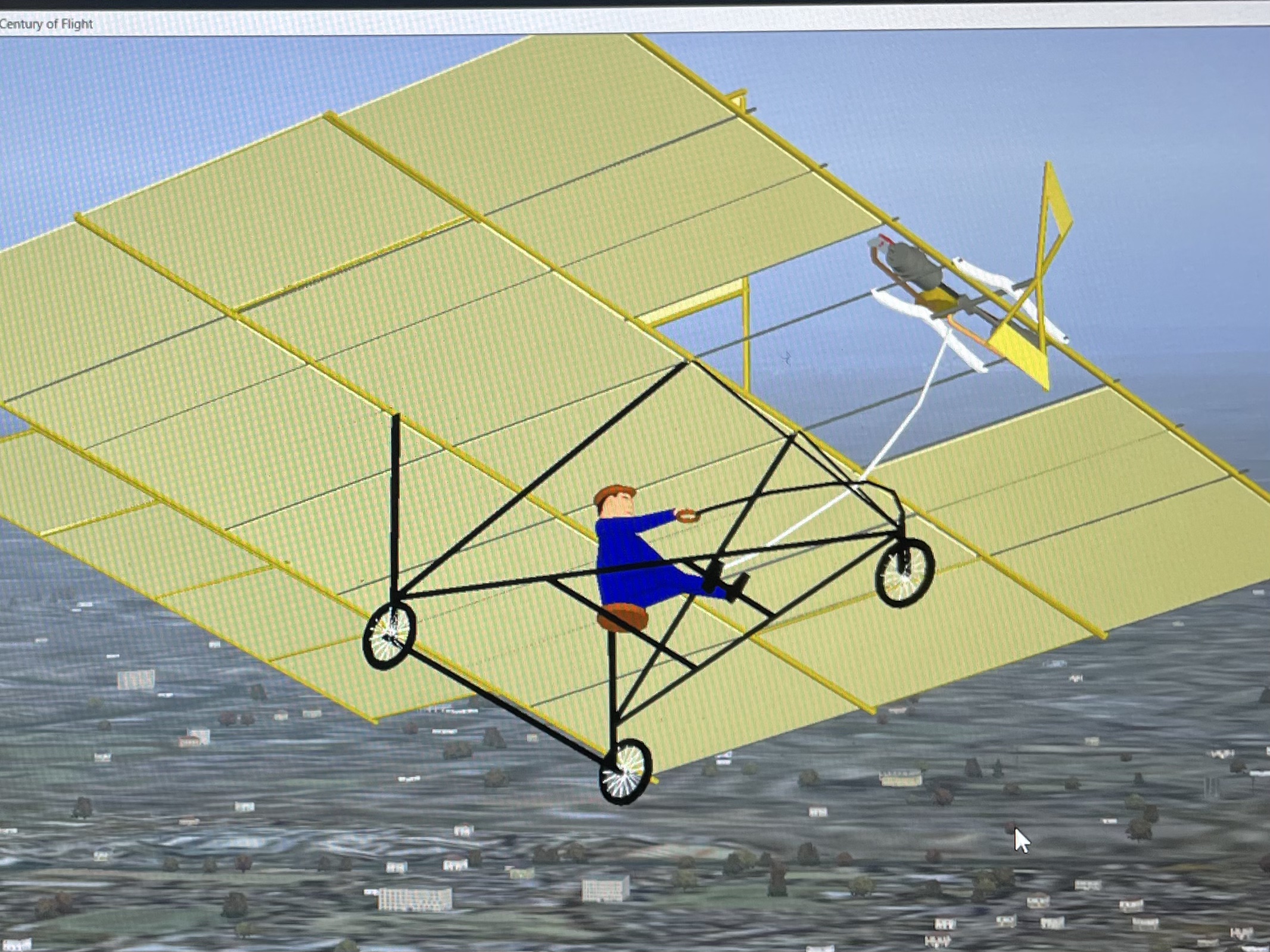
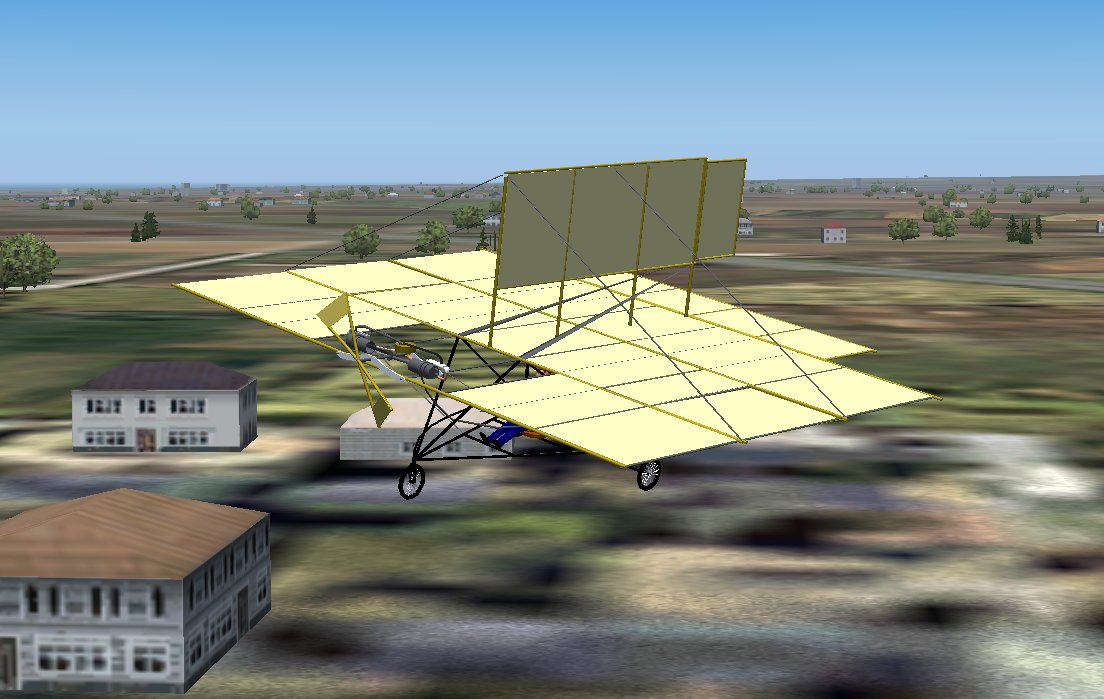
Indeed, duh, until modifying the Extra’s flight characteristics, it flew just like the latter. But it was straightforward to swap the Extra’s Sound file for my classic “clunker.” I swapped out the super-agile Extra AIR file for the 1909 Bleriot’s, and this worked well for photo shoots. I tried the default Wright AIR file, but the Pearse accelerated more quickly and then proved even more unstable than the Wright.
Eventually, I may replace data in its .cfg file with the few technical details I have on the Pearse: its dimensions, its weight, and the meagre 15-hp output of his homebuilt two-cylinder powerplant (the ignition of which Pearse achieved with a spark plug of his own design.)

Wikipedia describes, “Pearse’s handy man’s spark plug, having a wire within a central tube, utilised the pressure of the engine’s compression stroke to operate a valve, to vibrate the connected terminal wire into contact the central tube’s terminal, to produce multiple sparks.”
By the way, I did this flight analysis only after first fooling with the Pearse graphical model linked to the hyper-agile Extra 300s’ agility. I’m sure this scared hell out of my Richard Pearce pilot.
My Own Pearse Challenges. It had been more than a year since I’d fooled with GMax and a good deal of memory-probing was required. It helped that I had saved several of my other GMax aeroplanes, thus allowing recall of coding practices and animation techniques.
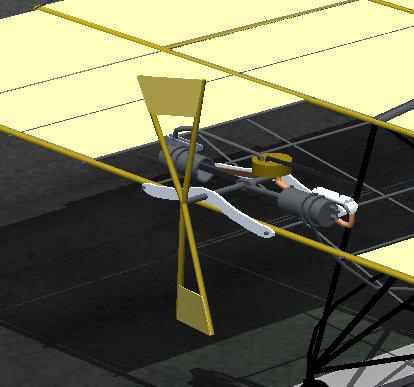
I got positively nerdy in animating the connecting rods of Pearse’s opposed two-cylinder powerplant. Coded “prop_blurred” at first, they somehow corrupted the graphics of the crank/prop shaft and fabricated propeller. Then I recalled the default “tick18” coding for their animation.
It took awhile to recall the intricacies of applying color .bmps to the pilot. Only late in the process I realized Richard Pearse had a trim little mustache. Details, details….
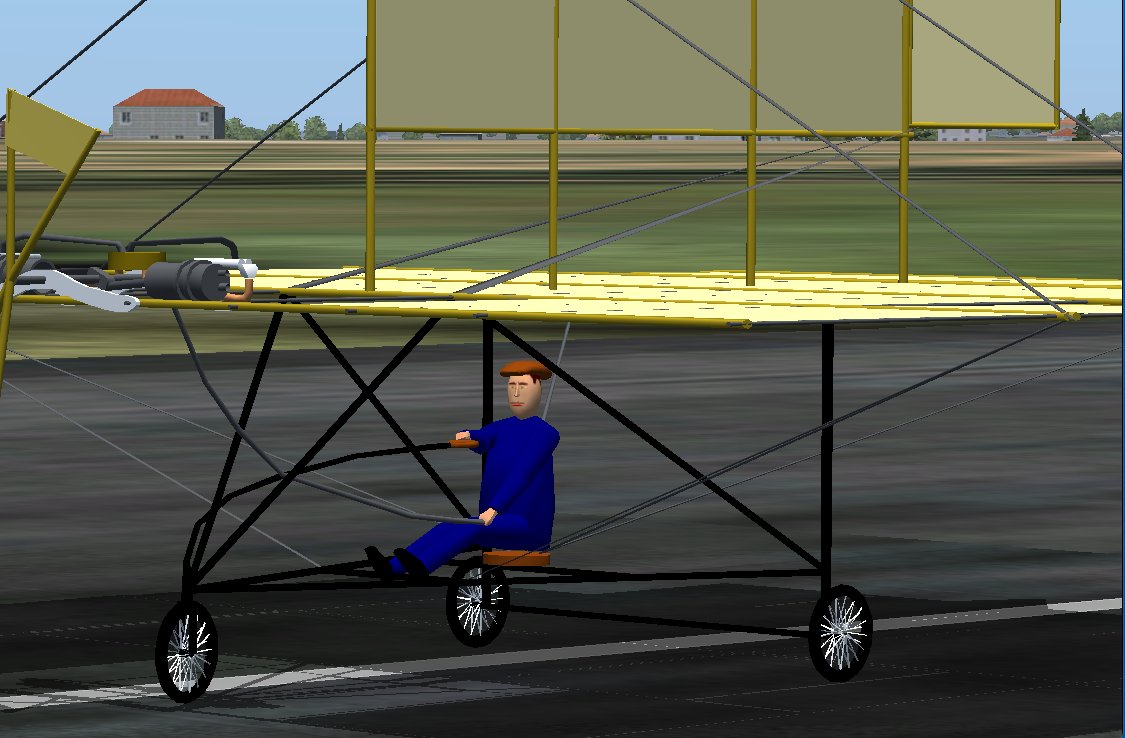
The Pearse’s Aileron Flaps. Rather than primitive wing-warping (as employed by the Wrights), Pearse devised downward articulation of left and right ailerons. I can only guess how he actuated them (wired to a sliding seat, akin to the Wrights’ hip grip?).
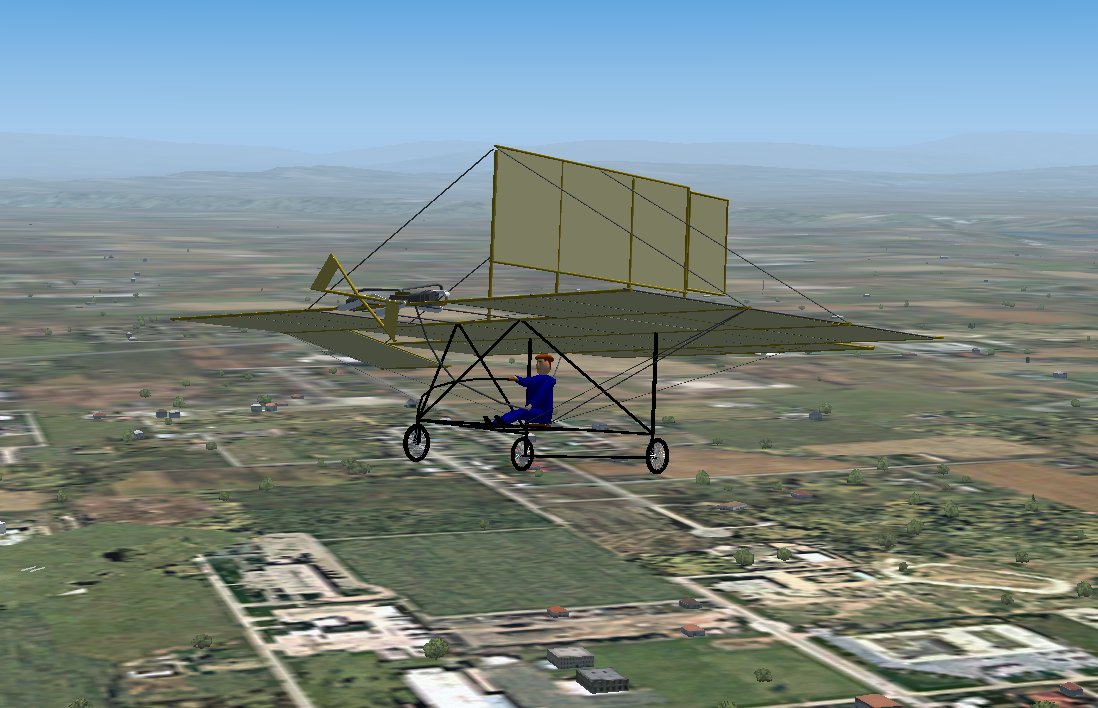
His Yoke. It’s evident that Pearse steered the front wheel via a lengthy yoke. Maybe this linked to the rudder as well? (I cheated with FS pedals for the front wheel/rudder; available sketches show nothing more for the feet than a frame crossbrace.
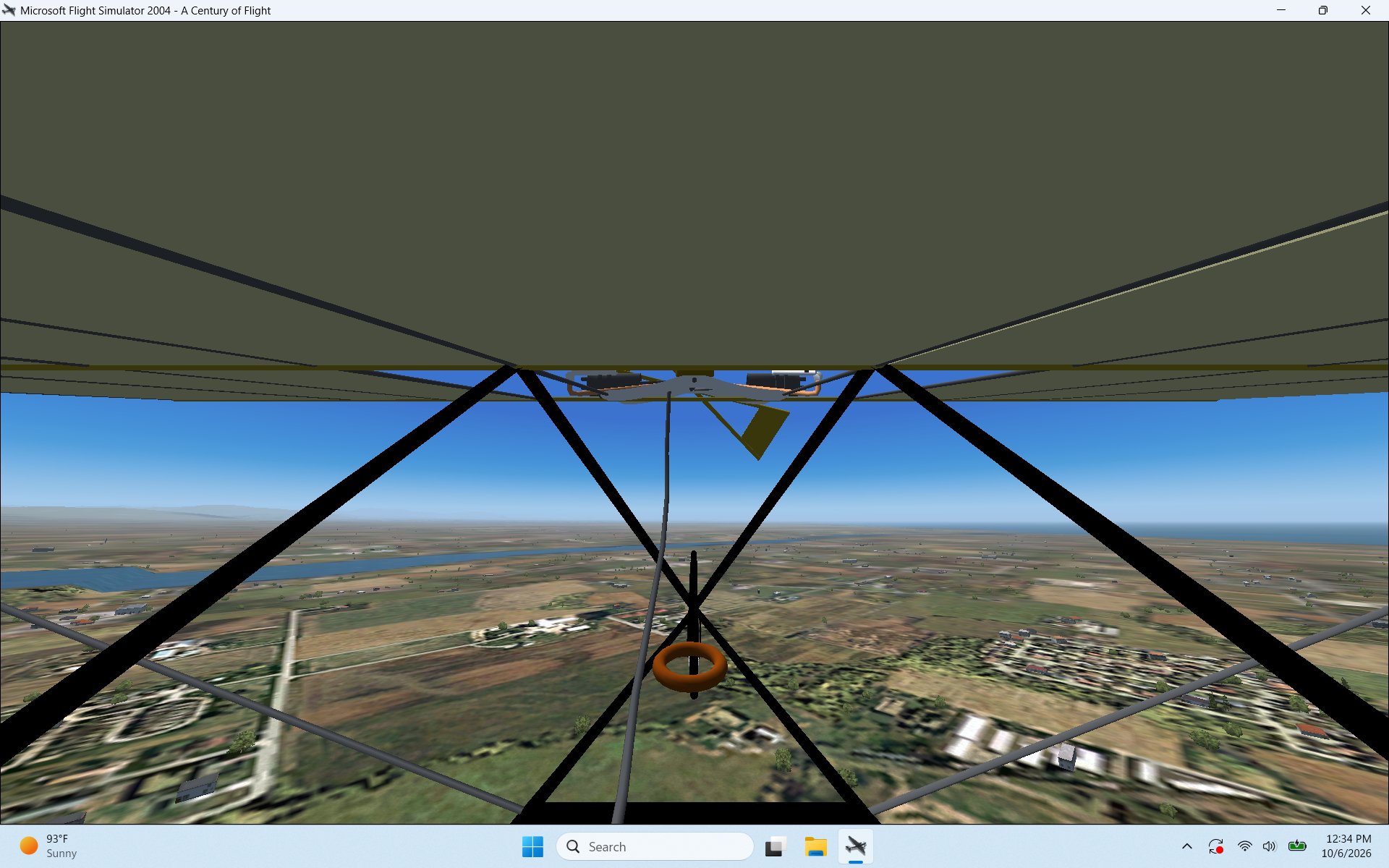
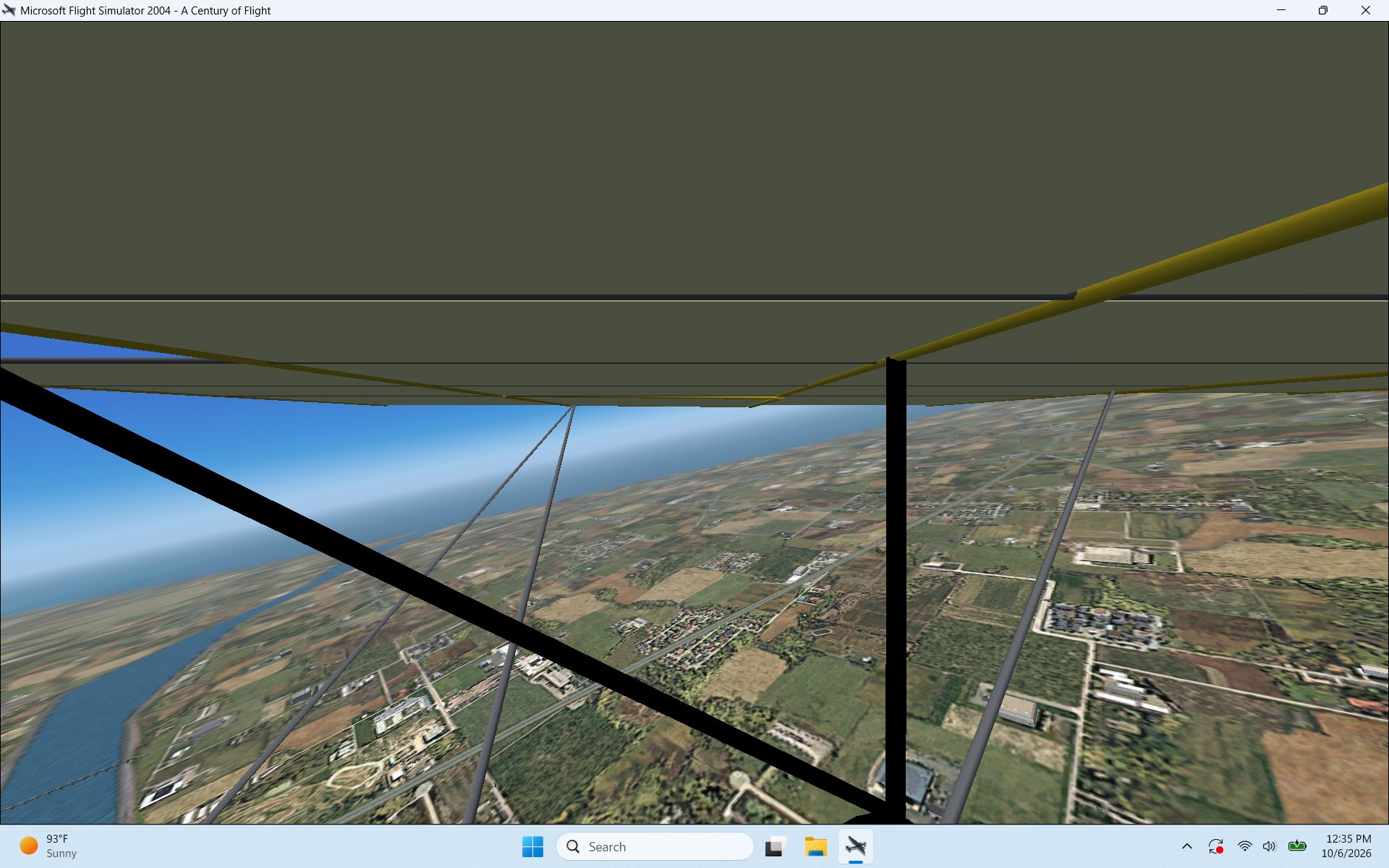
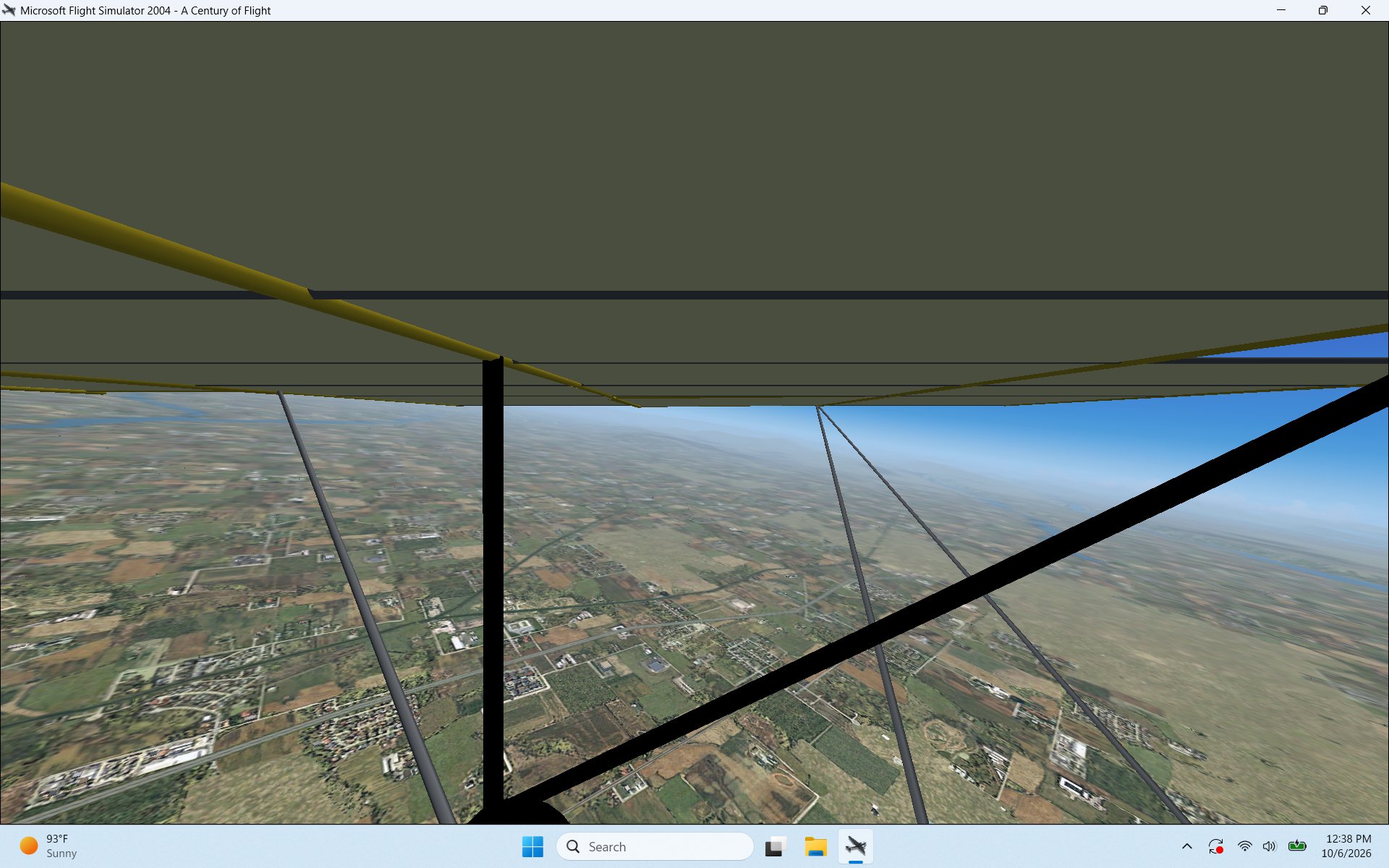
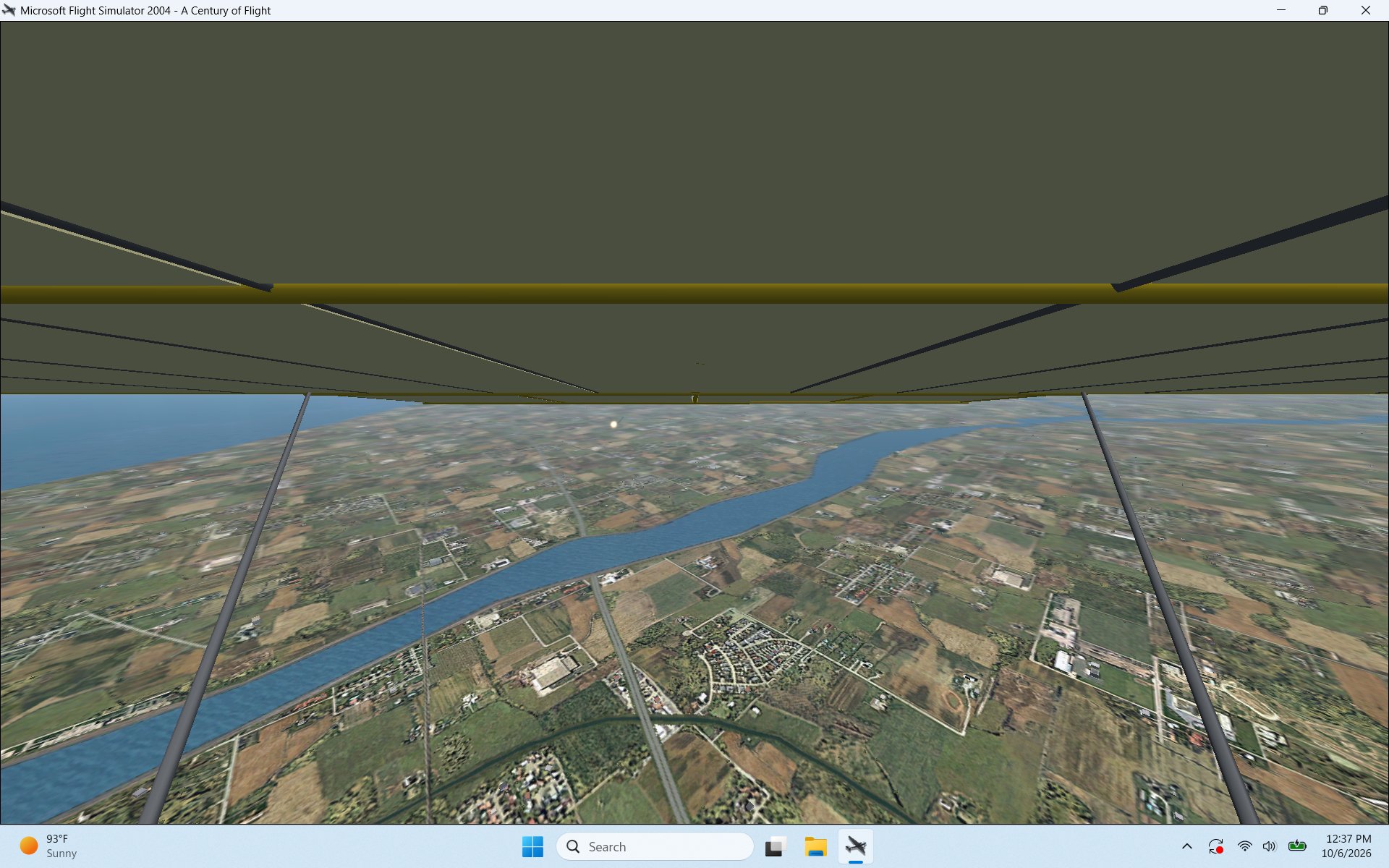
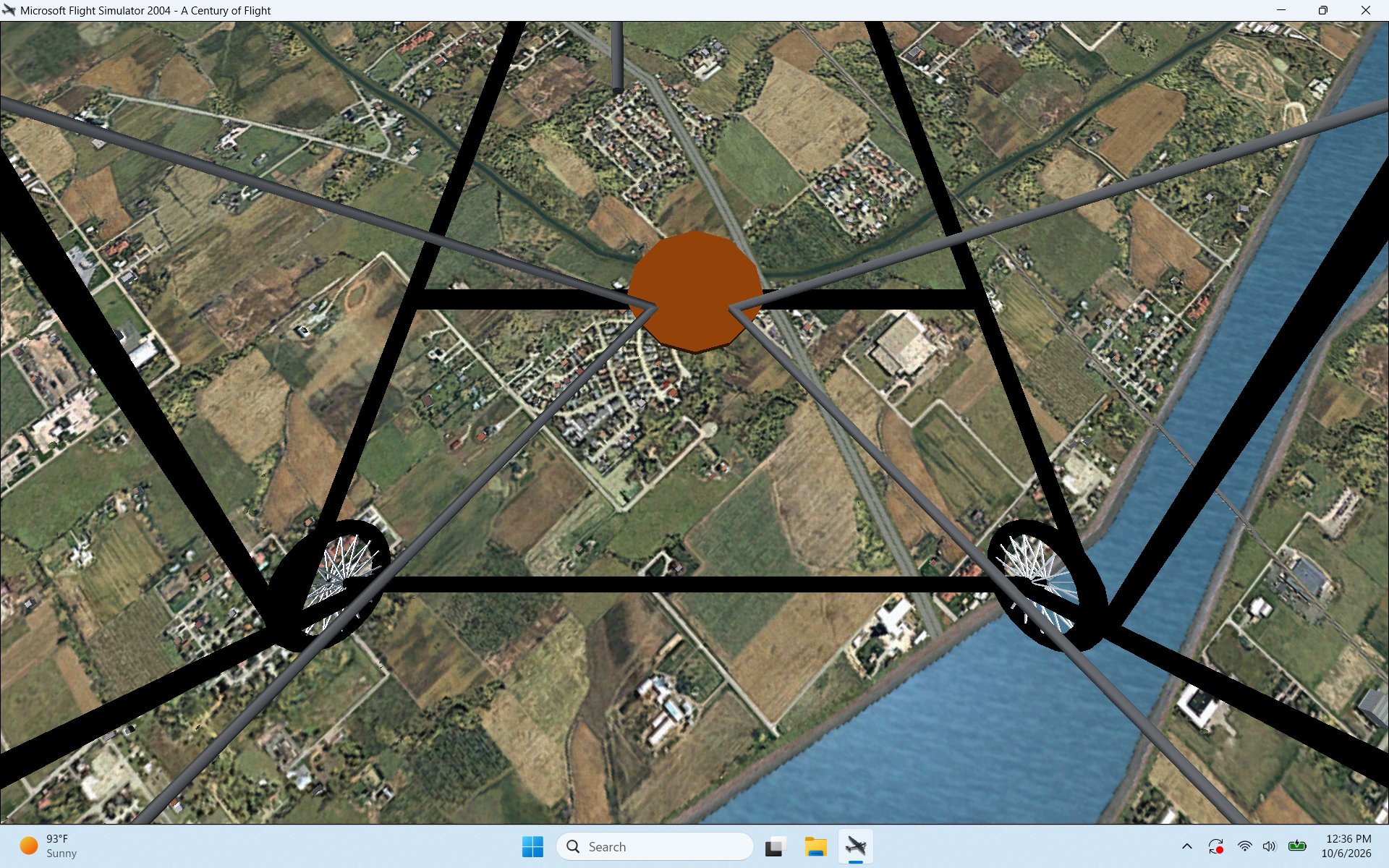
Pearse’s Views. The GMax option to get an FS9 pilot’s view requires three files, exterior/interior/both, the interior preserving everything the pilot sees. With the Pearse, this includes a lot of open air. To wit, views forward, right, left, aft, and downward:
Visiting Waitohi. Wikipedia recounts, “Waitohi, Waitohi Flat and Upper Waitohi are small farming centres from 5 to 16 km west of Temuka and north of the Opihi river, South Canterbury in New Zealand. They are about 20 km north of Timaru.”
“It is the area,” Wikipedia continues, “where Richard Pearse, a pioneer aviator, lived and farmed. From 1902 to 1904, Richard Pearce built and flew experimental aircraft on his Waitohi farm and managed to achieve powered flight.”
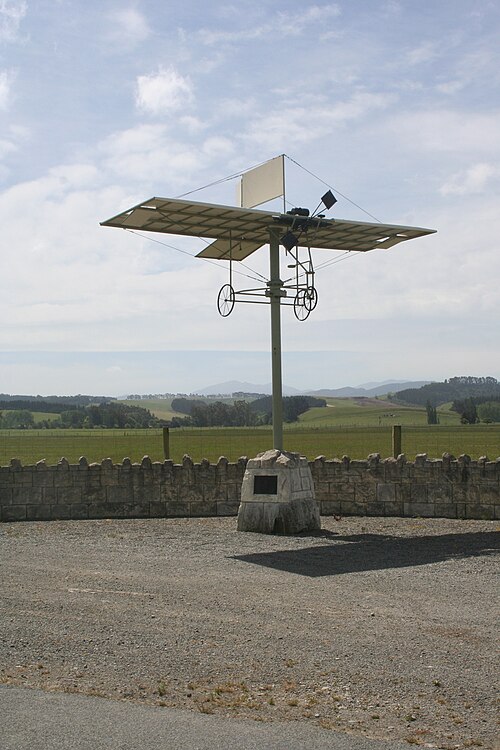
A Fine Home for My Pearse. FS9 and Google Maps teamed up in specifying a fine home for my Pearse. Southeast of Waitohi is Timaru, whose airport (coded TIU and appearing on FS9) is also known as Richard Pearse Airport.
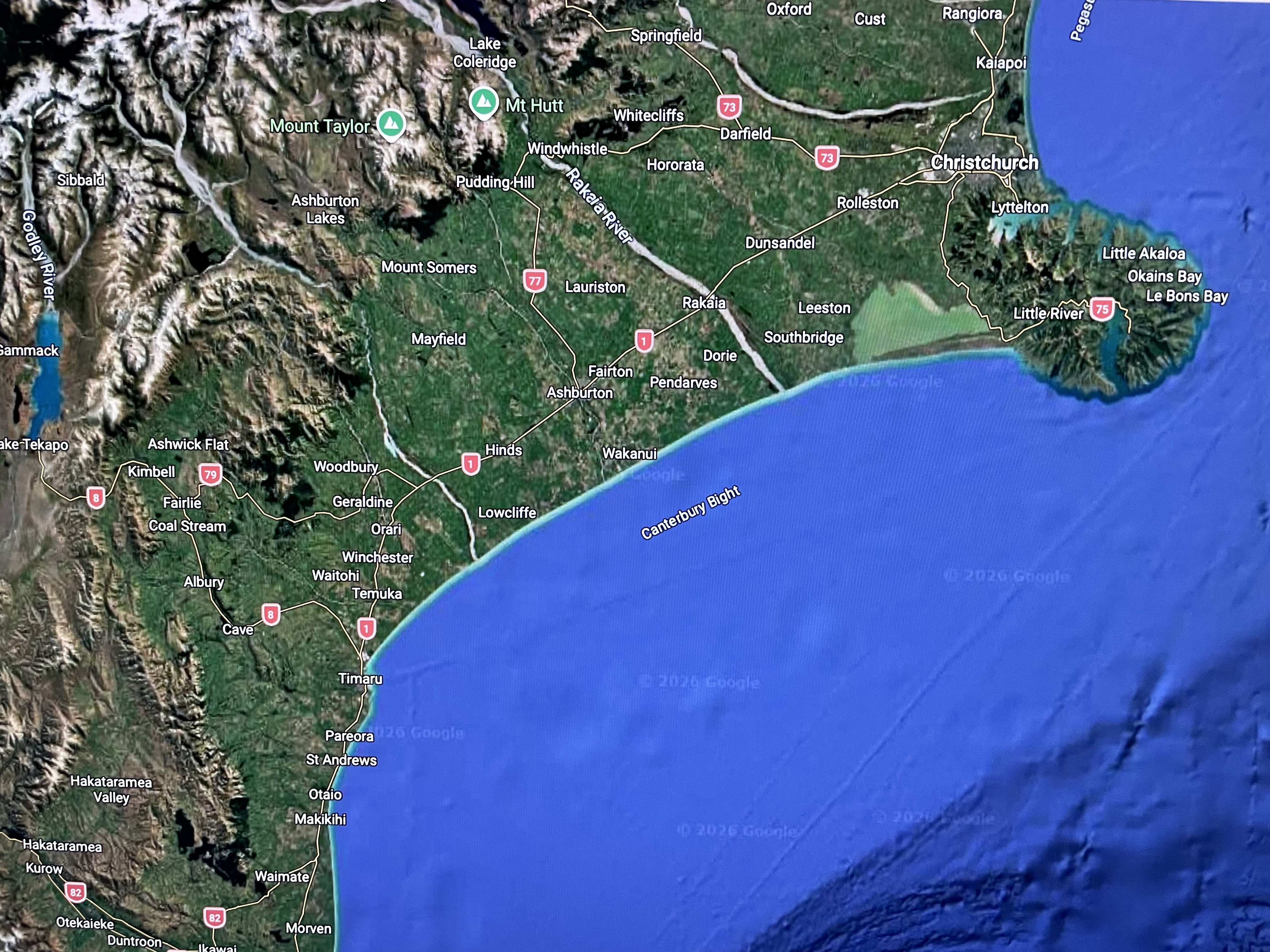
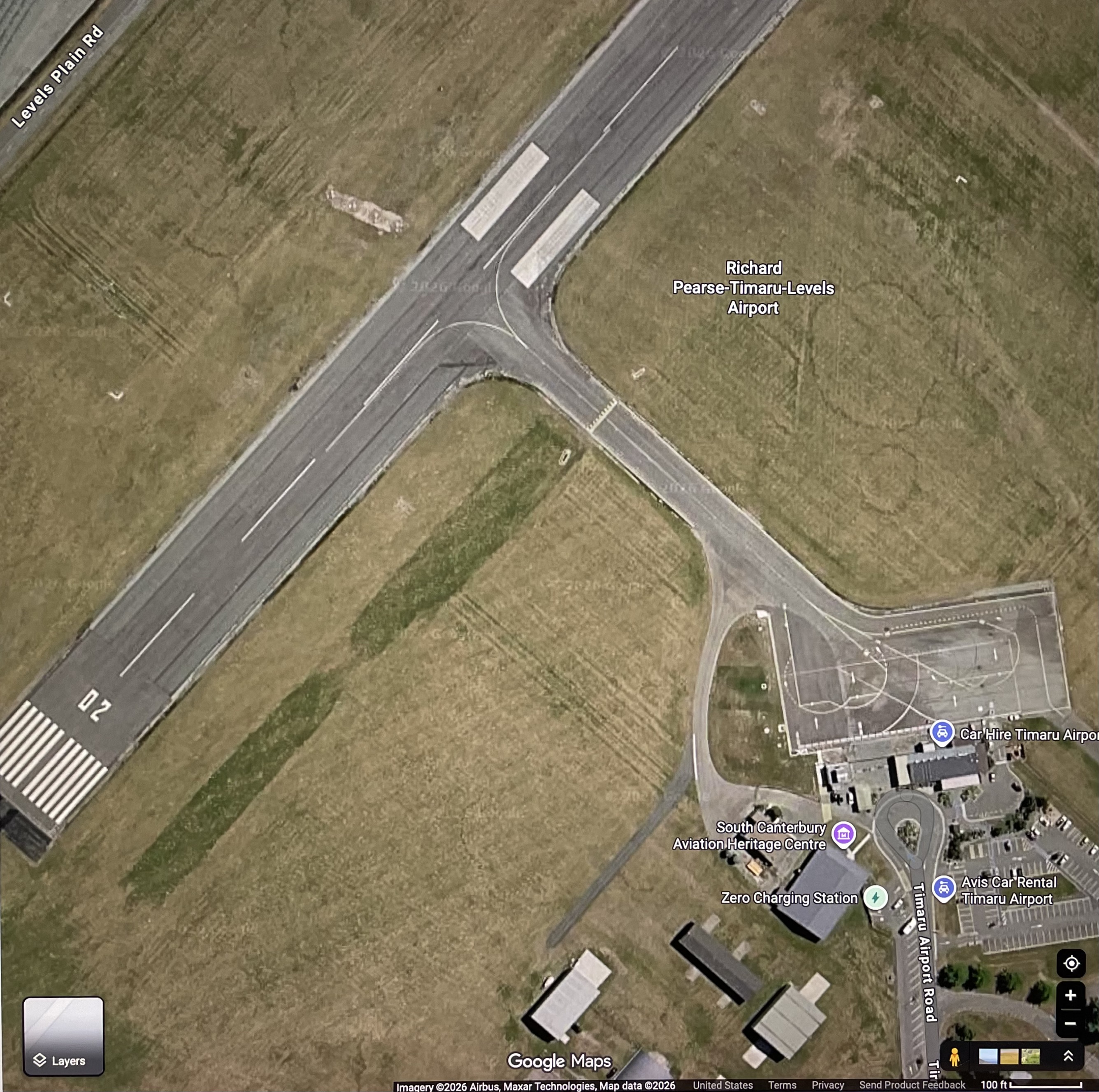
Images show Waitohi and Timaru southwest of Christchurch along Canterbury Bight. The airport’s original control tower is now home to South Canterbury Aviation Heritage Centre. On the long shot that they have an operable Microsoft FS9 installation, I’d be happy to donate a Pearse (er… phantom Extra). ds
© Dennis Simanaitis, SimanaitisSays.com, 2026

