
Simanaitis Says
On cars, old, new and future; science & technology; vintage airplanes, computer flight simulation of them; Sherlockiana; our English language; travel; and other stuff
ADA LOVELACE ON A.I.—YOU GO, GRRL!
WALTER ISAACSON DESCRIBES, “ADA LOVELACE Already Answered the Big Questions About A.I.,” The New York Times, October 5, 2026. Indeed, come to think of it, this confirms the findings of “Ada Lovelace Redux,” SimanaitisSays, July 21, 2018. Here are tidbits gleaned from Isaacson’s NYT Guest Essay, together with my usual extracurricular sleuthing.

Working Together to Produce Beautiful Results. Isaacson opens with, “The Digital Revolution was born in 1843, when Ada Lovelace produced a 20,000-word set of notes about a calculating machine invented by her friend, Charles Babbage. She showed how humans and digital technology could work together to produce beautiful results. Now, as we face a choice about the role of humans in an era of artificial intelligence, Lovelace’s approach to human-machine partnership remains the right one.”
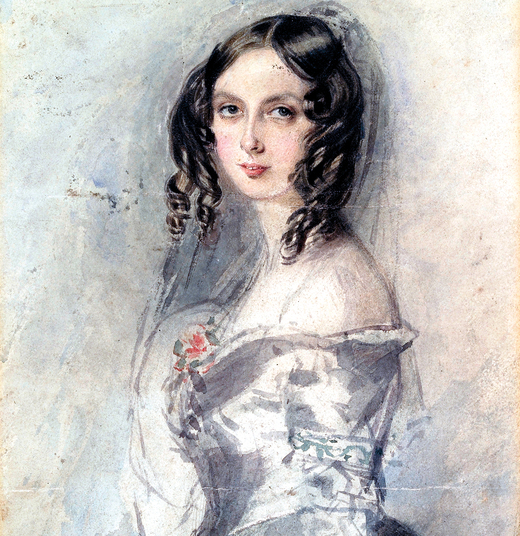
Augusta Ada King-Noel, Countess of Lovelace, née Byron, 1815–1852, English mathematician and writer. Image of Ada Byron, c. 1835, from the London Review of Books, June 21, 2018.
A “Poetical Science.” Isaacson recounts, “The only legitimate child of the Romantic poet Lord Byron, Lovelace had inherited her father’s rebellious artistic spirit, a trait that her mother, Anne Isabella Milbanke, tried to temper by having her tutored mainly in math. Lovelace came to realize that math was poetic: it’s a lovely language that describes the harmonies of the universe. Despite her mother’s efforts, she remained her father’s daughter, with a sensibility that allowed her to view an equation as a brushstroke that painted an aspect of nature’s splendor. The combination produced in Lovelace a passion for what she took to calling ‘poetical science,’ which linked her artistic imagination to her enchantment with numbers.”
Sorta like I perceive my mathematical speciality, dynamical systems theory, as “differential equations without the dirty bits.”
A Luddite’s Daughter? Yes, But…. Isaacson describes, “Her father was a Luddite, literally. In his maiden speech in the House of Lords, Byron defended the followers of the folkloric Ned Ludd who were rampaging against the mechanical weaving machines that were being deployed in England at the time. The Luddites believed automation would reduce the number of human jobs. They were wrong—just as modern Luddites are wrong about other new technologies. By the end of the 19th century, there were roughly 10 times more workers in textile industries than before.”
Jacquard Looms. “Unlike her father,” Isaacson notes, “Lovelace saw the power and the potential of automated technology. When her mother took her on a trip through the British industrial Midlands, she was particularly impressed by the new looms, known as Jacquard looms, that used punch cards to direct the creation of the desired fabric patterns.”
Enter Babbage’s Analytical Engine. Isaacson relates, “In her notes about Babbage’s computational machine, which he called the ‘Analytical Engine,’ Lovelace explained how the use of punch cards, with their rows of places that were either punched or unpunched, could store and convey information. ‘The Analytical Engine weaves algebraical patterns just as the Jacquard loom weaves flowers and leaves,’ she wrote.”
Isaacson continues, “Its operations, she realized, did not need to be limited to math and numbers. The punch cards could store, manipulate, process and act upon anything that could be expressed in symbols: words and logic and music and pictures and ‘the most complicated patterns in the fabrication of brocaded stuffs.’ The calculating machine could become a general-purpose computer. For more details, see “The Difference Engine—Fact and Fiction,” SimanaitisSays, September 30, 2012.
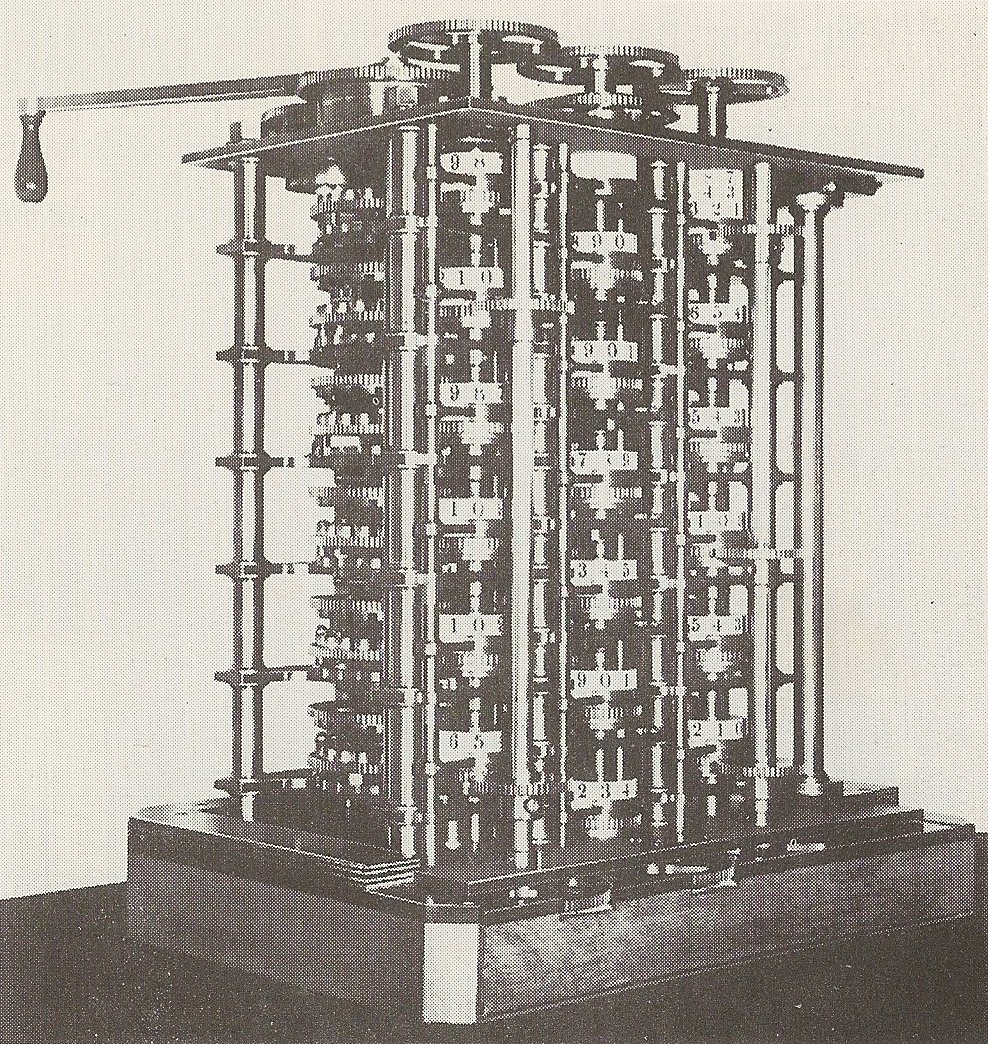
This portion of Babbage’s incomplete Difference Engine resides in the Science Museum, London. Images from Calculating Machines and Computers.
But Can Machines Think? Isaacson cites that Ada believed not: “A machine such as Babbage’s could perform operations as instructed, she asserted, but it could not come up with ideas or intentions of its own. ‘The Analytical Engine has no pretensions whatever to originate anything,’ she wrote. ‘It can do whatever we know how to order it to perform. It can follow analysis, but it has no power of anticipating any analytical relations or truths.’ ”
Alan Turing Believed Otherwise. Isaacson observes, “Just over a century later, in his seminal 1950 paper ‘Computing Machinery and Intelligence,’ the computer pioneer Alan Turing called this assertion ‘Lady Lovelace’s Objection’ and argued that she was wrong.”
Human Values, Consciousness, and Moral Sense. “On the other side is the Lovelace camp,” Isaacson recounts, “which holds that there will always be a role for human creativity, intention, agency and empathy. Human creativity involves values, aesthetic judgments, emotions, personal consciousness and a moral sense. We humans possess an imagination that, as Lovelace said, ‘brings together things, facts, ideas, conceptions in new, original, endless, ever-varying combinations.’ We appreciate beauty. We weave information into narratives. We are storytelling and social animals. Those are what the arts and humanities teach us and are what humans are distinctively able to do.”
Why Are We Building A.I.? “The answer should be the obvious one,” says Isaacson, “to make life better for humans…. A society in which machines do everything for us would provide abundance while depriving us of agency and meaning.”
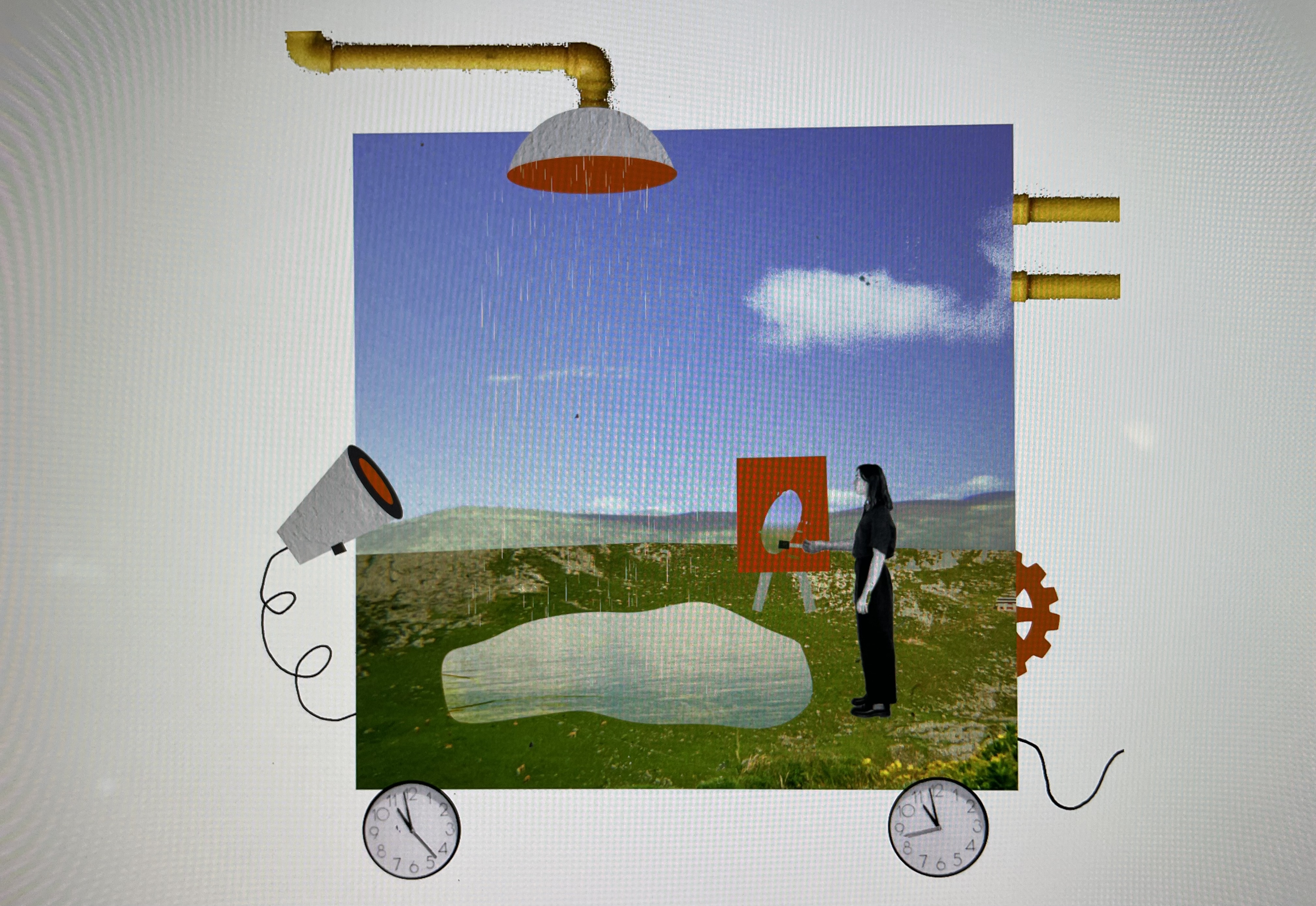
Isaacson concludes, “Following the path set by Ada Lovelace, we can help assure a flourishing human future by favoring services and devices that have human-computer interfaces in the tradition of J.C.R. Licklider, Douglas Engelbart, Alan Kay and Steve Jobs: ones that are user-friendly, intuitive and interactive and that seek to include humans in every step rather than to seduce their users into letting them handle things without us.”
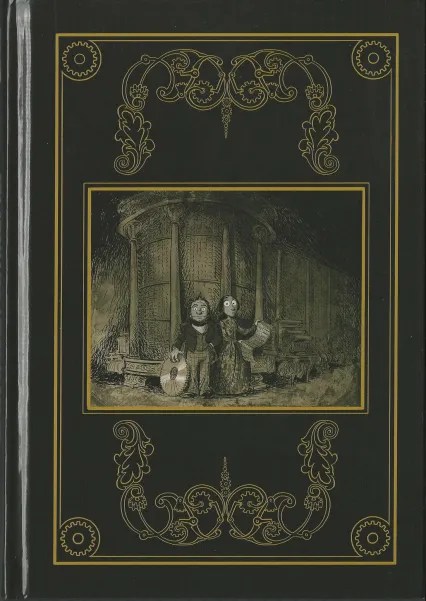
Indeed, for more about Ada, check out The Thrilling Adventures of Lovelace and Babbage: The (Mostly) True Story of the First Computer, by Sydney Padua, Pantheon, 2015. It has plenty of footnotes, just the thing for confirmation and human double-checking in this A.I. know-it-all age. ds
© Dennis Simanaitis, SimanaitisSays.com, 2026

