
Simanaitis Says
On cars, old, new and future; science & technology; vintage airplanes, computer flight simulation of them; Sherlockiana; our English language; travel; and other stuff
OPERA AND POLITICS
SOME MIGHT THINK THAT OPERA CAN HIDE from the real world behind its costuming, sets, and plots, but others feel decidedly otherwise. In particular, “Listening Differently,” by the Editor, Opera, With Opera News, December 2026, argues that even “if we can’t change the world, we can still learn to listen differently.” Here are tidbits gleaned from this editorial identified in quotes, together with my own filling in on matters new to me.

Prompted by The Mothers of Kherson. The Editor of Opera With Opera News writes, “From Warsaw, news of Maksym Kolomiiet’s new opera The Mothers of Kherson (premiered as we prepare to go to press—review next month) is a reminder of the passing of time.”

As described by The Metropolitan Opera, “The opera accurately represents events that occurred in the early days of the occupation of Kherson [a southern Ukraine city] in 2022, including the kidnappiing of children who were sent under false pretenses to summer caps in Crimea from which they didn’t return. It follows the heroic journey of two mothers and a grandmother who attempt to save their children from the camps.”
More On This. Wikipedia recounts, From March to November 2022, the city was occupied by Russian forces during their invasion of Ukraine. Ukrainian forces recaptured the city on 11 November 2022. In June 2023, part of the city was flooded following the Russian destruction of the nearby Kakhovka Dam. Since liberation, Kherson has become a target of the human safari Russian terror campaign of deliberate drone targeting of civilians, killing about 200 people as of October 2025 per the UN report.”

Longer Than World War I. “The commissioning composing, and producing of big operatic pieces,” the Editor notes, “is always a slow business, and for all the sense of urgency surrounding this one—co-produced in record time by New York’s Metropolitan Opera and Polish National Opera—its appearance now is a reminder of how long the war in Ukraine has dragged on, longer indeed already than World War I.”
A Certain Fatigue. “Nearly five years since President Putin launched his full-scale invasion of Ukraine—and almost 13 years since he started what ought now to be called the Second Crimean War— a certain fatigue is in danger of setting in. Many in the world are looking the other way as the White House moves into lock step with the Kremlin.”
The Editor observes, “Next to the psychopaths making international headlines and the more anonymous daily carnage enduring in Ukraine, it might seem supremely irrelevant to worry about what opera the world is seeing—were it not for the well-intended but by now largely broken promises of promoting neglected Ukrainian music over already familiar Russian repertoire.”
I confess, I didn’t know about Ukrainian composer Maksym Kolomiiets until research revealed The Met’s commission in 2023.
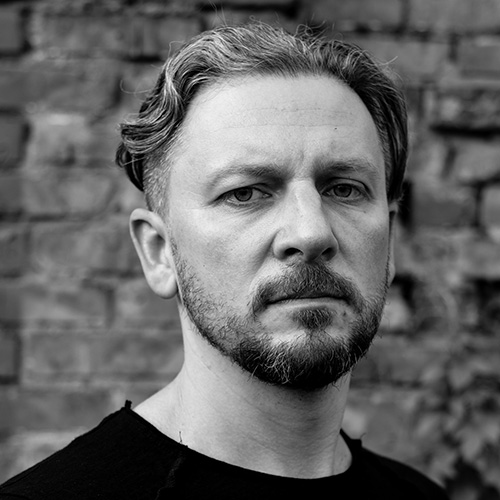
Maksym Kolomiiets, Kyiv-born 1981, oboist, composer of three operas, Espenbaum, performed in concert version; Night, excerpts premiered in August 2020; and The Mothers of Kherson, commissioned by The Metropolitan. Image from Kyiv Contemporary Music Days.
“Fatigued in their own way,” the Editor notes, “theatres and concert halls have fallen back on—as we are about to see again this Christmas—an endless stream of Nutcrackers and Swan Lakes, to which audiences are still flocking.”
“Which,” he observes, “is fine, up to a point; Tchaikovsky was a great composer and the musical world needs to guard against Russophobia. It shouldn’t have taken a war to get Ukrainian composers on our stages, yet if any good can ever come out of this dire situation it’s perhaps that the wider world will have developed a deeper awareness of Ukrainian culture. One might hope so, but whenever the war does eventually end, will we continue to hear Ukrainian music?”
The Editor admits, “That question gets harder to answer with certainty each passing year, since most of the theatres that made gestures of solidarity in spring 2022 have now—apart from still observing sanctions against Putin’s long-standing friend Valery Gergiev—revered to business as usual.”
“Back in 2022,” the Editor recalls, “it certainly appeared as if Russia’s disproportionate stranglehold on classical music might be shifted, but was that expecting too much too soon. (After all, it took a few hundred years for people to remember to programme more female composers.) At least we can now see more clearly that the predominance of Russian composers has already had something to do with the power of Russia and the mindset of exceptionalism that empires promote.”
“And,” already cited above, “if we can’t change the world, we can still learn to listen differently.”
There’s plenty here to consider. A not unrelated tidbit: Ukrainian pop music scores particularly well in the Eurovision Song Contest. ds
© Dennis Simanaitis, SimanaitisSays.com, 2026

