
Simanaitis Says
On cars, old, new and future; science & technology; vintage airplanes, computer flight simulation of them; Sherlockiana; our English language; travel; and other stuff
FERRARI GTSi—BEAUTY IS ITS OWN EXCUSE
APPEALING TO THE CLASSICS, R&T CITED IN 1981, “EMERSON WROTE THAT ‘Beauty is its own excuse for being.’ Some automotive enthusiasts feel that the same can be said for exoticars—such as Ferrari’s latest 308 GTSi.”
Impractical? R&T continued, “This is not to say that the Ferrari is impractical. It is simply less practical than, say, a Fiat 131. But then the 308 and cars of its kind are designed primarily for personal and not group (family) transportation and as a means of pleasure and not just conveyance. They’re not for everyone.”
What about for Dottie Clendenin and me on our excursion “Saluting the Boy Scouts of America,” recounted in SimanaitisSays, August 5, 2007? I’ll let you decide. But, in the meantime, here are tidbits, both favorable and otherwise, about the Ferrari 308 GTSi gleaned from R&T, March 1981.
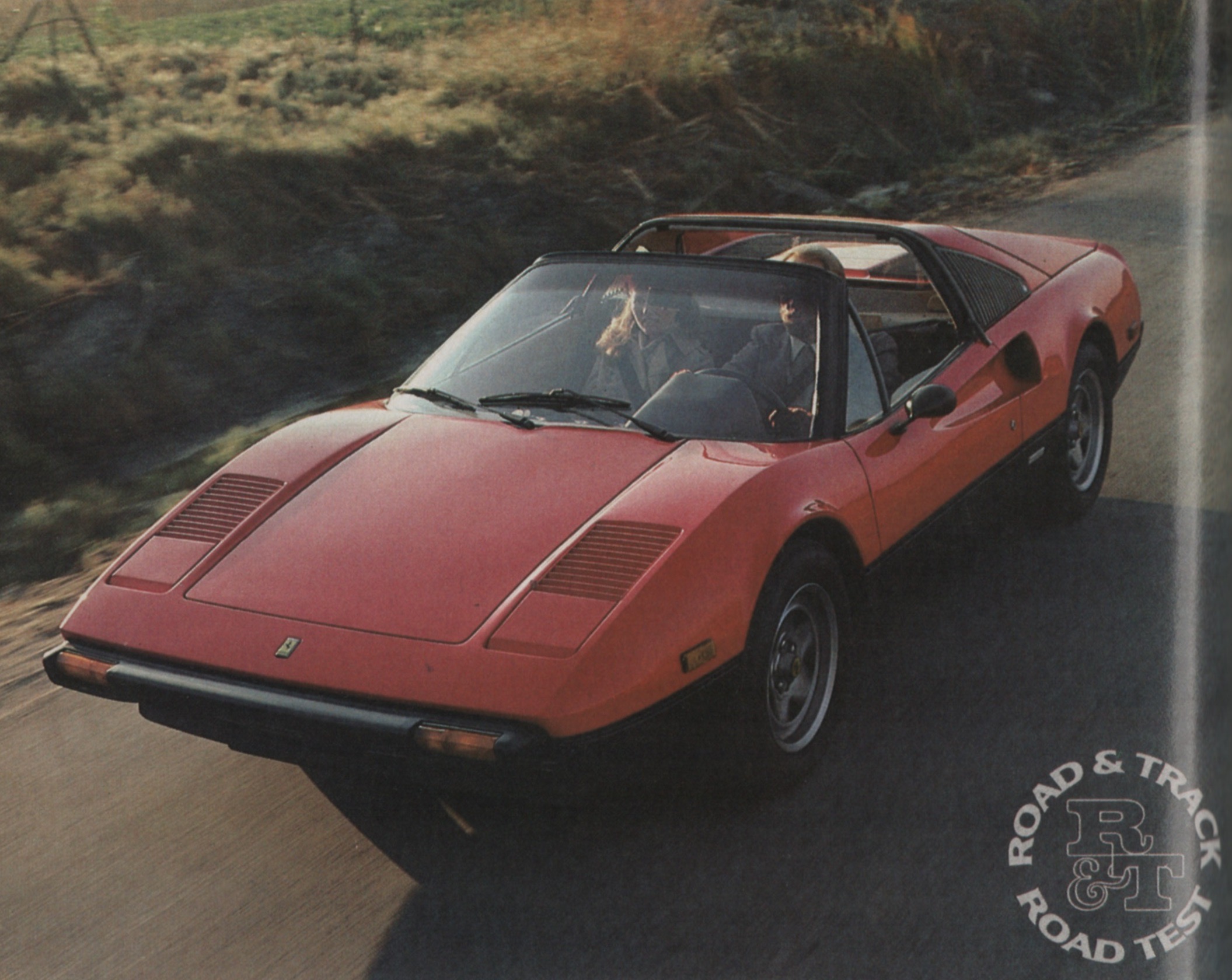
Iniezione. R&T related, “Notice the i suffix: That stands for iniezione, Italian for injection, in this case, Bosch K-jetronic. [Previously, Ferraris sported a multiplicity of Weber carbs.] This continuous-flow system is used on a large number of imports because it is relatively simple to adapt to an existing powerplant.”
And the precision of its fuel delivery enhanced combustion to the benefit of emissions controls.
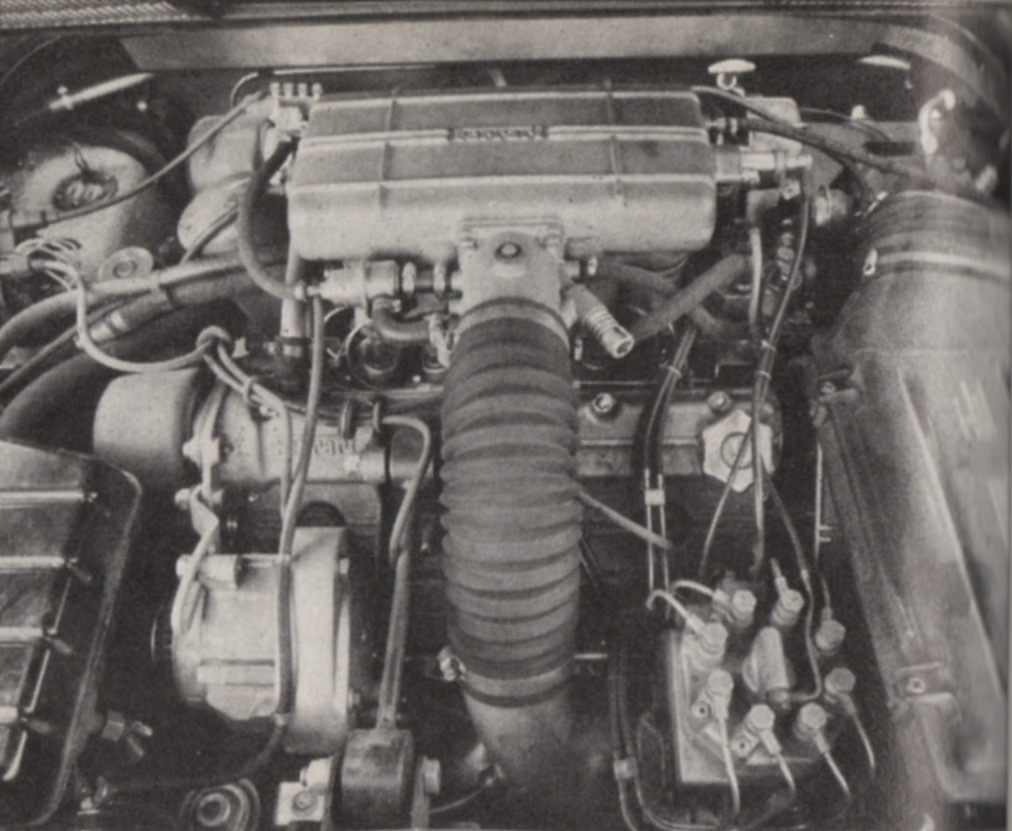
Its 308 nomenclature identified the car’s eight cylinder configuration of (almost) three liters. This scheme differed from Ferrari’s traditional approximation of one-cylinder displacement (e.g., the Ferrari 212 Export Barchetta powered by a 2562-cc V-12).
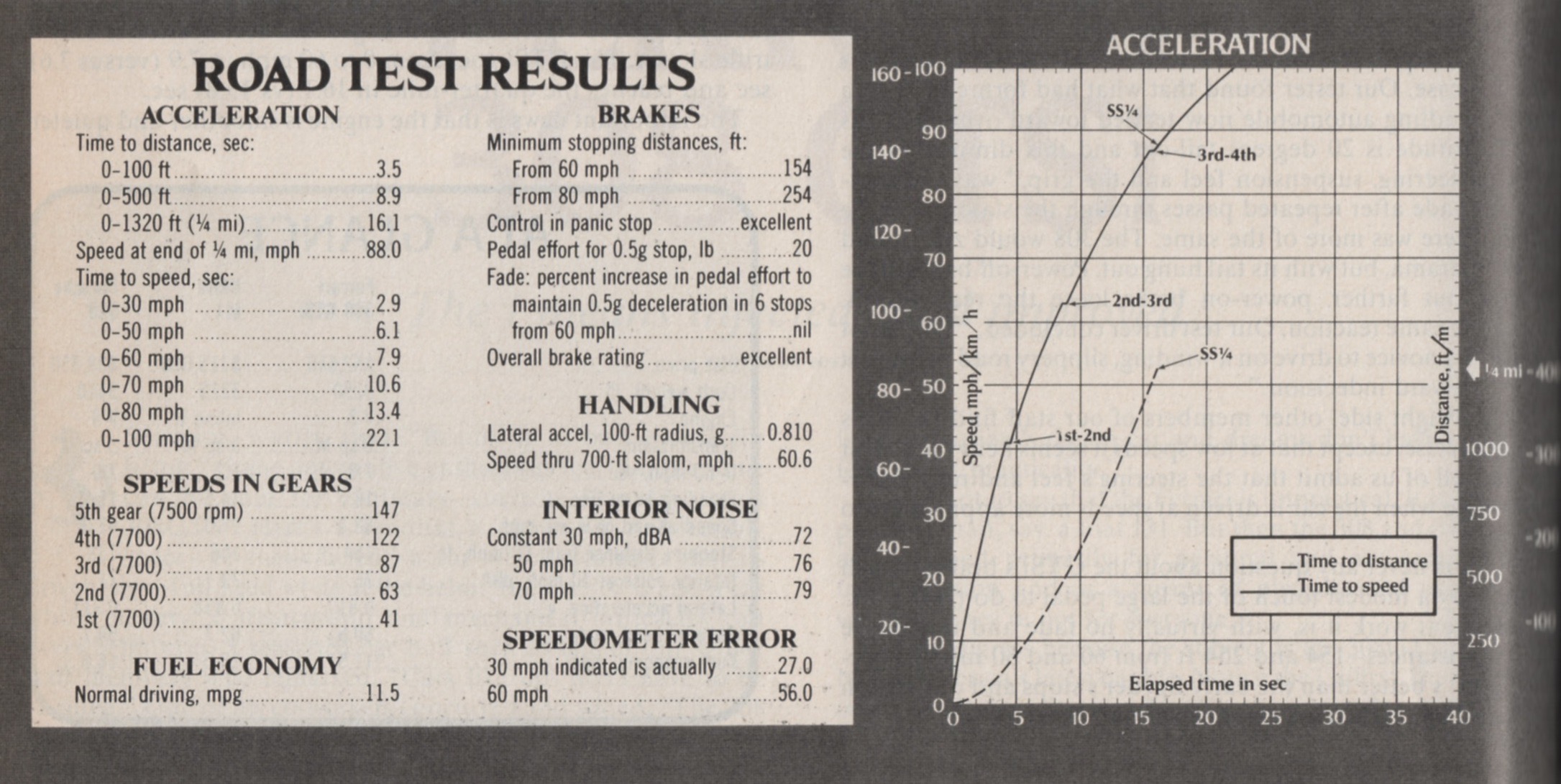
Michelin TRXs Versus XWXs. R&T reported, “The wheels are Speedline cast alloys fitted with Michelin 220/55VR-390 TRX tires. They replace the Cromodora alloys and 205/70VR-14 Michelin XWXs fitted to the Spyder of our July 1978 road test. That car was one of the four best we’ve ever tested, at least insofar as skidpad and slalom are concerned.” (The Spyder’s 0.852g and 60.8 mph, respectively.)
The report continued, “We expected as much (more actually) from the latest TRX-shod 308, so you can imagine our surprise at its test scores. Although the GTSi’s slalom speed was only a tick slower than before, its 0.810g skidpad showing was markedly less than that of its predecessor.”
Ferrari’s Assessment. “So,” R&T related, “we called Ferrari and were told that while the new tire/wheel combination is 1/2-in. taller than the old setup, it has a wider footprint and better all-weather (wet and dry) performance.”
Our Assessment. R&T observed, “Our tester found that what had formerly been a neutral-handling automobile now tended toward oversteer. ‘Its natural attitude is 20 degrees tail-out and this diminishes the excellent steering, suspension feel and grip’ was the comment he made after repeated passes through the slalom. On the skidpad there was more of the same. The 308 would zip around with little drama, with its tail hung out. Power-off brought the rear end out farther, power-on broke loose the rear wheels, causing the same reaction.”
And Just Who Was This Tester Anyway? I had taken over John Dinkel’s engineering editor role when I joined R&T in 1979. In retrospect, I don’t recall any question concerning the GTSi’s oversteer. Indeed, the road test recounted, “… all of us admit that the steering’s feel and responsiveness change when the car is driven at speeds more appropriate to Ferrari.”
Whew. A comfort for “the new guy.”
A “Pointless” Ignition. “In addition to the new induction system,” R&T observed, “the latest 308 engines are also equipped with Marelli Digiplex electronic ignition. Among other things, the Digiplex automatically advances the spark along one of 90 different curves tailored to meet a variety of driving conditions and engine loads.” (See “What Are Breaker Points, Grandpa?,”SimanaitisSays, September 7, 2019, and its recollection of Chrysler announcing a “pointless ignition.”)
Countering EPA’s Heavy Hand. “As effective as they are,” R&T recounted, “all of these advances in induction and ignition contribute little to the car’s net performance. Rather, they allow the 308 to maintain the performance level that existed before the heavy hand of EPA was felt on the industry’s shoulder. So even though the 308 is saddled with an air pump, thermal exhaust and catalytic converter, horsepower and torque (205 bhp, 181 lb-ft) remain unchanged and acceleration is only a trifle slower.”
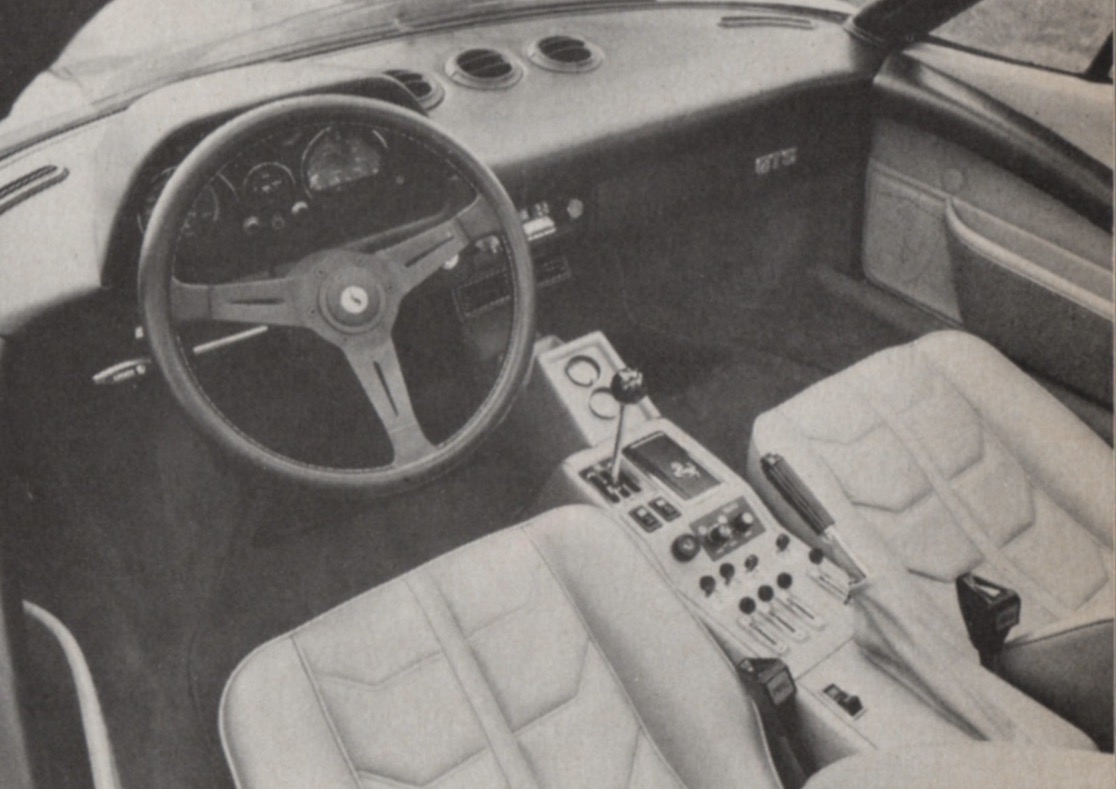
Interior Refinements. R&T described, “… the interiors of both cars [Berlinetta and Spyder] reflect subtle refinements that include extensive use of Connolly leather and deep-pile carpeting plus a redesign of the dashboard. It took our ardent Ferrari expert to find this last change because to the casual observer the instrument panel looks the same except for its fascia which is flat black rather than brushed aluminum.”
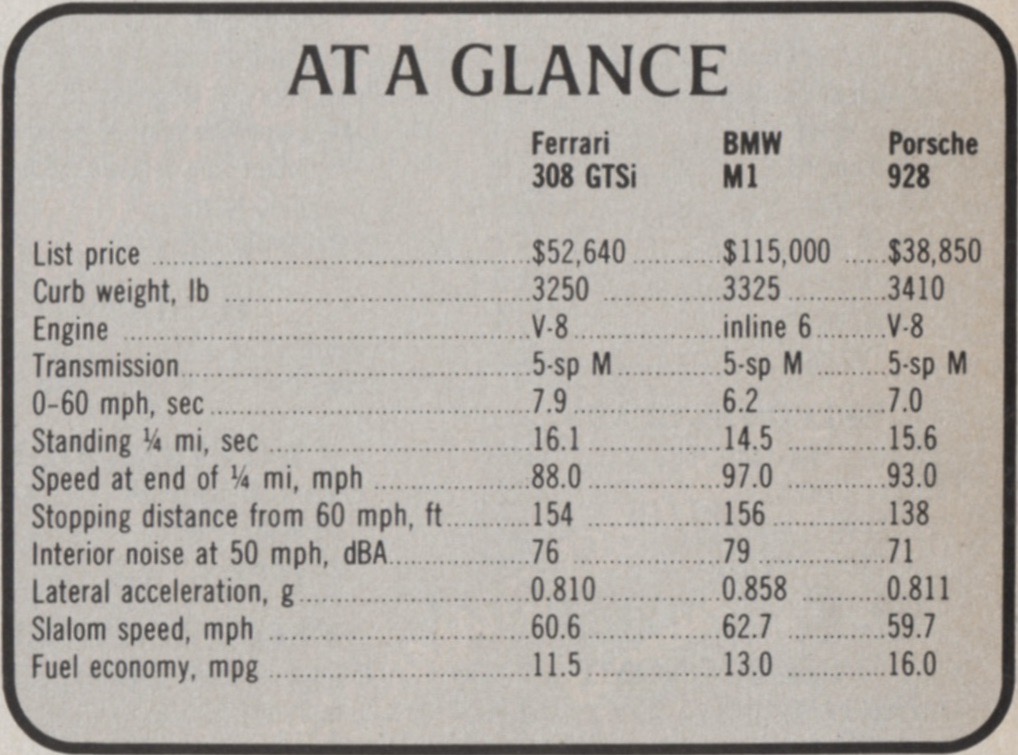
“The important news,” R&T cited, “is that the engine is smoother and quieter than before and has a more flexible power curve. It can be lugged to as low as 1000 rpm without protestation, yet it will rev freely right up to the redline, even in fifth gear. That translates to almost 150 mph, mighty impressive in this day and age.”
Indeed, in retrospect, it was a day and age of yet-to-be-optimized clean-air engineering. To wit, the 308 GTSi’s admittedly heavy-footed 11.5 mpg.
Summarizing. To repeat R&T, “It’s exotic, even beautiful and, thus, is its own excuse for being.” ds
© Dennis Simanaitis, SimanaitisSays.com, 2026


I don’t care for the looks of these but rich folks gotta have their toys I guess .
I remember when C.I.S. mechanical fuel injection was introduced, I found it a good reliable system with no inherent drawbacks, it reduced emissions and at the same time improved driveability and fuel economy in a simple package that needed no maintenance apart from the regular 12/month 10,000 mile fuel filter changes (boo on those many Americans who never, _EVER_ changed their fuel filters and thusly kept me employed) .
-Nate
Nate, you’re not alone. Many of us never cottoned to the angular, flying door stop, geometric shape of so many ’70s and ’80s cars at any price, whether the above, Countachs, TR7s.
Go easy on a Fiat 131/Brava from the year you joined and enhanced an already refined R&T, Monsignor Simanaitis. I sold them new. “Nothing drives like a Fiat” was their tagline and it was true. Remy Julienne drove nothing but, and i don’t think it was strictly because Fiat paid him. Being young, dumb, late for work, ’twas easy to see why.
Of course, two months later, you’d see your customers in the service dept. making warranty claims on seat stitching already pulling apart, tho’ they didn’t otherwise deserve Fix It Again, Tony if you did the maintenance. On the other hand, while there are still plenty of 124 Spiders running around, what was the last time you saw a 131?
Re: the 308 GTSi’s 11.5 mpg from a mere three liters! You’d think fuel injection would enable better, but such nimbleness is intoxicating at any price.
What was the last time you saw something in a road test monthly opening with an Emerson quote? The likes of R&T from the days of Joe Troise, Phil Frank, Peter Egan, and Dennis Simanaitis is a greater loss than the finest cars of those halcyon days.
Thanks for your kind words, Mike. Of course, Wife Dottie had a 124 Sports Coupe for years.
Once I took a 1500 Fiat Sport Coupe in payment for some Brit car work we’d done, and it was a surprise and delight. Guy knew it was coming due for a 24K mile cam Gilmer belt replacement and Fiat gave him a scary price.
But, I knew the right guys who knew the right shortcuts, and it wound up being a quick, couple hour job … though risk of belt failure had dire, expensive consequences.
Zippy and agile, and treated well, without problems … though with quirks, like wing window (remember them?) latches that were glued on with impermanent Crazy Glue and starter bolts that loosened … with the standard access procedure per our friend Tony requiring pulling the engine to reach it!!
Worked around that by getting about 9 feet of rachet extensions and fishing down the driveshaft tunnel from behind the rear axle and liberal use of lacquer thinner cleaning and Loctite.
I heard the 1600s and 1800s had issues, but I never missed those extra ccs.