
Simanaitis Says
On cars, old, new and future; science & technology; vintage airplanes, computer flight simulation of them; Sherlockiana; our English language; travel; and other stuff
BATTERY MATERIAL OPTIONS
A POTATO, A NAIL, AND A COIN make a perfectly functioning battery. Swap the potato for a new one, and the battery is recharged.
The quest for energy, however, seeks optimality among a battery’s two electrodes (the nail’s zinc, the negative anode; the coin’s copper, the positive cathode) and its electrolytic fluid (the potato’s mild phosphoric acid) through which ions pass.
Lead-Acid. With this traditional battery, plates of lead are the anode; plates of lead dioxide are the cathodes; and sulfuric acid is the electrolyte. Wikipedia describes, “First invented in 1859 by French physicist Gaston Planté, it was the first type of rechargeable battery ever created.”
Lithium-Ion. The batterie de jour is the lithium-ion. Its anode is graphite; its cathode is a lithium-metal oxide (the metal: cobalt or nickel); its electrolyte is a liquid or gel material containing lithium salts.
Compared to previous technologies, Li-ion batteries have high energy density, no memory effect degrading recharge, low self-discharge, and long lifespan. Their tradeoffs include the relative rarity of lithium, cobalt, and nickel (and where we get them), cost, and a proclivity for thermal runaway.
Today, Li-ion batteries of various sizes are found in consumer electronics, power tools, EVs, and energy storage.
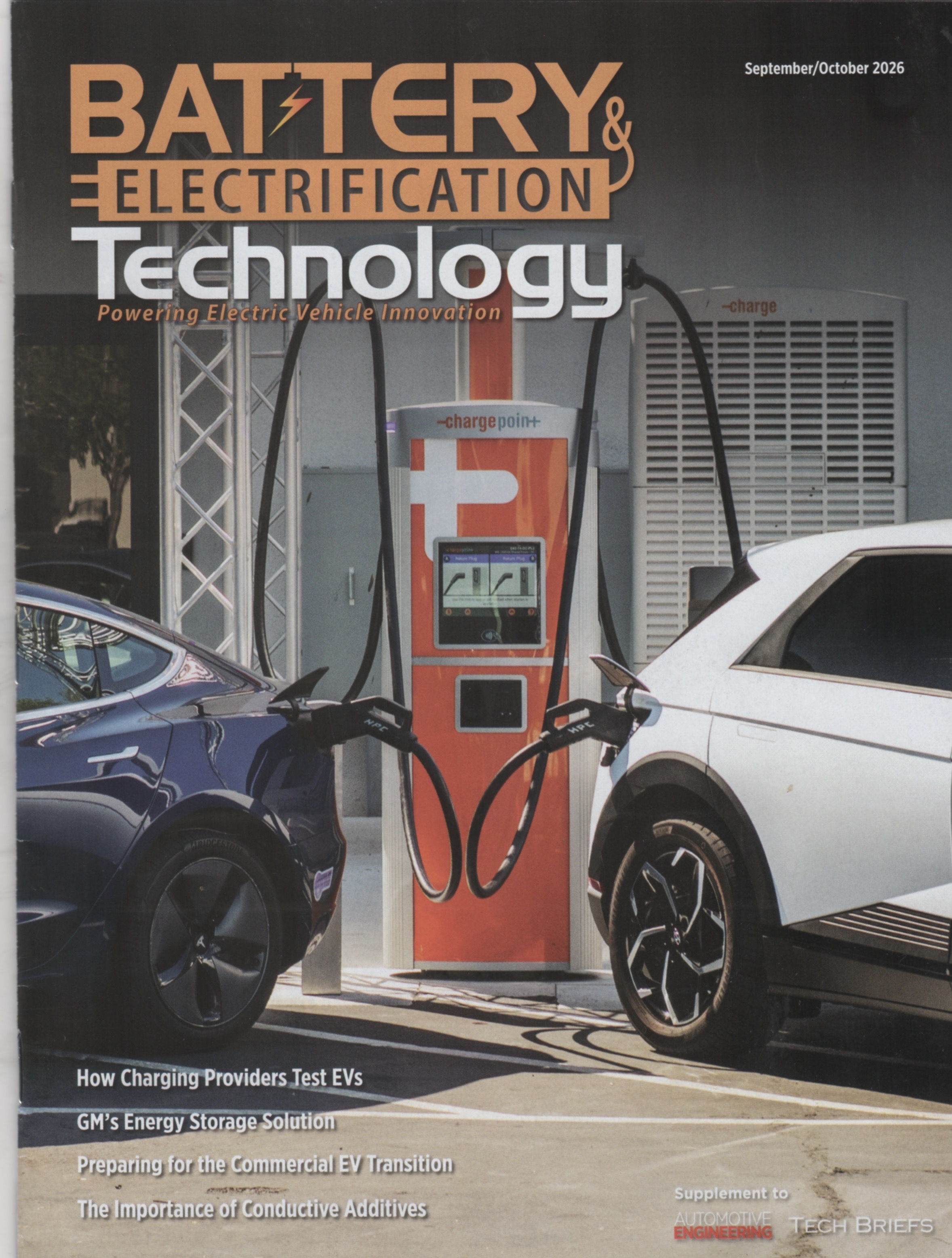
What about competing battery technology? The September/October 2026 Battery & Electrification Technology, published as part of SAE International Automotive Engineering October 2026 has these relevant articles, “GM’s Sodium-Ion ESS Batteries Will Offer Lower Operating Costs,” “A COF-Graphene Hybrid Opens New Horizons for Lithium-Sulfur Batteries,” and “Researchers Create Moisture-Driven Tech That Powers Green Batteries—And Dissolves Spy Gear.” Here are tidbits gleaned from each.

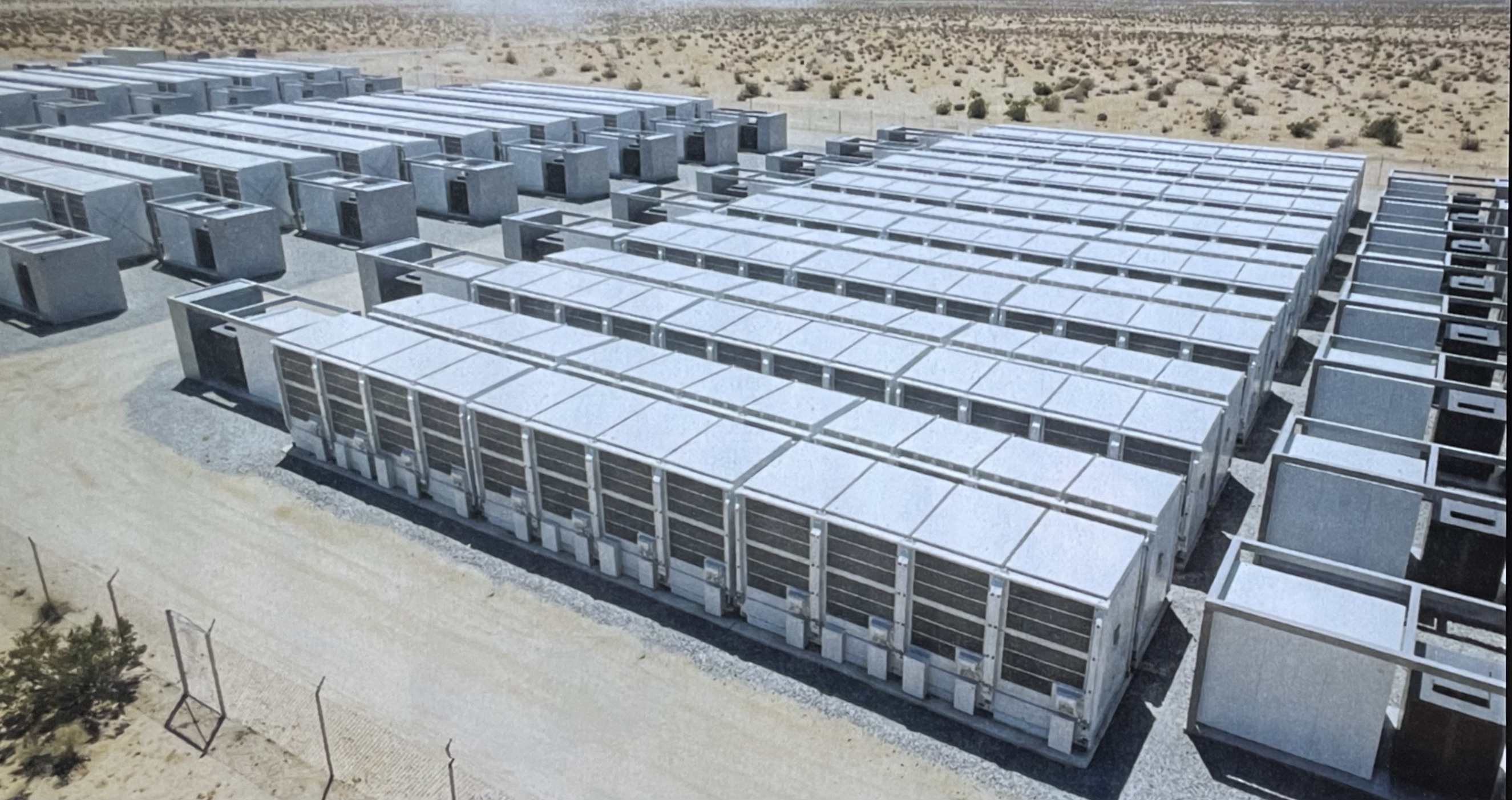
Storing the Energy: Sodium-Ion ESS. Energy Storage Systems “is a new venture,” SAE International observes, “and GM Energy is partnering with Peak Energy to bring its in-house developed sodium-ion (specifically sodium pyrophosphate, NFPP [Sodium Iron Phosphate Pyrophosphate]) to life. The batteries are purpose-built for ESS.”
Wikipedia describes, “A sodium-ion battery (NIB, SIB, or Na-ion battery) is a rechargeable battery that uses sodium ions (Na+) as charge carriers. In some cases, its working principle and cell construction are similar to those of lithium-ion battery (LIB) types, but different in that the battery is manufactured with sodium instead of lithium as the intercalating ion. Sodium belongs to the same group in the periodic table as lithium and thus has similar chemical properties.”
SAE International notes, “The chemistry allows for a much wider operating zone of -40º C (-40º F) and 60º C (140º F) than the batteries built for EVS. The batteries also have a longer battery life with up to 20,000 cycles. If it does one cycle a day, that’s over 54 years of service.
20% Lower Operating Cost. “Because of the wider operating temperature range than a battery in an EV, the ESS doesn’t need an active cooling system. That reduces the build, support, and energy costs of the battery packs.”
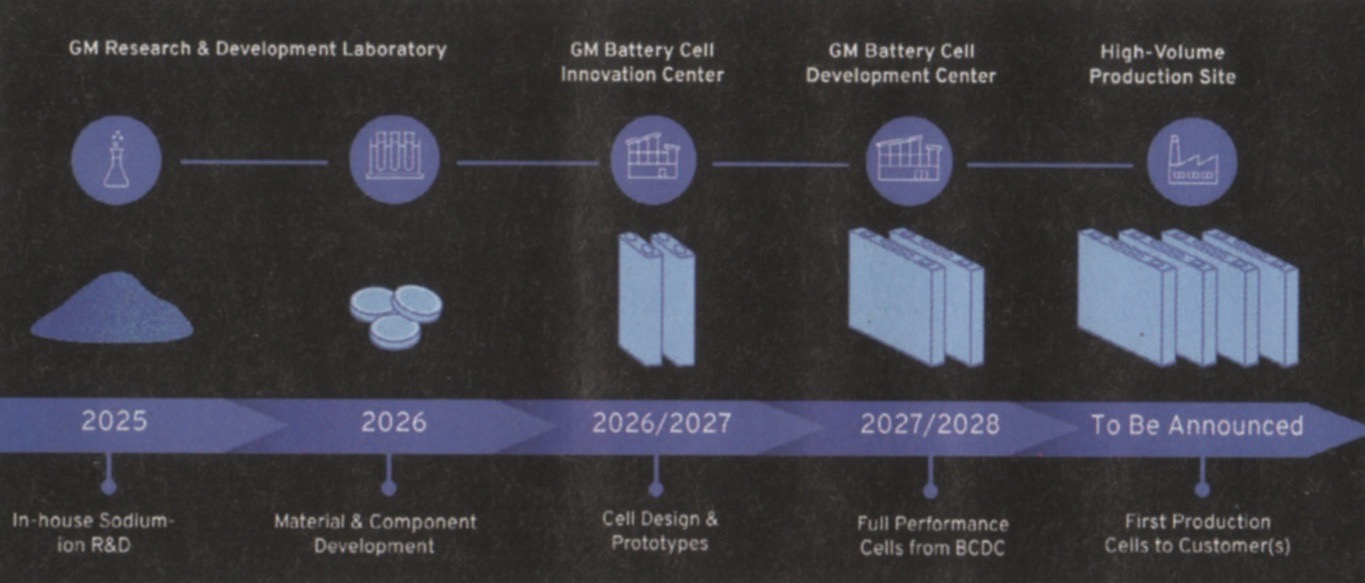
Not for EVs As Yet. “As for cars, according to GM, it would be tough to get 300 miles of range out of an EV with a sodium-ion battery versus an LFP [lithium iron phosphate] pack. This all comes down to picking the correct chemistry for the right job.”
“The focus now is ESS. This article was written by SAE Media group Sustainability Editor, Roberto Baldwin. For more information, visit https://www.mobilityengineeringtech.com.”
Reducing Lithium-Sulfur Ion Wandering. SAE International recounts, “Lithium-Sulfur (L-Si) batteries combine the abundance and affordability of sulfur with an energy-storage capability far beyond that of current lithium-ion technologies.” Wikipedia describes, “Lithium–sulfur batteries could displace lithium-ion cells because of their higher energy density and lower cost.”
However, SAE International notes, “Practical deployment has been slowed by a long-standing challenge known as polysufide shuttling, whereby dissolved sulfur intermediates migrate within the battery, leading to active-material loss and premature performance decay.”
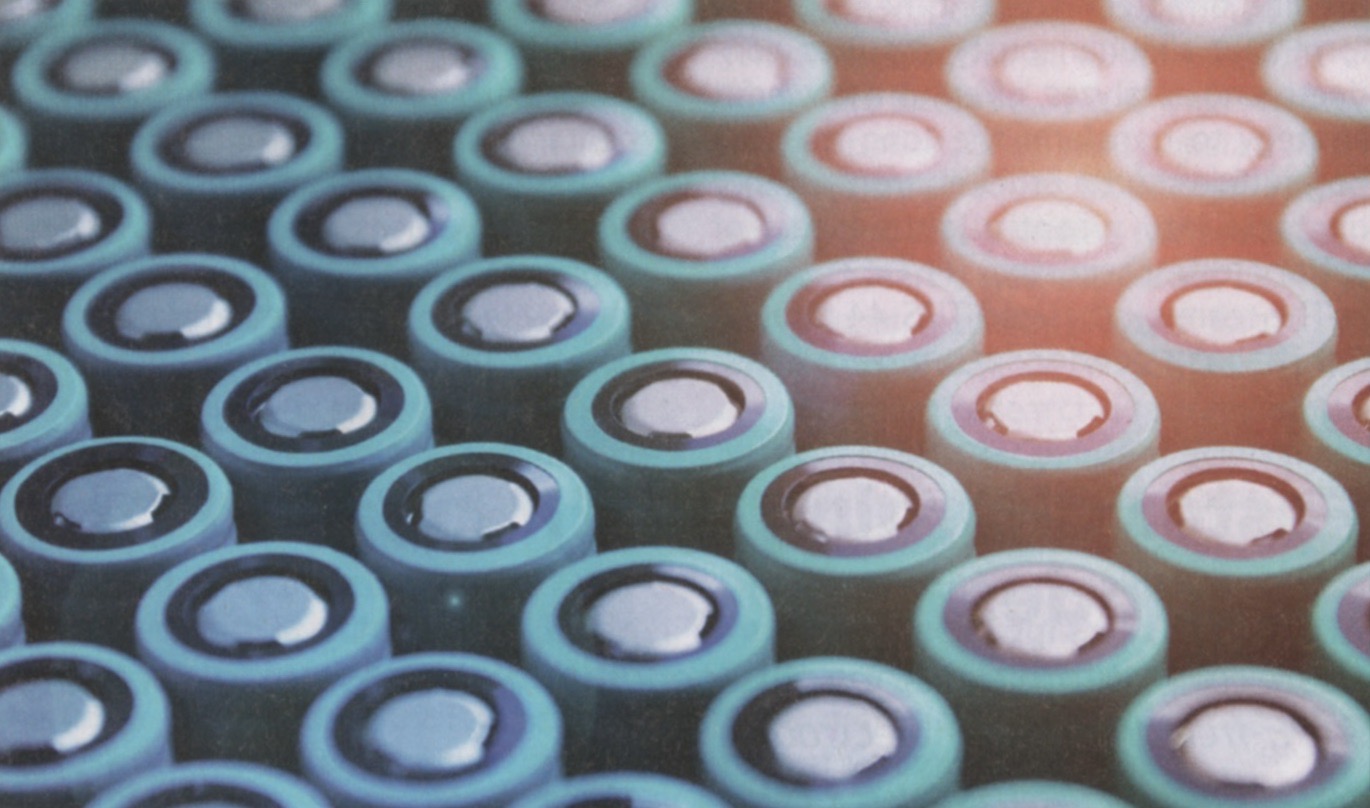
Lithium-sulfur batteries. Image from Павел Лечёнкин/Adobe Stock via SAE International.
“Now,” SAE International recounts, “researchers from Tohoku University and collaborating institutions have tackled this problem by developing a molecularly designed covalent organic framework (COF)-graphene interlayer. This lightweight interface mitigates polysulfide shuttling by combining chemical trapping, rapid charge transport, and sulfur-conversion promotion.”
Neato. “For more information, contact Yuichi Negishi at yuichi.negishi@tohoku.ac.jp.”
007 Stuff. SAE International describes, “Researchers from North Carolina State University and Rice University have created a non-toxic, stretchable battery that operates by extracting moisture from the ambient environment—even in climates as dry as the desert. The batteries could be useful in Internet of Things (IoT) applications ranging from wearables to advanced surveillance monitors with built-in kill-switches.”

“For more information, contact Rajaram Kaveti at rkaveti@ncsu.edu.” Don’t try this at home, kids; these people are professionals. ds
© Dennis Simanaitis, SimanaitisSays.com, 2026


Fascinating stuff here .
My primary interest is vehicles, I have converted most of mine to AGM batteries and don’t trust Lithium ones because of all the fires .
-Nate
Absolutely. Another deep dive from Dennis into something few people, “car guys” among them, understand and thanks. As our ranging host showed earlier this year, hybrids far outsell EVs, and his 2/8/25 Reuse, Don’t Dig Up reminds us that many of the materials needed come from politically unstable realms and their mining and refining dreadful impacts.
Electric vehicles are no panacea. There are not enough raw materials to swap all ICE (internal combustion) cars for EVs. EVs run on petroleum tires (producing most the dust in urban areas), and use six (6) times as many minerals as i.c. cars, including cobalt, lithium, nickel, copper, manganese, graphite, zinc, rare earths like neodymium, thallium, and dysprosium, the latters’ extraction requiring huge amounts of carcinogens like ammonia, hydrochloric acid, sulfates. Much of these minerals are imported from politically unstable regions.
Thallium has been a common ingredient in rat poison. It’s tasteless, odorless, and nearly colorless. While those who tested positive hadn’t consumed poisonous levels of the metal, it was enough to cause fatigue, heart arrhythmia, nausea, digestive trouble, neurological problems, and hair loss. The scariest part is that even after patients completed detoxification regiments, thallium continued to show up in their systems.
“We now know that heavy metals are additive and synergistic,” says David Quid, the lead scientist at Doctors Data, PhD in nutritional biochemistry. “If you get a little thallium, and a little lead, and a little cadmium in your system, you’ve got one plus one plus one equals five or six, not just three.” In other words, these metals do more damage when they’re combined.“This stuff bioaccumulates,” he added. “Down the road, it’s going to kick you in the ass one way or another.”
Agree with Nate on AGM batteries in i.c. cars. Am not associated with Optima, but find their 800 cold cranking amp 6V Red Top turns my seldom driven 80-year-old dragon’s gear-reduction starter and nine main bearing crankshaft just fine, only maintenance being a trickle charger.
One of the reasons for my going with a new Bolt recently was its use of a Li-iron-phosphate (LFP) main battery (the “starter” battery is a small AGM battery). LFP provides good-enough capacity and long cycle life while avoiding the cost and potential instability (political and fire, among others) issues of the traditional cobalt (etc.) based chemistries. Also less temperature sensitive on the hot side, though heating/cooling and battery management is still necessary, and cold weather performance is more limited (not an issue where I live). LFP is the preferred battery type for most commercial EVs now in part due to the lower flammability (Tesla notwithstanding). Downside of course: it may have been invented in the US, but it’s currently available in quantity only from China.
GM’s apparently playing (still) with LMR batteries, which they claim provides near-NMC performance at near-LFP cost. Yes, “near” is doing some heavy lifting, and there are some downsides that need to be controlled such as potentially short cycle life. I don’t want to get a vehicle using V1.0, or even 2.0, of those batteries.
Sodium-ion has the benefit of lower expensive-mineral requirements than standard (NMC, etc) Li-ion, and sodium is much cheaper and available (um, seawater?) than lithium. But its lower energy density (slightly lower than LFP) makes it suitable more for bulk energy storage than for EVs. However, given the low flammability and much lower cost than traditional Li-ion, I’d certainly prefer to have that BSS in my backyard (or at Moss Landing) using them rather than some recycled Leaf or Tesla batteries.