
Simanaitis Says
On cars, old, new and future; science & technology; vintage airplanes, computer flight simulation of them; Sherlockiana; our English language; travel; and other stuff
TRIPPIN’—GOOD AND BAD
AS ANY HONEST GUIDEBOOK WILL TELL YOU, some things go fine on trips; others do not. In perusing Chronicle of Flight, I collected shorter tales for “Aviation 100 Years Ago,” October 21, 2026. Today let’s continue tidbit-gleaning from this excellent source, with focus on the heroic flight of Alan Cobham’s trippin’ from England to Australia and return. There are also unrelated examples of trippin’ gone bad.
Alan Cobham, Aviation Pioneer. Wikipedia describes, “Sir Alan John Cobham, KBE, AFC, 1894–1973, was an English aviation pioneer.” After having served in WWI as a Staff Veterinary Sergeant, he transferred to the Royal Flying Corps and then the Royal Air Force, where he became a Pilot Officer flying instructor.
Trippin in de Havillands. Wikipedia describes Cobham’s travels, “In 1921 he made a 5,000-mile air tour of Europe, visiting 17 cities in three weeks. Between 16 November 1925 and 13 March 1926, he made a trip from London to Cape Town and return in his de Havilland DH.50, in which he had replaced the original Siddeley Puma engine with a more powerful, air-cooled Jaguar. On 30 June 1926, he set off on a flight from Britain (from the River Medway) to Australia.”
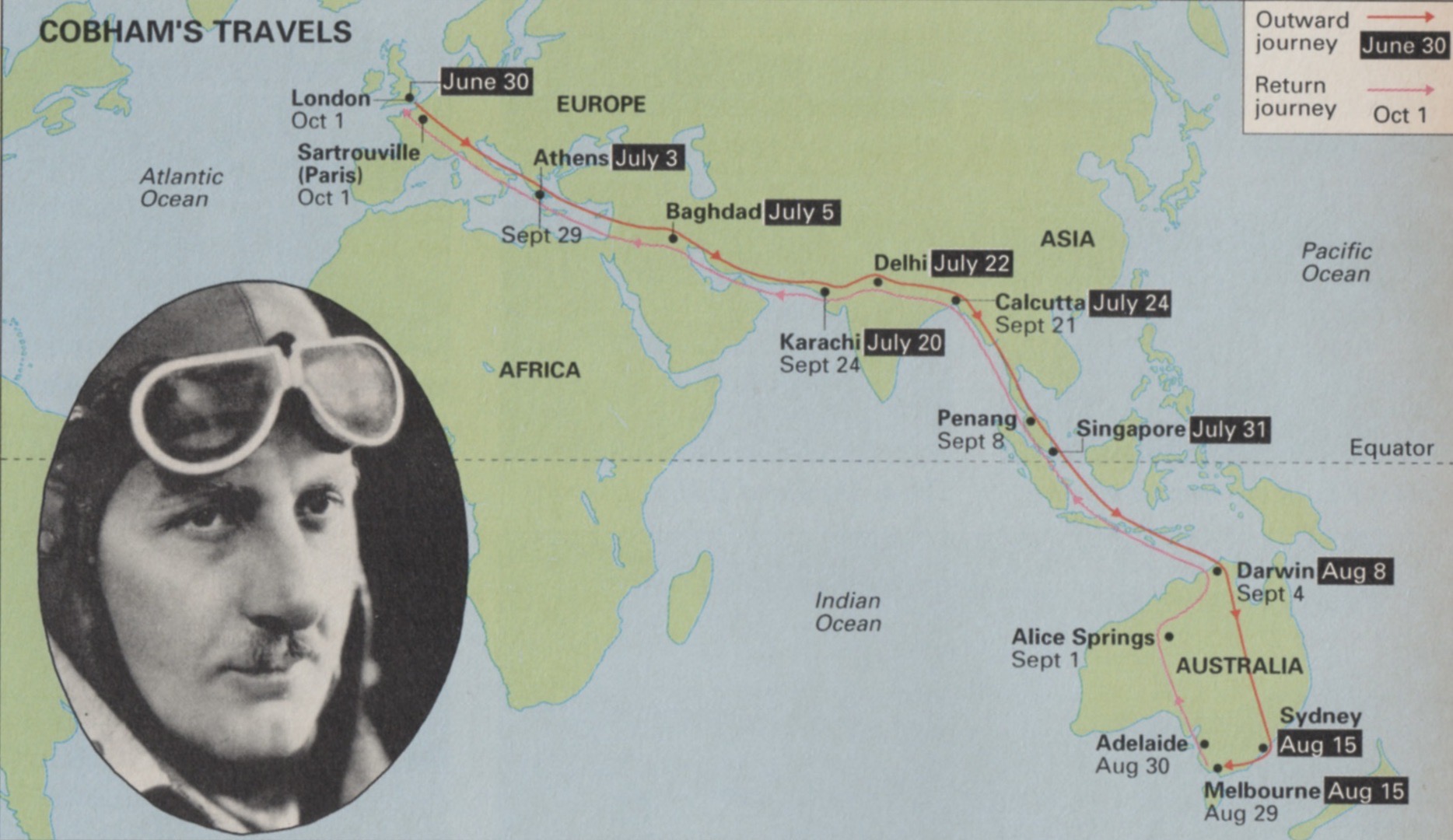
A Tragic Outboard Leg. Chronicle of Flight recounted that his flight was “marred by the death on the outboard leg of his engineer and friend of long standing, Arthur Elliot…. The Elliott tragedy occurred over Iraq near the Persian Gulf, where he was shot by a Bedouin tribesman.”
“A severe sandstorm had forced the aircraft to fly low, making it as easy target,” Chronicle related. “After the bullet ripped through the airplane, Elliott passed a note to Cobham saying a petrol pipe had burst and he himself was ‘bleeding a pot of blood.’ Cobham landed at Basra, but Elliott died in hospital that same night.”
The Flight Continues. Chronicle described, “Royal Air Force Sergeant Ward took over, and Darwin in Australia was reached on August 5. Converted back into a landplane, the D.H. 50J passed through Sydney, Melbourne and Adelaide before Cobham headed home on the return leg of the journey.”
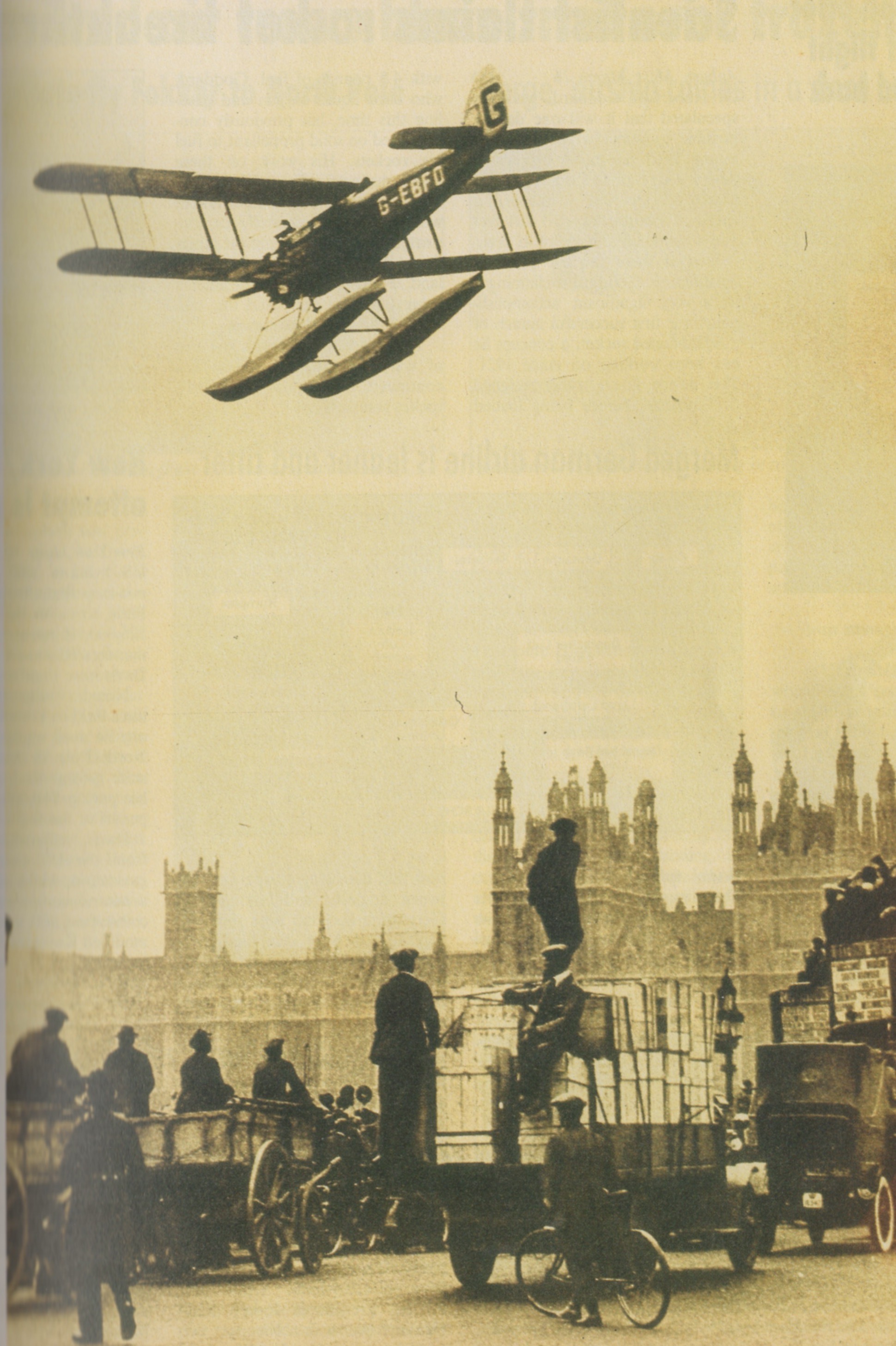
London, October 1, 1926. Chronicle recounted, “British members of parliament and their friends were among spectators who watched Alan Cobham make a spectacular landing [Ed.: setdown] alongside the Houses of Parliament on the river Thames today. It was the end of his 26,703-mile flight from England to Australia and back.’’
Dangerous Trippin’. Chronicle highlighted other incidents involving flights over Northern Africa and the Middle East. As an example, Morocco, May 27, 1926: “Intrepid flyer Jean Mermoz has been released by his Moorish captors for a ransom of 1000 pesetas [The Spanish peseta in use then in Morocco was generally valued at 5 to the U.S. dollar.] Mermoz was flying from Casablanca to Dakar, on an established mail route, when his aircraft was forced down with technical problems.”
“He crash-landed in the desert,” Chronicle continued, “and was promptly bound hand and foot and put in a cage. It was three days before an Arab chieftain agreed to accept a ransom for him.”
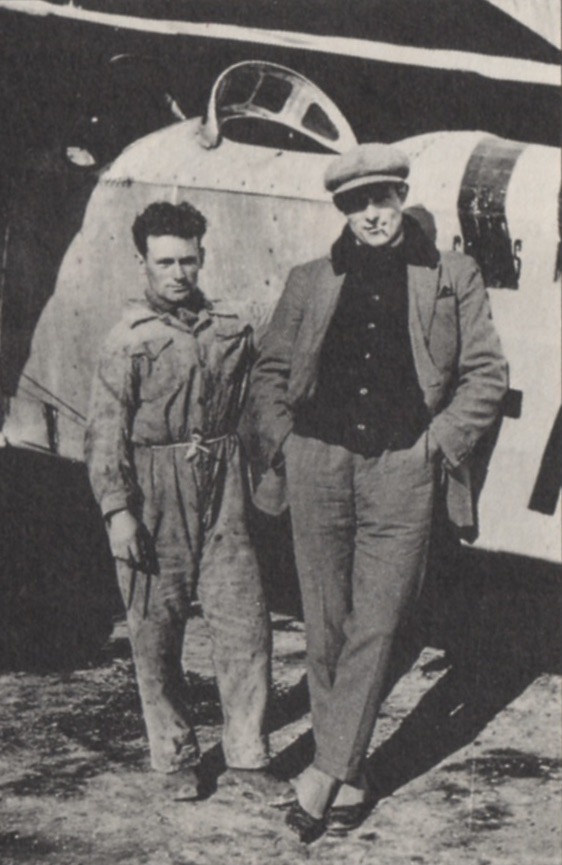
“Mermoz is no stranger to adventure,” noted Chronicle, “when he flew his test flight for the Latécoère mail company, he looped the loop, made a series of steep turns and slipped into a landing.”
My recounting of “Jean Mermoz, Aviator,” October 8, 2013, parallels these adventures.
Kurd Rebel Kidnaps Two RAF Crewman. Iraq, September 1, 1926. Chronicle reported, “Kurdish nationalist leader Sheik Mahmud has fled from British vengeance in Iraq to sanctuary in Persia [Iran]. This is not the first time: He did this before when the Royal Air Force broke the resistance of his army and civilians with low-level machine-gun attacks and bombing raids.”
“The difference now,” Chronicle related, “is that he has two hostages, the crew of a D.H.9A bomber, seized when their machine landed due to engine failure on June 14.”
Complex Bargaining. “The crew are thought to be still alive,” Chronicle described, “to be used as bargaining counters in a political checker game. Money alone is unlikely to secure the release of such a valuable prize for Mahmud. The British released him from prison four years ago and settled him in the neighboring Koweit [Kuwait] with a generous pension. He has made war against them ever since.”
Gee, a story “as timely as today’s headlines.” Who couldn’t have seen it coming? ds
© Dennis Simanaitis, SimanaitisSays.com, 2026

