
Simanaitis Says
On cars, old, new and future; science & technology; vintage airplanes, computer flight simulation of them; Sherlockiana; our English language; travel; and other stuff
THE PFITZNER MONOPLANE—ANOTHER WRIGHT COMPETITOR PART 2
AVIATION PIONEER ALEXANDER PFITZNER AND HIS MONOPLANE were topics yesterday here. Today in Part 2 we fool with fabricating a GMax model of his innovative craft—and find another fascinating aspect of the man’s engineering expertise.
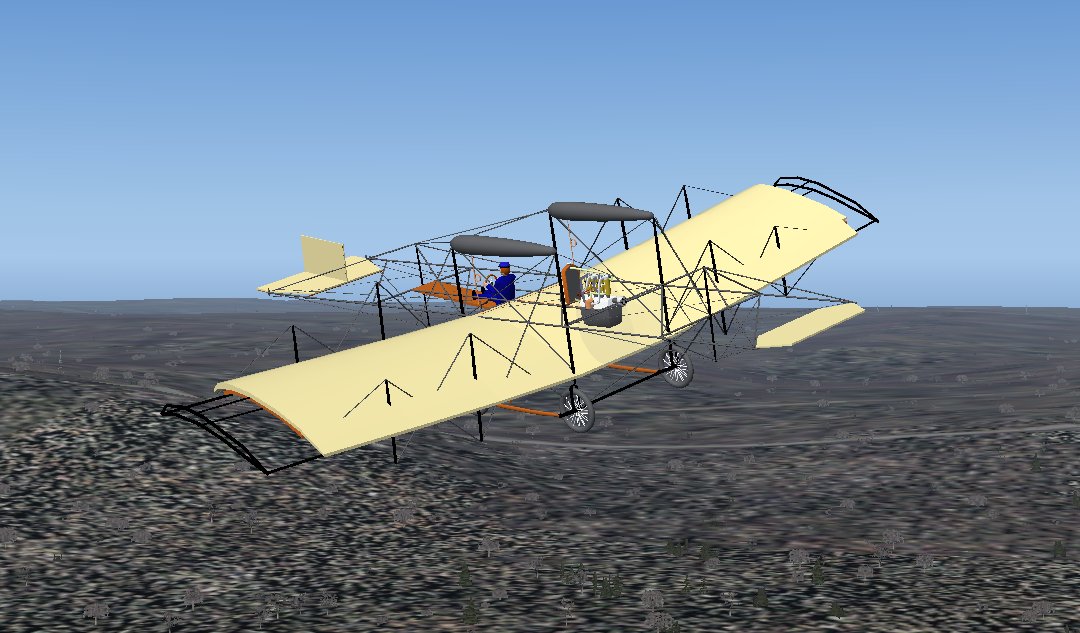
Primary Source. The 1910 Pfitzner Monoplane is featured in Paul Matt’s wonderful series, this one drawn by Herb Kelley. It also gives General Specifications including an approximate empty weight of 370 lbs and gross weight of 560-600 lb. Its engine is a four-cylinder water-cooled Curtiss producing 25 hp. Wing span calculates out to 31 ft., with each of the movable compensators being 30 in. wide.
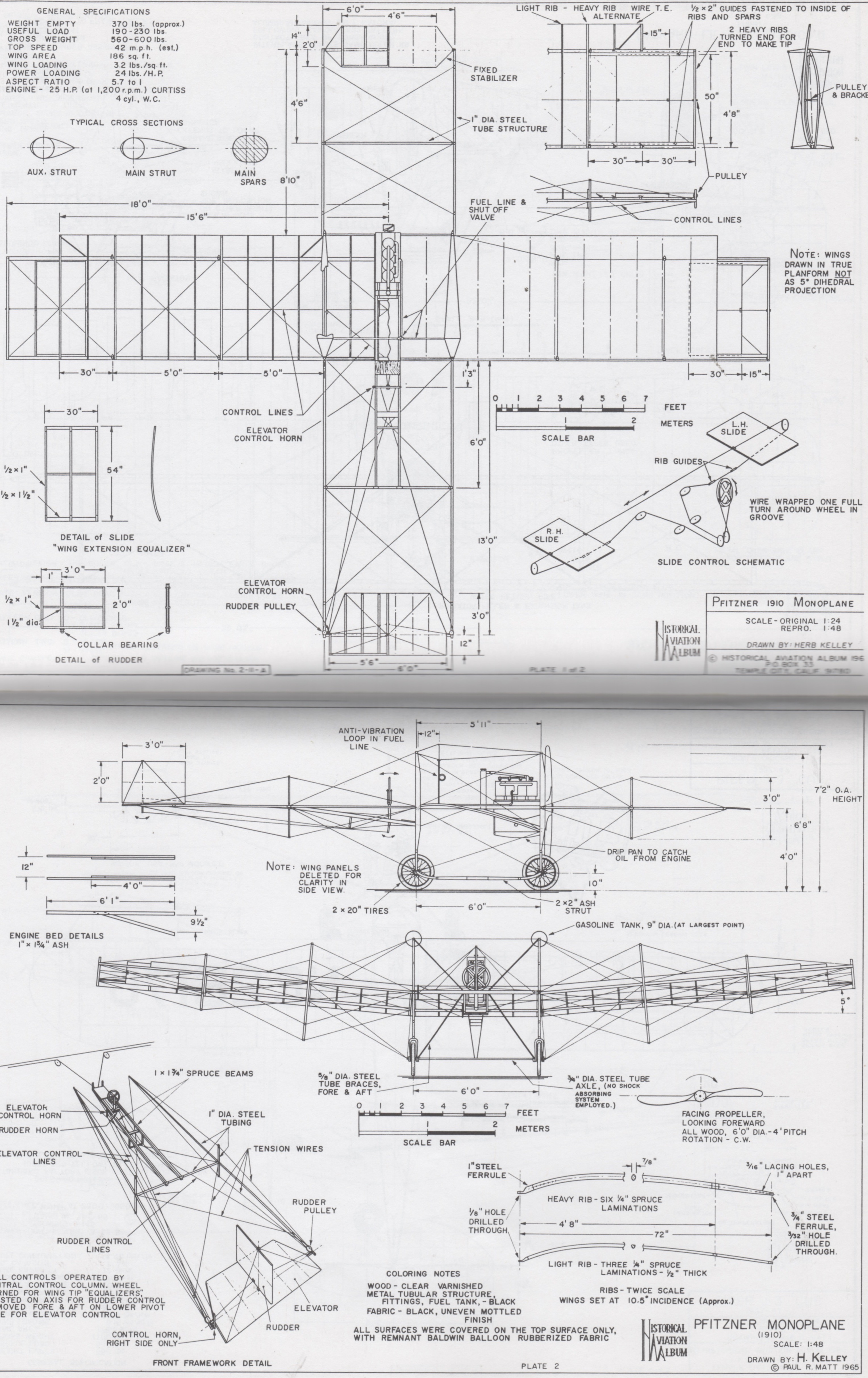
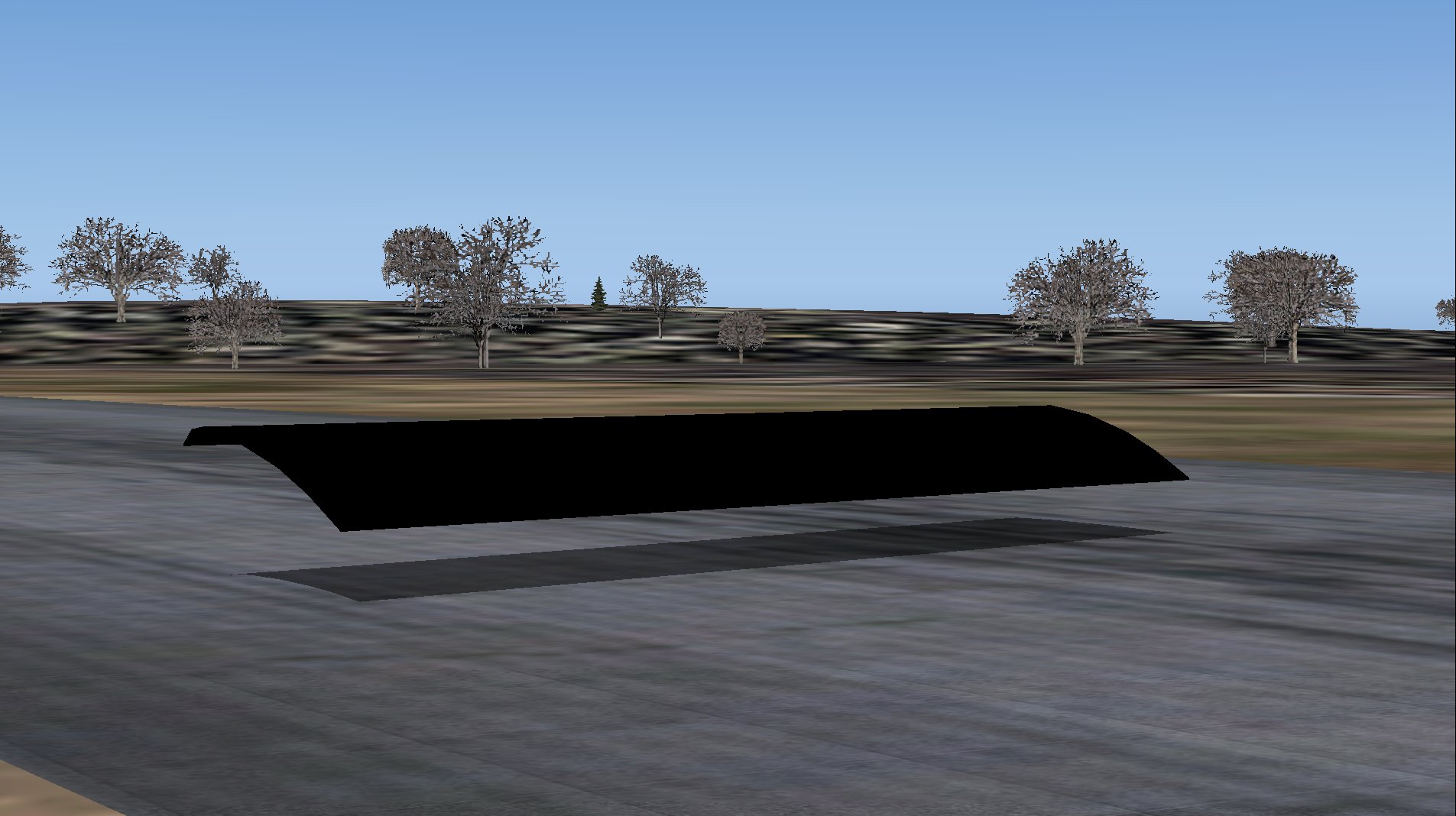
Fabricating the Wing; And Don’t Forget Its Dihedral. I started with the wing, initially sans its 5º dihedral that begins after its 6-ft. center section. A GMax Box shape of seven segments got me its airfoil and a prototype rib. Thinning it vertically yielded the fabric covering; extending it to 31 ft. defined the span.
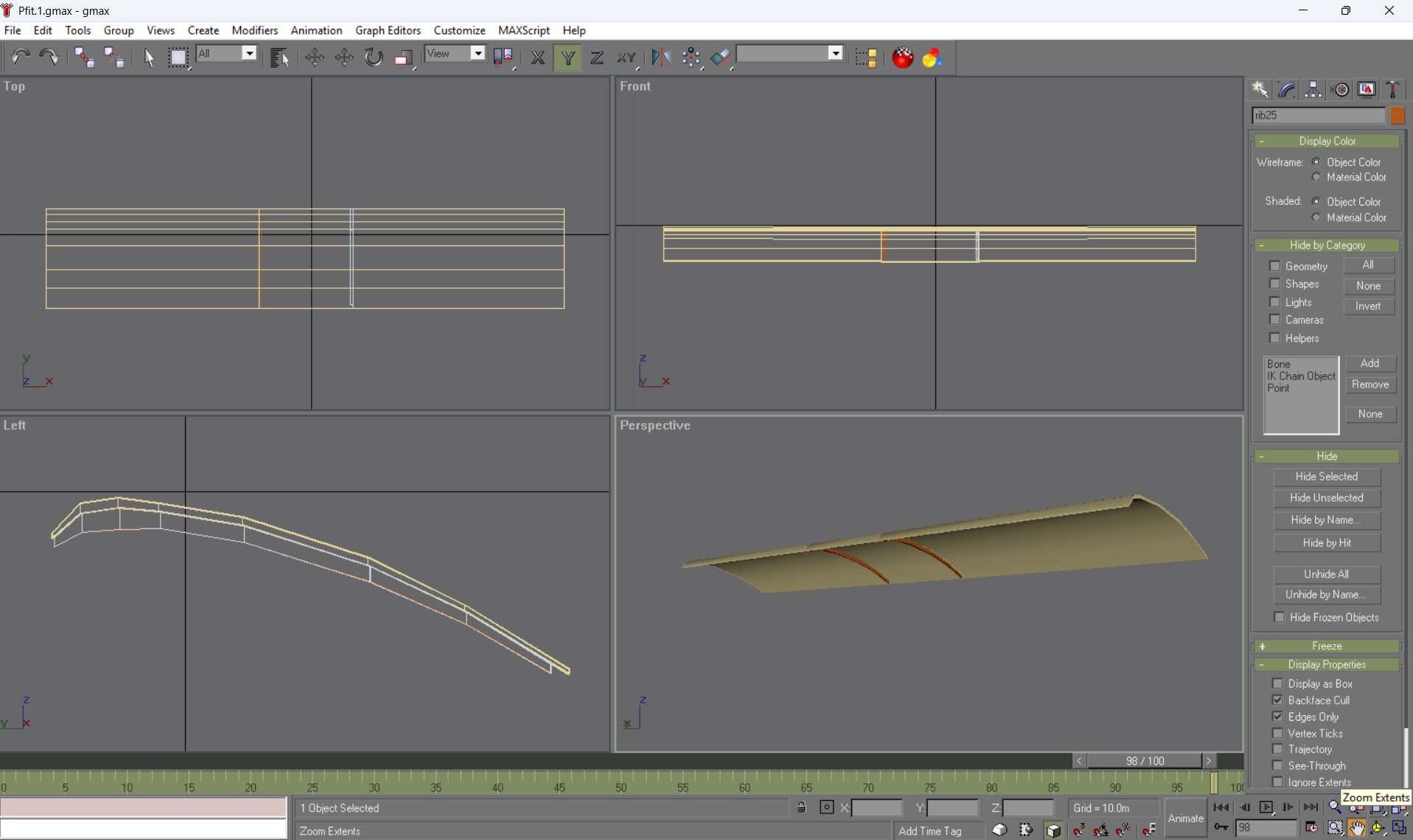
A GMax look at the wing fabric with two of its ribs.
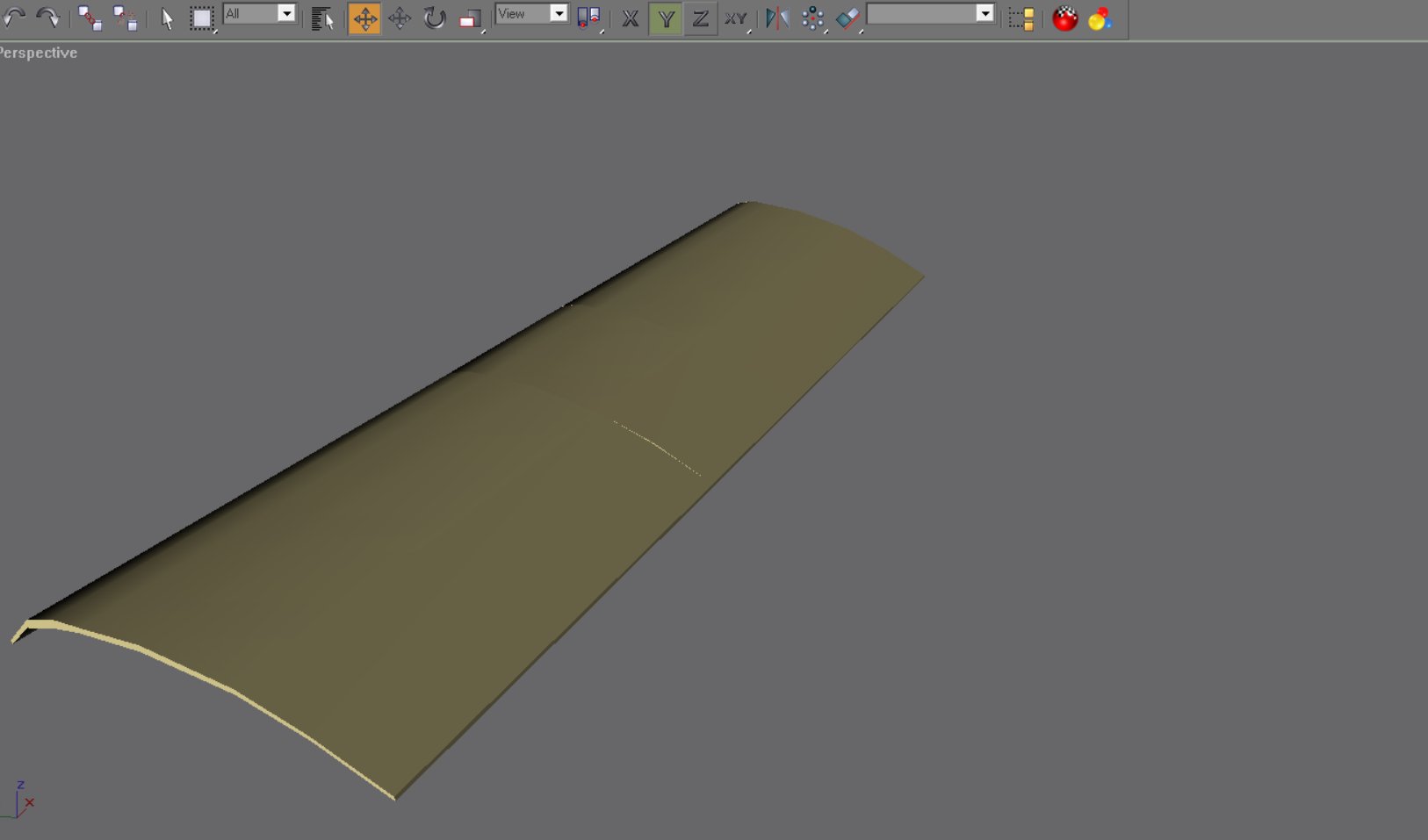
To establish its existence in Microsoft FS9, I exported this wing skin to a prepared default donor plane. (See “My Pearse Project,” SimanaitisSays, October 8, 2026, for details of the workaround with my archaic GMax and FS9’s failure to Export to my up-to-date Dell PC.) Initially I chose as donor the Cessna 208 Amphibian (a default craft I’ve fooled with only rarely); more on this anon.
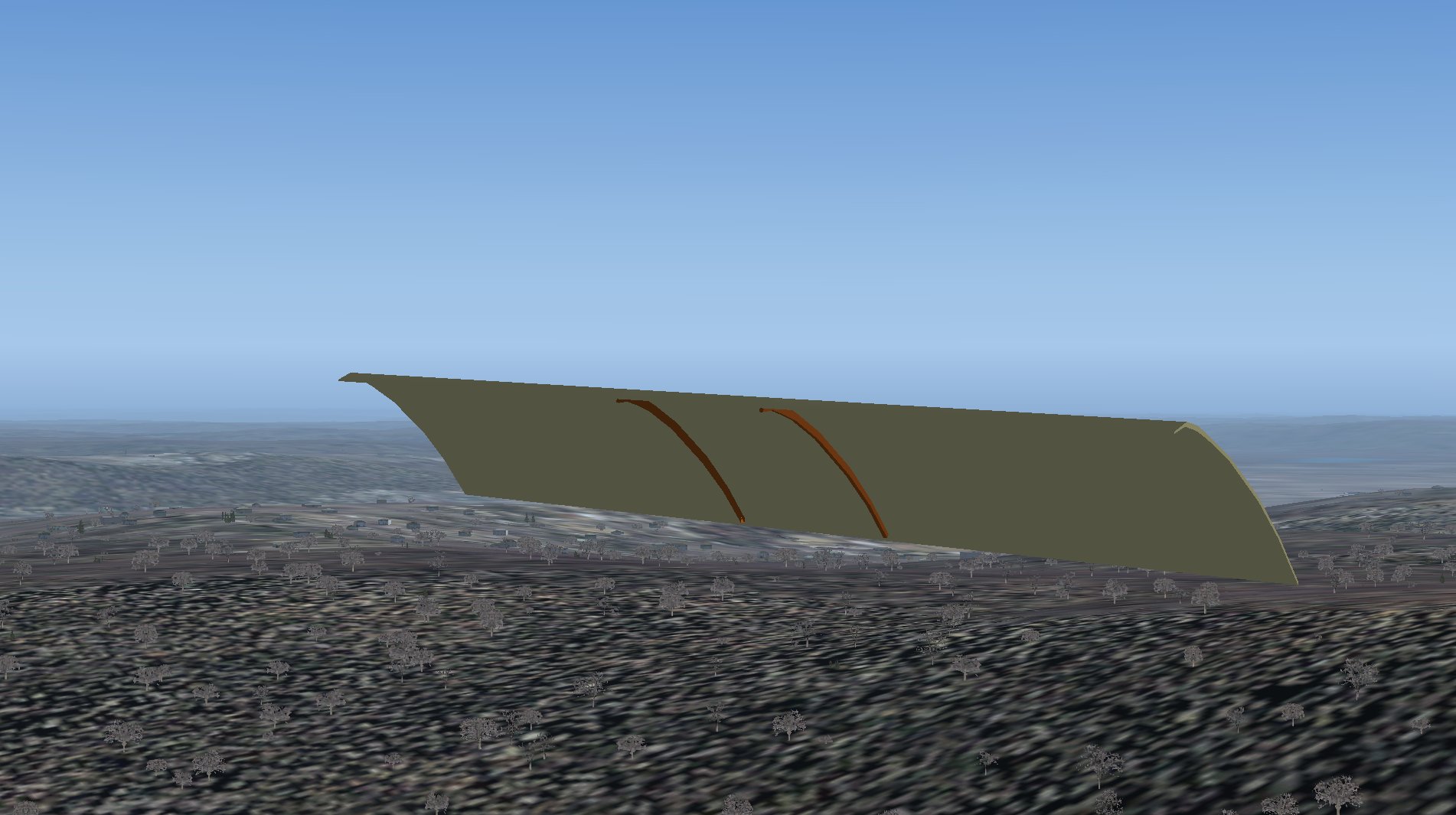
Self-Generated Texture Hassles. The Kelley drawings have Coloring Notes: wood—clear varnished. Metal tubular structure, fittings, fuel tank—black. Fabric—black, uneven mottled finish.
I fooled briefly with a .bmp image of mottled black in GMax, but encountered problems having it appear in FS9. I suspected another gremlin in my geriatric GMax/automatically upgraded Dell pair. In working around it, I limited coloration to the GMax default color, plenty of hue varieties but nothing elaborate. (Only later did I recall that GMax has 24-bit images; FS9 requires 32-bit.
Forget mottling.
What’s more, default black looked… er, like default black.
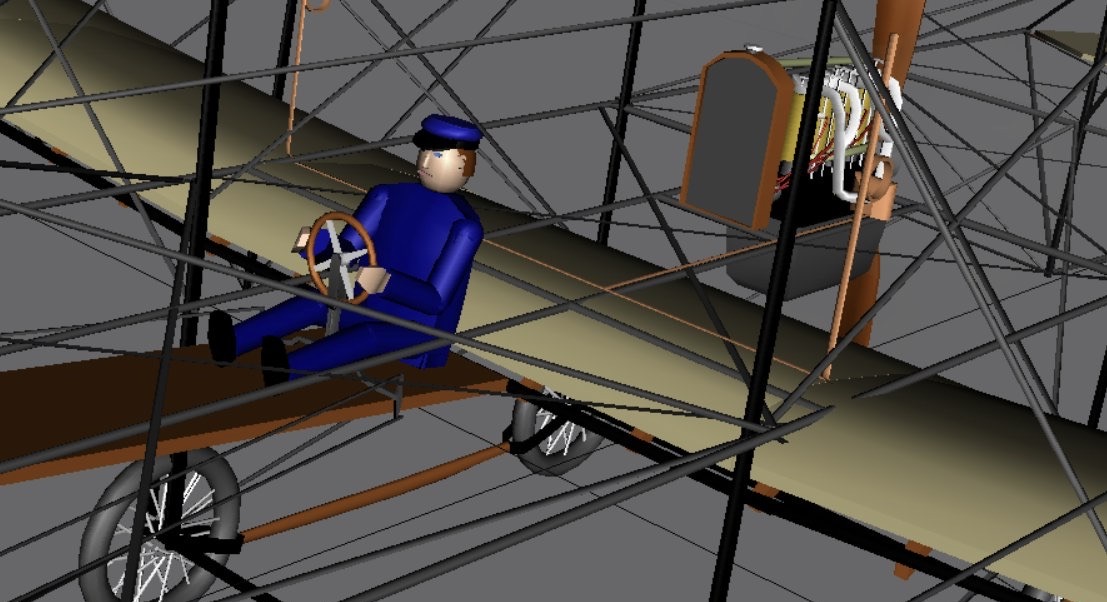
Pfitzner’s Visage. In earlier models, I had devised elemental texture art of faces, hands, and clothing. This time around, eyes, lips, ears, and clothing were specific default-colored pieces.
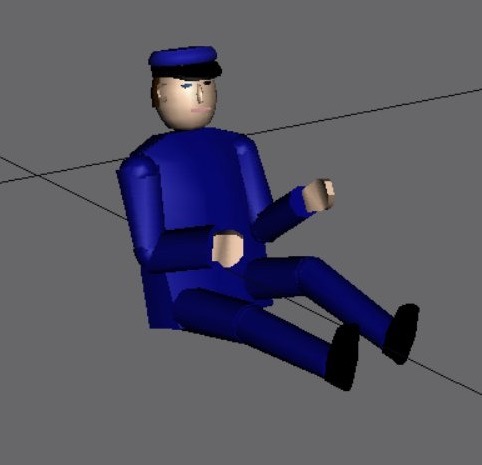
No big deal. But as I’ve noted, nor am I an artist.
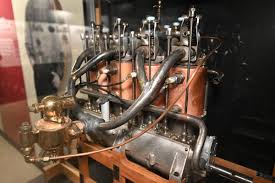
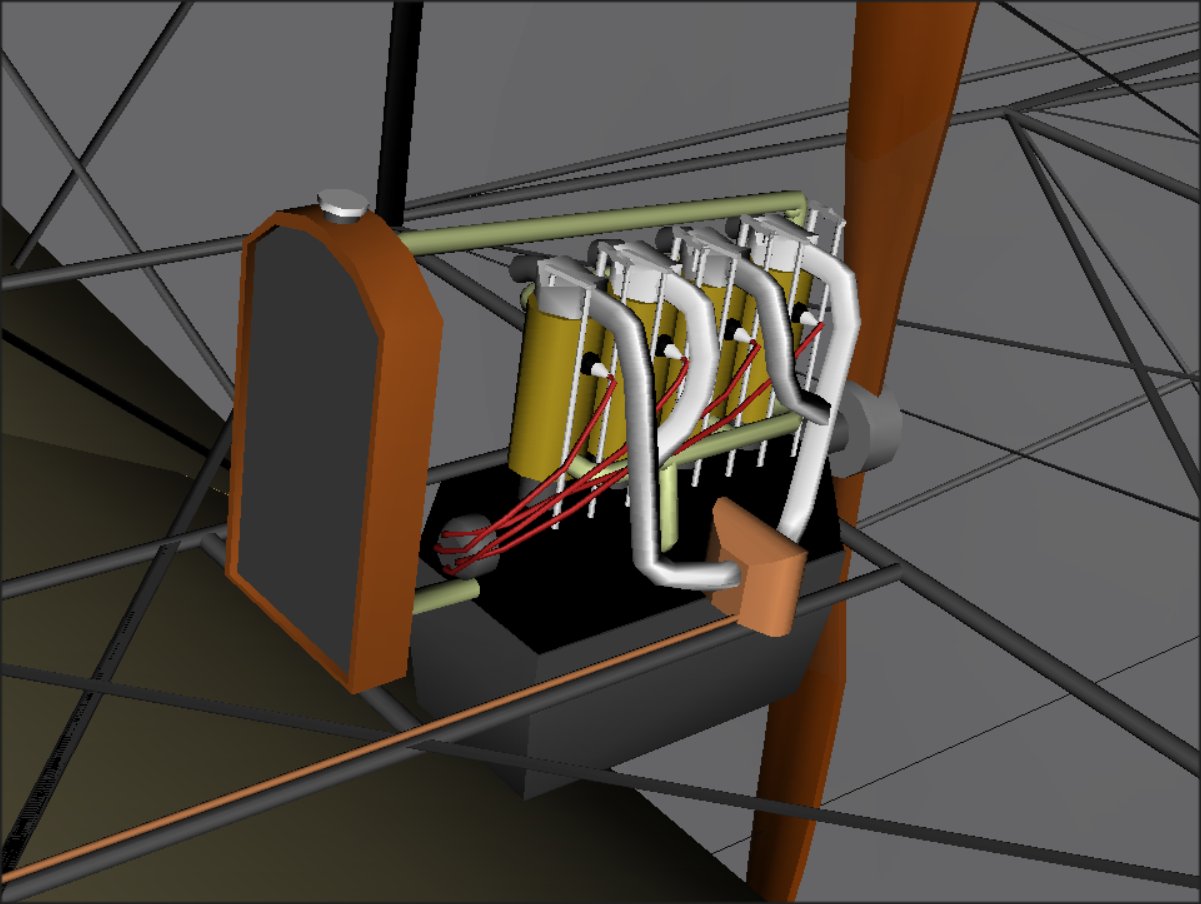
The Curtiss Powerplant. The Historical Aviation Album rendered only the basic form of the water-cooled four-cylinder Curtiss. However, the National Museum of the U.S.A.F. came through with excellent photos of a Curtiss D-4 powerplant.
The Controls. Rotating the steering wheel controlled roll (as pictured in the plan’s compensator Slide Control Schematic). Fore/aft movement of its column controlled the elevator. The rudder, I assumed, would be linked to a bar controlled by the pilot’s feet. (I had initially missed the word “All” in “All controls operated by a central control column.”)
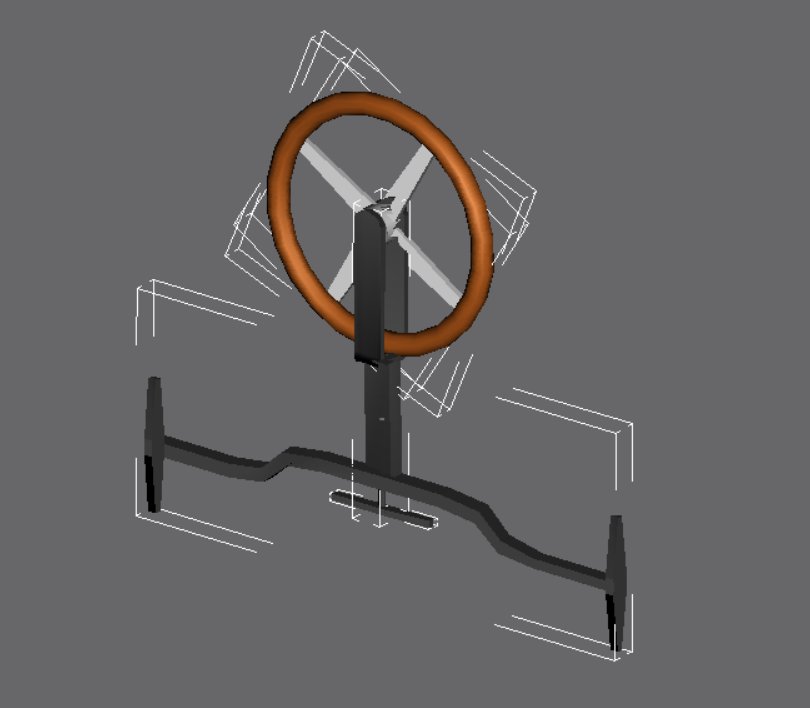
Indeed, I had already set GMax animations of the pilot’s arms, hands, and feet to activate these controls
But then I saw this diagram at flyingmachines.ru:
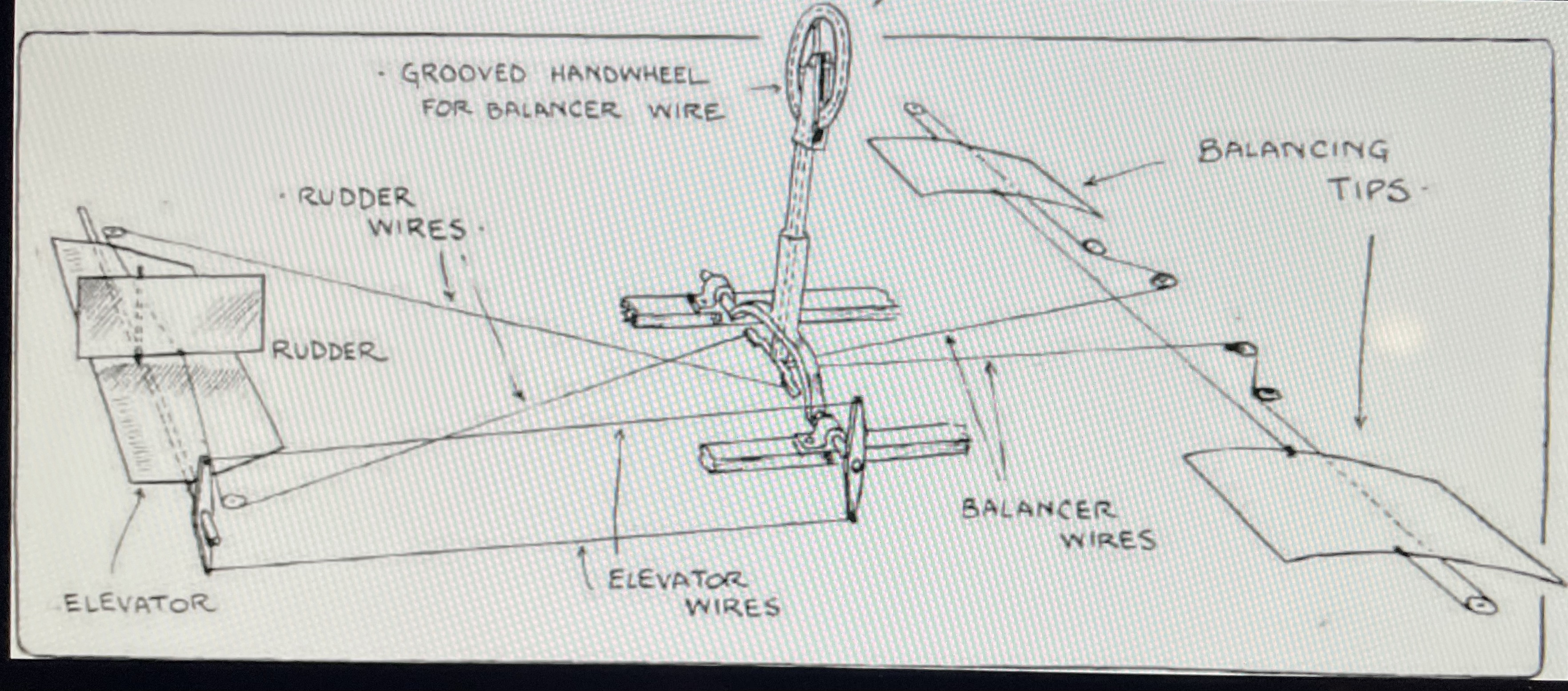
A Unique Roll/Pitch/Yaw Control! Amazing! Pfitzner had indeed devised a unique roll/pitch/yaw control: The rudder was operated by pivoting the steering wheel left to right on its column axis! This is the first—and only time—I’ve ever seen such a flying control. Following the diagram, its GMax fabrication was straightforward.
Getting “Clunker” to Function. Among its FS9 files, each aircraft has an appropriate Sound File. The elaborate ones have clicks upon opening or closing hatches. Many have scrubbing sounds when bounced off-runway onto other surfaces. Seaplanes have splashing sounds upon touching down—and screeches with otherwise inappropriate “landings.”
This is preface to another segment on my FS9 learning curve. I have a Sound File that I call “Clunker,” the origin of which probably lies in some pioneer plane I’ve downloaded at one time or another. I’ve used it on everything from the Bleriot XI to the Pearse.
It was a natural for the Pfitzner Monoplane’s 1910 Curtiss four-cylinder, but failed to work.
Aha, the donee Cessna 308 has a turbine engine, coded 5 in its Aircraft.CFG file, whereas piston engines are coded 0. I tried changing the 5 to 0, but to no avail. I considered leaving the Pfitzner with a turbine sound track—but this destroyed its 1910 image.
So, not without yet more time-gobbling, I reset its donor to the Cessna 172SP, a piston craft. My Pfitzner now clunks along as desired.
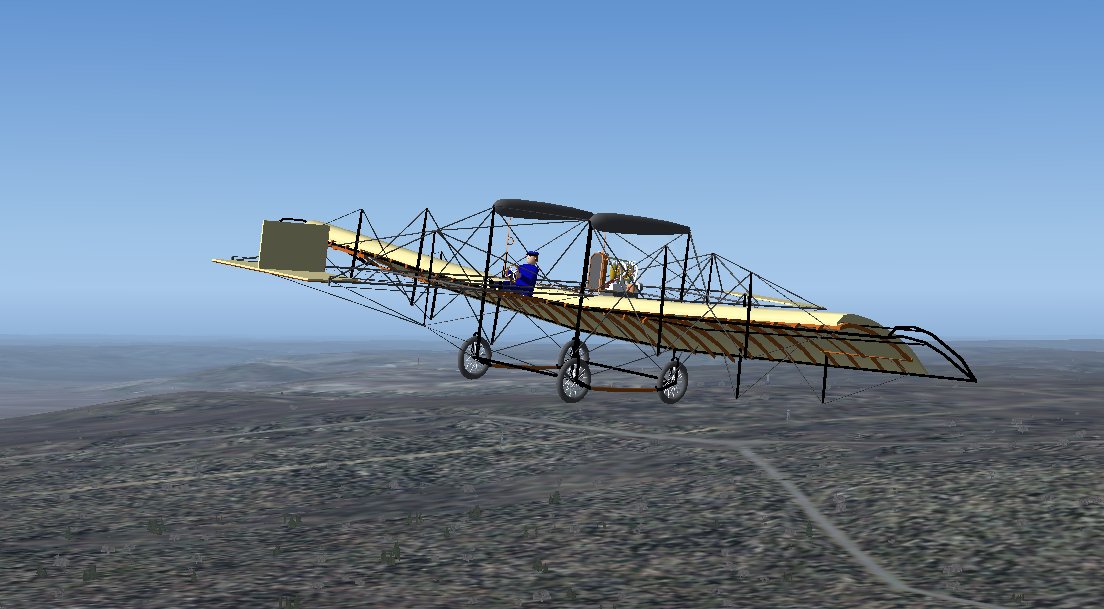
Yes, GMax/FS9 proponents, there is life after upgrades. Things are not always straightforward, but they’re fun nonetheless—and they continue to keep away real-world whammies. ds
© Dennis Simanaitis, SimanaitisSays.com, 2026

