
Simanaitis Says
On cars, old, new and future; science & technology; vintage airplanes, computer flight simulation of them; Sherlockiana; our English language; travel; and other stuff
THE PFITZNER MONOPLANE—ANOTHER WRIGHT COMPETITOR PART 1
I CHOSE THE PFITZNER FLYER AS A GMAX PROJECT because, as an 1910 aeroplane, it had lots of stuff out in the open, including its pilot Alexander Pfitzner.
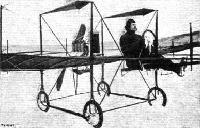
Beginning this research, little did I realize Pfitzner’s significance in pioneer aviation. And, after having devised necessary GMax workarounds for “My Pearse Project,” October 8, 2026, little did I sense yet other geriatric GMax features to be encountered during the Pfitzner’s fabrication.
All good time-gobbling fun, as described in Parts 1 and 2 today and tomorrow.
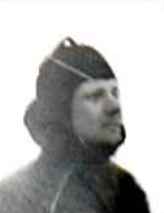
Alexander (Sandor) L. Pfitzner, 1880–1910, Austria-Hungary-born engineer, inventor, and pioneer aviator who emigrated to the U.S. in the early years of the 20th century.
Wikipedia recounts, “Pfitzner worked for several automobile manufacturers before starting with the Curtiss Aeroplane and Motor Company. He designed and built the gasoline engine with which Curtiss won the overall speed event in 1909 Gordon Bennett Cup in Rheims, France.” For details about this world’s first air meet, see “The Wright Bros. vs Glenn Curtiss,” December 13, 2012.
The Wrights vs. Everyone. The “vs.” included more than just Curtiss. In a very real sense, the Wrights were to early aviation what George B. Selden was to fledgling automobiles and Thomas Edison was to early motion pictures. Edison, Selden, and the Wrights were avaricious protectors of things they developed. Film moguls fled west to get as far away as possible from Edison’s legal wrath. Ford fought it out with the Selden Patent in court from 1903 until 1911. Early aviators had to contend with the Wrights’ patents on aeronautical control, in particular on their concept of wing-warping for roll.
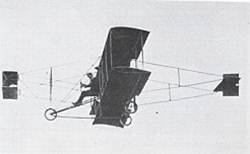
Curtiss and his aileron-fitted Reims Racer beat everyone—including those flying Wright designs—in August 1909. Image from Wikipedia.
Curtiss’s ailerons were inherently different from wing-warping, but the Wrights brought suit at the first aviaiton meet in America, Los Angeles, January 1910.
The Pfitzner Contribution. Wikipedia continues, “Frustrated by the efforts of the Wright Brothers’ use of the courts to dominate the developing market for powered flight, Pfitzner designed his own aircraft, the Pfitzner Flyer, which avoided the Wrights’ method of warping the wings to achieve a lift differential between port and starboard wings by using wing extensions (or ‘compensators’).”
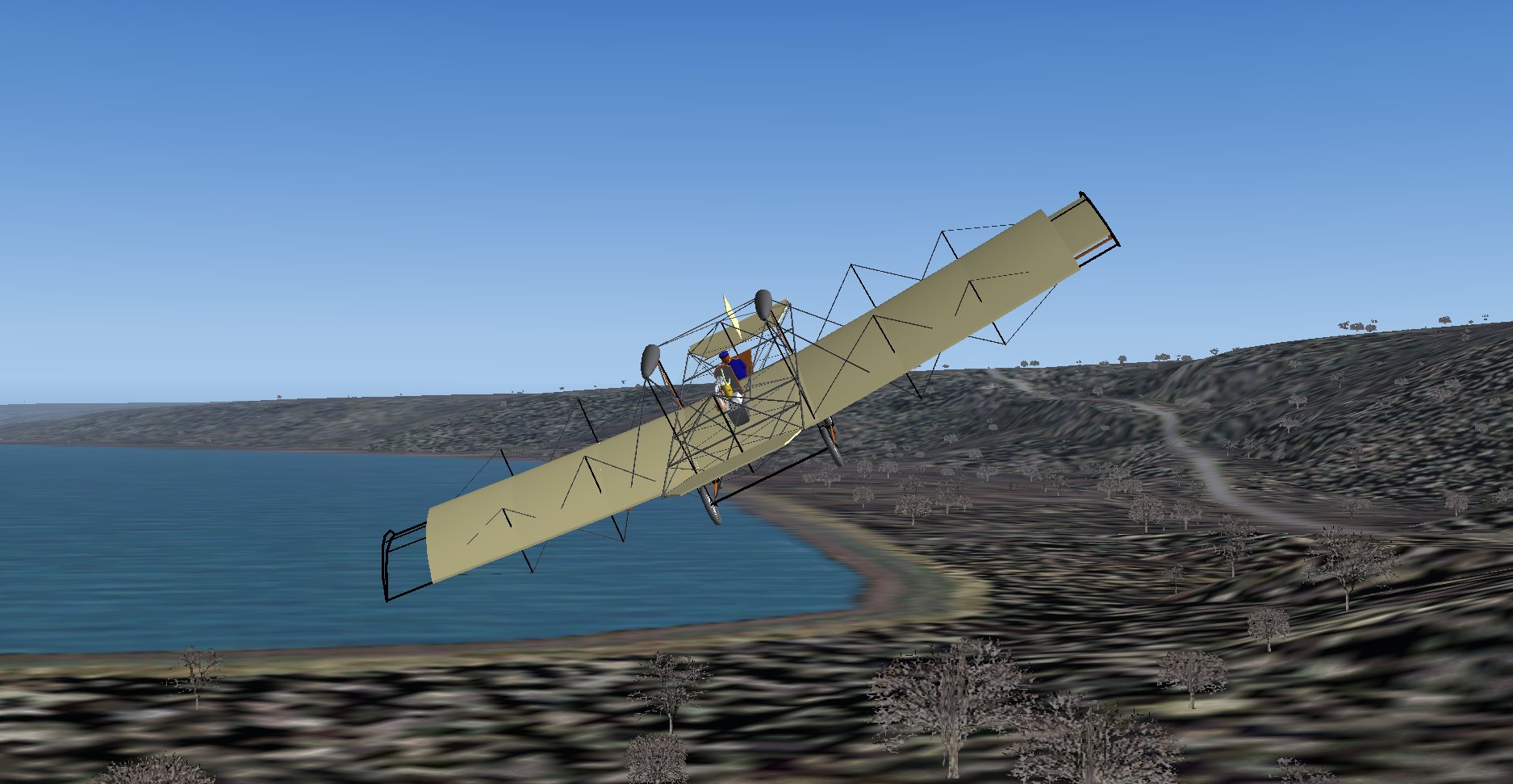
Increased lift on the right wing would roll the aeroplane to the left, and vice versa. A clever idea inherently different from wing-warping and, in a sense, no more difficult to achieve than ailerons.
Wikipedia relates, “In his book Monoplanes and Biplanes: Their Design, Construction and Operation (1911), Grover Loening wrote ‘This aeroplane is a distinct departure from all other monoplanes in the placing of the motor, aviator, and rudders, and in the comparatively simple and efficient method of transverse control by sliding surfaces, applied here for the first time.’ The issue of patent protection was sufficiently in the public eye for The New York Times in its issue of 16 January 1910 to headline Pfitzner’s design as an ‘Aeroplane Without Patent Drawbacks.’ ”
“Open-Source,” Almost a Century Before Its Time. Wikipedia continues, “The same article refers to the ‘Wright suits’ and their attempts to ‘build up their patent fences.’ Pfitzner is quoted there as saying that ‘any one who wants to do so is welcome to use [his] panel invention without cost or fear of injunction.’ ”
Less Than Full Success, and an Open Question. A Wikipedia entry on The Pfitzner Flyer recounts, “Pfitzner himself, although an inexperienced flyer at the time, conducted initial test flights with his Flyer, the first taking place in early January 1910. Despite the presence of a light covering of snow at the time, it was reported that the Flyer had made a large number of short flights and that it required an average run of 100 ft. (30 m) to get airborne.”
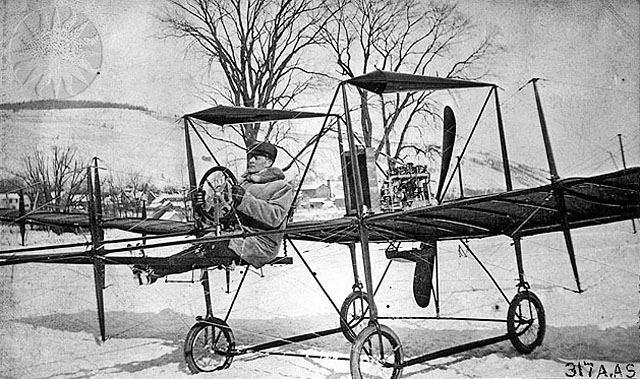
Wikipedia’s entry about Pfitzner observes, “The performance of his monoplane Flyer disappointed Pfitzner. In 1910 he joined the Burgess Company at Marblehead, Massachusetts, where he worked on the design of a biplane which also employed his sliding wing-tip principle. This aircraft was destroyed in a crash in 1910.”
“Pfitzner is reported to have been depressed by his lack of success,” Wikipedia notes. “On July 12, 1910, he rowed out into Marblehead Harbour with a suitcase containing his drawings. The otherwise empty boat was found a few days later with his hat, coat and a recently used revolver, but Pfitzner’s body was never found. In September 1910, rumours were reported that some of his friends had seen him in New York.”
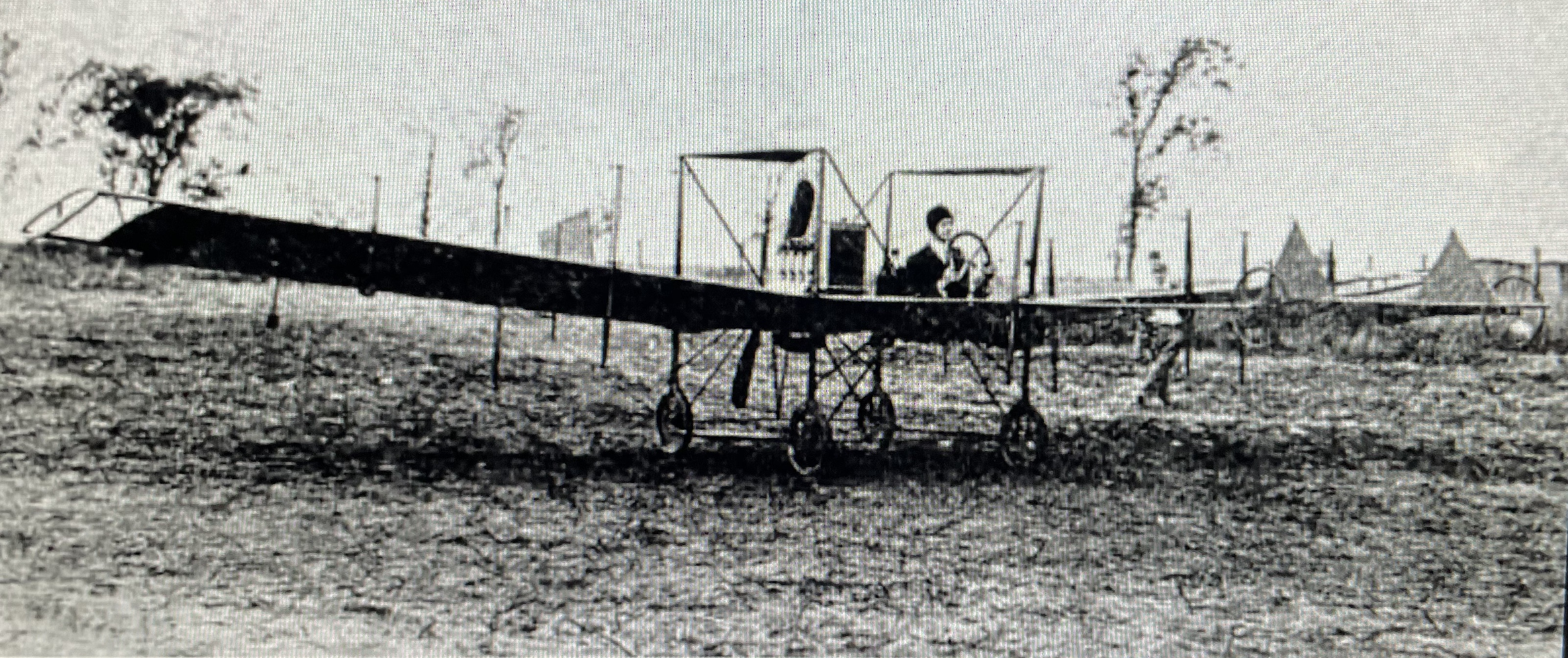
Wikipedia’s article about the Pfitzner aeroplane concludes, “Following Pfitzner’s disappearance (and assumed suicide) in July, 1910, Horace K. Kearney took over the aircraft and demonstrated it at aero meets in the succeeding months, including in Boston, before the Pfitzner Flyer became little more than an interesting footnote in the history of aviation.”
And, as we shall see in Part 2, in ways in addition to his novel “compensators,” The Pfitzner Flyer is a fascinating GMax project as well. ds
© Dennis Simanaitis, SimanaitisSays.com, 2026

