
Simanaitis Says
On cars, old, new and future; science & technology; vintage airplanes, computer flight simulation of them; Sherlockiana; our English language; travel; and other stuff
ENGLISH AND FRENCH 1902—WITH ATTITUDE!
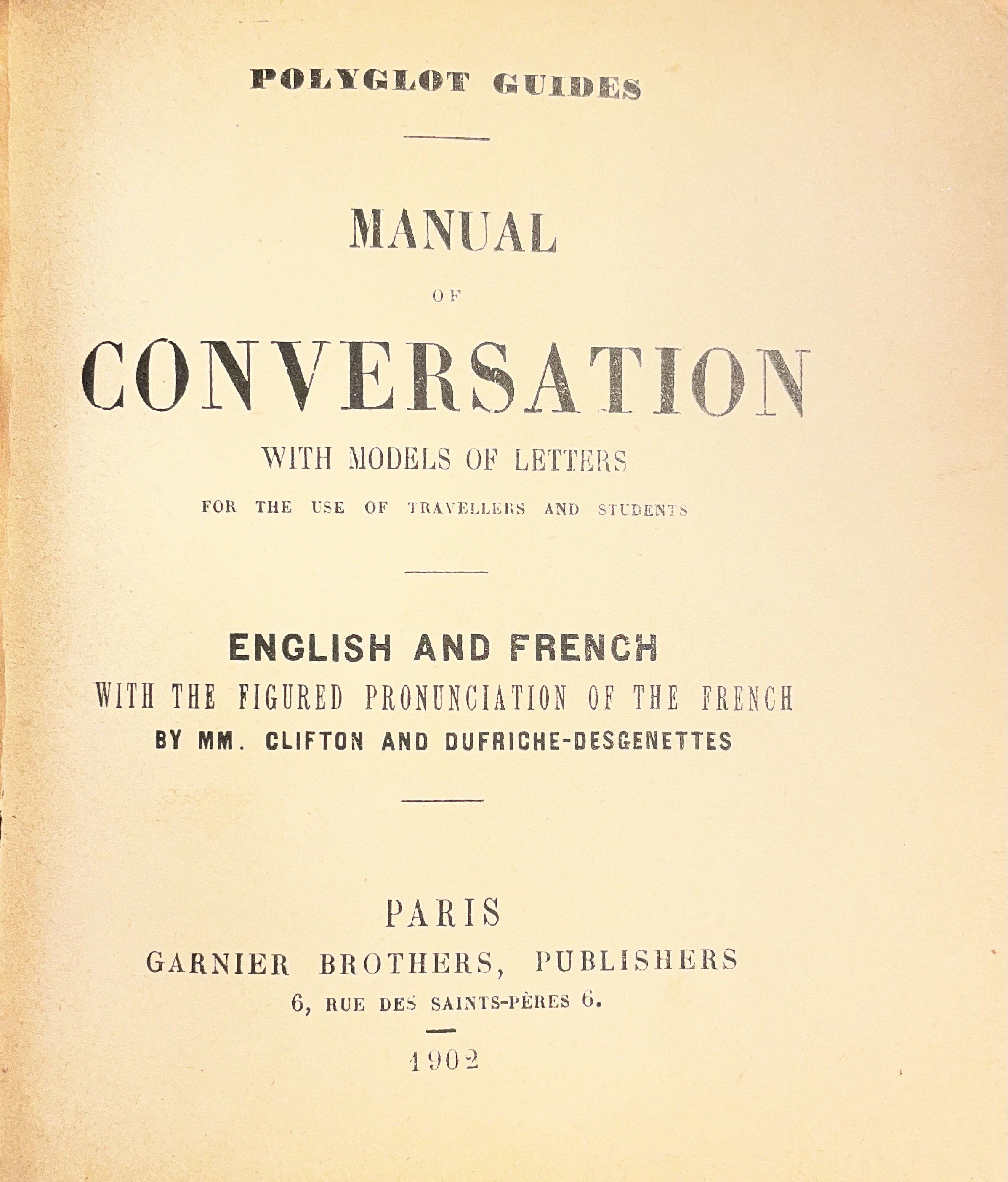
AMONG MY TRAVEL GUIDES IS THIS HANDY LITTLE (4 3/4” X 5 1/4”) VOLUME titled Manual of Conversation With Models of Letters for the Use of Travellers and Students, English and French with the Figured Pronunciation of the French.
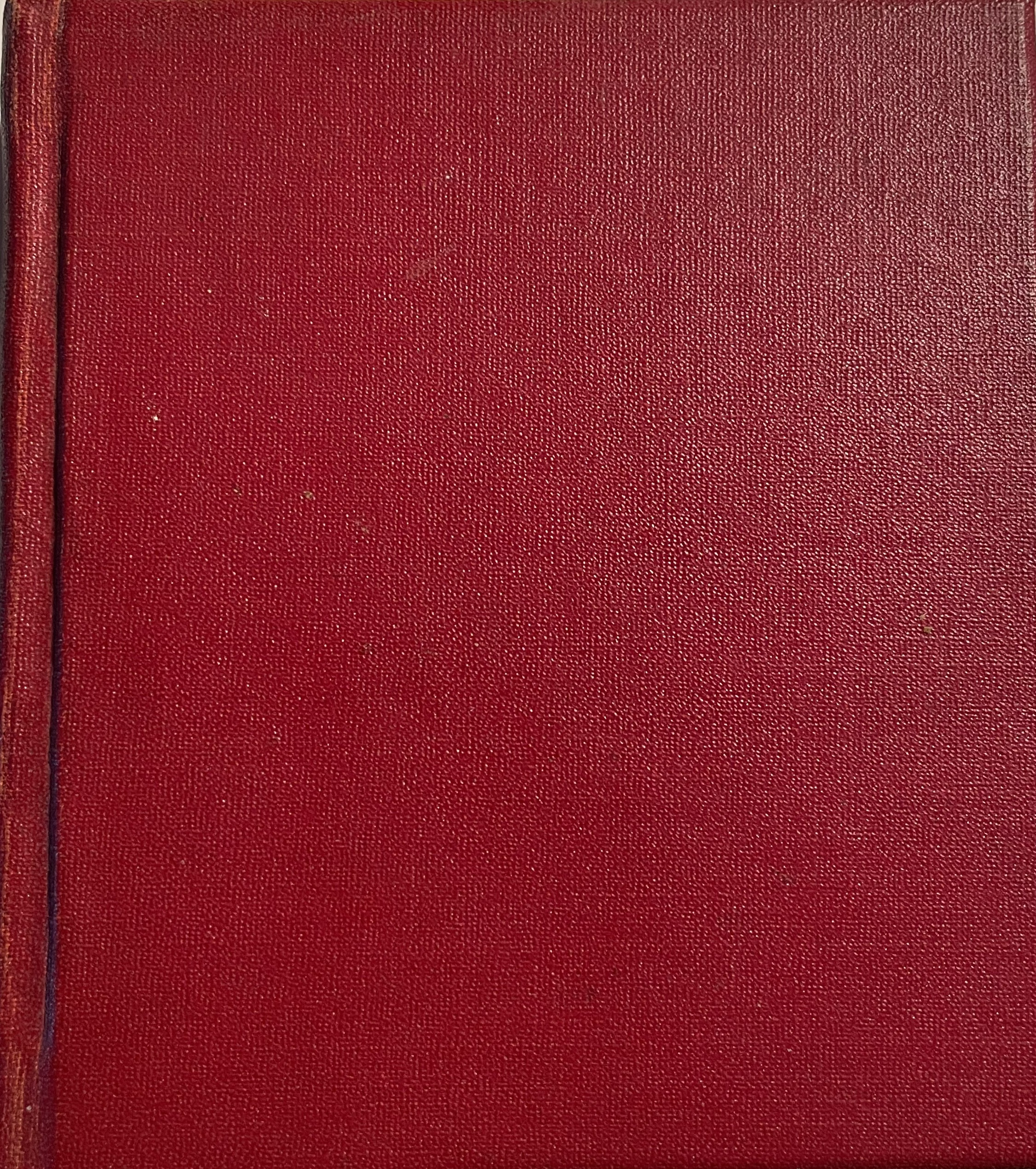
Manual of Conversation With Models of Letters for the Use of Travellers and Students, English and French with the Figured Pronunciation of the French, by MM. Clifton and Defriche-Desgnettes, Garnier Brothers, Paris, 1902.
Well, gee, my iPhone has Apple Translate that works with written or spoken language pairs of twenty—count them!—twenty languages, from Arabic to Vietnamese.
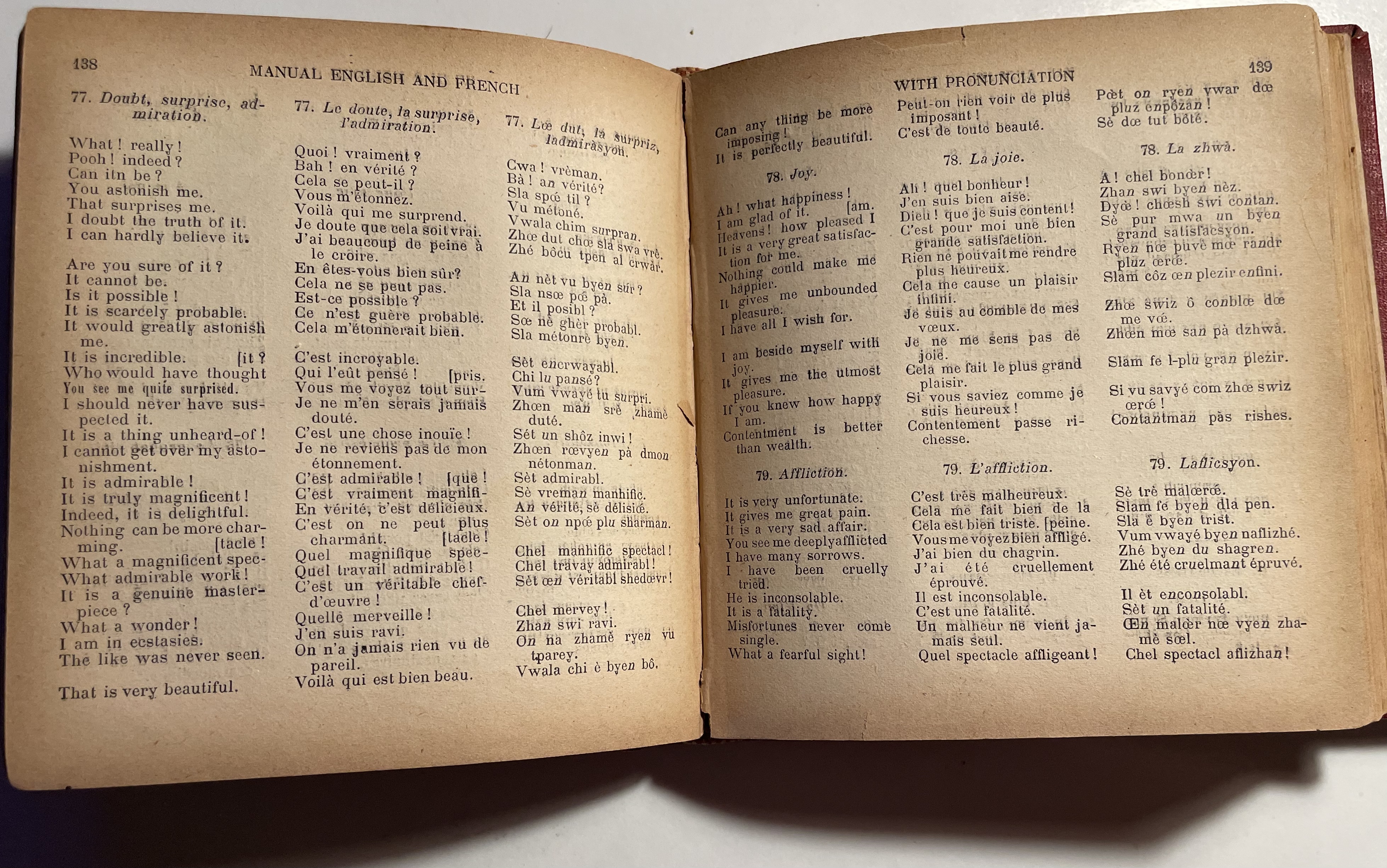
Ah, but note, my Polyglot Guide has “Models of Letters” brimming with attitude. And, just for fun, let’s do multilingual gleaning, occasionally in English, occasionally in French, and occasionally in M. Defriche-Desgnettes’ Figured Pronunciation. For example: “Waiter, can we have a private room?” “Garçon, pouvon-nous avoir un cabinet particulier?” “Garson, puvon nuz avwár ɶ cabine particulyé?”
An Eating-House. Un Restaurant. “Give us in the first place three dozen oysters and some white wine.” “Doné nu dabòr trwá duzen dwitr é du ven blan.”
“Est-ce du vin ordinaire que vous désirez?”
“Non, doné nu du vyœ sôtèrn. Sœ cutò-n cup pá.” “No, give us some old Sauterne. This knife does not cut.”
“Give me some new bread; this is too stale. Take away these plates.” “Donnez-moi du pain frais; celui-ci es trop rassis.”
Too Bad about the “eating-house.” But ain’t this trilingual jazz fun?
The Fish Course. “Avez-vous du poisson bien frais?”
“We have some carp and pike just taken out of the river.” “Nuz avon de carpe de broshè chi sortœ-d-la rivyér.”
“Give me another fork and a clean plate.” “Doné mwa un ôtrœ fursheté un asyet propr.”
The best defense is a good offense.
Opps. “We have not a soup ladle.” “Nous n’avons pas de cuiller à soupe.”
“I beg your pardon, sir; it is behind the tureen.” “Pardon, el è deryèr la supyèr.
Touché.
Huile Non-Formidable. “This oil is not good.” “Set wil nè pà bon.”
“It is Aix oil nevertheless.”
“Very possible; but it must be a good while since it saw the beautiful sky of Provence.” This quip is quite the challenge for the English speaker: “Se posibl, mez il dwati avwar lonton chel na plu vu lœ bô syel dœ provans.”
Complications of a Train Departure. You’d think “A quelle heure part le train pour Paris?” would lead to little drama. Ah, but our intrepid Englishman brings his own: With regard to a dog, “That is very well for bulldogs, but my Azor is no bigger than your hand. I shall put him under my cloak and nobody will be aware of his presence.”
Replies the conductor: “(Bas.) Il n’y a pas de pire sourd que celui qui ne veut pas entendre. (Haut.) Soit! mais ce fusil au moins ne restera pas inaperçu.” “(Low.) There is none so deaf as he who won’t hear. (Aloud.) Well, but this gun at least will not pass unnoticed.”
Why is our Englishman packing iron/le fer?!? The two get into an argument about whether it’s loaded/chargé or not. The conductor observes, “It is true that you don’t look much like a revolutionist; still, as you are armed with a gun….”
What’s the last time you’ve seen this in a guidebook?
Finally, the Englishman has a full-on rage/fureur: “Me voilà de beaux draps! C’est pourtant ce maudit M. A. [the conductor] qui est cause de tous ces désagréments “Here am I in a pretty predicament! That cursed [Google Translate says ‘damned’] M.A. is the cause of all this annoyance.”
What a bore! Quel ennui! Chel annwi! ds
© Dennis Simanaitis, SimanaitisSays.com, 2026

