
Simanaitis Says
On cars, old, new and future; science & technology; vintage airplanes, computer flight simulation of them; Sherlockiana; our English language; travel; and other stuff
THE WALTZ— ITS FATHER, ITS KING, AND DON’T FORGET MATILDA PART 2
MUSICOLOGIST NICK SLONIMSKY BEGAN ALL THIS with his entertaining writings abut 3/4 time and its composers. Here in Part 2, we focus on dissing, both musical and familial. And, as hard as we try, we can’t avoid the political. It’s not Nick’s fault.
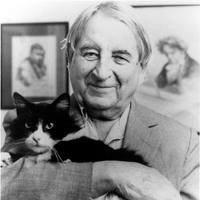
Nick Slonimsky and his cat Grody-To-The-Max, the name suggested by Frank Zappa’s daughter Moon Unit. See Slonimsky.net for other family images.
Any Dissing To Do? I looked up the Strausses, father and son, in Nick’s Lexicon of Musical Invective: Critical Assaults on Composers Since Beethoven’s Time.
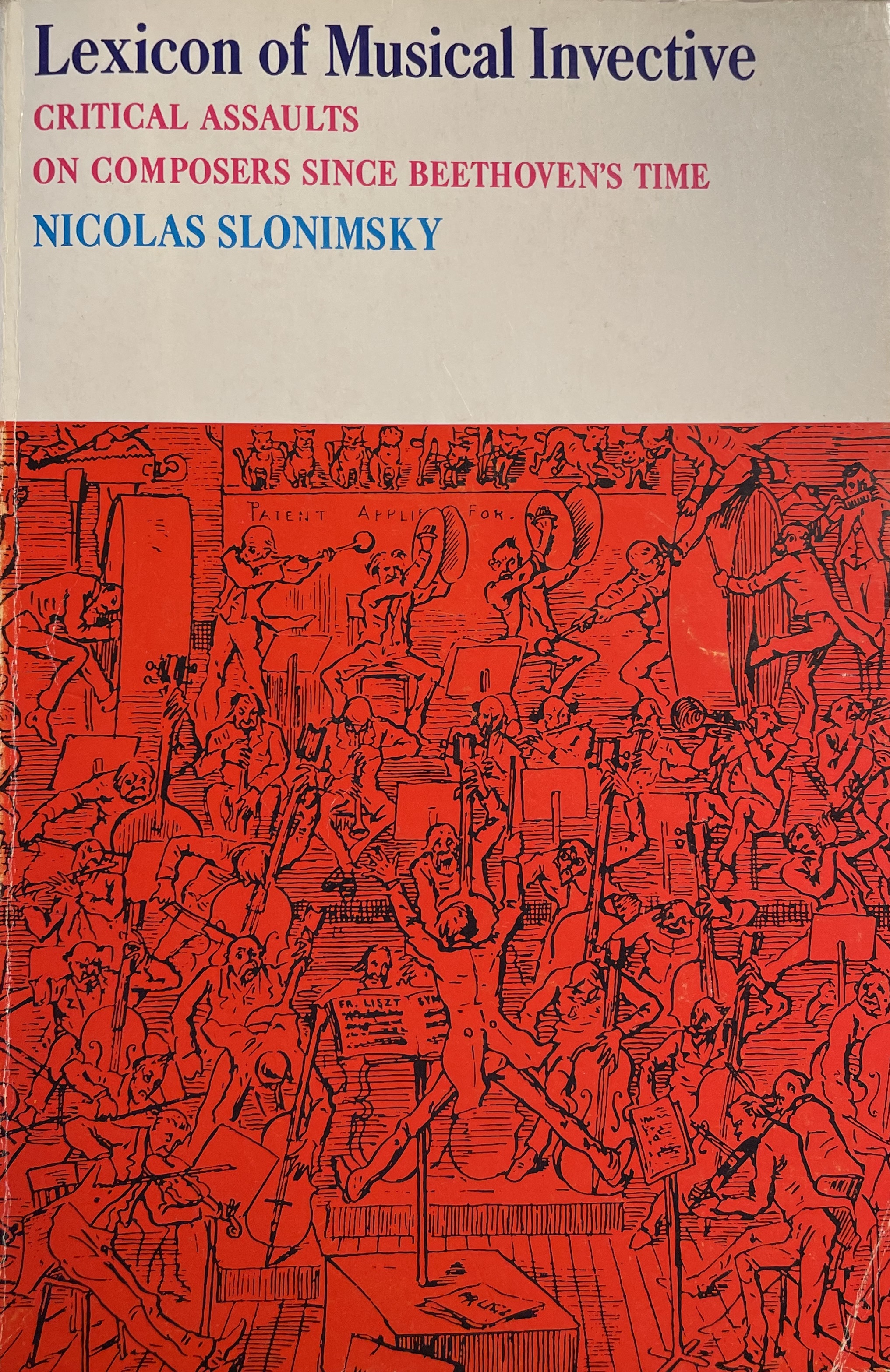
There’s only neutral mention of a “Strauss or any other waltz compounder” and an orchestra that “would feel it infra dig to play Johann Strauss’s waltzes.” The particular Strauss who’s given separate listing is Richard (no relation, composer of Don Quixote, Ein Heldenleben, Salome, Also Sprach Zarathustra, etc.). Indeed, he gets 14 pages of invective. With regard to this last composition: “When a man is awakened by an entire city crumbling about his ears, the blowing up of a single building by nitroglycerine passes unnoticed.”
Ouch.
From Nick’s Baker’s Biographical Dictionary: (1) Johann (Baptist) Strauss (Sr.) “violinist, conductor, and composer, known as ‘The Father of the Waltz,’ was born into a humble Jewish family of Hungarian descent; called ‘black Schani,’ he made a concerned effort to conceal his Jewish origins (when the ancestry of the family was realized by the chagrined Nazis a century later, they falsified the parish register at St. Stephens Cathedral in 1939 to make the family racially pure).”
(2) Johann (Baptist) Strauss (Jr.) was “greatly renowned [you’ll note Nick’s subtle rating system] violinist, conductor, and composer, known as ‘The Waltz King.’ His father intended him for a business career…. While he was a mere child, his mother arranged for him to study secretly with Franz Amon, his father’s concertmaster.”
Strauss Sr. left the family in 1842. Jr. “made his 1st public appearance as conductor of his own ensemble at Dommayer’s Casino at Hietzing on Oct. 15, 1844. His success was instantaneous, and his new waltzes won wide popularity.”
Nick also lists (3) Josef Strauss, conductor and composer, and (4) Eduard Strauss, conductor and composer. Neither achieved the adjectival significance of their elder brother.
And What of Waltzing Matilda? Back in his Lectionary, Nick notes that this was “an old Scottish song, first published in 1818. The words are of Australian origin, fitted to an old tune first published in Sydney in 1903. Matilda is not a girl’s name, but Australian slang for a knapsack, and and waltzing means bouncing, not dancing the waltz.”
“In fact,” Nick observes, “the tune is in 4/4 time, not waltz time. The song, tremendously popular among Australian troops during the two world wars, almost assumed the status of a second national anthem.”
Kinda like the Village People’s YMCA? Check out Wikipedia’s “Musicians Who Oppose Donald Trump’s Use of Their Music.” And also “Former Village People Member Says Original Band ‘Would Never’ Play Trump Rally,” The Guardian, January 21, 2025.
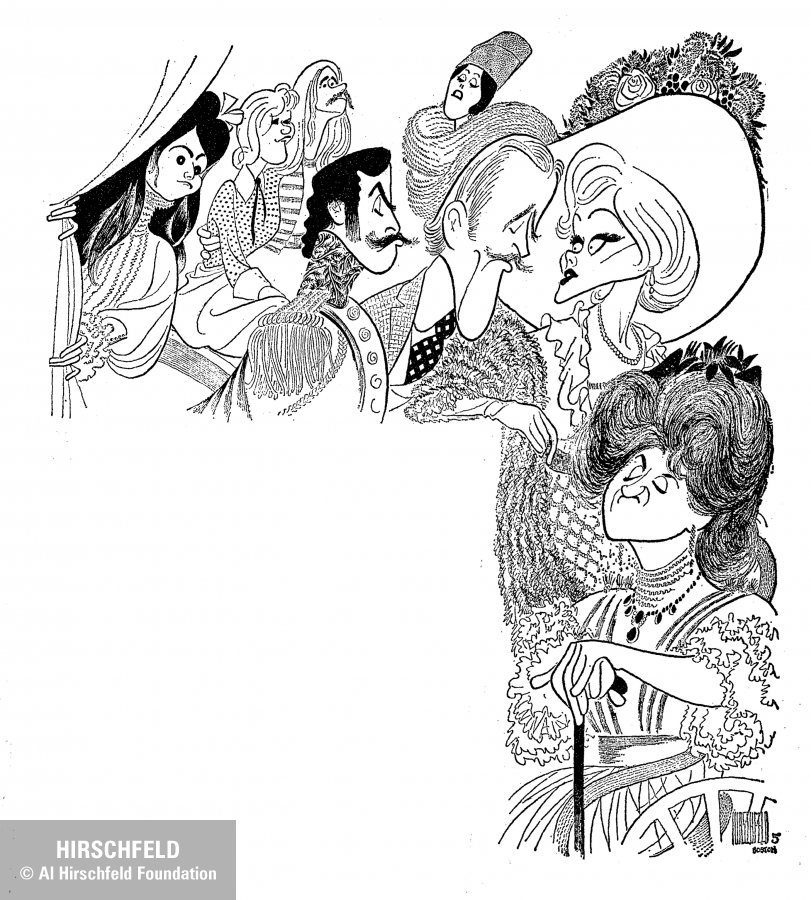
And as counterpoint, “My Favorite Sondheim—Illustrated by Hirschfeld,” SimanaitisSays, December 11, 2021, recounts that “Virtually all the music of A Little Night Music is in three-quarter time.” ds
© Dennis Simanaitis, SimanaitisSays.com. 2026

