
Simanaitis Says
On cars, old, new and future; science & technology; vintage airplanes, computer flight simulation of them; Sherlockiana; our English language; travel; and other stuff
SPEAKING IDIOMATICALLY
I’VE BEEN MEANING TO TELL YOU ABOUT THE NEW DICTIONARY OF CULTURAL LITERACY. Who, after all, wouldn’t want to be culturally literate? Yet there’s a challenge to admit full knowledge concerning 606 pages of such things.
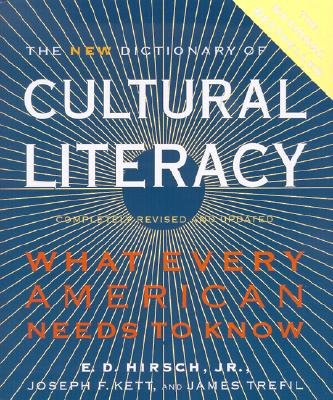
Subtitled “What Every American Needs to Know,” this book begins with The Bible, Mythology and Folklore, Proverbs, and Idioms. It ends with Anthropology, Psychology, and Sociology; Business and Economics; Physical Sciences and Mathematics; Earth Sciences; Life Sciences; Medicine and Health; and Technology.
Let’s Look at Idioms. E.D.H. cites humorist Art Buchwald’s writing “Le Grande Thanksgiving,” which has English translated directly into French with occasionally goofy results: Thanksgiving Day = le Jour Merci Donnant; Indians = les Peux-Roughes; and Miles Standish = Kilometres Deboutish. I encourage you to give Buchwald’s column a look.
Format. Each idiom (23 pages of them!) has a brief explanation, some with citations of origin. For instance, Shakespeare’s The Merchant of Venice contributes “The quality of mercy is not strained,” clarified by noting “strained” is an old form of “constrained,” meaning “forced.”
To the Manner Born. “A person who is ‘to the manner born’ is one who has acquired genteel tastes and habits by virtue of having been born into a privileged class…. This expression is sometimes mistakenly rendered as ‘to the manor born.’ ” The phrase is from Hamlet, as are the idioms “There’s method in his madness” and “cruel to be kind.”

Other Shakespeare idioms include “And thereby hangs a tale” (As You Like It), “milk of human kindness” (Macbeth), “more sinned against than sinning” (King Lear), “Most unkindest cut of all” (Julius Caesar), “pound of flesh” (The Merchant of Venice), “salad days” (Antony and Cleopatra), and “star-crossed lovers” (Romeo and Juliet).
New to Me. Nor is Shakespearean scholarship required to recognize these idioms. In fact, throughout the 23 pages only two of the entries stood out: “modus vivendi” and “sui generis. This first one immediately follows “modus operandi m.o.,” an old friend from my shamus lore on Old Time Radio. Its “vivendi” is another clue: “A compromise between adversaries that allows them to get along temporarily…. From Latin, meaning a ‘method of living.’ ”
Somehow, “sui generis” has a ring of familiarity, but its definition is still welcome: “A person or thing that is unique, in a class by itself…. From Latin, meaning “of its own kind.”
In retrospect, I shoulda studied more Latin than just the Vulgate mass.
Other Interesting Facts Revealed (or Recalled). “Noblesse oblige” is an easy one because it is the motto of Cleveland East High School, through which I enjoyed a obligatory three years: “Noblesse Oblige, you will live long,/Always, all ways true!”

I confess it seemed a bit presumptuous being placed among the nobility, though in retrospect I might well have been missing the point. The idiom “hoi polloi,” meaning “the masses, the ordinary folk,” seemed more appropriate. From the Greek, meaning “the many.” And, I note pedantically that writing “the hoi polloi” has a redundant “the.”
Once in a Blue Moon. Familiar enough an idiom, though I learned something more in the Cultural Literacy’s description of “once in a blue moon”: “The phrase refers to the appearance of a second full moon within a calendar month, which actually happens about every thirty-two months.”
Gee, add that to my cultural literacy. ds
© Dennis Simanaitis, SimanaitisSays.com, 2026

