
Simanaitis Says
On cars, old, new and future; science & technology; vintage airplanes, computer flight simulation of them; Sherlockiana; our English language; travel; and other stuff
THE AVIATOR—REVISITED, RECALLED, WITH MATHEMATICAL WHIMSY PART 1
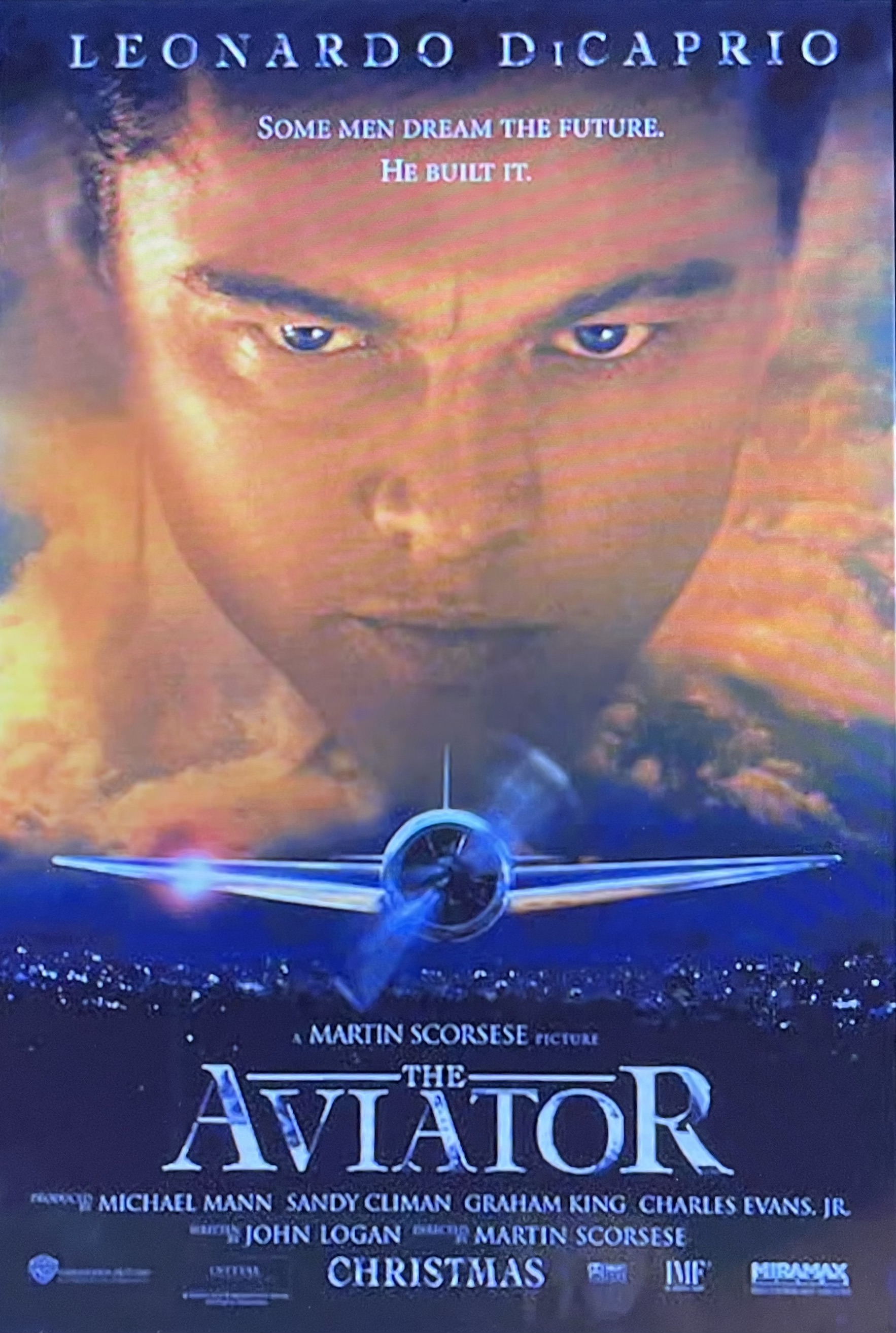
IT TURNS OUT HOWARD HUGHES IS A FAMILIAR FIGURE here at SimanaitisSays and, surely, I’ve seen The Aviator, 2004, at least once before its recent showing on Turner Classic Movies. Here, in Parts 1 and 2 today and tomorrow, are tidbits about the flick, its larger-than-life personage depicted, and several activitites he and it encouraged.
This and following images from IMDb.
The Flick. Wikipedia describes, “The Aviator is a 2004 epic biographical drama film directed by Martin Scorsese and written by John Logan. It stars Leonardo DiCaprio as Howard Hughes, Cate Blanchett as Katharine Hepburn, and Kate Beckinsale as Ava Gardner. The supporting cast includes John C. Reilly, Alec Baldwin, Alan Alda and Jude Law.”
Rotten Tomatoes’ “Critic’s Consensus” notes, “With a rich sense of period detail, The Aviator succeeds thanks to typically assured direction from Martin Scorsese and a strong performance from Leonardo DiCaprio, who charts Howard Hughes’ descent from eccentric billionaire to reclusive madman.”
I concur about the rich details; admiring the cars and airplanes of 1927–1947 is a treat, as are the era’s music and entertainment.
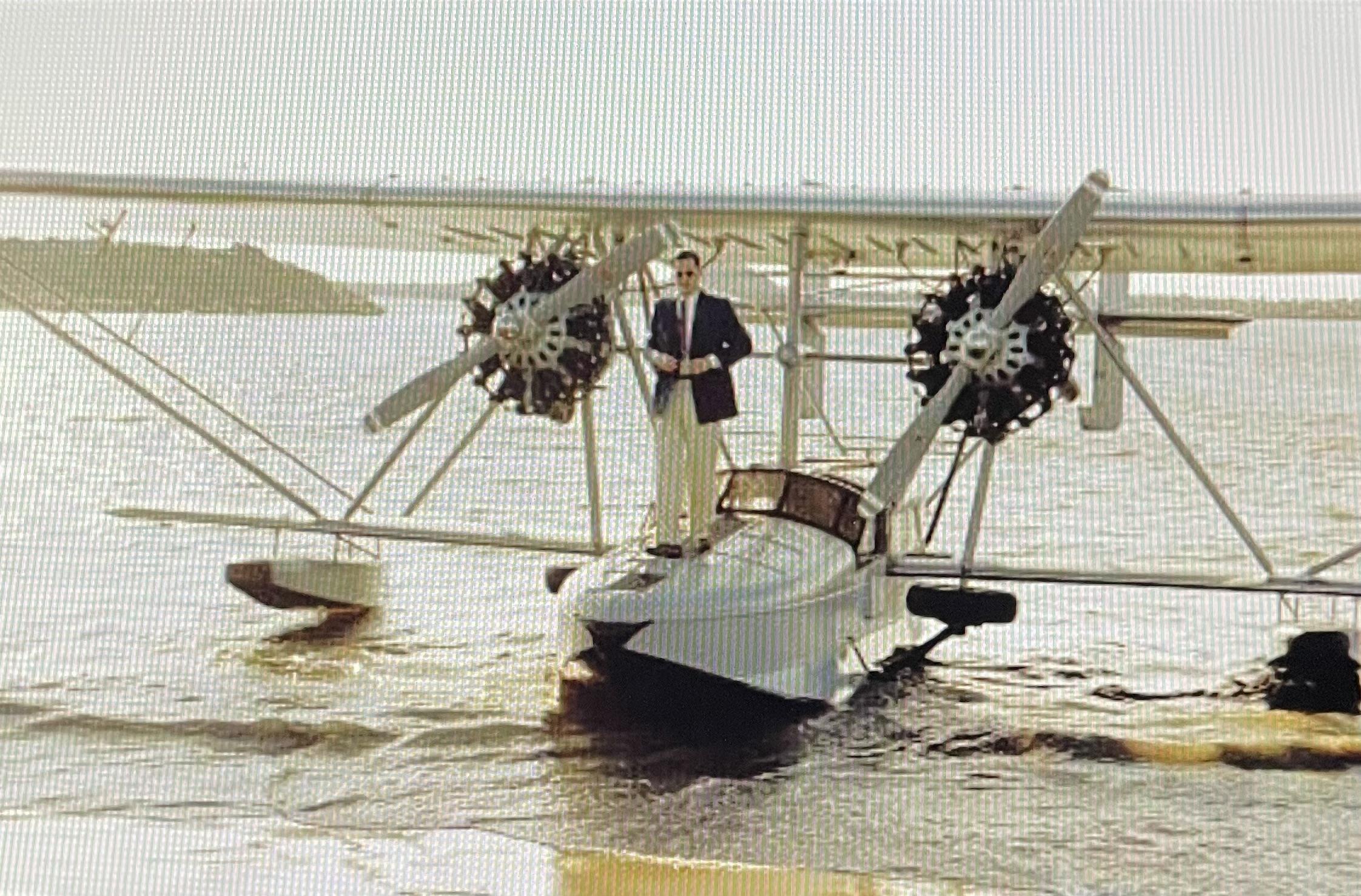
Hughes enjoyed his personal Sikorsky S-38 amphibian.
A bit of movie trivia: Among its huge cast is director Scorsese as the Hell’s Angels Projectionist/Man on Red Carpet (voice)(uncredited) and also his daughter Francesca as a little girl on one scene (she was 4 at the time).
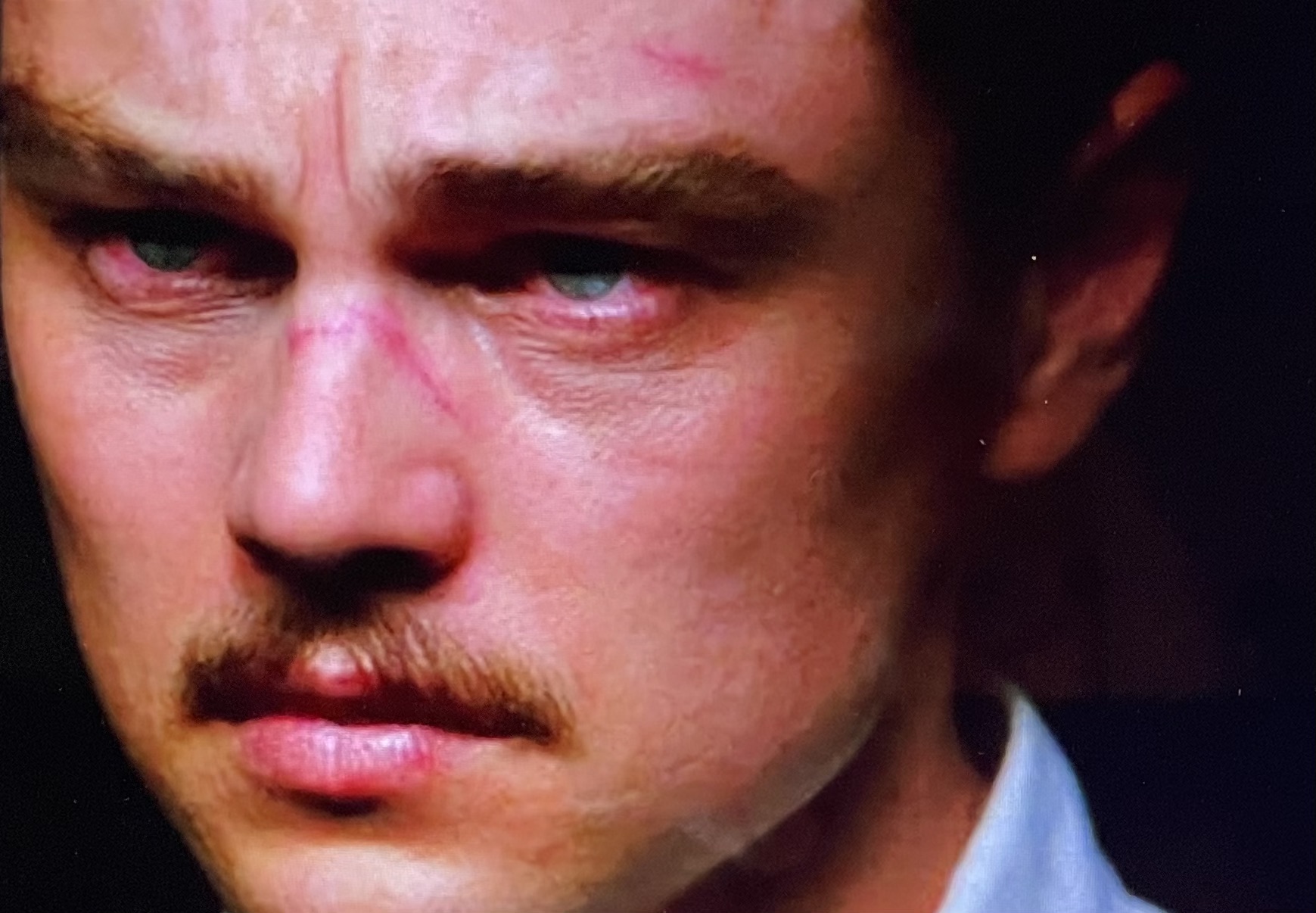
Also treated with harrowing sympathy were Hughes’ battles with severe obsessive–compulsive disorder (OCD).
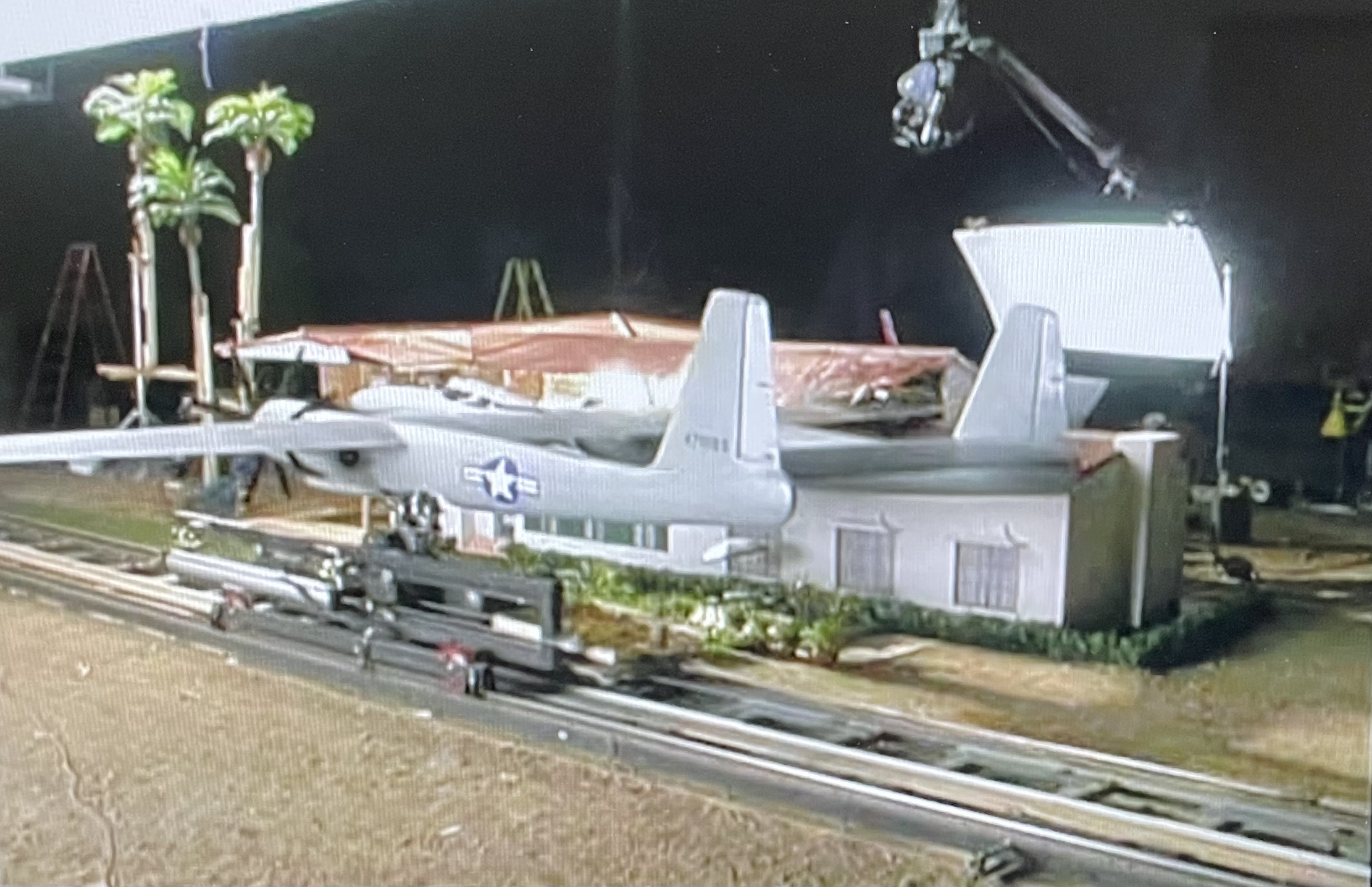
The Aviator’s Scale Models. Wikipedia recounts, “Scale models were used to duplicate many of the flying scenes in the film. When Martin Scorsese began planning his aviation epic, a decision was made to film flying sequences with scale models rather than CGI special effects. The critical reaction to the CGI models in Pearl Harbor (2001) had been a crucial factor in Scorsese’s decision to use full-scale static and scale models in this film. The building and filming of the flying models proved both cost-effective and timely.”
“The primary scale models,” Wikipedia continues, “were the Spruce Goose and the XF-11; both flyable scale models were designed and fabricated over a period of several months by Aero Telemetry, an aerospace company that specializes in building unmanned air vehicles.” (The company’s website describes “Airplanes of The Aviator.”)
Though RC-controlled models, they are of considerable size: The 375-lb. H-4 had a wingspan of 20 ft. The 750-lb XF-11 had a 25-ft. span. Other smaller scale models were non-flying but operated on the sound stage. Below, the Hughes XF-11 in its Beverly Hills crash.
My GMax H-1 and H-4. Back in 2021, my “Hughes H-1 Racer” appeared here at SimanaitisSays. As I noted, “It was the 1930s, when Howard Hughes and his H-1 Racer set a world speed record as well as one for crossing the United States.”
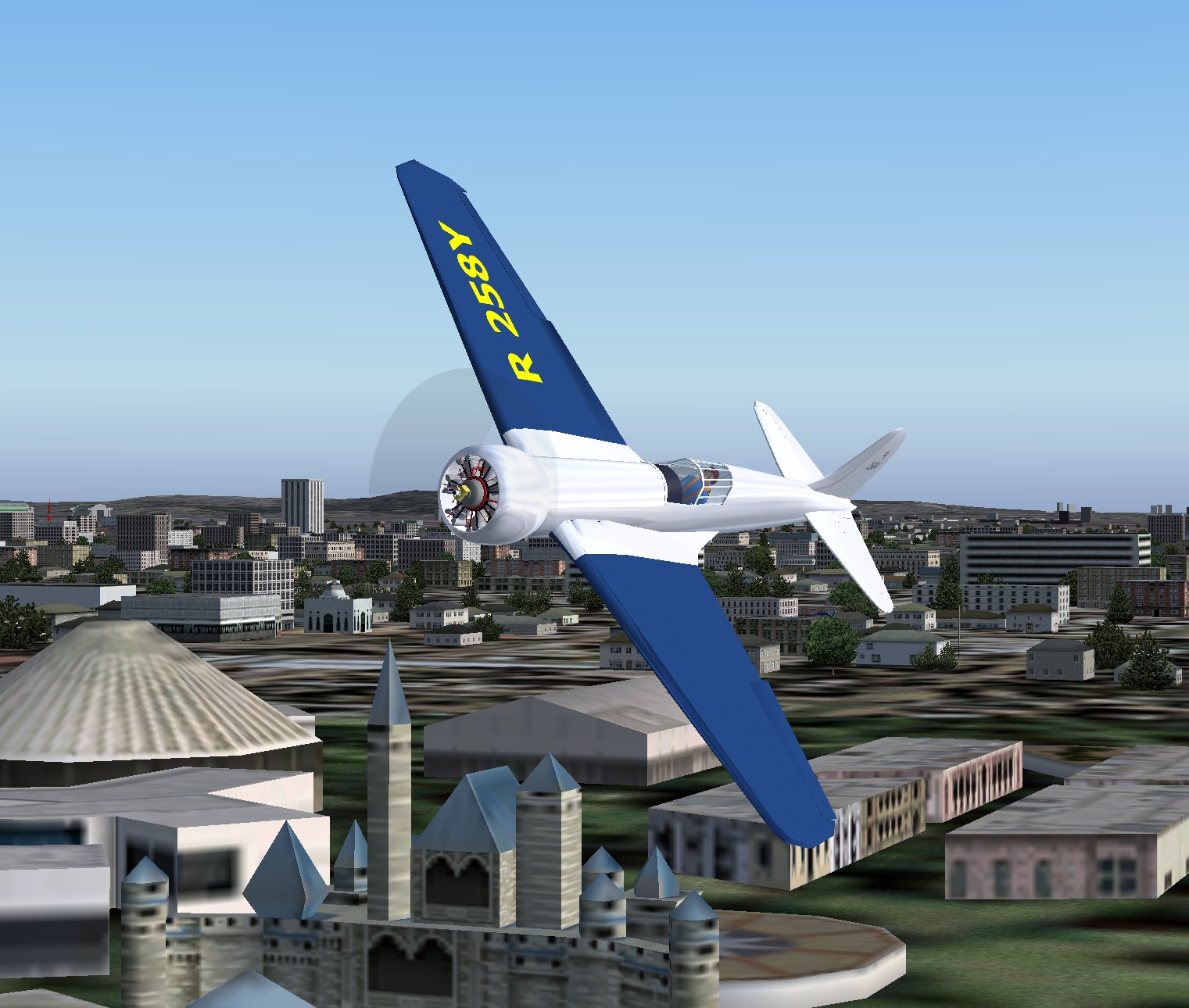
My GMax Hughes H-1 buzzes a Microsoft Flightsim Disneyland. Don’t try this at home, kids. Howie was a professional.
I observed, “The actual craft’s aluminum monocoque fuselage was fabricated with a multitude of rivets, each individually machined, flush, and polished. Its plywood-covered wing was also highly polished to reduce drag.” This theme of obsessive aerodynamics recurs in the movie as well.
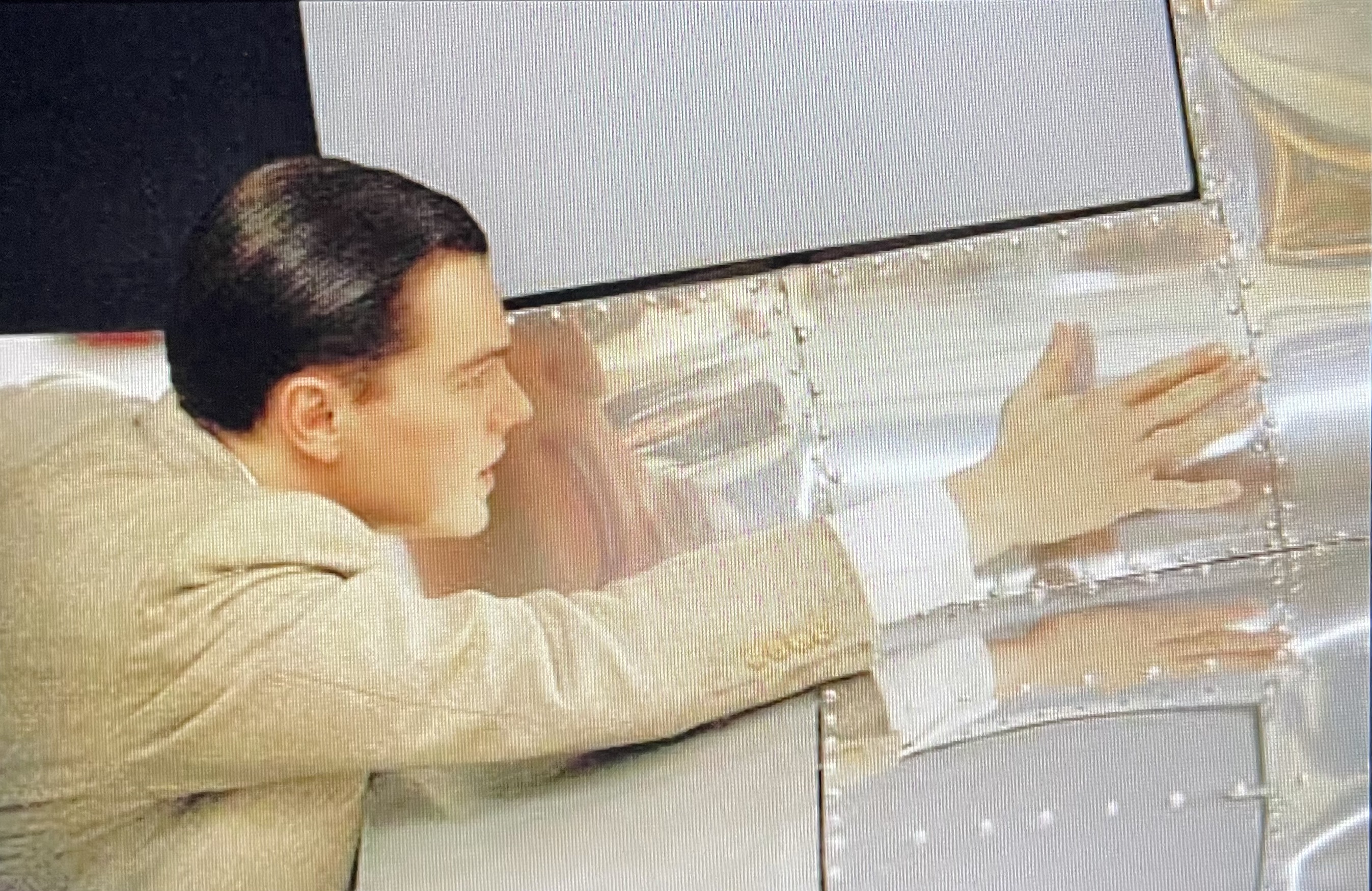
In a crucial scene, Hughes tests the flush finishing of the H-1’s fabrication.
Tomorrow in Part 2, yet another association of The Aviator appears; this one, with some mathematical whimsy.
© Dennis Simanaitis, SimanaitisSays.com, 2026

