
Simanaitis Says
On cars, old, new and future; science & technology; vintage airplanes, computer flight simulation of them; Sherlockiana; our English language; travel; and other stuff
USTA BE AN EDITOR, Y’KNOW PART 2
HERE IN PART 2, WE’LL CONTINUE OUR LINGUISTIC DISCUSSIONS encouraged by Professor Valerie Fridland’s “Despite All the Likes, Literallys, and Dropped g’s, English Isn’t Decaying Before Our Eyes.” It’s quite enough to make the ghost of Mrs. Quimbly shudder.

Professor Fridland, with (half a) familiar friend. Image from her website.
Droppin’ Stuff. Fridland relates, “The things we tend to label as ‘bad’ or sloppy English—for instance, the ‘g’ that gets lost from our -ing endings or the deletion of a ‘t’ when we say a word like ‘innernet’—actually reflect speech habits that are centuries old.”
The word “often” is a good example: “Originally spoken with the ‘t,’ that pronunciation gradually became less favored around the 15th century, alongside that ‘l’ in ‘talk’ and the ‘k’ in know. Meanwhile, the ‘s’ now stuck on the back of verbs like ‘does’ and ‘makes’ began as a dialectal variant that only became popular in 16th-century London. It gradually replaced ‘th’ whenever third persons were involved, as in ‘The lady doth protest too much.’ ”
Rhymin’ Back Then. Prof. Fridland recounts, “Another example of grammarian angst reconfiguring the view of an otherwise perfectly fine form is the droppin’ of the ‘g.’ It became so tied to slovenly speech that it was branded with an apostrophe in the 19th century to make sure no one missed its lackadaisical and nonstandard nature. Up until the 19th century, however, no one seemed to care whether one pronounced it as ‘-in’ or ‘-ing.’ ”
“Evidence,” she says, “suggests that -ing wasn’t even heard as the correct form. Many elocution guides from the 18th century provide rhyming word pairs like ‘herring/heron,’ ‘coughing/coffin’ and ‘jerking/jerkin,’ which suggest that ‘-in’ may have been the preferred pronunciation of words ending with ‘-ing.’ Even writer and satirist Jonathan Swift—a frequent lobbyist for ‘proper’ English—rhymes ‘brewing’ with ‘ruin’ in his 1731 poem ‘Verses on the Death of Dr. Swift, D.S.P.D.’”
Linguistic Advice. “If people learned to look at language more like linguists,” Fridland says, “they might come around to seeing that there is more than one perspective on what good speech consists of.”
(What? Did the Prof end a sentence with a preposition? Yes, and she did so intentionally.)
It was 18th-century grammarian Robert Lowth who advised against sentence-ending prepositions. Fridland notes, “Though Lowth voiced no hard and fast rule against it, many a grammar maven later misconstrued his advice as an admonition.”
Churchill’s Usage and Morris Bishop’s Humor. As noted in “Preposition Alert,” SimanaitisSays, August 27, 2012, Winston Churchill (likely apocryphally) said, “That is something up with which I will not put.”
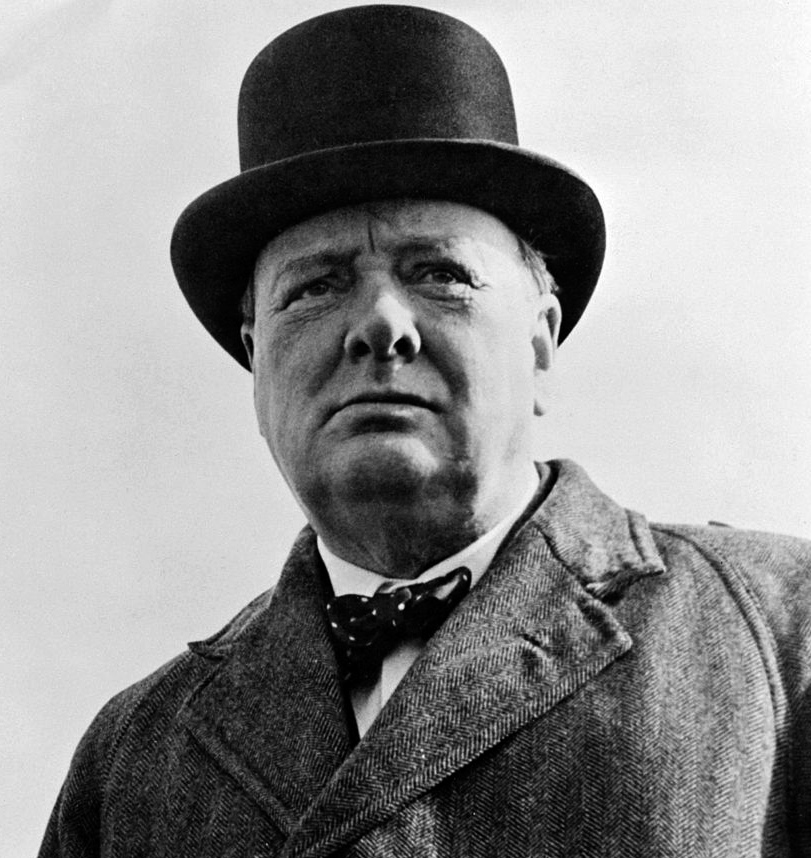
My favorite Churchill quip is what he said about a political adversary: “Clement Attlee is a modest man who has a good deal to be modest about.” (Take that, Mrs. Grimbly.)
Check out the rest of “Preposition Alert” for Bishop’s poem and my mathematician pal Steve MacDonald’s addendum thereto. (And doesn’t “thereto” sound kinda like a preposition? No; it’s an adverb.)
Back to Professor Fridland. She concludes, “So if you think the speech that comes from your lips is the ‘correct’ version, think again. Thou, like every other English speaker, art literally the product of centuries of linguistic reinvention.” ds
© Dennis Simanaitis, SimanaitisSays.com, 2026


Let’s see … ‘innernet’ sort of describes an individual’s nervous system, or a local area network, and since the whole planet is essentially a local area now perhaps the entire “Internet” (proper name) is really an ‘innernet’ for the planet. Especially since the connection principles of the Internet have now been extended to higher-latency situations like lunar or planetary communications, forming a true ‘internet’ connecting truly long distances. See, we can come up with an excuse for anything …