
Simanaitis Says
On cars, old, new and future; science & technology; vintage airplanes, computer flight simulation of them; Sherlockiana; our English language; travel; and other stuff
ECLECTIC ELECTRICS—17 YEARS AGO PART 1
IT WAS EARLY 2009 THAT R&T GOT SERIOUS ABOUT BATTERY ELECTRIC VEHICLES, BEVs, for short. (And no pun intended). In February 2009, we tested the Tesla Roadster, a rolling-chassis Lotus Elise conversion by this Silicon-valley upstart. And a month later, I assembled what I called “a bevy of BEVs.” These ranged from what I called the “Grande Dame,” the Toyota RAV4 EV (produced, and mostly leased, between 1998 and 2003), to the AC Propulsion eBox (my fav), to the one-off Wrightspeed X1, “the second-quickest car I’ve ever driven in my life—bettered only by the Benetton-BMW B186 F1 car.”
Talk about eclectic!
Here, in Parts 1 and 2 today and tomorrow, are tidbits gleaned from this article, together with some current perspective on this 2009 state-of-the-art.
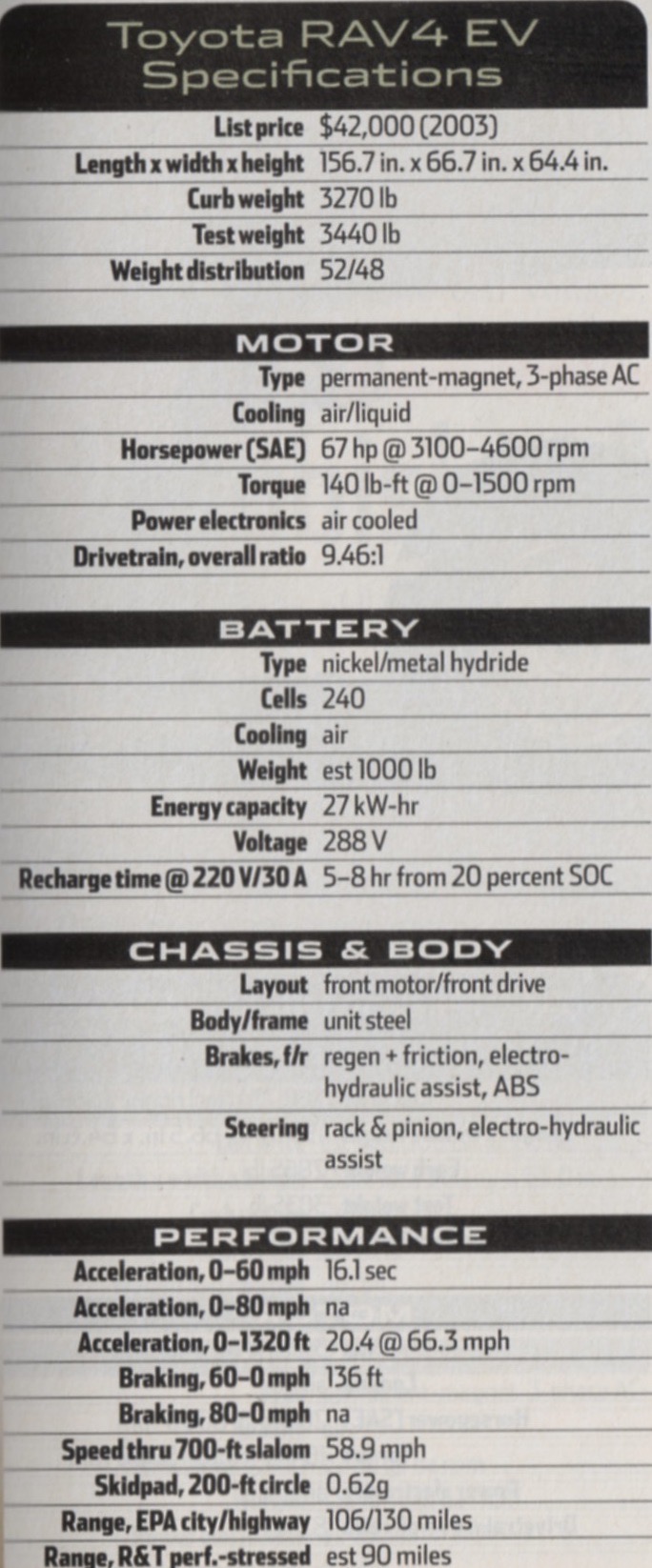
Toyota RAV4 EV. Thank the California’s Zero Emission Mandate of the late 1990’s for this Toyota RAV4 conversion. “Our local electric utility, Southern California Electric,” I cited, “has accumulated hundreds of thousands of miles with its fleet RAV4 EVs, fairly common sights in our region.”
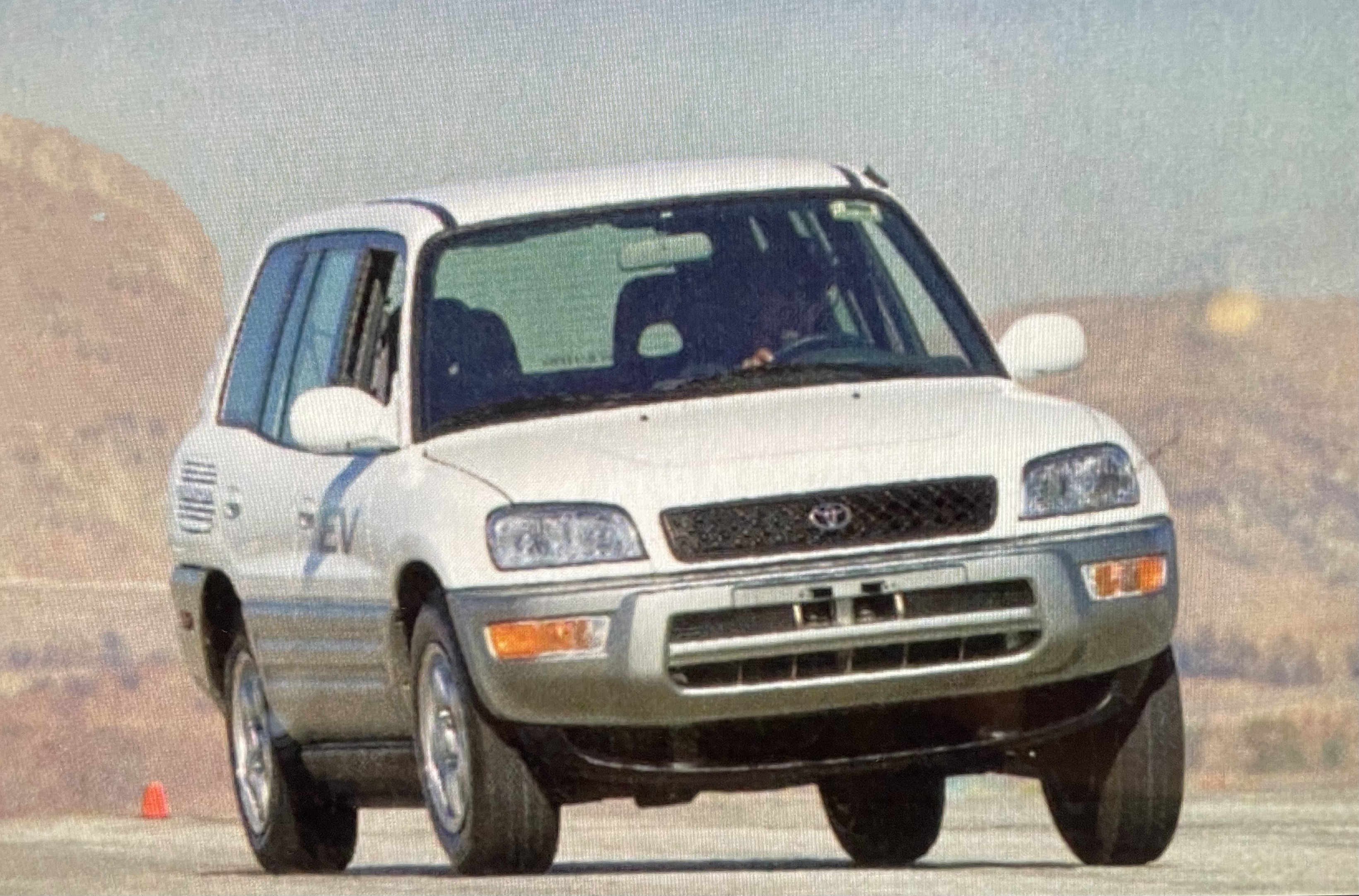
By 2009, there were some 1500 Toyota RAV4 EVs in So Cal Electric’s fleet. This and other images from R&T, March 2009
“So what’s a Grande Dame like to drive?,” I posited. “In a word, pleasant. At 0-60 mph in 16.1 seconds, she’s anything but quick. On the other hand, the RAV4 EV doesn’t get swamped by traffic, and remember, the old dear is almost a vintage car by EV standards.”
Tesla Roadster. In February 2009, we called the Tesla Roadster “the Porsche 911 of EVs.”
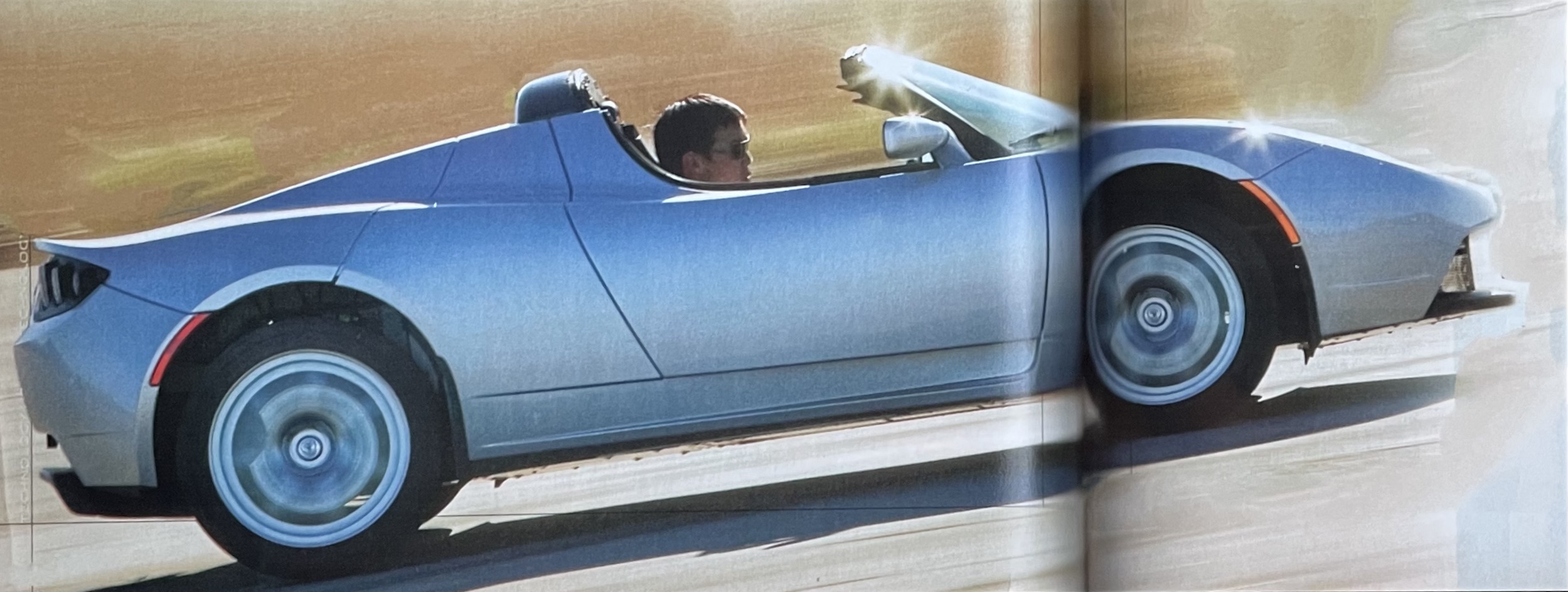
Though the Roadster had Standard, Maximum Performance, and Maximum Range modes, this time around, “we treated the Tesla as a true enthusiast car—mostly in Maximum Performance Mode—and it responded in kind.”
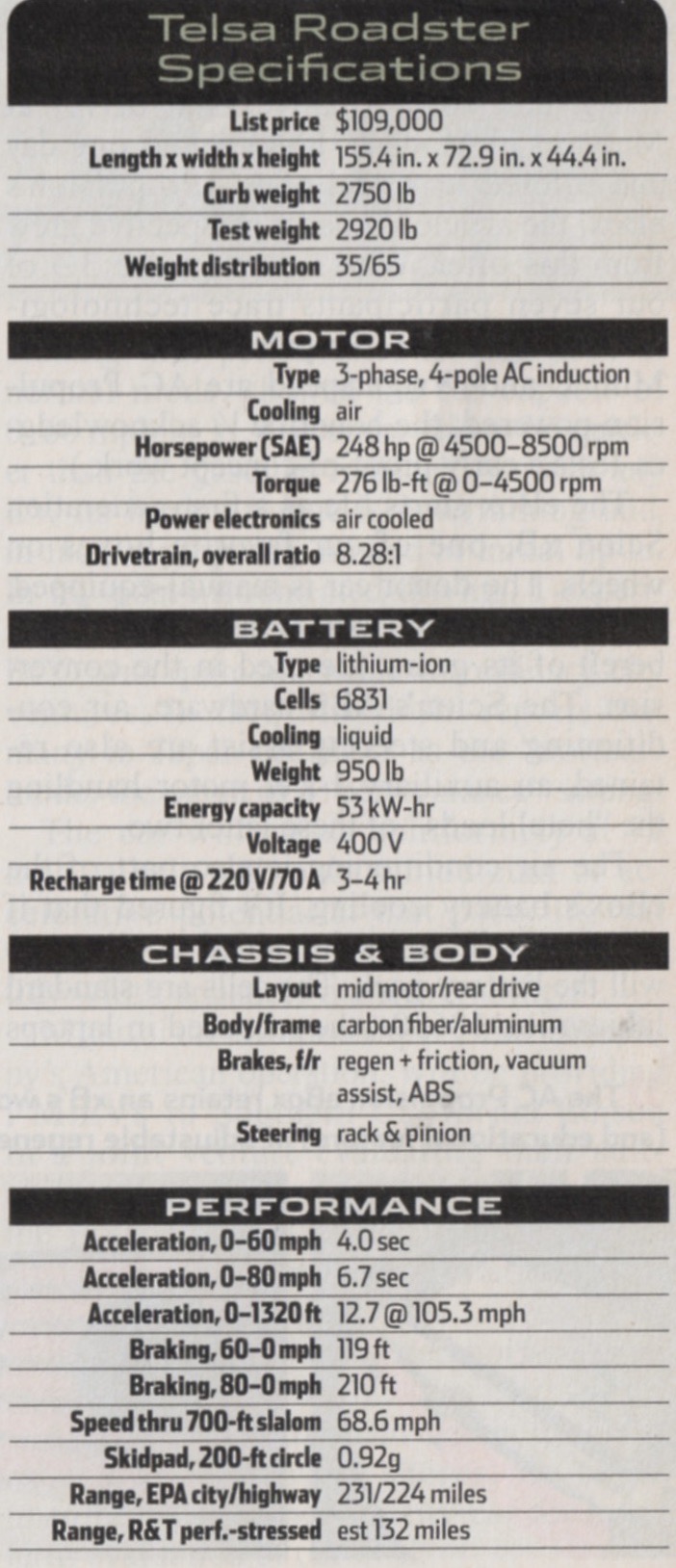
A Business Plan. “Tesla sees the Roadster,” I described, “as the initial element of an ambitious plan (one that’s been tried by others, alas, unsuccessfully). The idea is to produce a limited number of premium vehicles, sell them at premium prices, and turn around the profits into a second phase. This involves a medium-price car sold in considerably larger numbers, generating enough profit for the final iteration, that of large-scale production of a moderately priced car. And, of course, in Tesla’s plan these would all be EVs, its own little collection of Eclectic Electrics.”
What with one thing and another (the Trump/Musk bro/no-bro relationships among them), this is still a work in progress.
AC Propulsion eBox. “The eBox,” I confessed, “starts life as a first-generation Scion xB, one of our favorite boxes on wheels…. The [lithium-ion battery] modules reside beneath each front seat, their location profiting from the car’s high seating position. They’re positioned toward the chassis centerline so there’s no degradation of side-impact protection.”
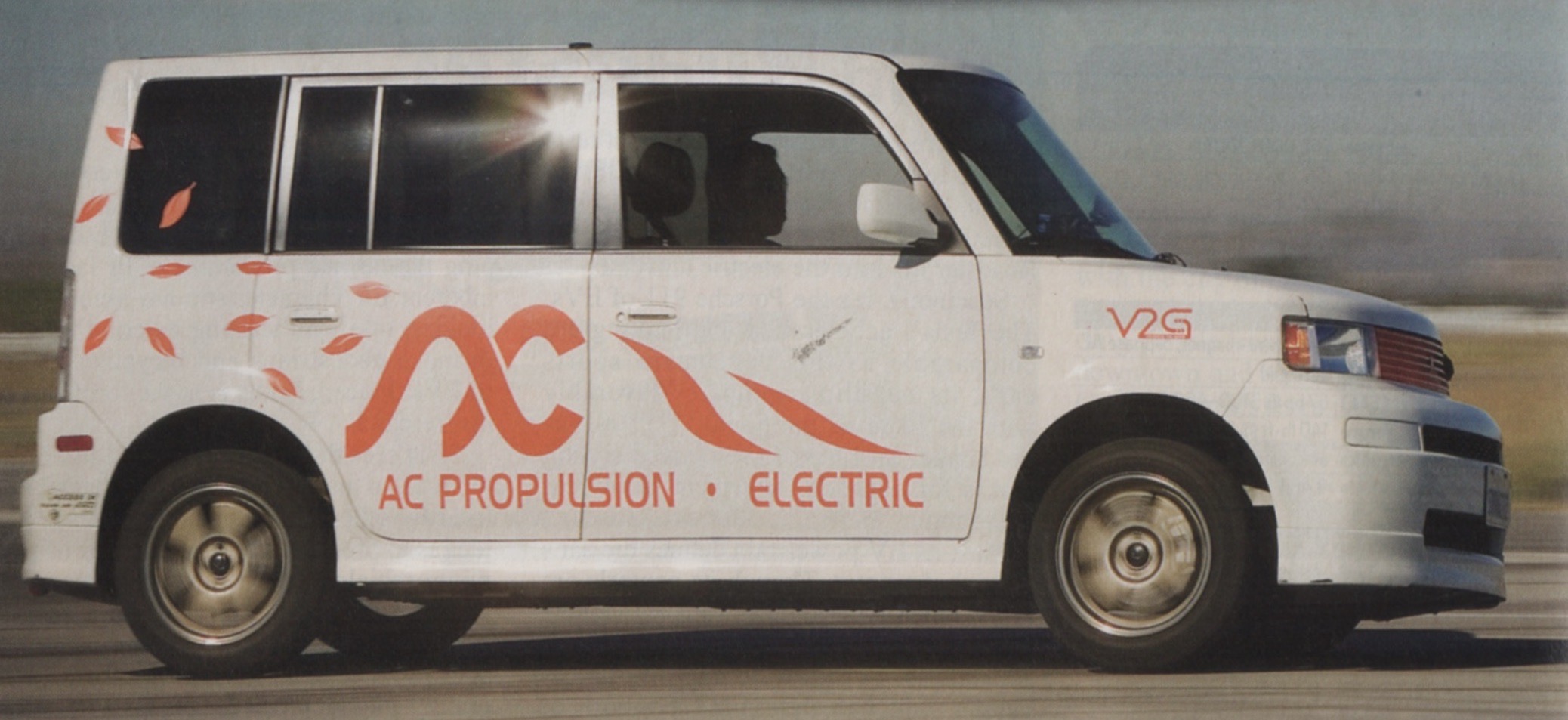
“The most interesting control,” I noted, “is one adjusting brake regeneration. The lever has a Min/Max range, and its use utterly separates driving patterns of an eBox from those of conventional cars.”
“Set to Min,” I described, “the car coasts easily on liftoff and brakes in a transparent fashion. Set increasingly to Max, one-pedal driving (with the ‘speed pedal’) become not only possible but quite pleasant. That is, lifting off the accelerator invokes perhaps 0.5g of braking, a fairly steep rate likened to what you might use approaching a toll booth from speed.”
“All this and a 0-60 mph time of 7.0 seconds, wrapped up in a tidy box of extreme utility.”
Tomorrow in Part 2, we’ll learn more about the AC company, an electrified Kei car, and another giving an immense charge out of driving. ds
© Dennis Simanaitis, SimanaitisSays.com, 2026


Electric vehicles are here to stay .
I hate ’em and will keep driving / riding my old ICE vehicles until I die, then who cares, my son wants nothing .
-Nate
California’s state vehicle fleet had a gaggle of RAV4 EVs, too. Mostly, they didn’t make it into the general pool, because the departments that got them kept them as long as they could. Some were still in use until nearly 2020, when all of the Really Olde Stuff (including some Gen-1 2-passenger Honda Insight hybrids) were finally sent to auction. Since I didn’t have access to the department fleet (not important enough for an assigned car) I used the general fleet out of the State Garage, which had, as long as the leases lasted, some EV-1s (Gen 1 with lead-acid batteries; interesting but fundamentally useless with a ~40 mile range), Honda EVs (extremely ordinary but easy to live with, peppy enough, 70+ mile range even with some freeway running), those Insights (only a dozen or so, and I was always able to get one – stick shift in a pool car! – and it did get 60+ mpg in stop n go traffic), and Gen 1 Prius (hardly any in the general pool – they were all department directors’ cars). Also some Gen 1 & 2 Honda Civic CNGs; the second Gen was comfy, almost luxury, worked well, and had well over 100 miles range), and a crowd of Cavalier and GM van CNG/gas dual-fuel conversions (worked fine; CNG lasted for 50-100 miles then switched to gasoline with a slight hiccup; tank in the trunk of the Cavs left room for maybe a briefcase, not a suitcase). I also worked with the Caltrans shop a bit on their project to try out various DPFs and catalyst devices on fleet trucks. Was kind of fun to be part of all that, even though it was obvious that it couldn’t last – PZEVs were a product of the general failure of that first generation of EVs (hybrids had more staying power) to qualify for “mainstream.”