
Simanaitis Says
On cars, old, new and future; science & technology; vintage airplanes, computer flight simulation of them; Sherlockiana; our English language; travel; and other stuff
AUTOMOTIVE INNOVATORS FROM C&SC
THE BRIT CLASSIC & SPORTS CAR CONTINUES TO BE MY FAVORITE AUTO MAGAZINE. As an example, it recently discussed “25 Automotive Innovators” online.

Among the 25 listed chronologically were familiar (and expected) choices: the Ford Model T, the Austin Seven, the Citroën Traction Avant, the Willys Jeep, the Volkswagen Beetle, the Jaguar XK-120, the Chevrolet Corvette, the Mercedes-Benz 300SL Gullwing, the Citroën DS, the Austin Mini, the Saab 99 Turbo, and the McLaren F1. Indeed, as noted via these links, each of these has been celebrated here at SimanaitisSays.
Here are tidbits gleaned about several of the 13 remaining cars ranging from the Lamborghini Miura to the Volvo PV544 and Renault Espace.
Lamborghini Miura, 1966. C&SC notes, “It would be enough that the Lamborghini Miura was the car for which the term ‘supercar’ was coined for it to be considered among the greats in its field. Yet there was so much more to this car, and not just the amazing looks.”
Its innovation, notes C&SC: “Lamborghini stole a march on its competitors by introducing the mid-engined layout to the sector. Unlike most supercars that followed suit, the Miura’s engine and gearbox were placed transversely in the chassis, which helped with its pert looks.”
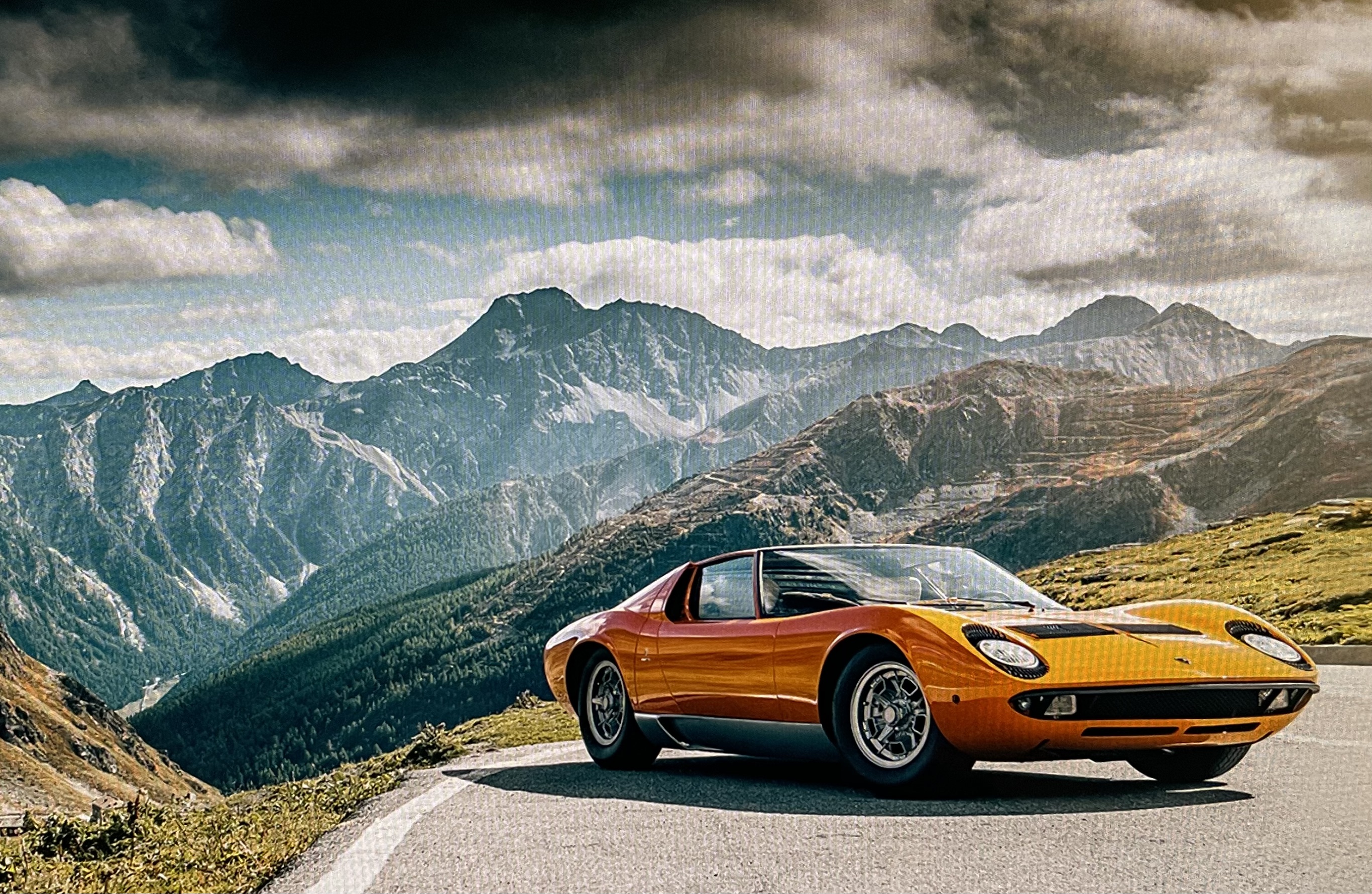
C&SC continues, “It created the fastest production car in the world at the time with a claimed top speed of 180 mph. Even if that was closer to 170 mph in reality, it was job done for Lamborghini, because all its rivals were now on the back foot.”
Nomenclature: “Front-engine” is clearly defined. “Mid-” and “rear-engine” depend upon the engine’s relative location with respect to its rear-axle centerline. Traditional Porsches, for instance, are rear-engine, hanging their flat-cylinders aft of the drive axles. Formula One cars have been mid-engine since the British Coopers evolved from motorcycle-engined Formula Three cars.
Traditional Ferraris and the first Lamborghinis, the 350GTV and 400GT, were front-engine. Ferrari’s first mid-engine road car (as opposed to sport racing car) was the 1967 Dino 206 GT; the first carrying the Ferrari name, the 1973 365 GT4 BB.
Lotus Elite, 1958. “Lotus,” recounts C&SC, “flabbergasted the world’s media and car makers when it launched the Elite. Here was a car that not only used the new wonder material of glassfibre for the car’s body, but also for its entire structure.”
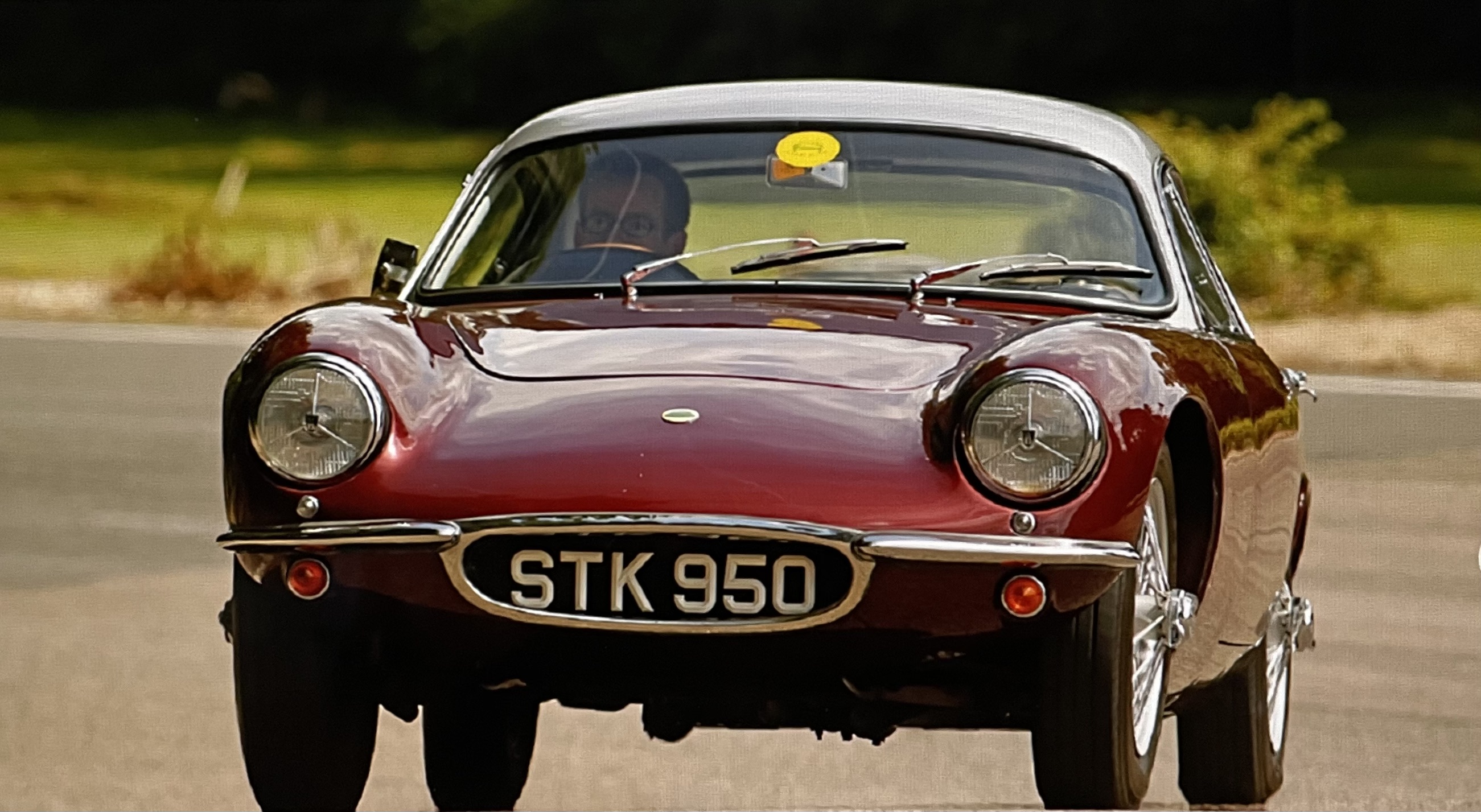
C&SC continues, “This was a huge leap forward and demonstrated the strength of glassfibre, because the Elite had no separate chassis. It made the car very light at just 660 kg all up, while fine aerodynamics also helped it to be quick.”
Of course, the glassfibre Chevrolet Corvette arrived in 1953 (as noted in the C&SC list), but the material was solely bodywork. Also, speciality marques had glassfibre bodies, but only in limited numbers and not produced for long.
Volvo PV544, 1959. C&SC observes, “It’s hard to think of a more conservative model than the Volvo PV544, with its simple mechanics and rugged build. [Not to say its late-1940s American styling.] Yet this was the car that introduced the three-point seatbelt to the world, which has saved more lives on the road than any other invention.”
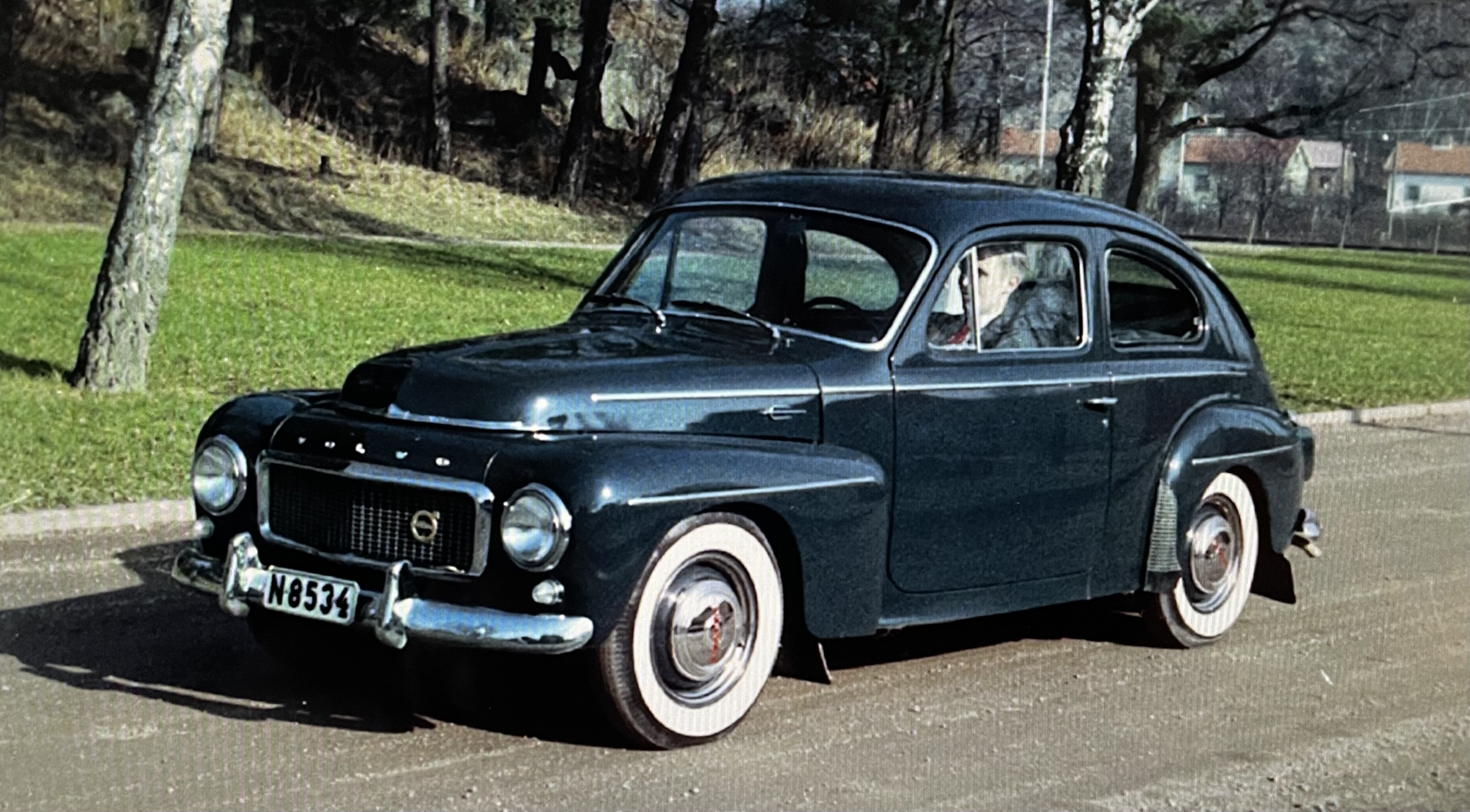
Volvo PV544.
“The three-point belt,” C&SC notes, “was the idea of Nils Bohlin, an engineer for Volvo, who realised that simple lap belts offered little protection in a collision. By adding the diagonal strap, it held occupants much more securely. Volvo’s other innovation with this safety design was to waive its patent rights, so every car maker was free to fit three-point seatbelts to their cars.”
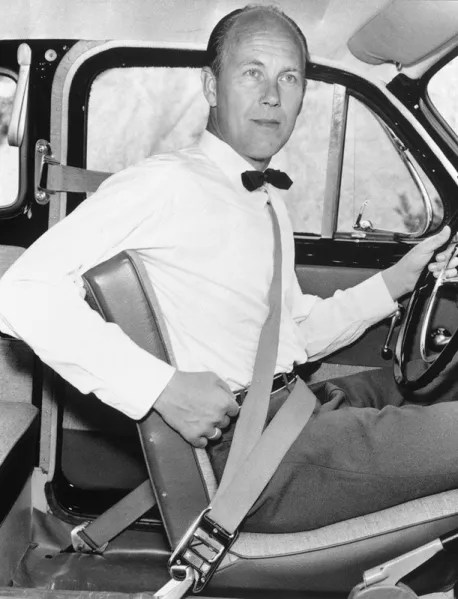
Volvo’s 3-point belt with engineer Nils Bohlin. Image from “Buckling Up With Rover,” SimanaitisSays, September 4, 2017.
My St. Thomas Volvo 144S Wagon had these excellent belts.
Renault Espace, 1984. C&SC confesses, “There were already MPVs around, especially in the US, but the Renault Espace was far and away the most advanced machine of its type. Built by Matra for Renault, it used plastic body panels over a lightweight steel spaceframe to clothe its monobox design that maximised interior space.”
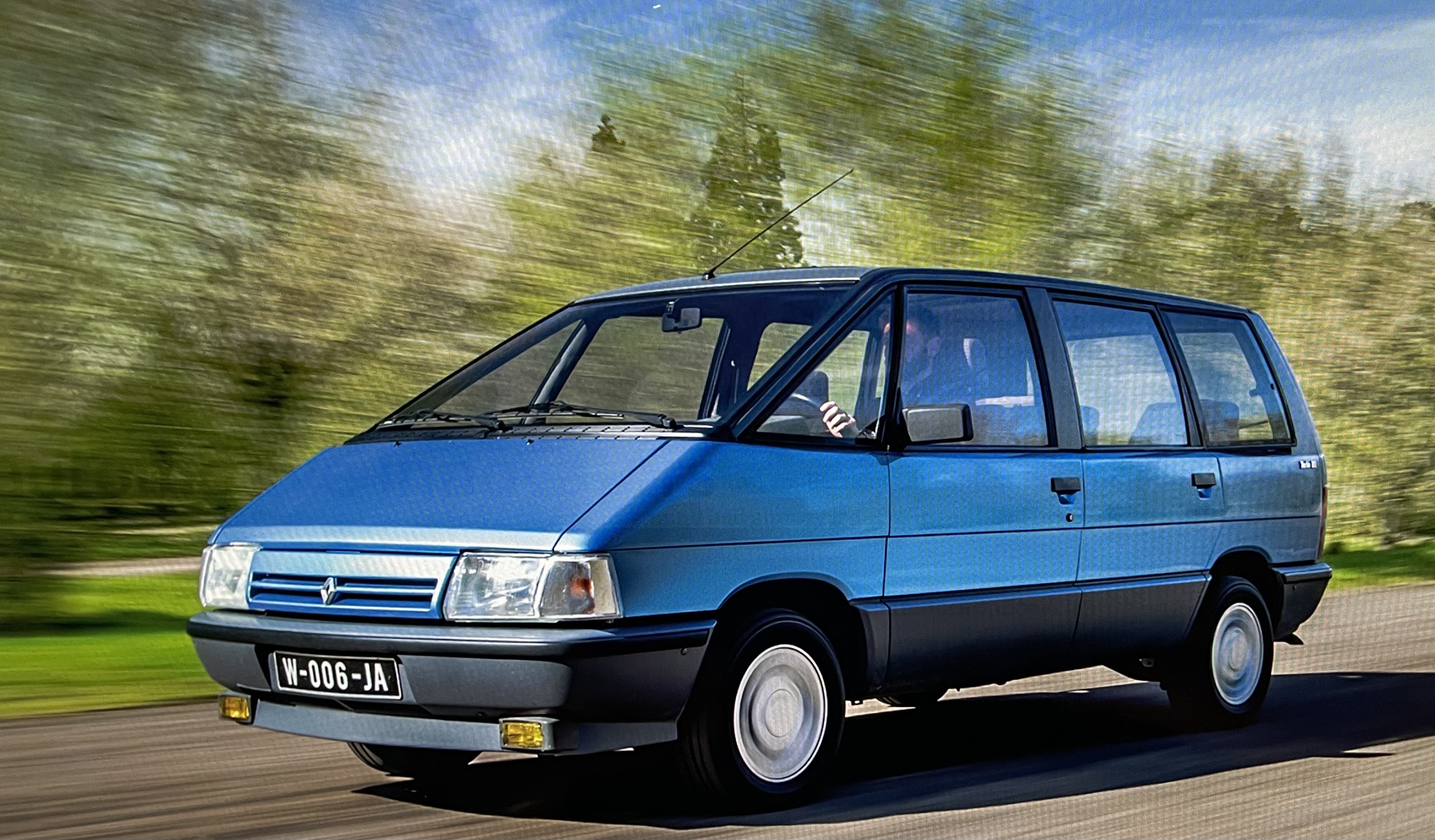
“It was inside where the Espace truly shone,” C&SC recounts, “ offering practical seating for up to seven people. Not only that, you could vary the layout to suit, because all five rear seats could be individually folded or removed, and there was a completely flat floor for ultimate load carrying.”
I borrowed an Espace for one of my post-press-trip early-retirement stopovers. Having already sampled Chrysler’s minvans at home, I especially appreciated the Renault design innovations that C&SC was to celebrate 40 years later. ds
© Dennis Simanaitis, SimanaitisSays.com, 2026


I bet the Corvette got onto that list by the skin of its teeth, or rather the skin of its body; otherwise it was entirely conventional. May I make two additions, the Citroen 2CV and the Lancia Lambda? Beyond ICE cars, we would have to include the Tesla.
Good additions. The Lambda, being a unibody, of sorts. The 2CV for its wonderful minimality. (I like how easy the seats can be removed.)–ds
Based on these innovator entries, I’d raise a tongue-in-cheek nomination for the 1965 Renault 16. Like the future Espace, the seats could be shuffled into numerous configurations. or could be removed for ultimate *hatchback sedan* (a modern “first”?) load capacity. And like the later Miura, it was mid-engined — albeit the front wheel drive power unit was mounted longitudinally, preceded by the transmission à la R4.
(“Albeit”, now there’s a word I only ever saw in R&T.)
And here at SimanaitisSays now and then.–ds