
Simanaitis Says
On cars, old, new and future; science & technology; vintage airplanes, computer flight simulation of them; Sherlockiana; our English language; travel; and other stuff
THE WORLD’S LARGEST POP-UP BOOK
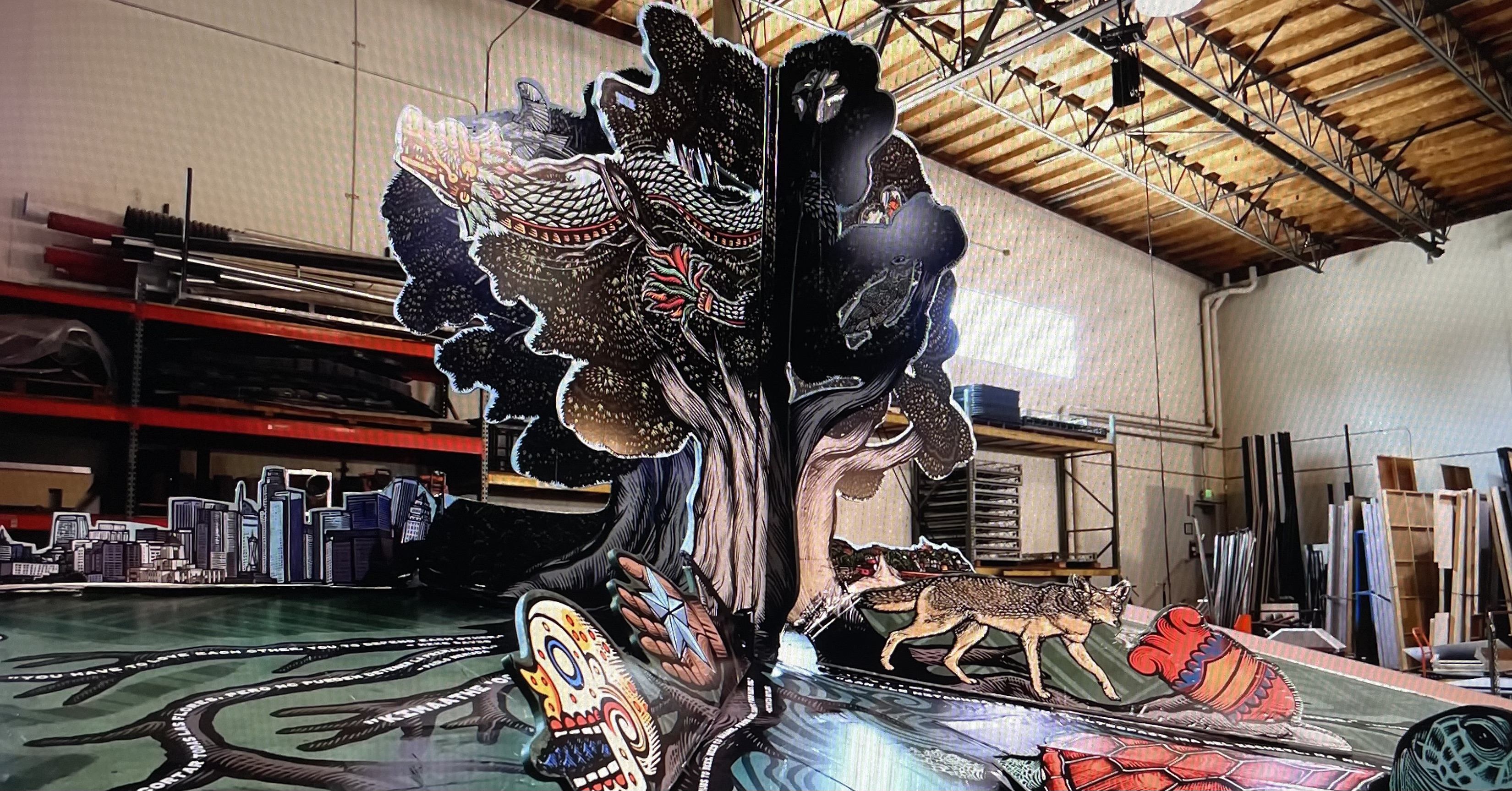
LUCEROS Y PENUMBRAS, STARS AND SHADOWS, is a product of Los Angeles artist and printmaker Daniel González, paper engineering by Matthew Reinhart, and full-scale engineering and fabrication by Goodnight & Co. It is also officially recognized by Guinness World Records as the largest pop-up book ever created. What’s more, it’s being exhibited until November 2026 in the Rotunda of the Richard J. Roidan Central Library of Los Angeles, California.

Here are tidbits gleaned from “Luceros y Penumbras The World’s Largest Pop-Up Book,” Library Foundation of Los Angeles, together with my usual Internet research on the topic.
Pop-Up Heritage. Lauren Corba offers “A Brief History of the Pop-Up Book,” Books Tell You Why, October 25, 2014. “By 1860,” she describes, “movable books began to be produced on a mass scale.… utilizing ribbons as a buttress to hold the images up on the page and project the scene–making it come alive.”
Animations. Corba observes, “It is also important to acknowledge the genius of Lothar Meggendorfer who made an appearance at the same time…. He made it possible for the pull of a tab to animate an entire scene, for example a dinner party’s eyes, jaws, arms, and legs could move all at once.”
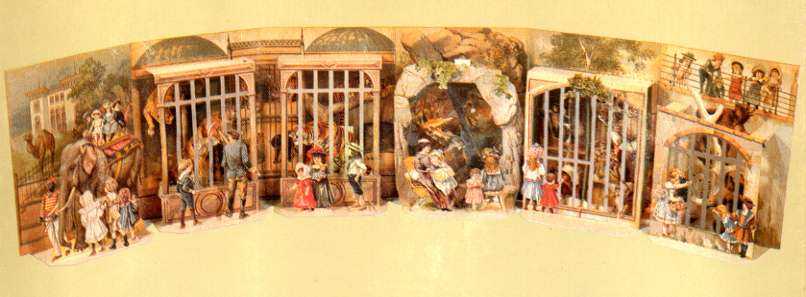
Pop-Ups Today. Corba describes, “The 1900s saw the creation of yet another kind of movable book, one very similar to the pop-up books of today. With the expertise of S. Louis Giraud, the simple action of turning a page brought illustrations alive, visible from all angles…. By the 1940s, Blue Ribbon Publishing of New York had made its name and coined the phrase ‘pop-up book.’ ”
My Example (of One). “Reduced Shakespeare—What a Joy,” SimanaitisSays, November 29, 2017, describes the sole pop-up in my collection.
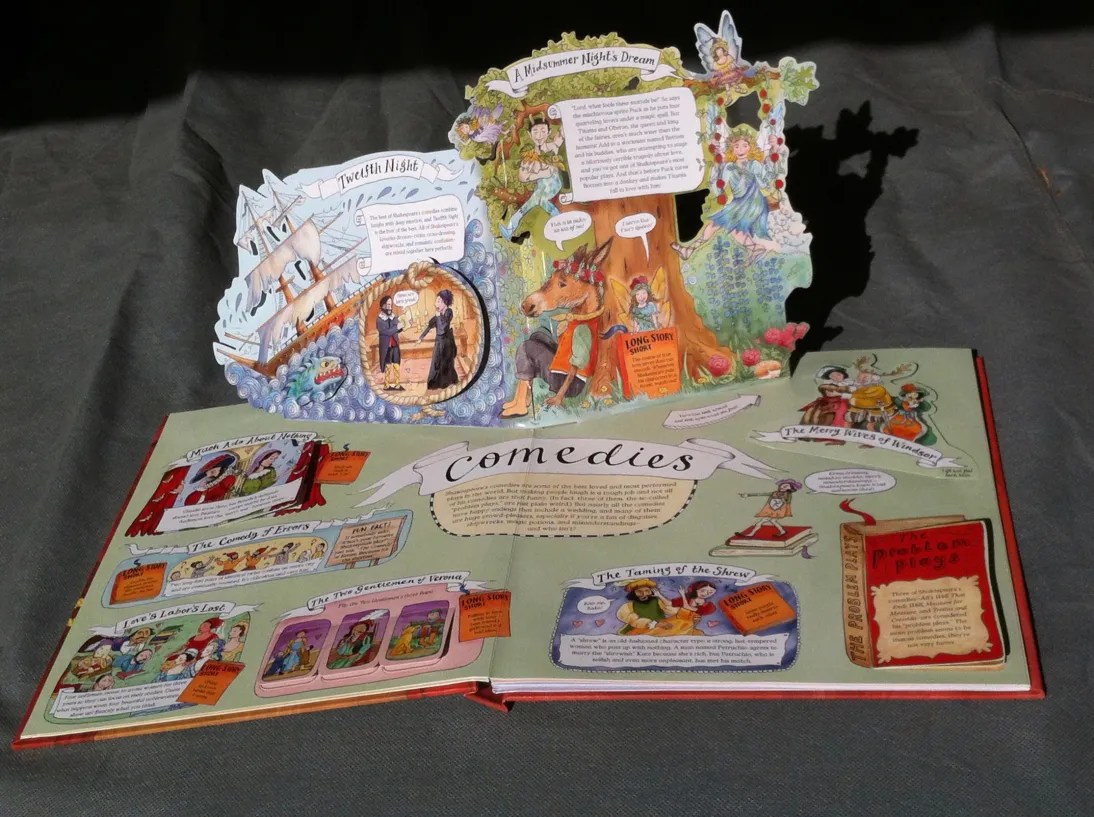
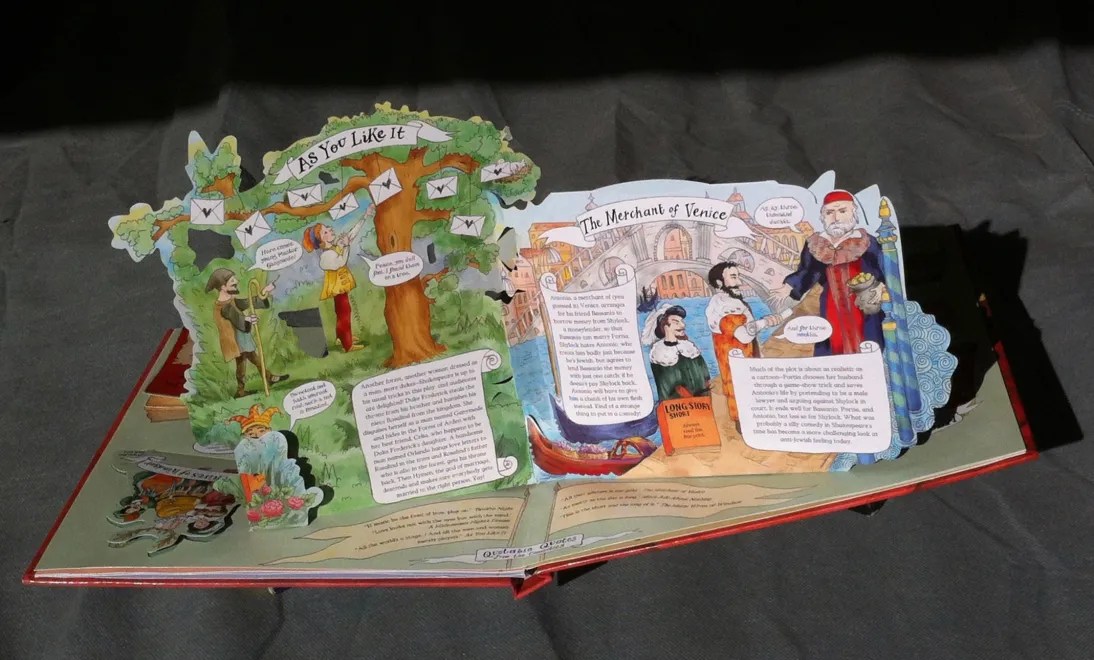
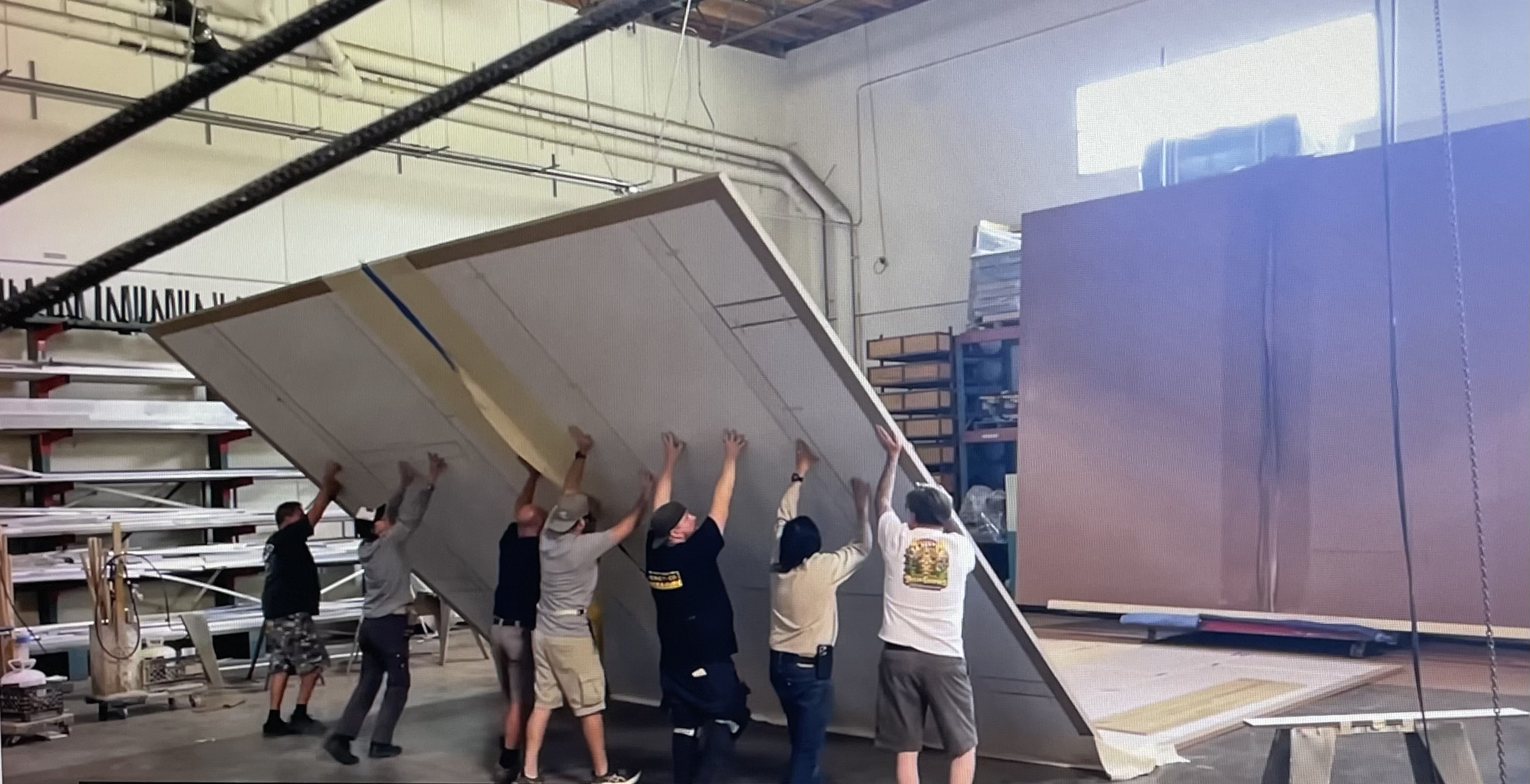
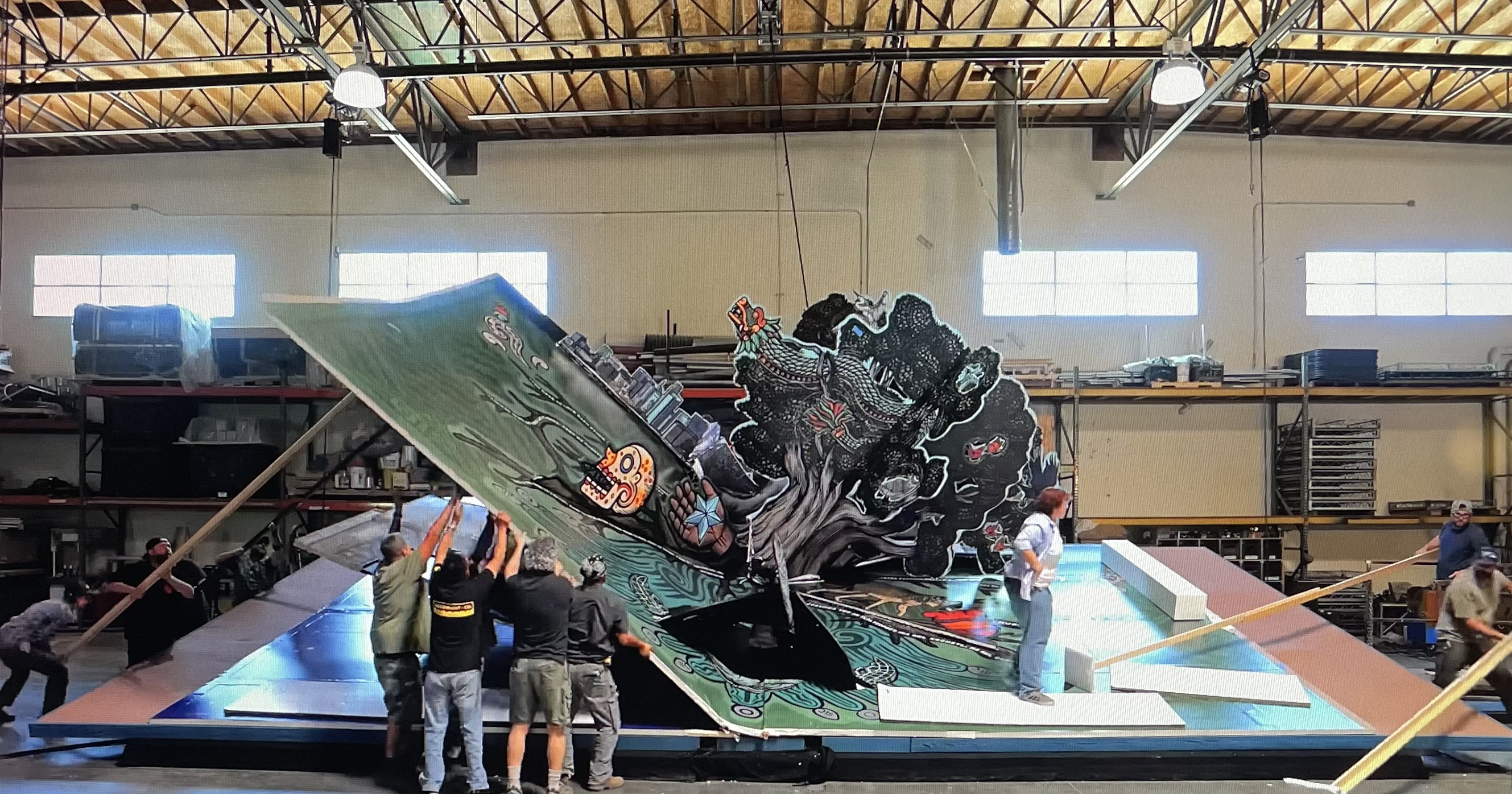
Now Supersize It, Please. Consider this concept enhanced with pop-ups rising more than 11 feet tall. When opened, Luceros y Penumbras measures approximately 31 feet by 20 feet, weighs more than 1800 lbs., and is made entirely from the same materials used to produce traditional books—paper, adhesive, and fabric.
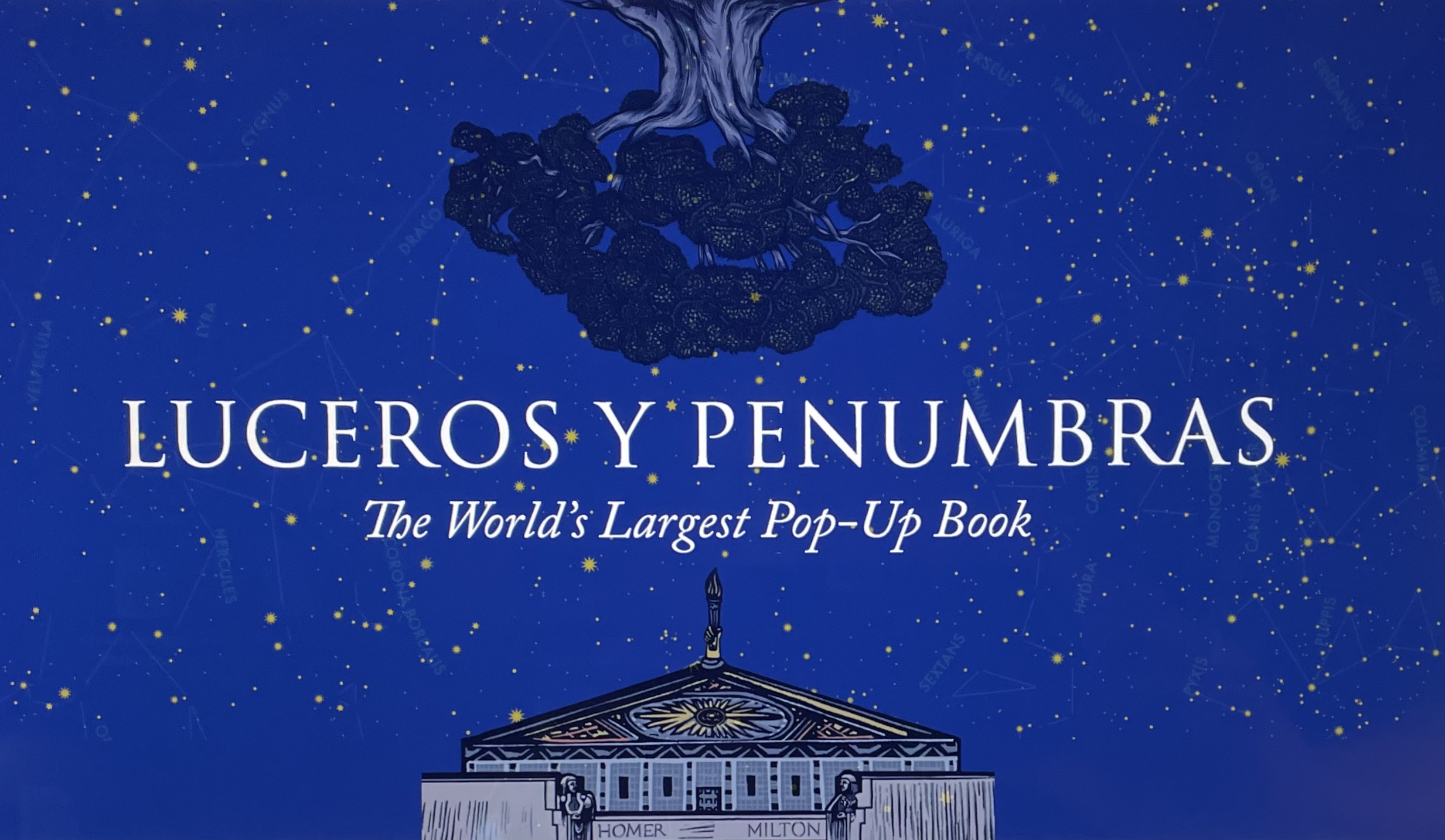
Printmaking, Then Models. Daniel González says he has been inspired by the Los Angeles Public Library all of his life. He fashions his illustrations by relief printmaking, an artful process of chiseling away a linoleum surface and then using the result to make a print.
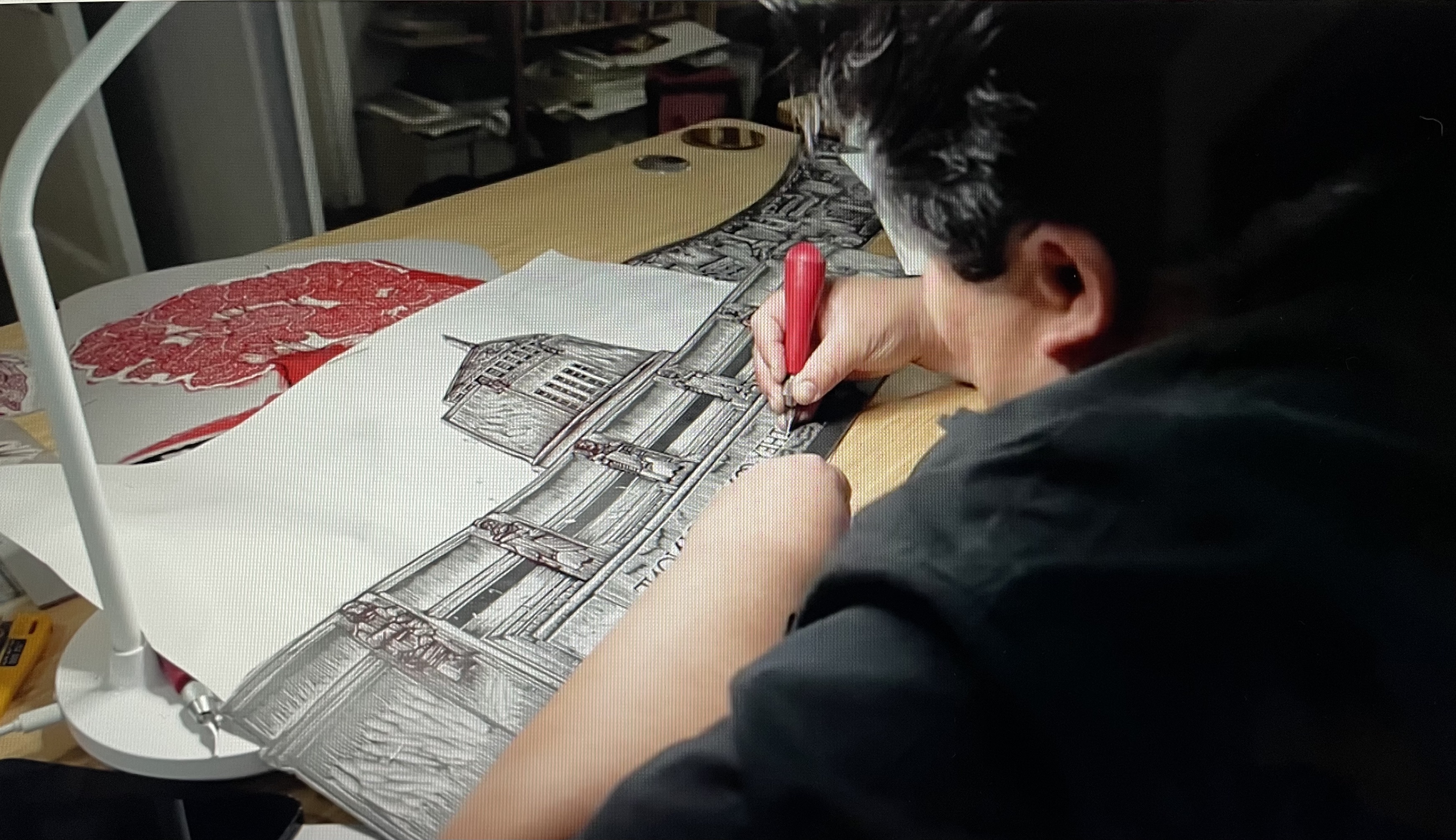
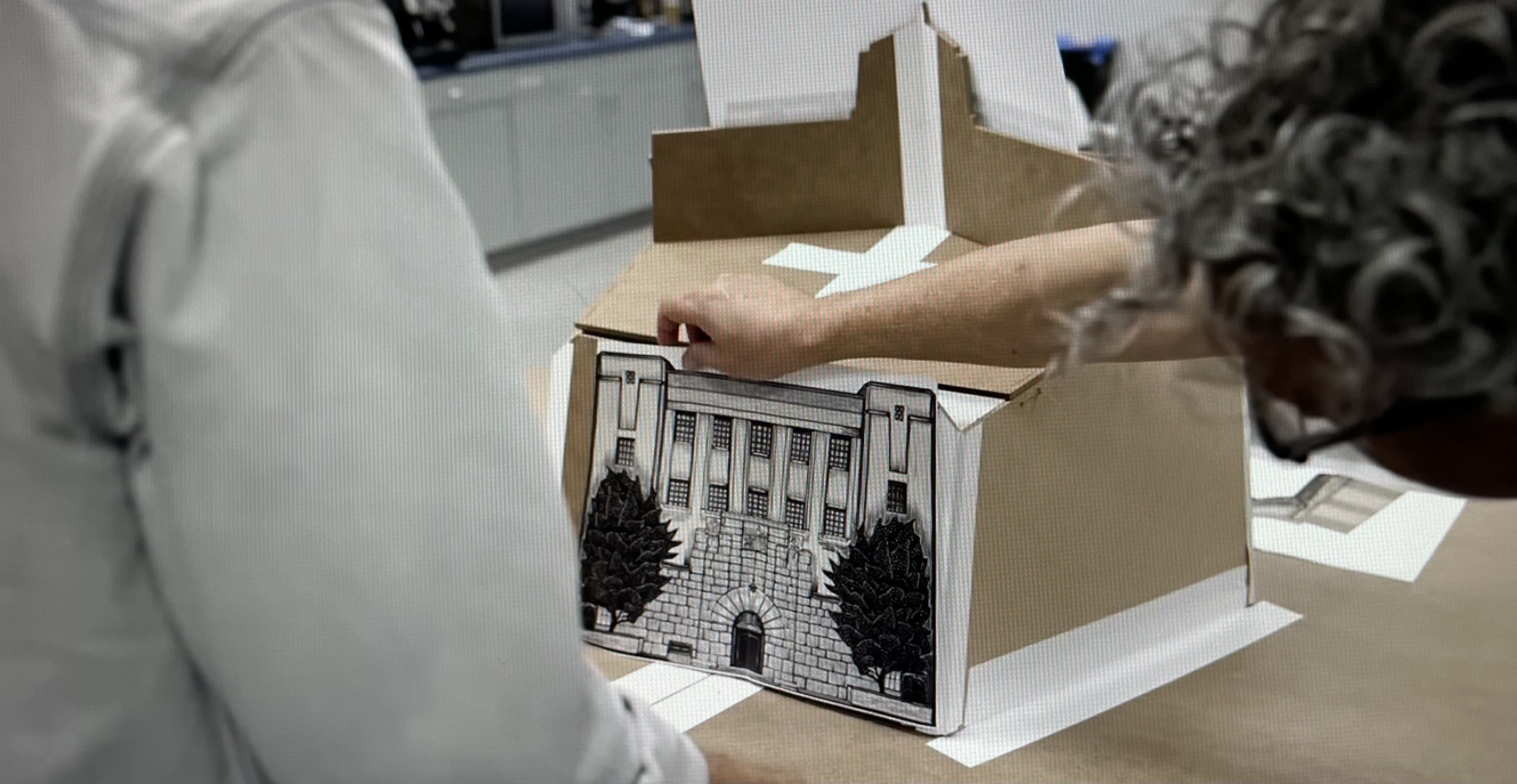
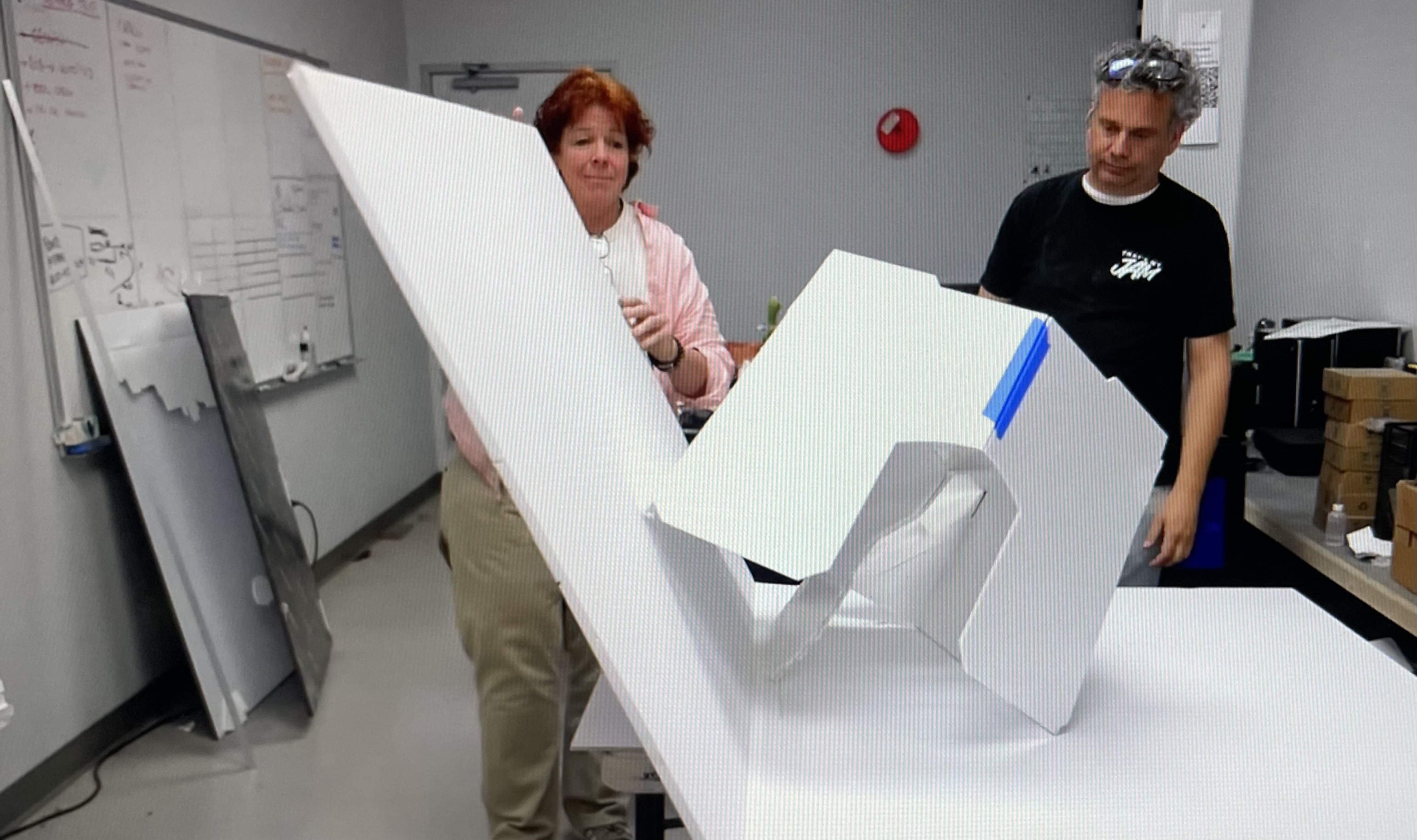
Matthew Reinhart transforms the prints into scale models of the full-size product to come. For example, he starts with Daniel’s illustration of an Aliso tree and decides how it can be constructed into folded paper transformed into a pop-up.
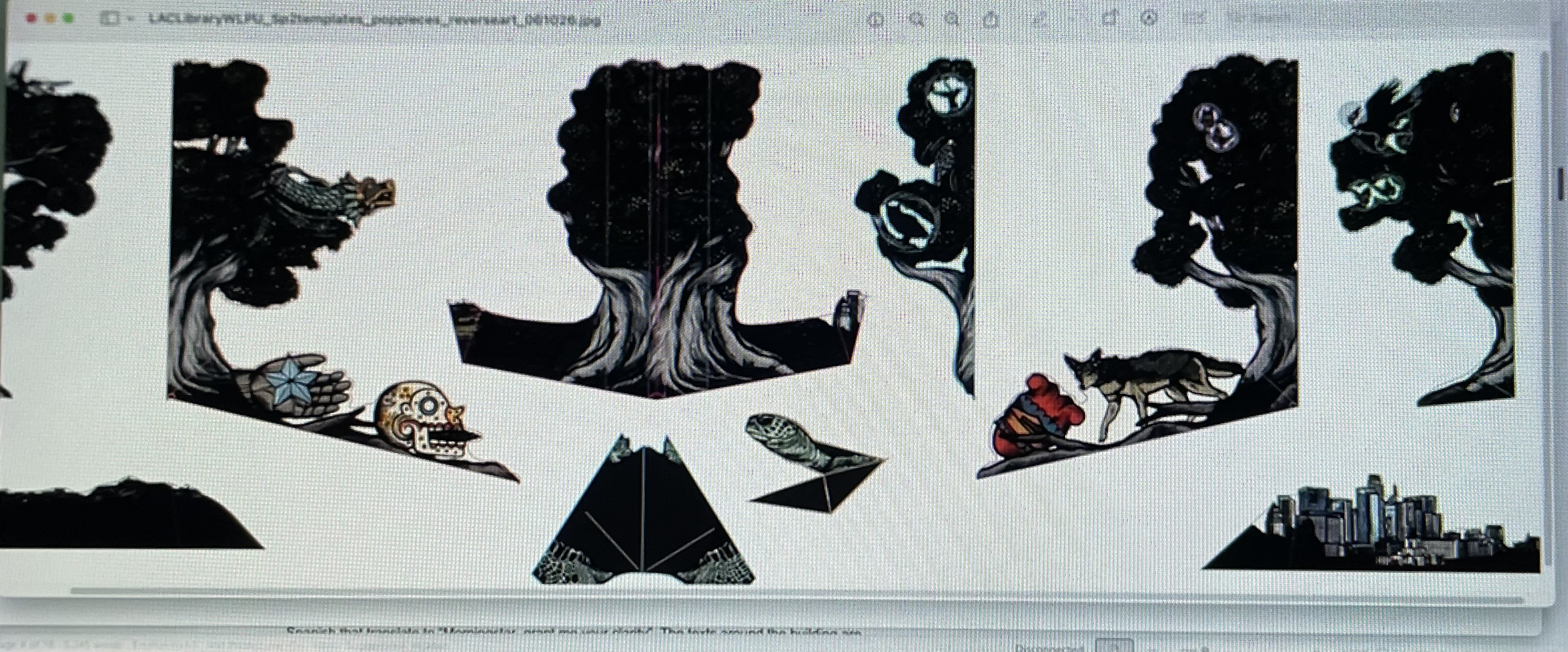
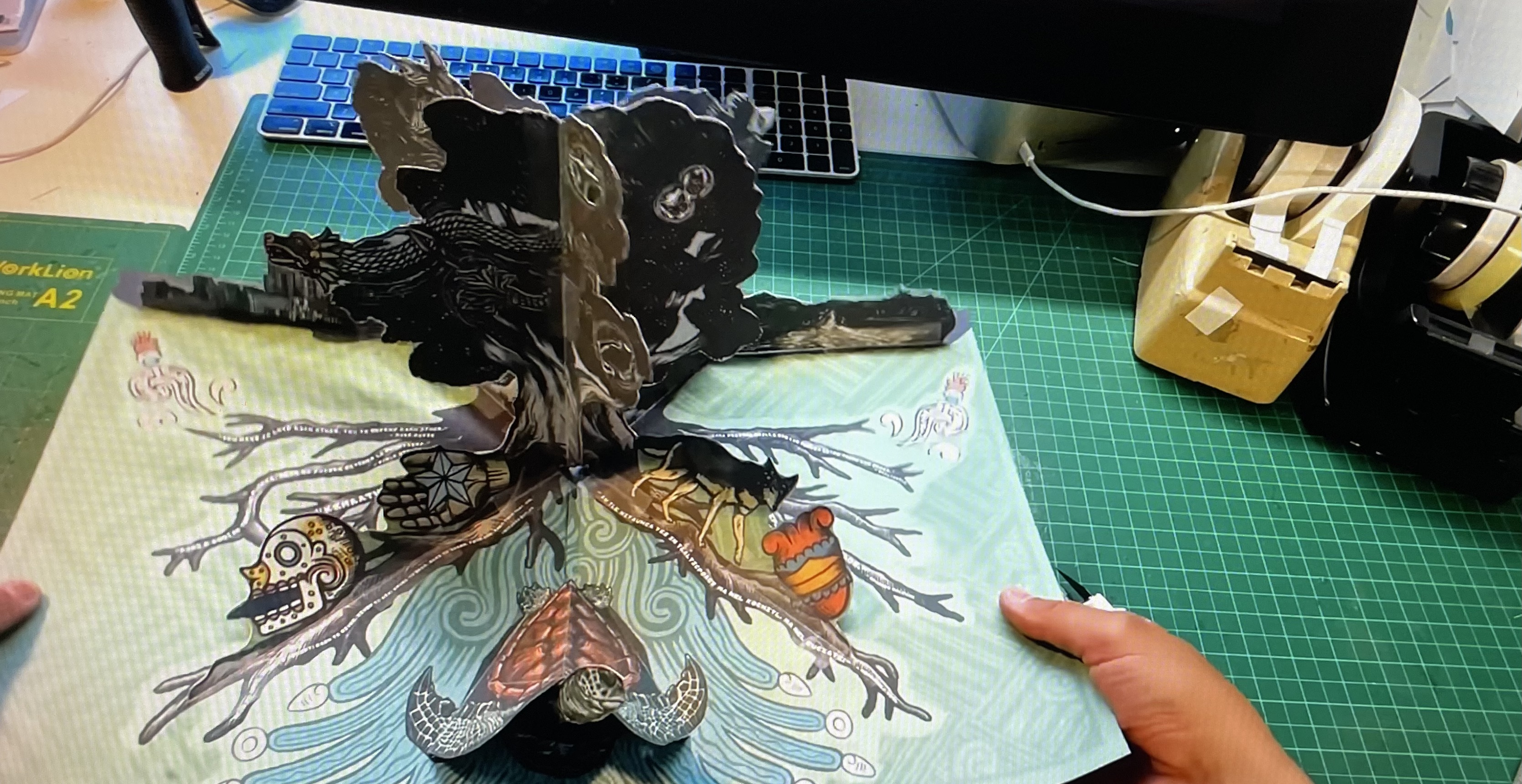
From Model to Full Size. Greg Young of Goodnight & Company was the project lead in upsizing the scale models, from tabletop to 1/5-scale to full size. There were three challenges in this: using paper, glue, and fabric alone; building it in one location and ultimately setting it up in another; and making as many as six iterations of the 1/5-scale models to counter complications of pop-up.
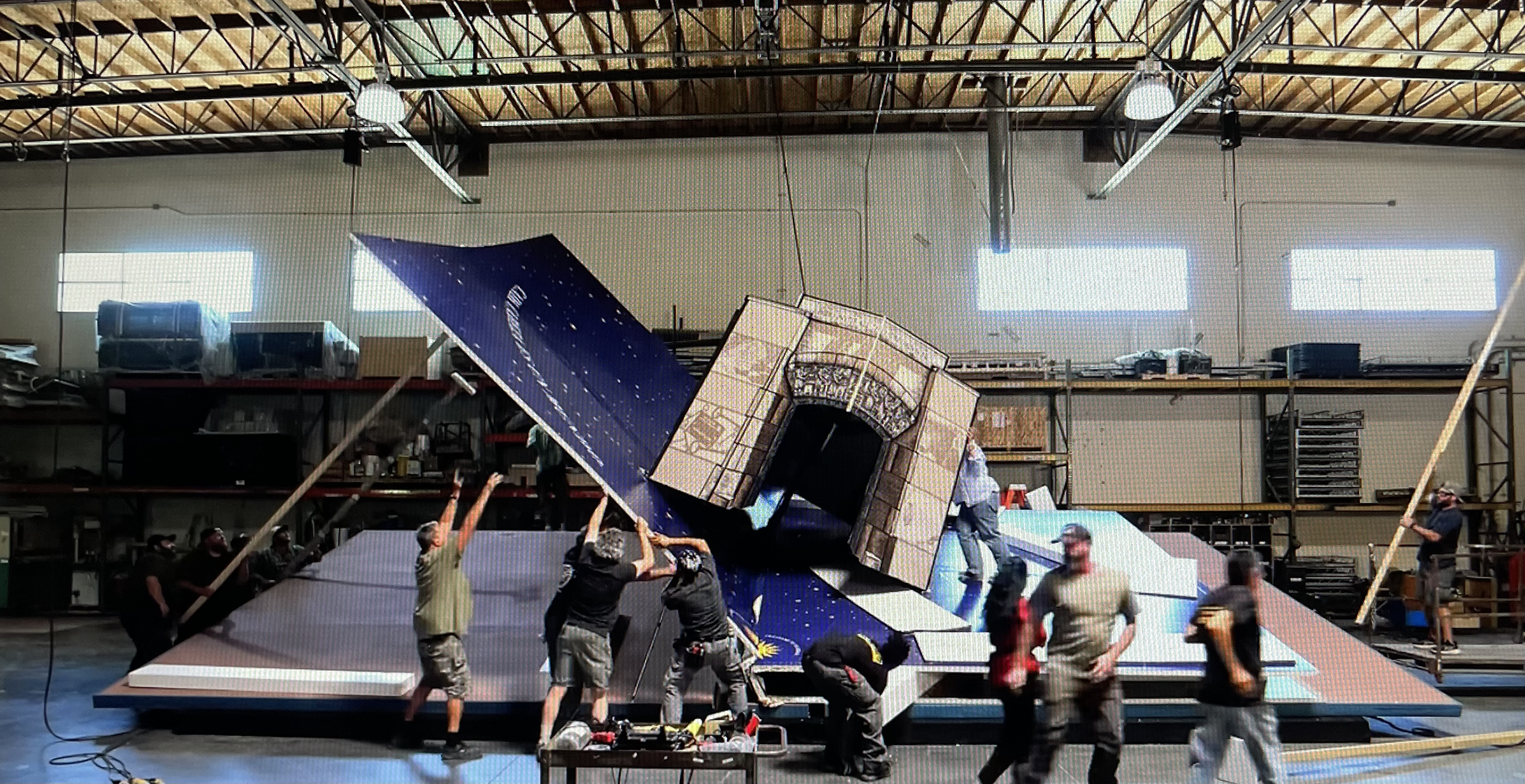
A Pop-Up of Art and Heritage. There are details a’popping in the final Luceros Y Penumbras.
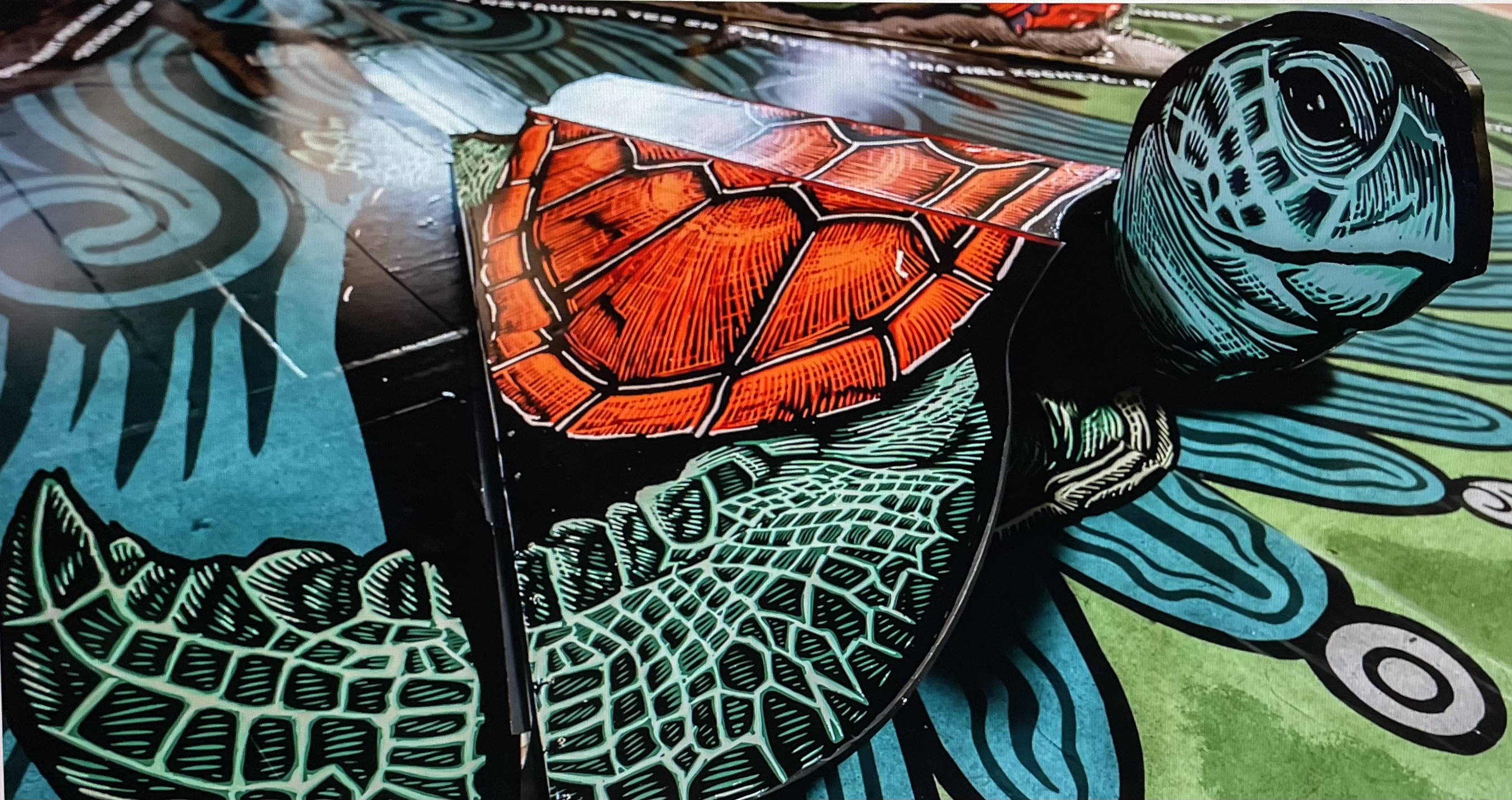
Of course, he’s only part of the celebration.
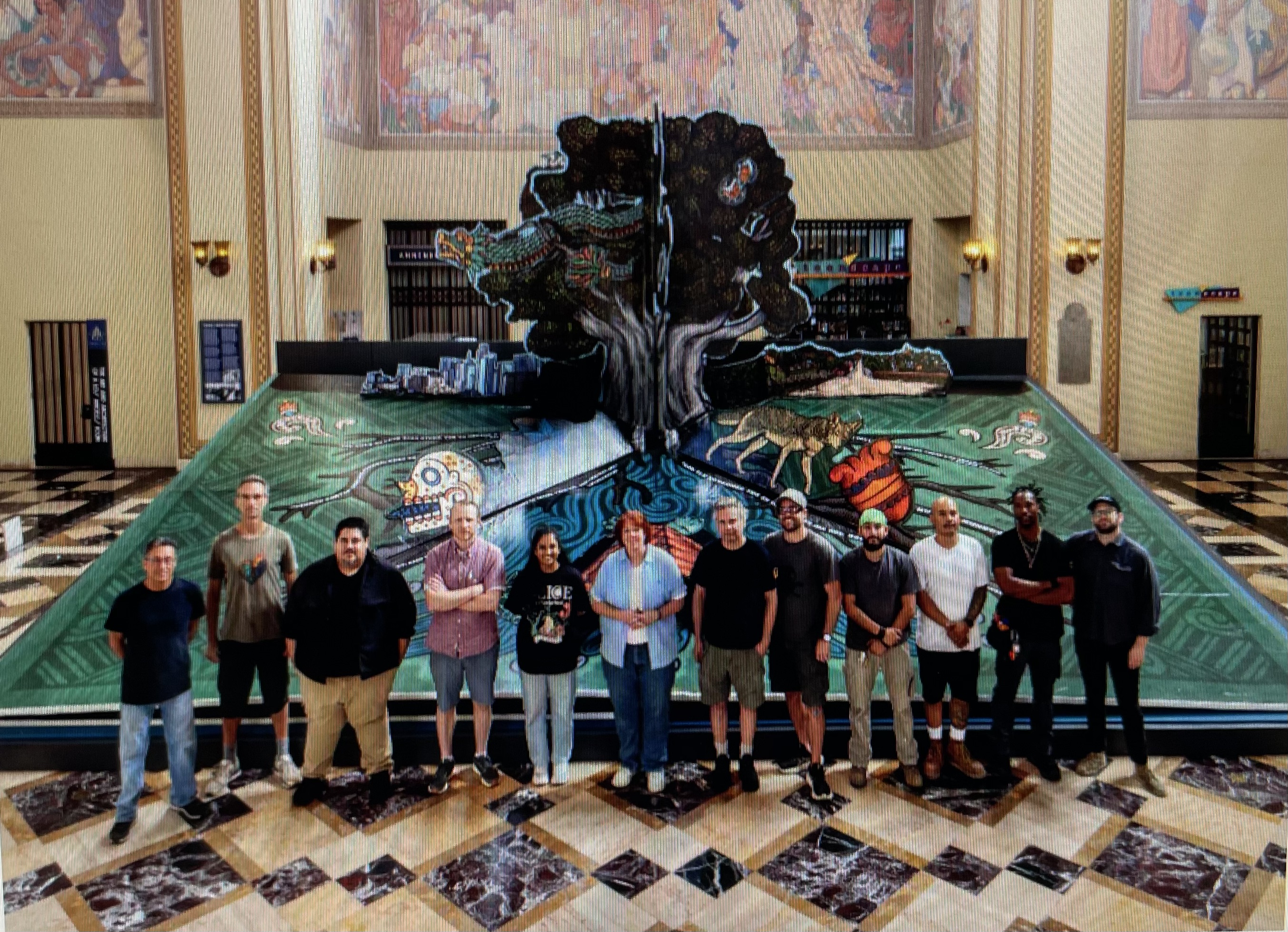
Let’s all celebrate this world’s largest pop-up. ds
© Dennis Simanaitis, SimanaitisSays.com, 2026

