
Simanaitis Says
On cars, old, new and future; science & technology; vintage airplanes, computer flight simulation of them; Sherlockiana; our English language; travel; and other stuff
AMERICA—AS SEEN AT A LONDON EXHIBIT
CHARLOTTE JANSEN OFFERS “PORTRAIT OF A CITY Review—Master Photographers Capture the U.S. Cityscape In All Its Grime, Grit and Glory,” The Guardian, July 28, 2026. She reviews an exhibit at the London’s Dulwich Picture Gallery: “Era-defining photographs from the likes of Alfred Stieglitz, Saul Leiter and Dorothea Lange showcase the urban landscape, from midnight crime scenes to gloomy corridors.”

I found several of her selected photos to be particularly moving. Here are examples gleaned from her article, together with my own thoughts about favorite images.
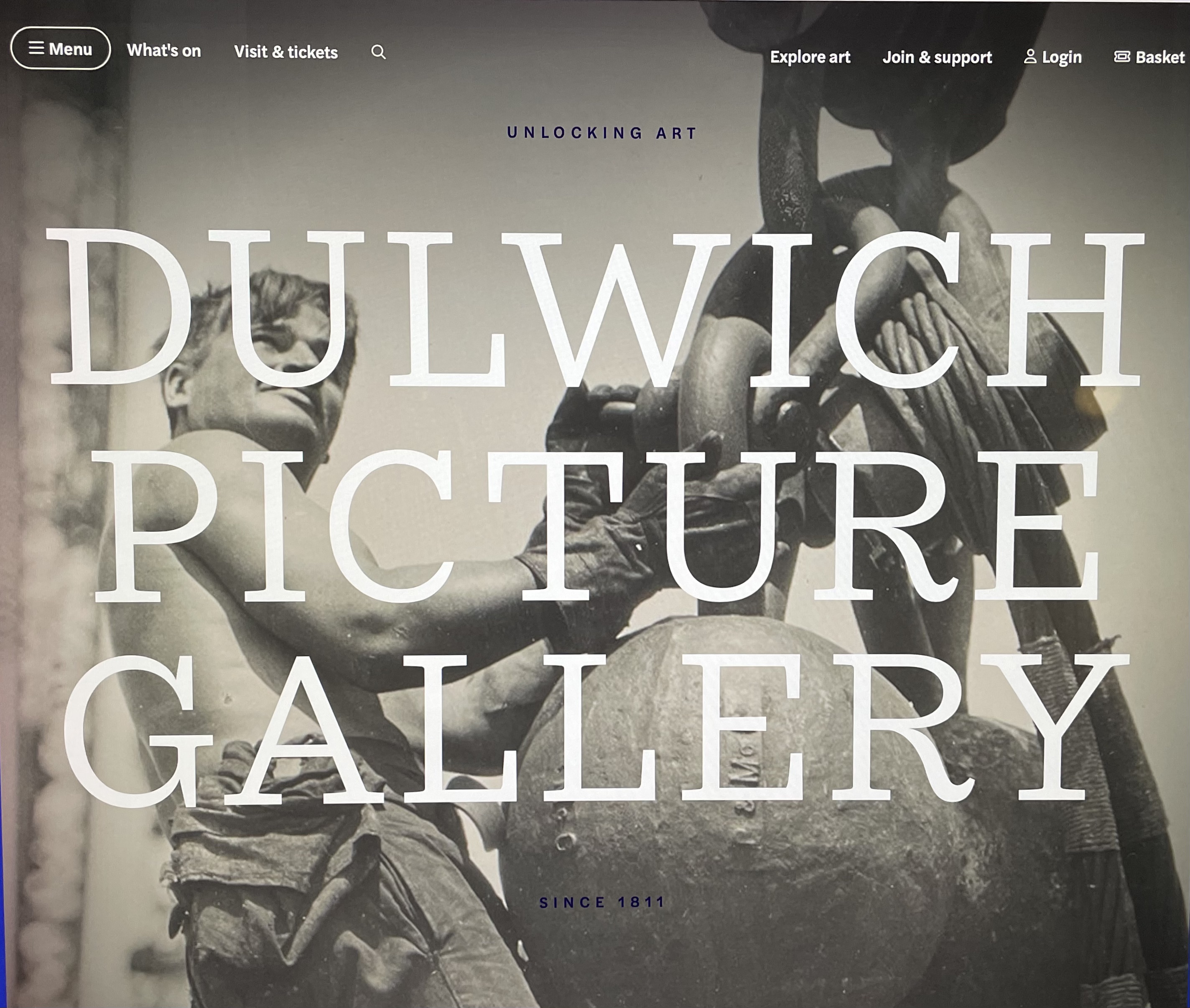
Quietly Contemplative, But Gripping. Jensen observes, “This—only the second photography exhibition in Dulwich Picture Gallery’s history—is a quietly contemplative but gripping show that traces two intersecting developments: the construction of the modern urban environment and the language of photography.”
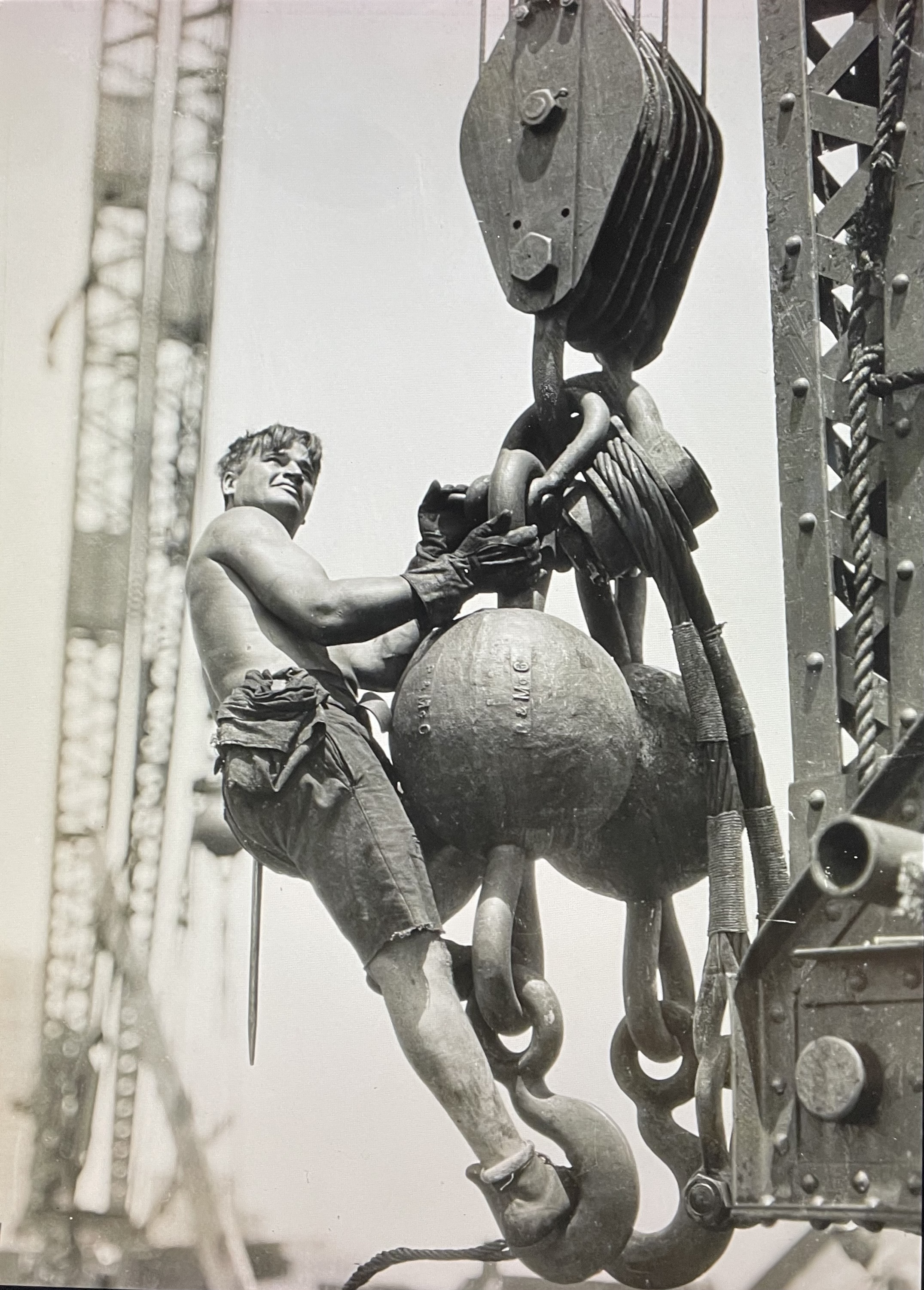
She continues, “Focusing exclusively on works from era-defining photographers of the 20th century made in cities across the US, it’s a concise overview that begins with the pictorialist pioneers of New York, Alfred Stieglitz and Edward Steichen, and keeps moving through masterpieces, starting with early examples of social documentary photography—Dorothea Lange’s Migrant Mother and White Angel Breadline, and Lewis Hine’s emblematic portrait of the high-steel ironworker Victor “Frenchy” Gosselin working on the construction of the Empire State Building.”
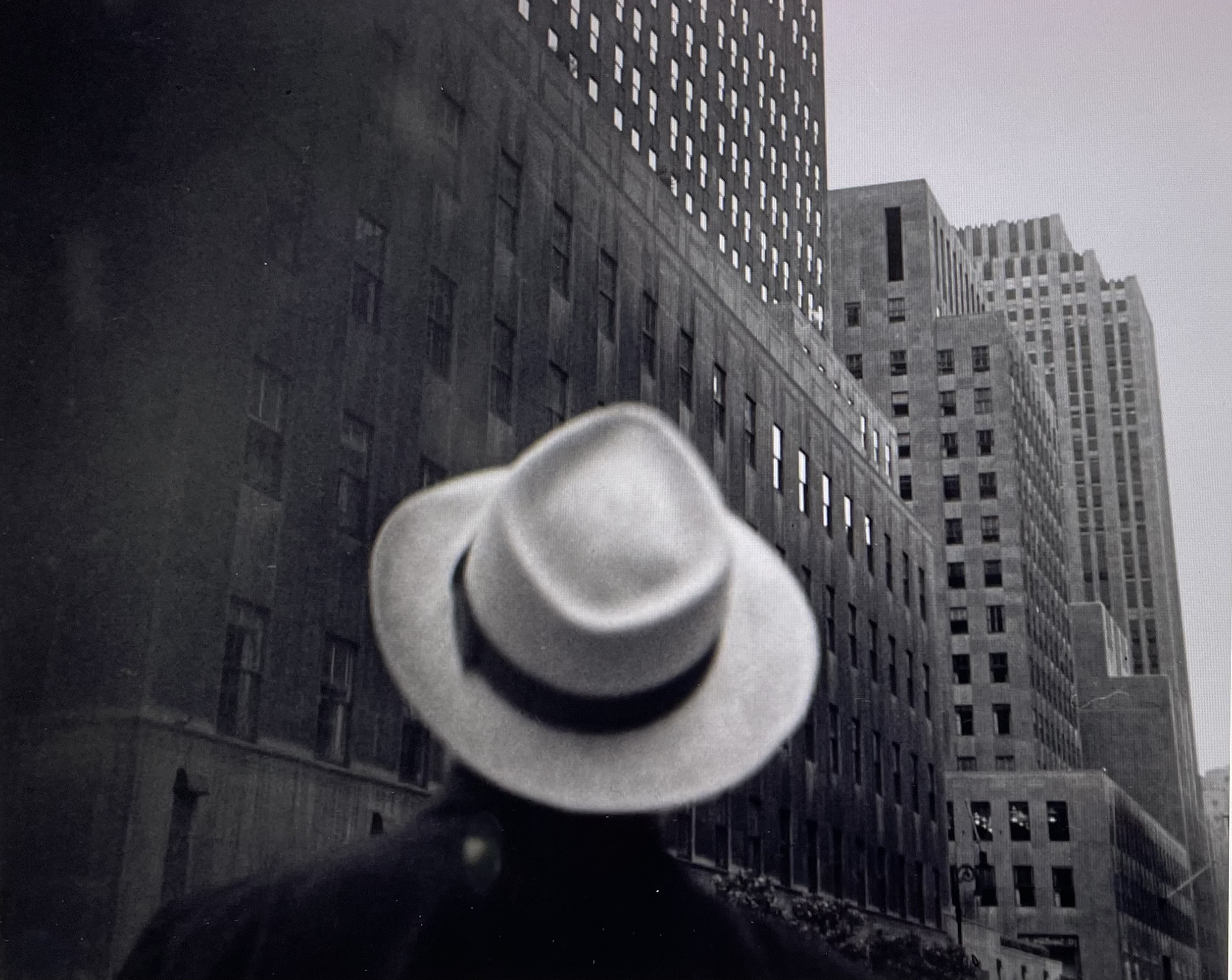
Mortals Dealing With The Massive. Villages might be tidy, but cities by their very nature are massive. And, thus, so are their means of formation.
This reminds me of a favorite portrait of Isambard Kingdom Brunel.
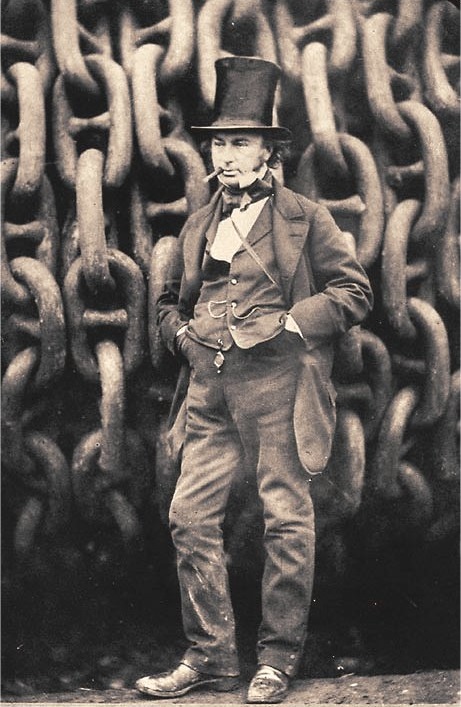
Brunel brims with confidence in this famous image, and for good reason: Wikipedia observes, “Powered by both sidewheels and a screw propeller, she [the Great Eastern] was by far the largest ship ever built at the time of her 1858 launch, and had the capacity to carry 4,000 passengers from England to Australia without refuelling.”
Postwar Street Photography. Jensen recounts, “Garry Winogrand was a central figure in the redefinition of American street photography during the postwar decades.”
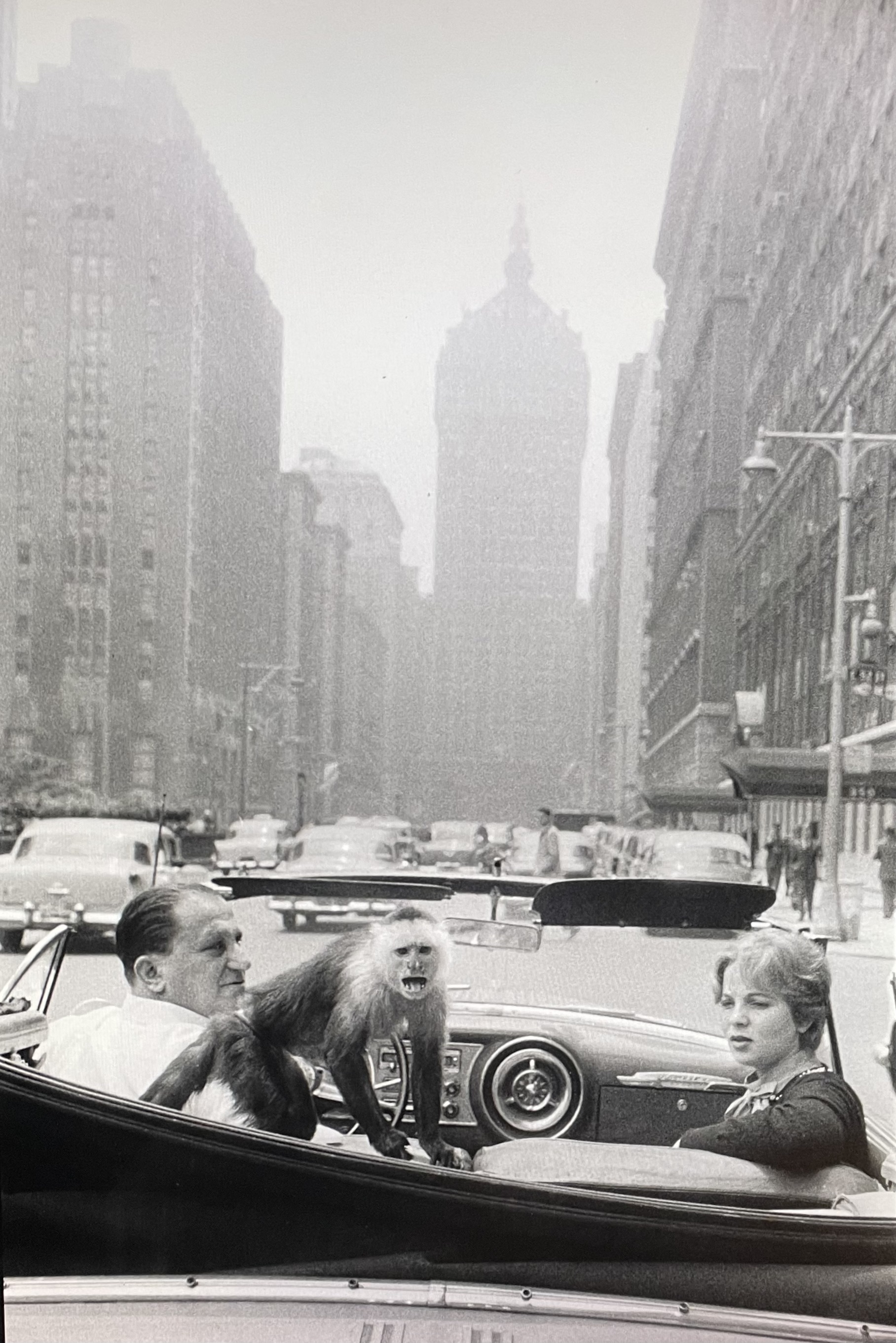
“Winogrand worked at great speed,” Jensen relates, “producing on average around 600 rolls of film per year, often resulting in tilted horizons and abrupt framing.” Here, the dashboard identifies exuberance of the era, as does the humans’ pal.
Eras are Not Always to be Celebrated. Mary Ellen Mark worked in a different city and a different era.
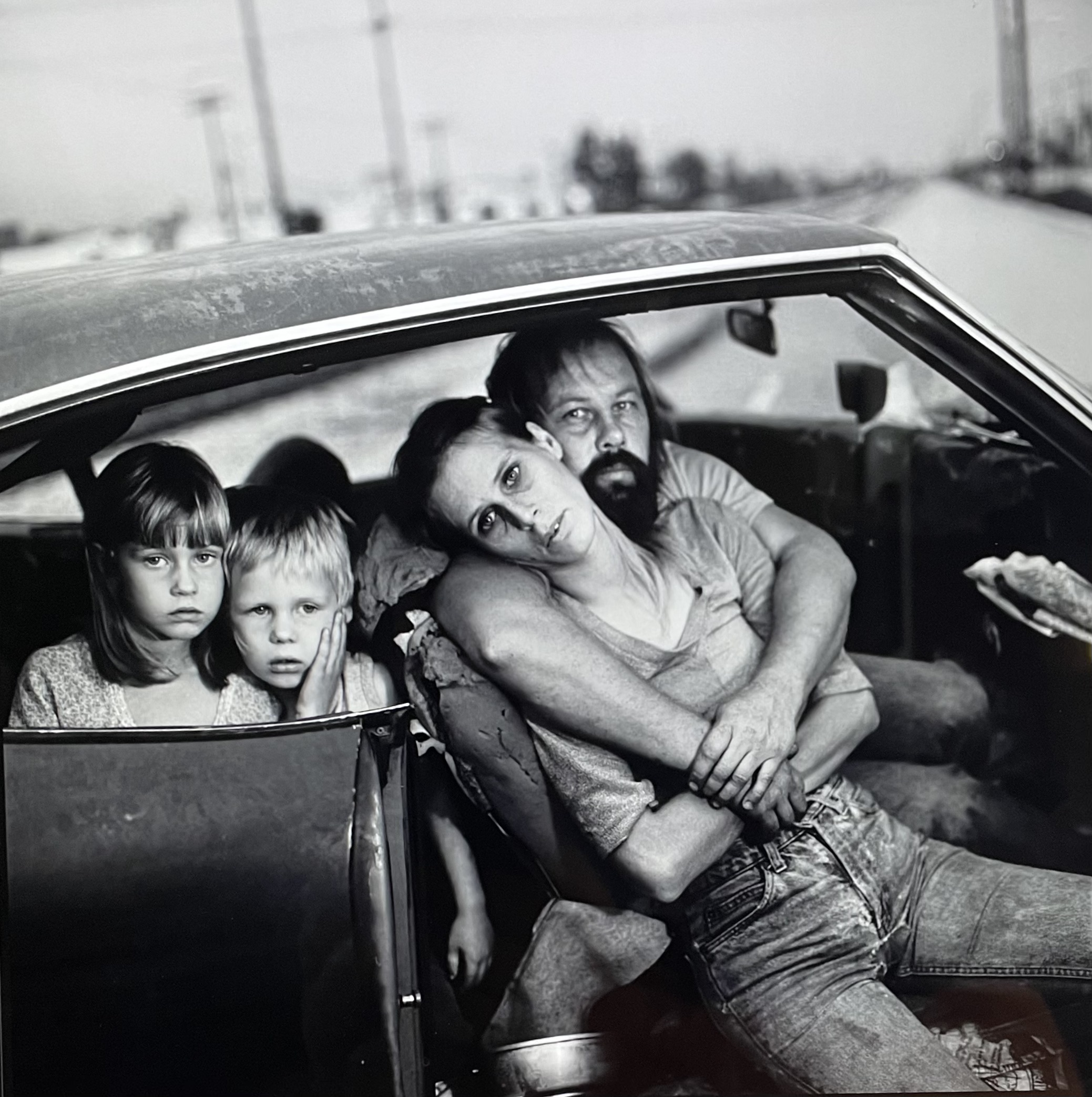
Sadly, this photograph echoes another favorite photo of mine, an especially touching one by Dorothea Lange.
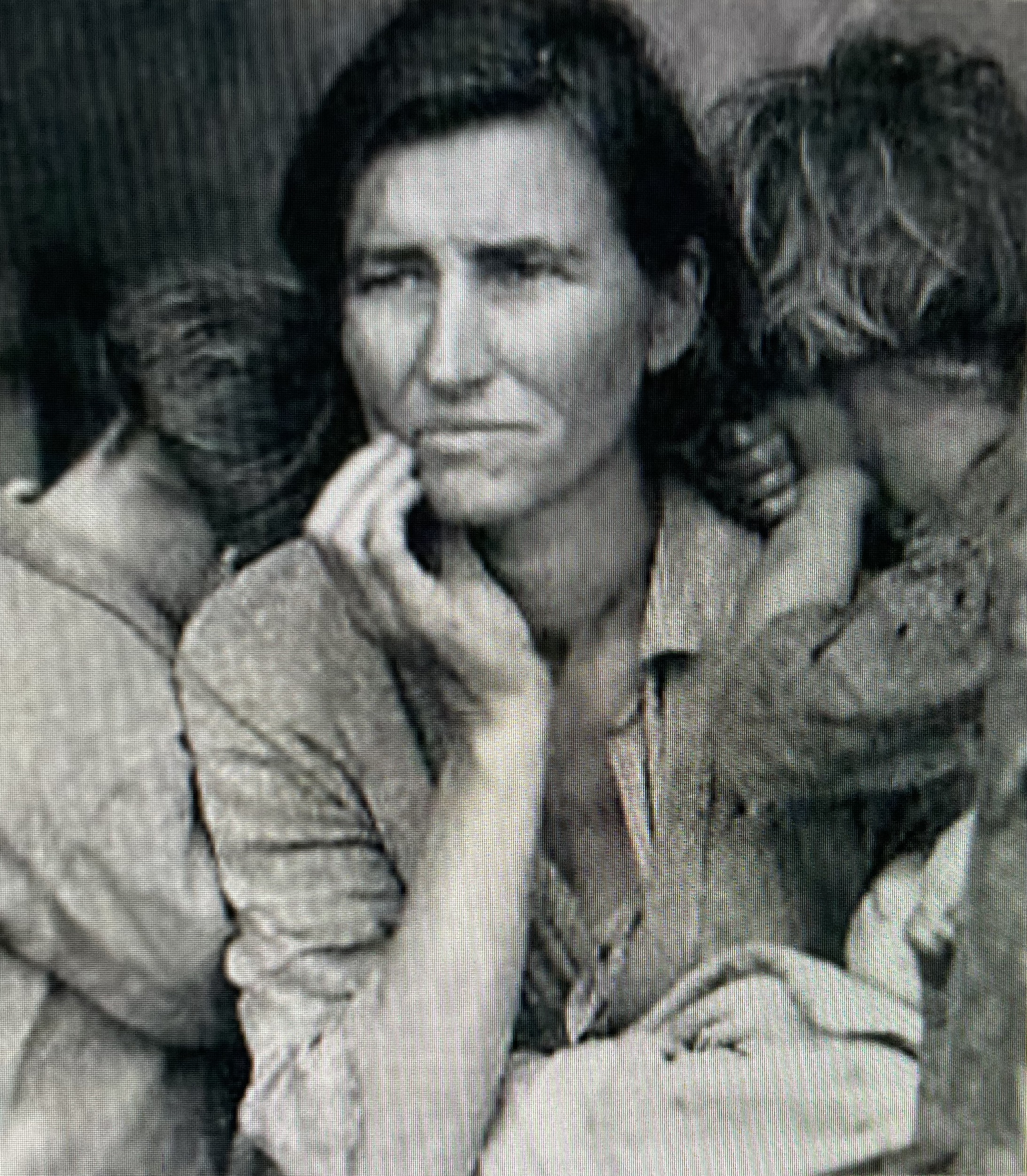
Migrant Mother, Nipomo, California,1936, by Dorothea Lange.
People on the Move. Adverse climate conditions are nothing new (nor “hoax”): People of the Great Plains sought more hospitable living conditions—and jobs—during the Great Depression.
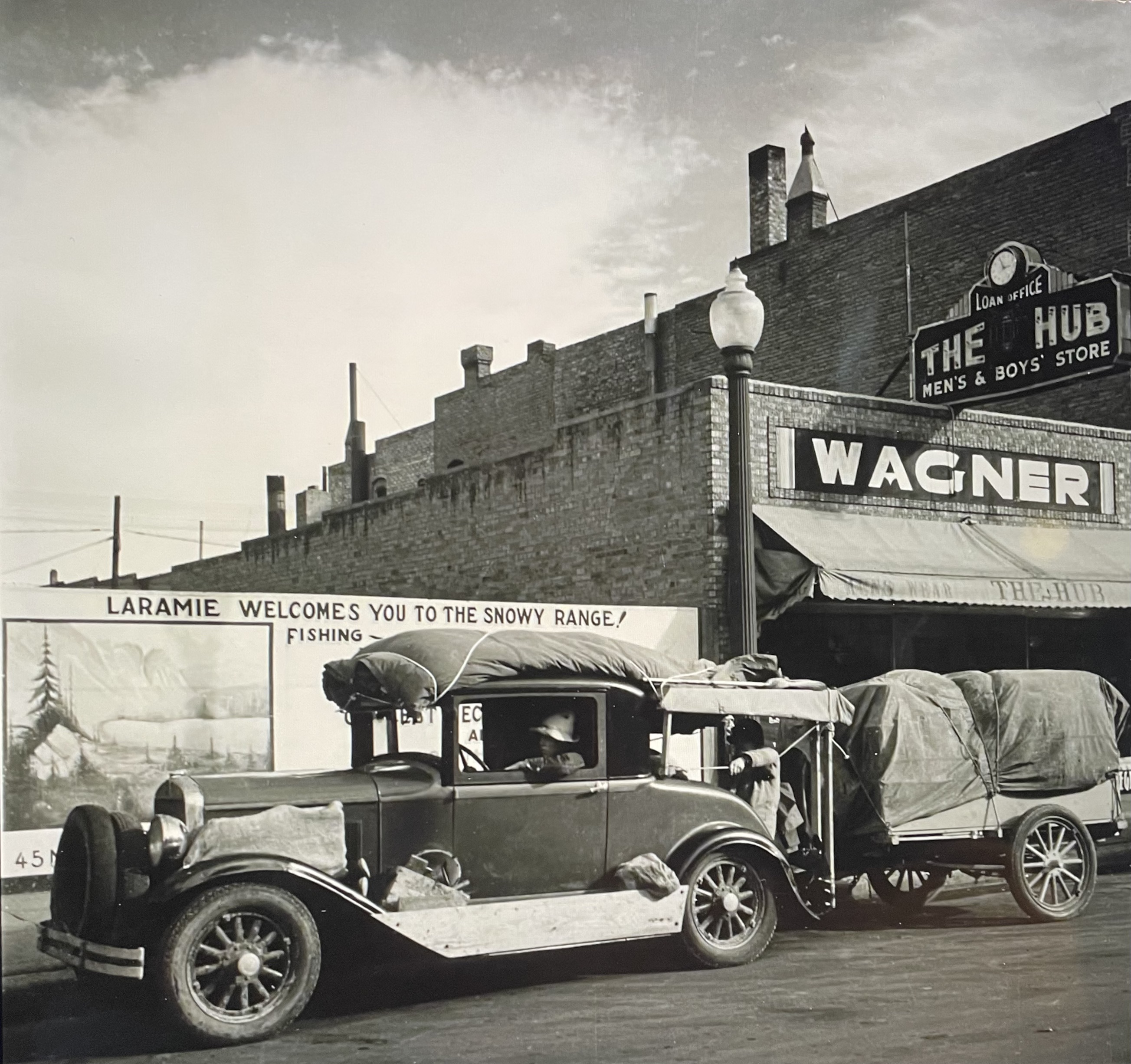
Jensen observes, “[German-born] John Gutmann brought with him a visual sensibility shaped by Bauhaus-influenced ideas. This photograph depicts migrants from the Great Plains who travelled west from states such as Oklahoma, Texas and Missouri in search of work during the Great Depression.”
Celebrating Life. The Dulwich Picture Gallery exhibition identifies American resilience as well. Jensen recounts, “Walker Evans occupies a central place in American photography because he redefined how the modern city could be seen. Working during the Great Depression, Evans applied a detached approach to document urban and rural America.”
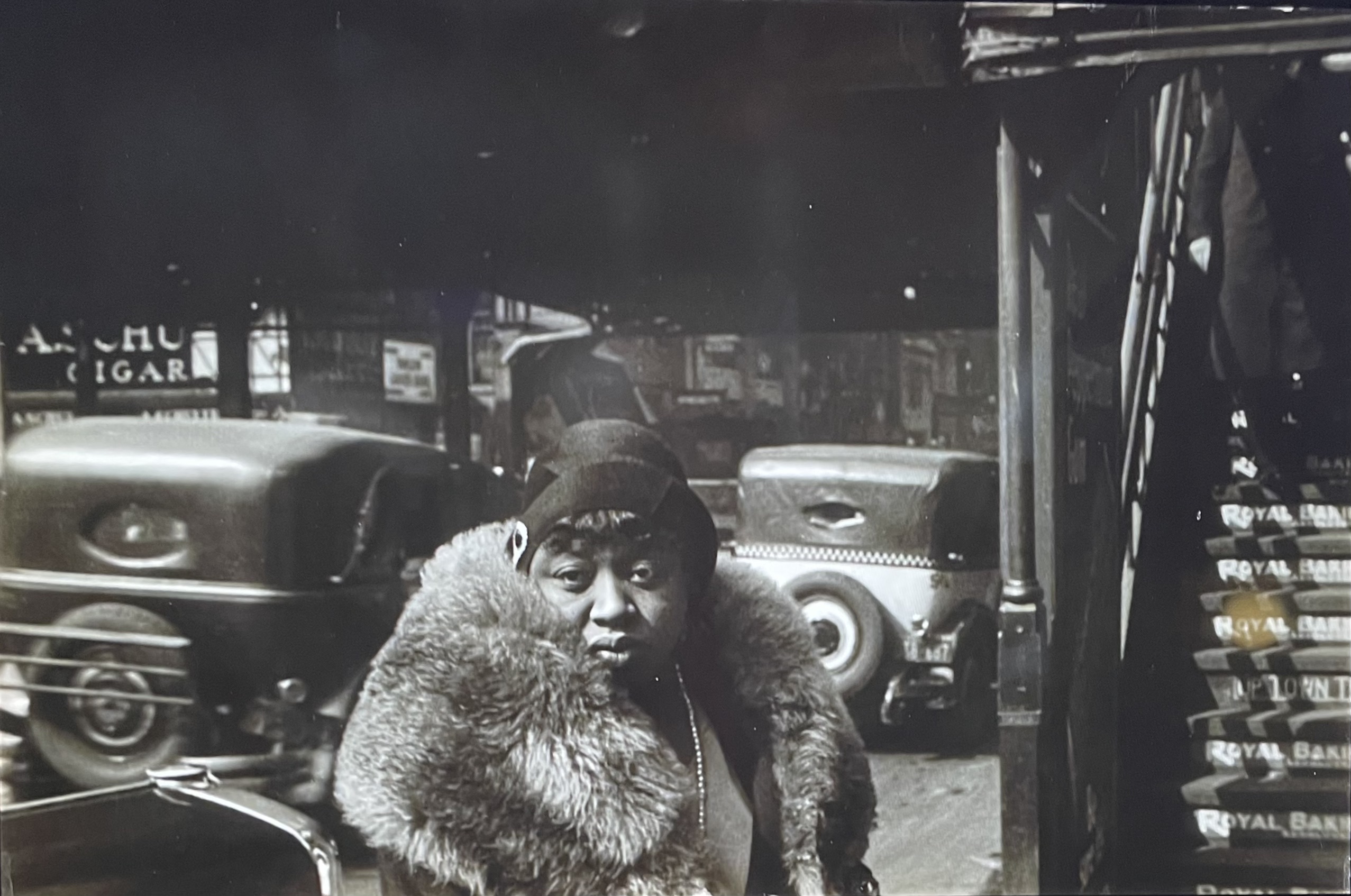
Like so many of Evans’ photo portraits, this one is enigmatic: Is this woman about to board a bus or merely crossing a busy city street? What of her evidently well-to-do Black circumstances, especially in 1929?
“Last One In’s…” The full title of one of The Guardian’s two articles is “Take The Plunge. A Deep Dive into New York and Other Great American Cities—in Pictures.” And where would the Dulwich Picture Gallery exhibition be without the famous image of New York City kids “taking the plunge”?
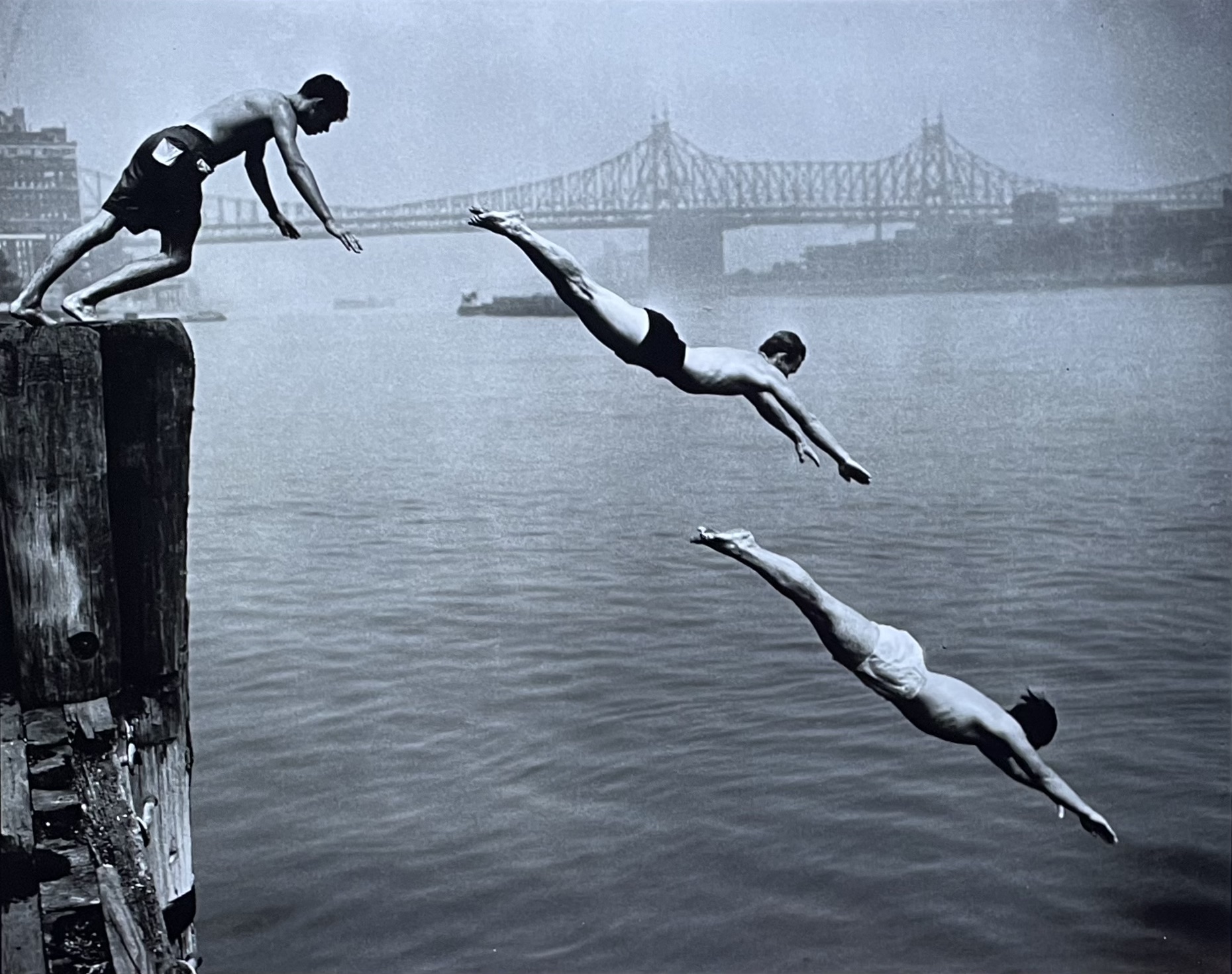
Jensen recounts, “Arthur Leipzig was a Brooklyn–born photographer whose work focused on everyday life in the city during the 1930s–50s.”
Take Your Own Plunge? Portrait of a City: A Century of American Photography is at Dulwich Picture Gallery, London, until October 4. ds
© Dennis Simanaitis, SimanaitisSays.com, 2026

