
Simanaitis Says
On cars, old, new and future; science & technology; vintage airplanes, computer flight simulation of them; Sherlockiana; our English language; travel; and other stuff
ANOTHER ABSURDITY CONCERNING DATA CENTERS PART 1
IT’S BAD ENOUGH THAT DATA CENTERS OCCUPY CONSIDERABLE LANDSCAPE, suck up critical electricity and water for their operation, and offer questionable societal “A.I. benefits.” Hiroko Tabuchi reports “Old, Polluting Jet Engines Are Being Scavenged to Power Data Centers,” The New York Times, November 3, 2026: “Environmentalists,” Tabuchi writes, “call it a step backward.”
So do I. Here, in Parts 1 and 2 today and tomorrow, are tidbits gleaned from Tabuci’s article together with my occasional sleuthing commentary.
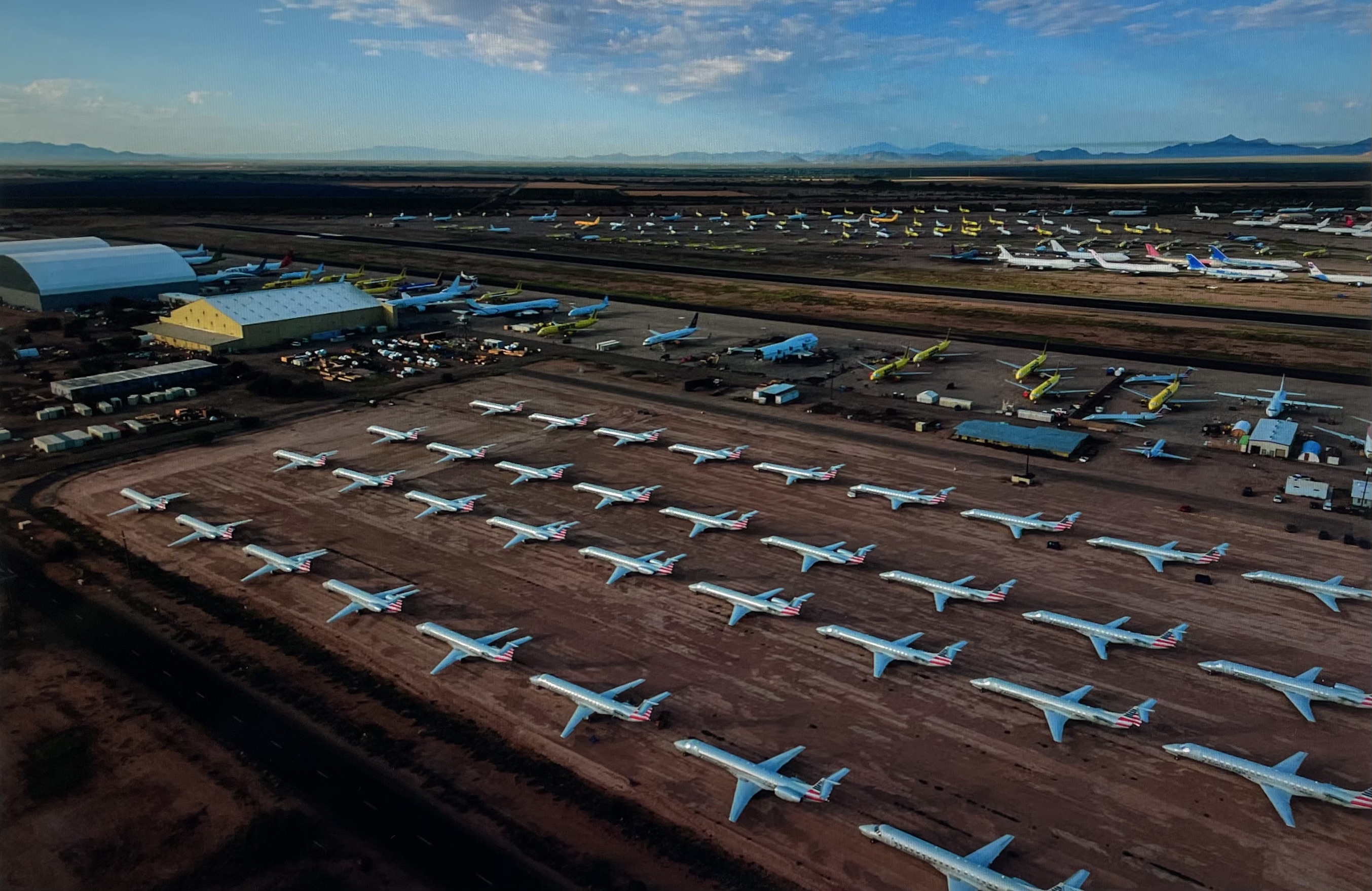
Briefly…. “Across wide stretches of the sun-bleached Sonoran desert in Arizona,” Hiroko Tabuchi writes, “thousands of retired aircraft sit nose-to-tail in graveyards of metal known as boneyards. Many of their engines haven’t been fired up for years. But America’s soaring demand for electricity to power data centers is bringing them back to life. Several companies are racing to strip the engines out of old aircraft to convert them into electrical generators. And data centers, desperate for power, are snapping them up.”
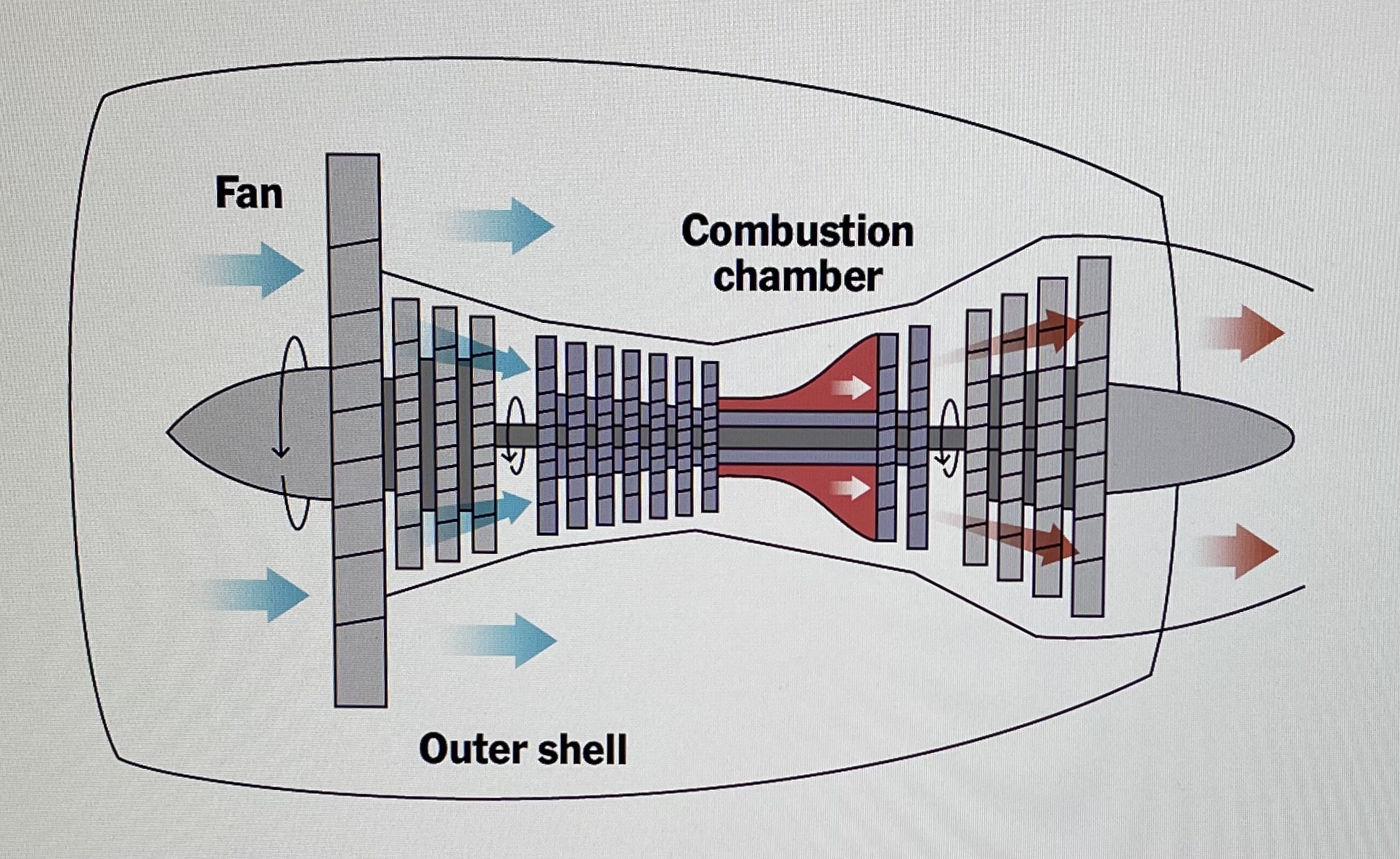
Jet Turbine Fundamentals. “On a plane,” Tabuchi explains, “the engine’s job is to push lots of air out the back, propelling the aircraft. To do that, air is sucked in by a huge fan at the front and compressed by a series of rotors. Then it is combined with jet fuel in the combustion chamber to rotate a central shaft that spins the front-facing fan, pulling in more air and starting the cycle again. Most of the air sucked in by the fan bypasses the engine core and gets shot out the back, creating thrust.”
Note that rotating central shaft.
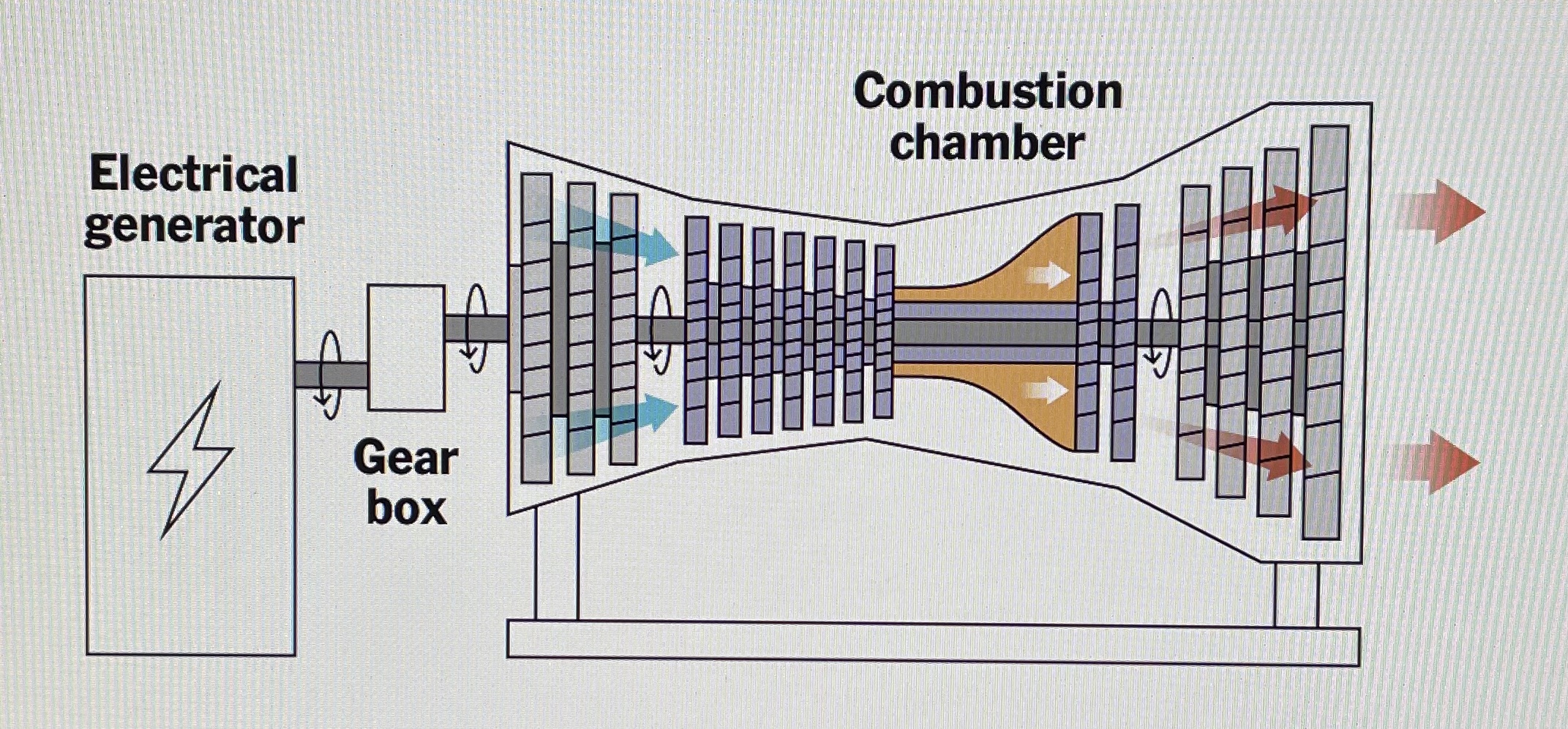
Converting to Land Operation. “To convert the engine,” Tabuchi continues, “the outer shell and fan are removed. The combustion chamber is modified to burn natural gas. The central shaft is connected to a gear box and electrical generator instead of spinning a huge fan.”
“Jet engines are a plentiful and untapped source,” Tabuchi observes. “In January, the federal Energy Information Administration said that the engines from the 4,000 old military jets it parks at a single desert base in Tucson could create 40,000 megawatts of power. That’s more than the generation capacity of the entire state.”

Tradeoffs? Tabuchi continues, “But repurposed aircraft turbines tend to be less efficient and more polluting than engines designed for conventional gas-burning plants. And data centers need more jet-powered generators to produce the same amount of electricity.”
Nor does Tabuchi mention the dense, stationary generation of emissions versus a jet airliner’s distributing its thrust (and pollution) throughout its flight.
Musk—and Damn the Environment. Tabuchi recounts, “Elon Musk’s A.I. company, xAI, has installed eight converted turbines in Mississippi to power one of its massive data centers, according to permits with the state and satellite imagery, both reviewed by The New York Times. The generators have state permission to emit carbon monoxide at twice the rate of other turbines at the site. The permits also allow a 25-percent higher limit for pollutants known as volatile organic compounds. Both carbon monoxide and volatile organic compounds pose significant health risks.”
Why ever would a state permit this increased level of CO and VOCs? Tomorrow in Part 2, we’ll hear more about this and other concerns. ds
© Dennis Simanaitis, SimanaitisSays.com, 2026

