
Simanaitis Says
On cars, old, new and future; science & technology; vintage airplanes, computer flight simulation of them; Sherlockiana; our English language; travel; and other stuff
FOR SALE—A FERRARI SIXTY YEARS AGO
IT’S FUN TO READ ABOUT CARS OFFERED FOR SALE IN R&T’S “MARKET PLACE.” But necessary, of course, to consult the CPI Inflation Calculator converting the values (and tempering our times by its nothing “Calculations using October 2025 data cannot be calculated due to a lapse in appropriations.”). It’s also fun to glean tidbits about these cars.

From the September 1966 R&T:
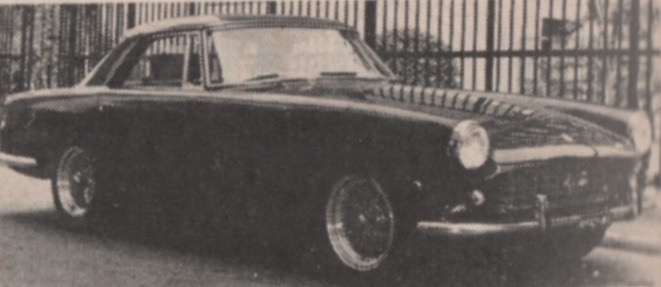
“American selling 1961 FERRARI 250 GT. Farina coupe. Dark blue, black leather, overdrive, disc brakes, Pirelli tires. Body, chrome and interior in excellent condition. Engine was overhauled 20,000 miles ago, mechanically perfect, normal Ferrari oil consumption. Presently in storage. Sacrifice, $3650 includes freight, insurance any U.S. Port.” [Address and phone number in Milan, Italy.]

The CPI Inflation Calculator sets the car’s $3650 at $37,516.14 today. Gee, that’s about the average price of a 2026 compact/subcompact SUV ($36,807).
But what’s the deal about “normal Ferrari oil consumption”?
Fortunately, See R&T, September 1966. There’s a Road Test of a Ferrari 275 GTS, with a subtitle that reads, “Those who like driving owe themselves at least one of these.” Here are tidbits about this enviable machine.
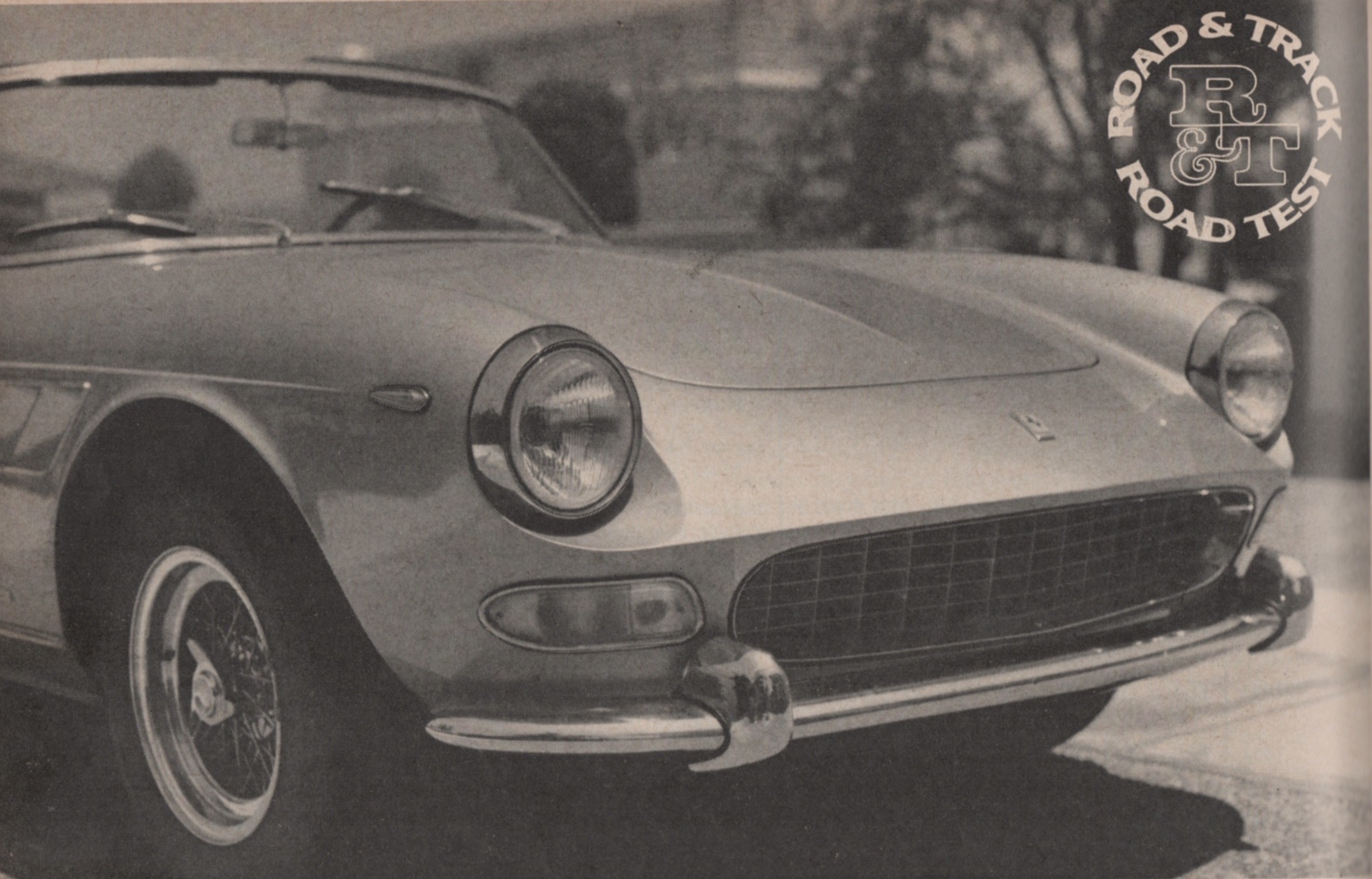
The Road Test began, “WHIRRRRR… VROOM! The very first sounds of a Ferrari set it absolutely apart from any other car. The Ferrari starter sounds like no other—it’s a constant whine, as if there were no compression (we know better).”
The article continued, “Then the Vroom! Ferraris always have and probably always will. The exotic, exciting pitch of 12 cylinders, accompanied by the muffled ticking of 24 tappets.”
Pause Here for 21st-Century Reality: A Ferrari press release notes: “From 78 years of racing heritage comes the first full-electric Ferrari. Built for pure performance, precision, and sports-car thrill.”
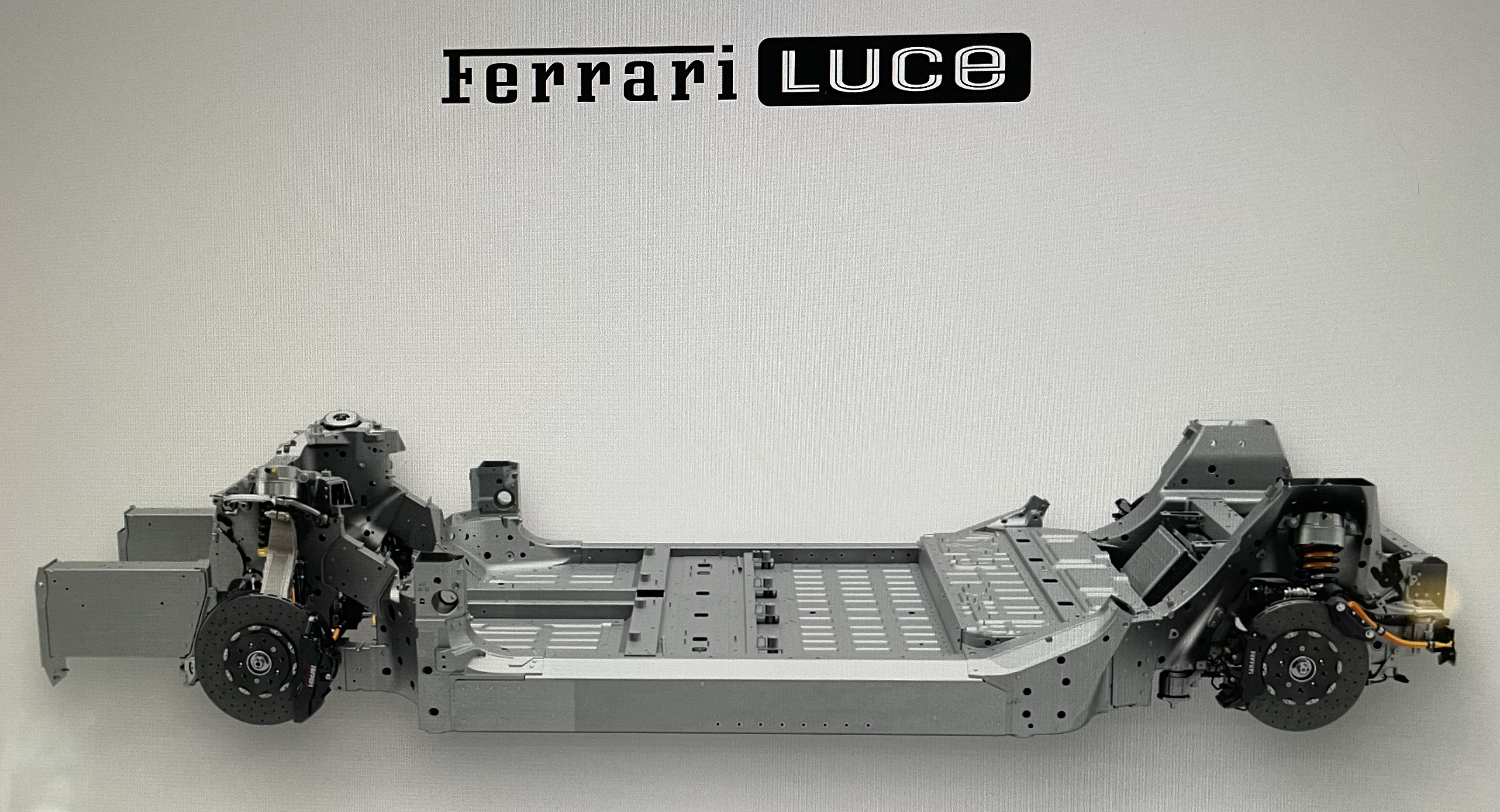
Drew Dorian recounts in Car and Driver, “An electric Ferrari might sound like sacrilege to petrol heads, but the Luce’s quad-motor powertrain with over 1000 horsepower begs to differ. Four-wheel steering, an adaptive suspension, and handy paddles that let the driver easily make changes to torque delivery and regen braking are all on hand to boost the Luce’s thrill-ride street cred. The EPA hasn’t weighed in on the driving range yet, but it should come in at around 280 miles per charge.”
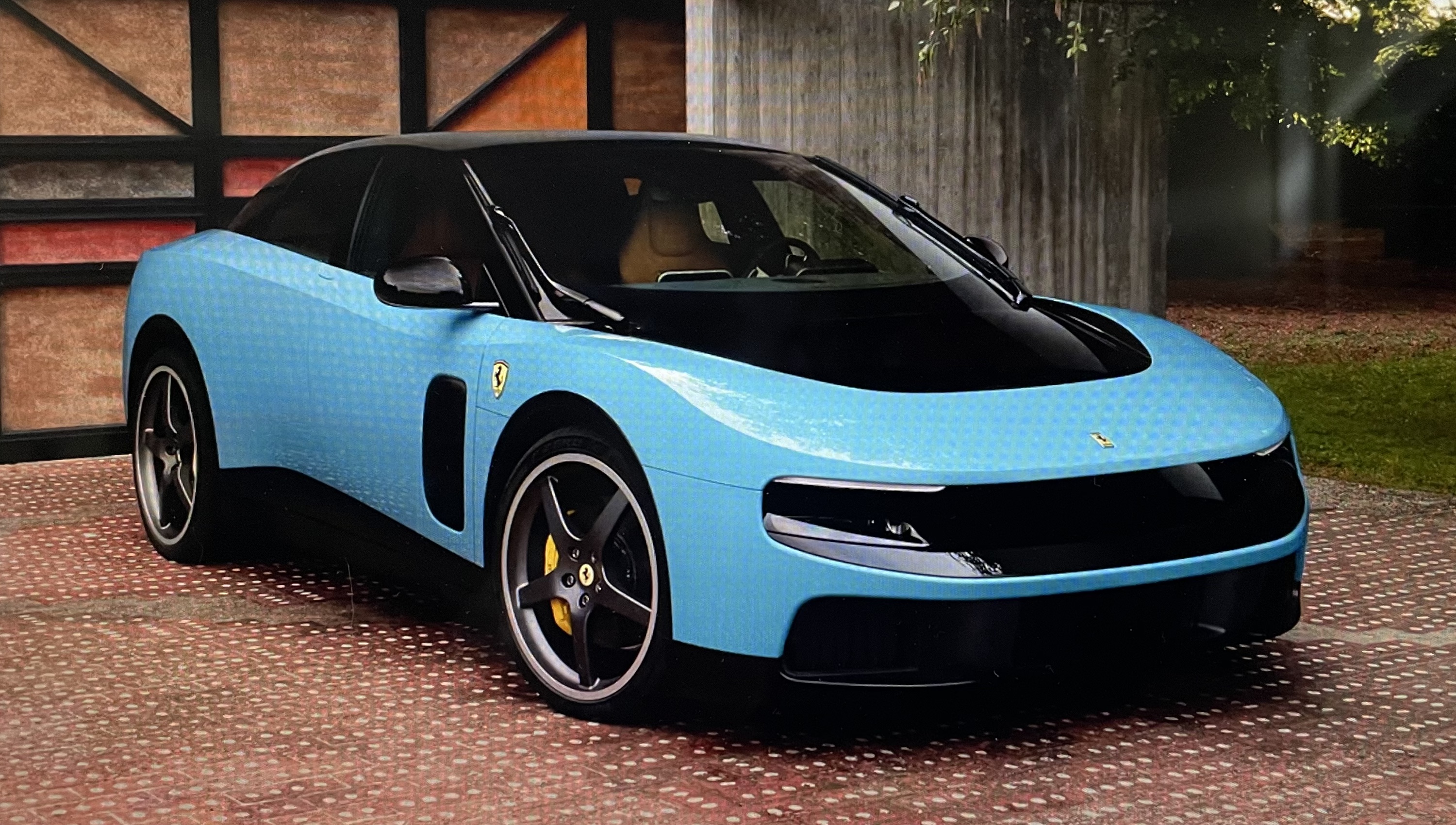
2027 Ferrari Luce. Image from Car and Driver.
“Outside of what will likely be brutal acceleration,” Dorian continues, “the Luce is also aiming to be a luxurious, tech-forward ride with an interior designed in partnership with LoveFrom, a design firm founded by famed Apple designer Jony Ive. Not only is the Luce Ferrari’s first EV, but it’s also the brand’s first five-seater, featuring a rear seat roomy enough to accommodate a three-across bench seat.”
But What About The Whirrrrr… Vroom! And That Ferrari Oil Consumption? Back to R&T, September 1966: “To get the car [the 275 GTS] into perspective, we took a trip through the only remaining state without open-road speed limits, Nevada. [It was “safe and sane” from the mid-1920s until 1955, and then limited only on certain highways.] It was here that the real nature of the car really came through. We covered 425 miles in 5 hours, in fact, at an ambient temperature of 100º F (including one gas and two lemonade stops).”
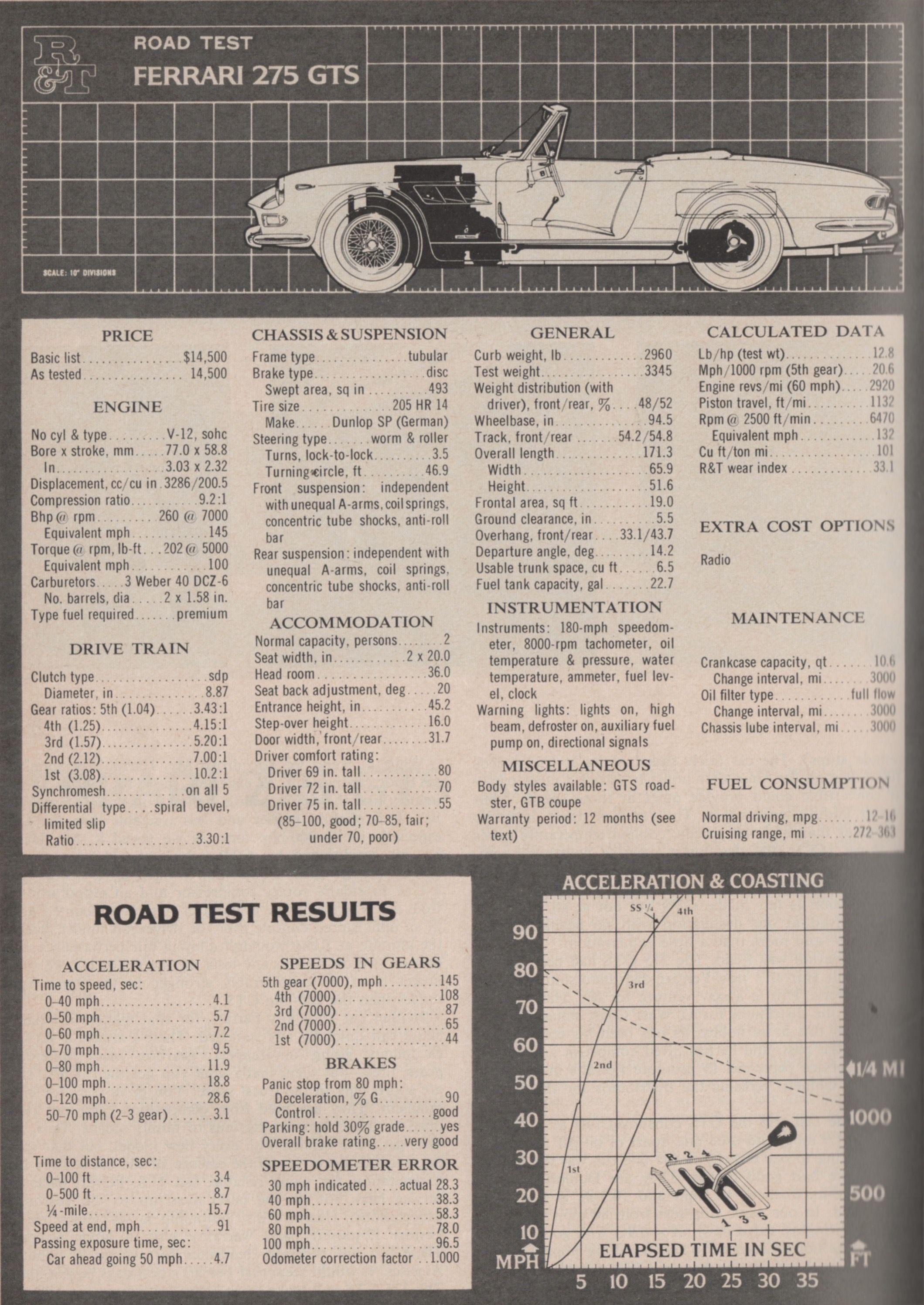
“The car fairly sailed along,” R&T recounted, “at true speeds of 100-110 mph for hour after hour…. During the fast trip, the GTS consumed fuel at a reasonable rate, 14.0 mpg, and used one quart of oil per 500 miles.”
Apparently, note, this seemed to be normal Ferrari oil consumption. On the other hand, a quart of oil in 1966 cost about the same as a gallon of gasoline, 32¢, (which the CPI Inflation Calculator figures at $3.30 in today’s dollar. Hmm….)
An Owner’s Report From That Same 1966 R&T. “So,” writer Bill Davis posited “You’d Like to Own a Ferrari?”
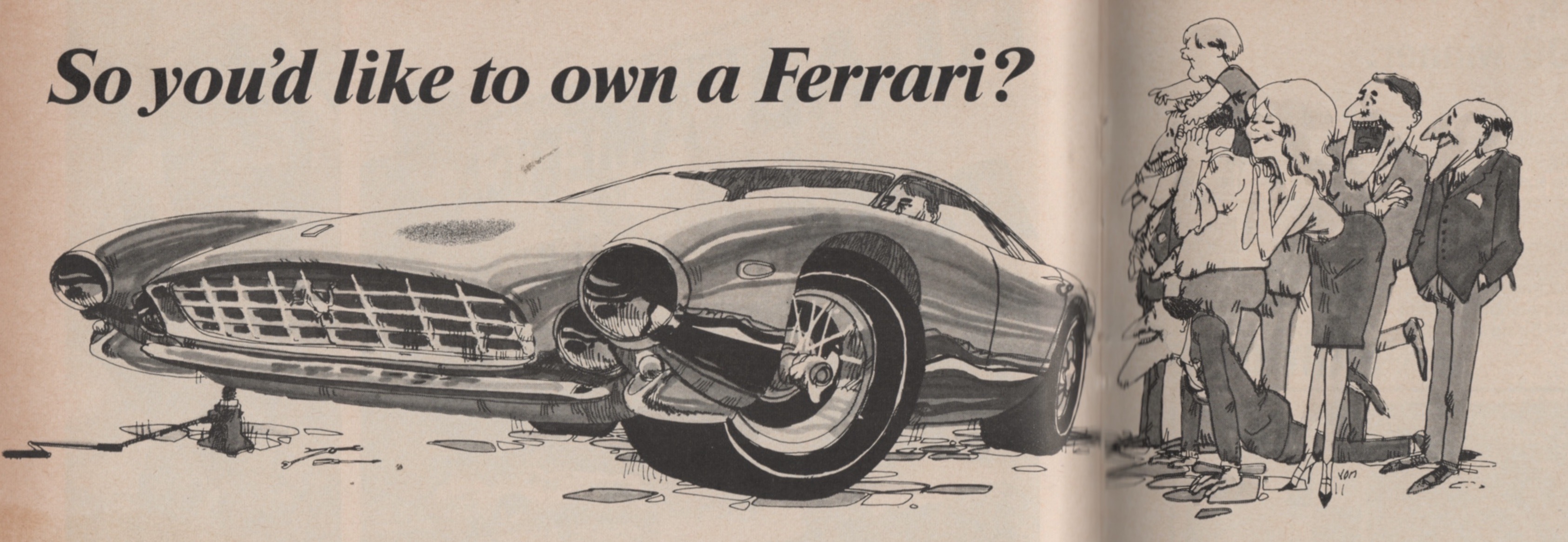
“There are twenty good reasons,” Davis recounted, “why the average car nut shouldn’t even look at a Ferrari. On the other hand, there is one good reason why anyone interested in cars should do everything short of going to jail to get one. What reason? A Ferrari is a Ferrari is a Ferrari.”
Davis’s life with a new Lusso began with a flat tire in the Lincoln Tunnel: “Where does an emergency truck hook-up to a Lusso? Besides, who-the-hell ever heard of a Ferrari holding up traffic? I decided to inch along with the pack. Outside the tunnel sans raincoat and while answering stupid questions of a Port Authority cop, I put on the spare. And 20 miles later, I was a happy boy when I steered into my own garage.”
“Well,” Davis recounted, “I’ll tell you. (1) I’ve been lucky, and (2) I know Joe. If I didn’t know Joe, I’d be as broke as a VW driveshaft in a Chaparral. But, friend, my heart has taken a beating. Ferrari reliability is a fact. The belief that ‘Ferraris never have trouble’ is a fiction.”
Other Travails. “First,” Davis noted, “the standard complaint. The clock didn’t work. Okay. So who needs a clock. Next, the cigarette lighter blew fuses. The horns were on the same circuit, so they went out with the lighter. There were aluminum chips in the dial mechanism of the speedometer, so the cable wound up and snapped. There was a porous weld in the filler neck of the gas tank. Gas spilled into the trunk every time fuel was added.”
And Who’s Joe? Davis explained, “Joe leases one end of a 2-pump filling station on Route 17, in North Jersey. Three other Ferraris go there, plus quite a few Jags, Healeys, VWs, etc. Joe claims he used to work at the Ferrari factory…. He seems to know my Ferrari like he designed it. And he approaches it with such reverence I almost cry.”
“Wouldn’t it be great,” said Bill Davis, “if every Ferrari came equipped with one Joseph Francica in the trunk compartment instead of a cheap tool kit?”
Thanks for a nice article, Bill. ds
© Dennis Simanaitis, SimanaitisSays.com, 2026

