
Simanaitis Says
On cars, old, new and future; science & technology; vintage airplanes, computer flight simulation of them; Sherlockiana; our English language; travel; and other stuff
A “SIMPLE” SEAL FOR A FORMULA ONE LSD
THANKS TO SAE INTERNATIONAL AUTOMOTIVE ENGINEERING, June 2026, we get a glimpse into what might be considered a “simple” seal for hydraulic actuation of the McLaren Formula One car’s limited-slip differential. Andrew Clarke, senior engineer of design & analysis at the product’s Greene Tweed supplier, offers details from which I’ve gleaned tidbits within my analytical ken. The moral of this is clear: Even the most basic aspect of Formula One is superbly hypertech.
LSD Fundamentals. Here and following, quoted descriptions are Andrew Clarke’s: “The limited-slip differential (LSD) governs torque distribution between the rear wheels, allowing controlled transfer of power to the wheel with greater available grip…. At the center of this assembly is a hydraulic actuator that clamps a friction clutch inside the differential. The actuator modulates clutch engagement to redirect torque as grip levels change through corner entry, mid-corner load transfer, and acceleration on exit.”
Seal Integrity in a Challenging Environment. “Within this system, seal integrity is paramount, as significant leakage could cause catastrophic loss of system function and force the team to retire the car.”
To wit, the hydraulic failure of steering assist and brake-by-wire in Charles LeClerc’s Ferrari late in the recent Barcelona Grand Prix.
“The LSD actuator operates in an environment characterized by temperatures up to 150º C (302º F) and pressures ranging from 5 to 250 bar (72.5 to 3625 psi). These loads occur in the presence of aggressive transmission fluids and under repeated actuation throughout practice sessions, qualifying runs, and race events.”
Reliable Sealing. “The actuator’s duty cycle includes rapid pressure application and release, meaning a seal must respond consistently during transient pressure events as well as during steady-state loading. Thermal cycling between operating and lower-temperature conditions introduces dimensional changes that must be accommodated without compromising contact pressure.”
Packaging a Challenge As Well. “Within the differential assembly, packaging space is limited and weight sensitivity is inherent in vehicle design.”
A “simple” seal can have complex requirements indeed.
A Metal-Spring-Energized Sealing Architecture. McLaren’s choice of a Greene Tweed’s Metal-Spring-Energized (MSE) seal is a concept considerably beyond a traditional elastic o-ring: “The architecture combines a precision-engineered polymer jacket with a corrosion-resistant metal energizing spring.”
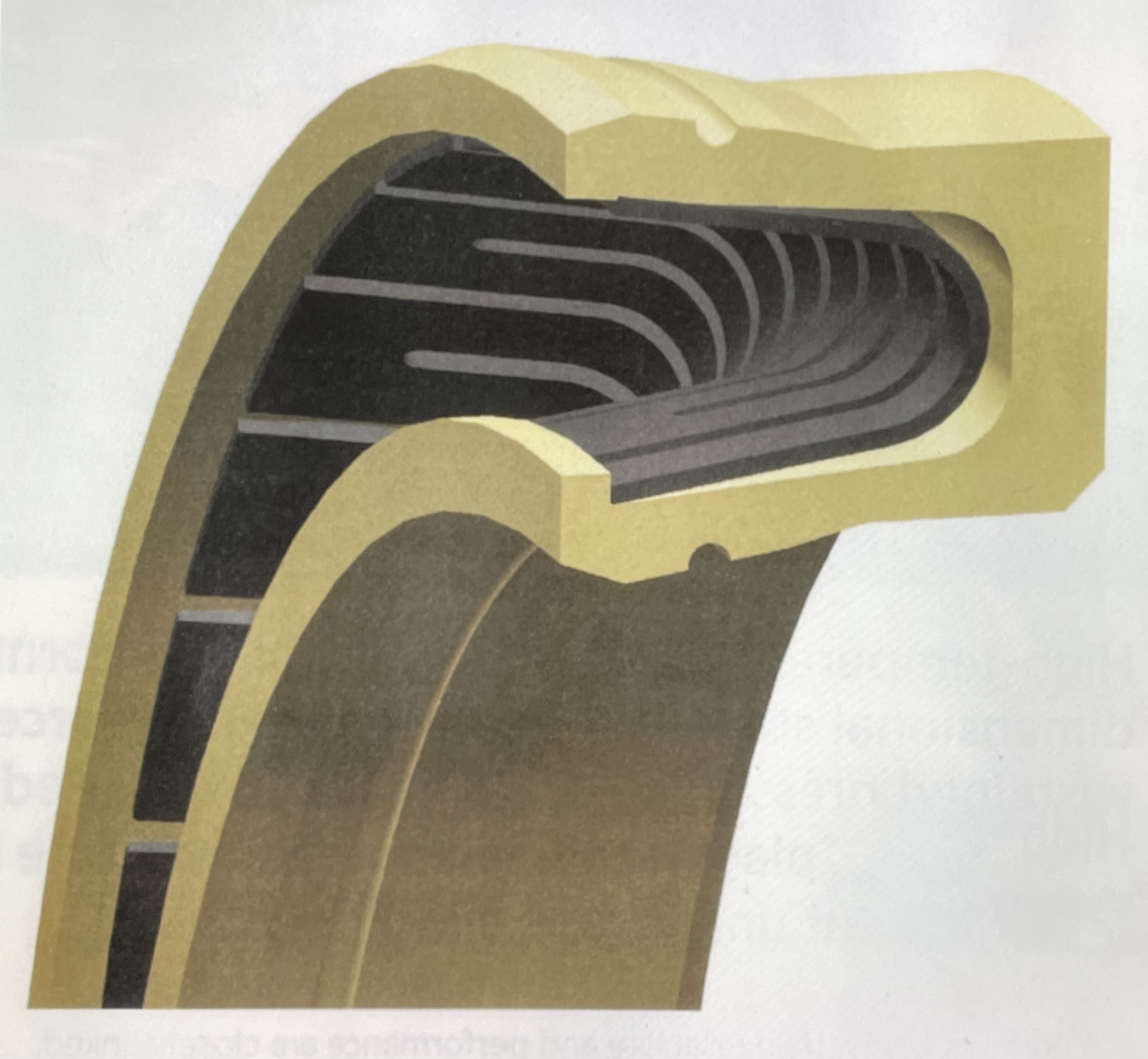
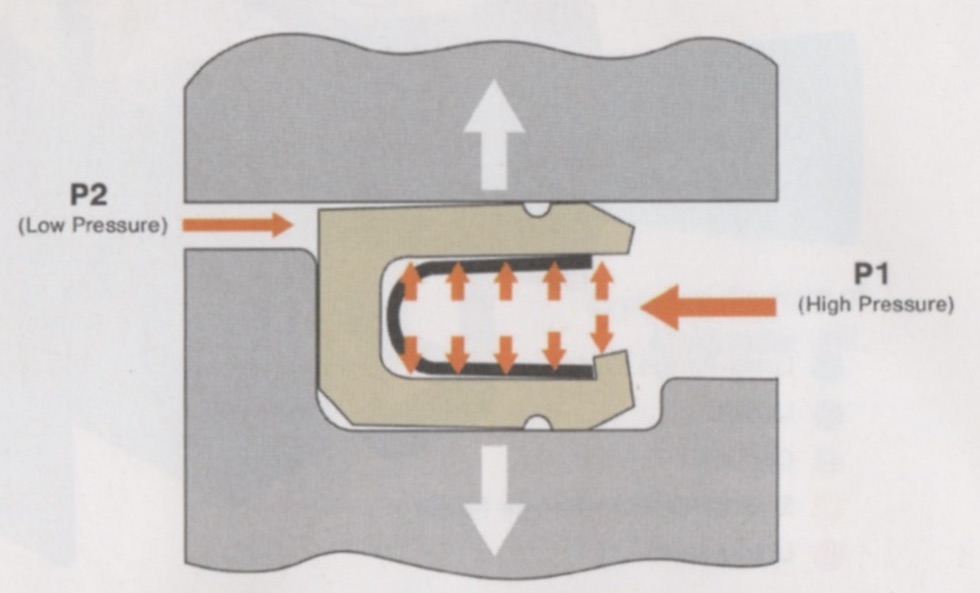
Elastic + Mechanical Sealing. “The seal features a C-shaped jacket profile designed to work with the internal spring to maintain a constant and uniform sealing force, particularly under conditions with a low system pressure…. The spring-energized configuration introduces a mechanical source of radial load that is independent of elastic memory.”
How It Functions. “The internal metal spring applies continuous outward (radial) force against the mating surfaces, maintaining contact pressure during thermal expansion and pressure cycling.”
“This separation of sealing force from polymer recovery alone supports more stable contact stress under conditions with low system pressure. As system pressure increases, the spring cavity becomes energized, and the sealing force is increased to further improve performance. The self-lubricating nature of the jacket material also facilitates lower friction during dynamic movement.”
Material Specs. “For the McLaren application, the sealing jacket was manufactured from Avalon 44, a proprietary PTFE (polytetrafluoroethylene) material selected for its improved material strength, wear resistance, and low creep relaxation characteristics meaning it is less likely to lose sealing force over time when compressed at elevated temperature).”
I thought I recognized PTFE by its brand name Teflon, and sure enough:
“The material’s low-friction behavior also supports stable and repeatable hydraulic response during clutch engagement, helping to minimize breakout variability (variation in the force required to initiate seal movement after static contact) during rapid pressure transitions.”
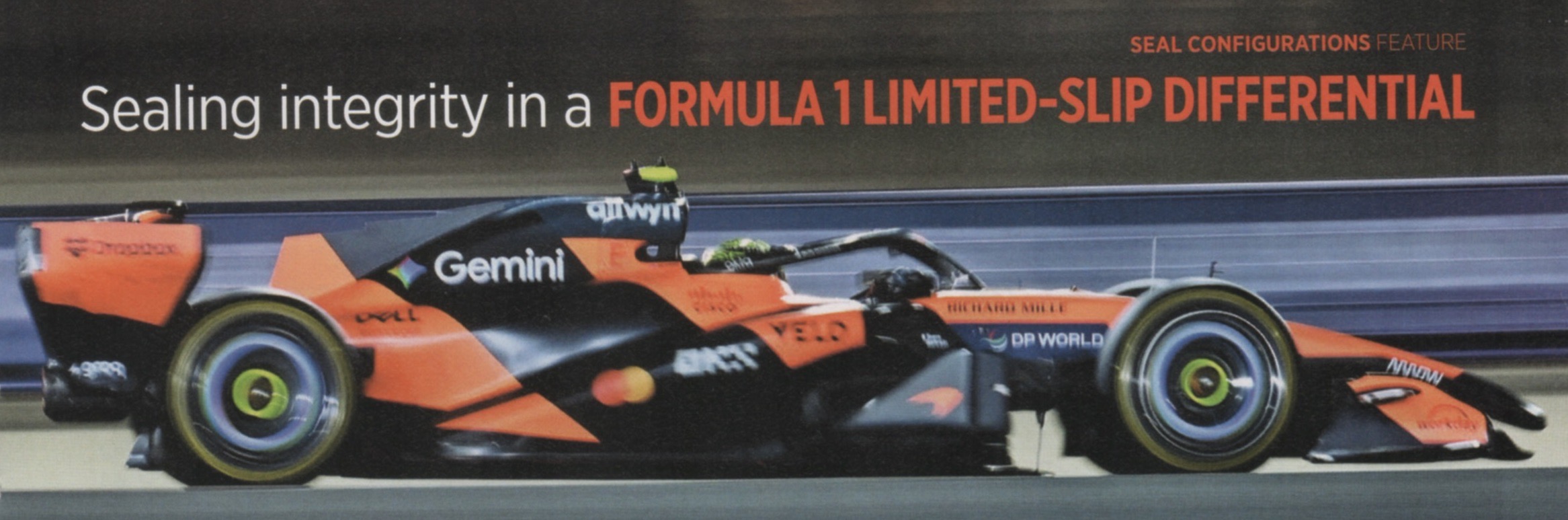
The McLaren Experience. “The MSE seals have been deployed throughout the 2022-2025 seasons, proving their ability to effectively meet leakage and endurance requirements under race conditions. For the 2026 season, Greene Tweed and McLaren collaborated on an updated assembly for the next-generation platform…. As transmission systems evolve, packaging requirements and structural considerations also change. The revised system now uses a single dynamic MSE seal (instead of the two seals used previously), enabling a reduction in packing space and a weight savings for the overall system.”
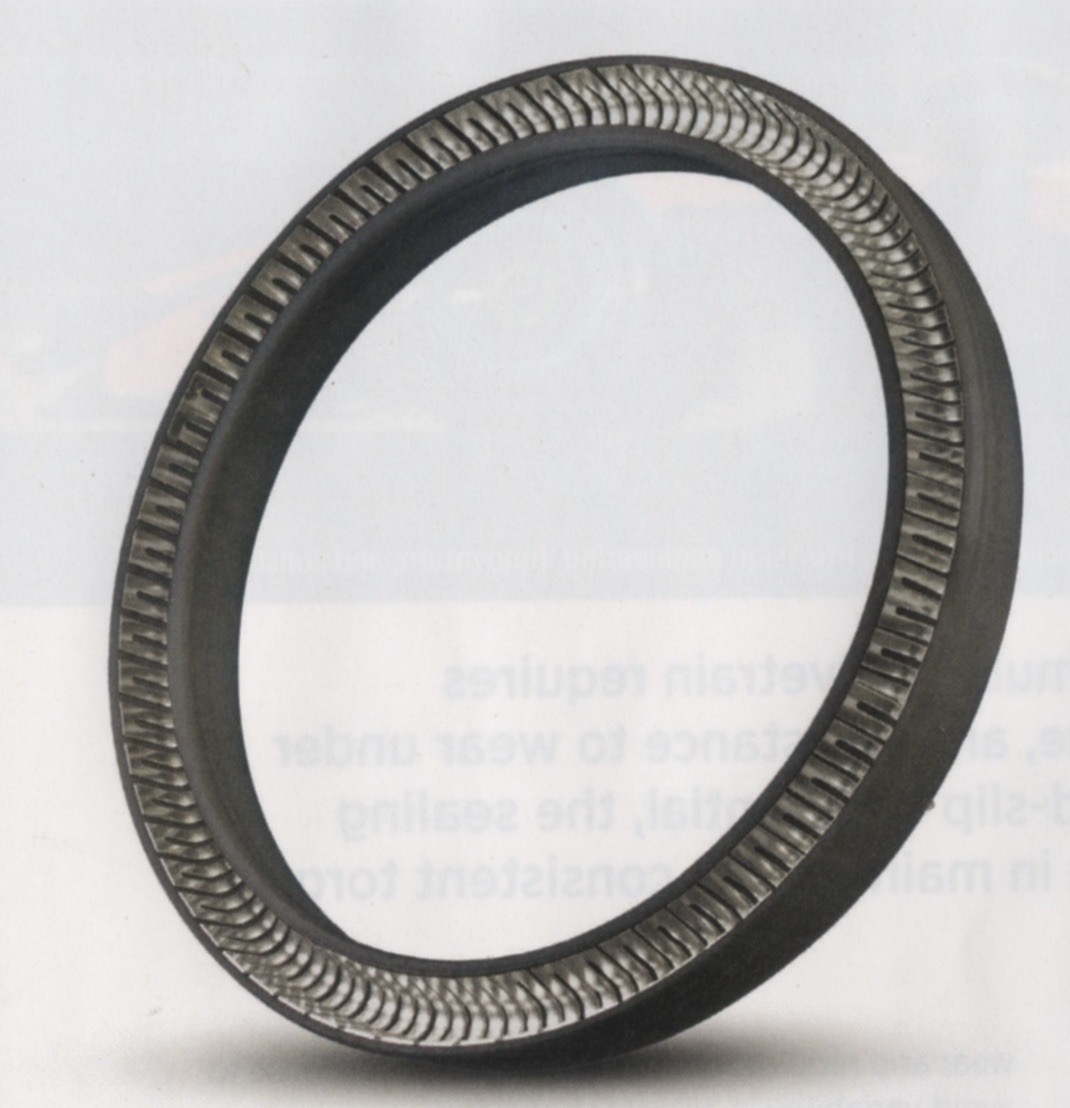
Incremental Engineering. “The functional role of the seal remains consistent, while geometry changes and structural reinforcement support evolving system requirements.”
I’ll never think of these things as simple o-ring seals again. Thanks, Greene Tweed’s Andrew Clarke and SAE International Automotive Engineering. ds
© Dennis Simanaitis, SimanaitisSays.com, 2026
 Simanaitis Says