
Simanaitis Says
On cars, old, new and future; science & technology; vintage airplanes, computer flight simulation of them; Sherlockiana; our English language; travel; and other stuff
HI, CLAUDE; HELLO, MYTHOS PART 1
HELLO AGAIN TO PROFESSOR PAUL TAYLOR, Health Informatics specialist at University College London. He has helped us here at SimanaitisSays in Covid days with “A Glimpse at SIR Modeling,” (as in “Susceptible, Infectious, and Recovered”), May 20, 2020; and with “A.I. Doomerism,” April 7, 2024. This time around, Prof. Taylor focuses his attention to “Ask Claude,” London Review of Books, May 7, 2026. This lengthy piece (4846 words) is multi-faceted, ranging from Taylor’s fledgling Star Trek computer gaming, to his career advice for coders today, to his views on what I perceive as A.I.’s moral leader Anthropic with its Claude, more recent Mythos, and its runs-in with immoralists like Trump and Hegseth.

What follows in Parts 1 and 2 today and tomorrow are tidbits gleaned from throughout, together with my usual sleuthing. To link the gleanings together with enhancements, you’re encouraged to read Taylor’s entire article.
His First Gaming. “This was the 1970s,” Taylor recounts, “barely twenty years after the creation of the first functioning programming languages. The game, Star Trek, was played on terminals without screens; the relative positions of the USS Enterprise and the Klingon ships could be seen only on a map created from ASCII characters and sent to a line printer.”
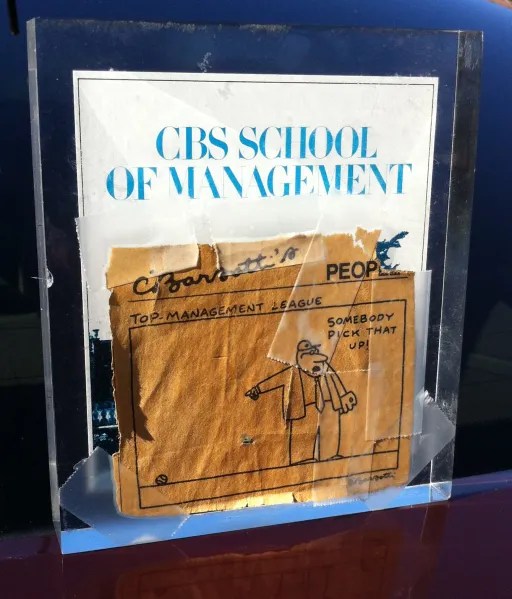
This reminds me of my CBS School of Management computer fooling at the de Seversky Conference Center cited in “De Seversky—A Real Fighter,” SimanaitisSays, November 12, 2015: “At the time [1983], this was a highly innovative program with computer simulations of business interactions.” We all interacted through teletype machines linked to a giant computer somewhere or other.
Taylor continues, “After I had been playing for a while, someone showed me the source code and let me tinker with it. It was written in BASIC, a language designed to make it easy for non-specialists to create programs and where children of my generation usually encountered computer code.”
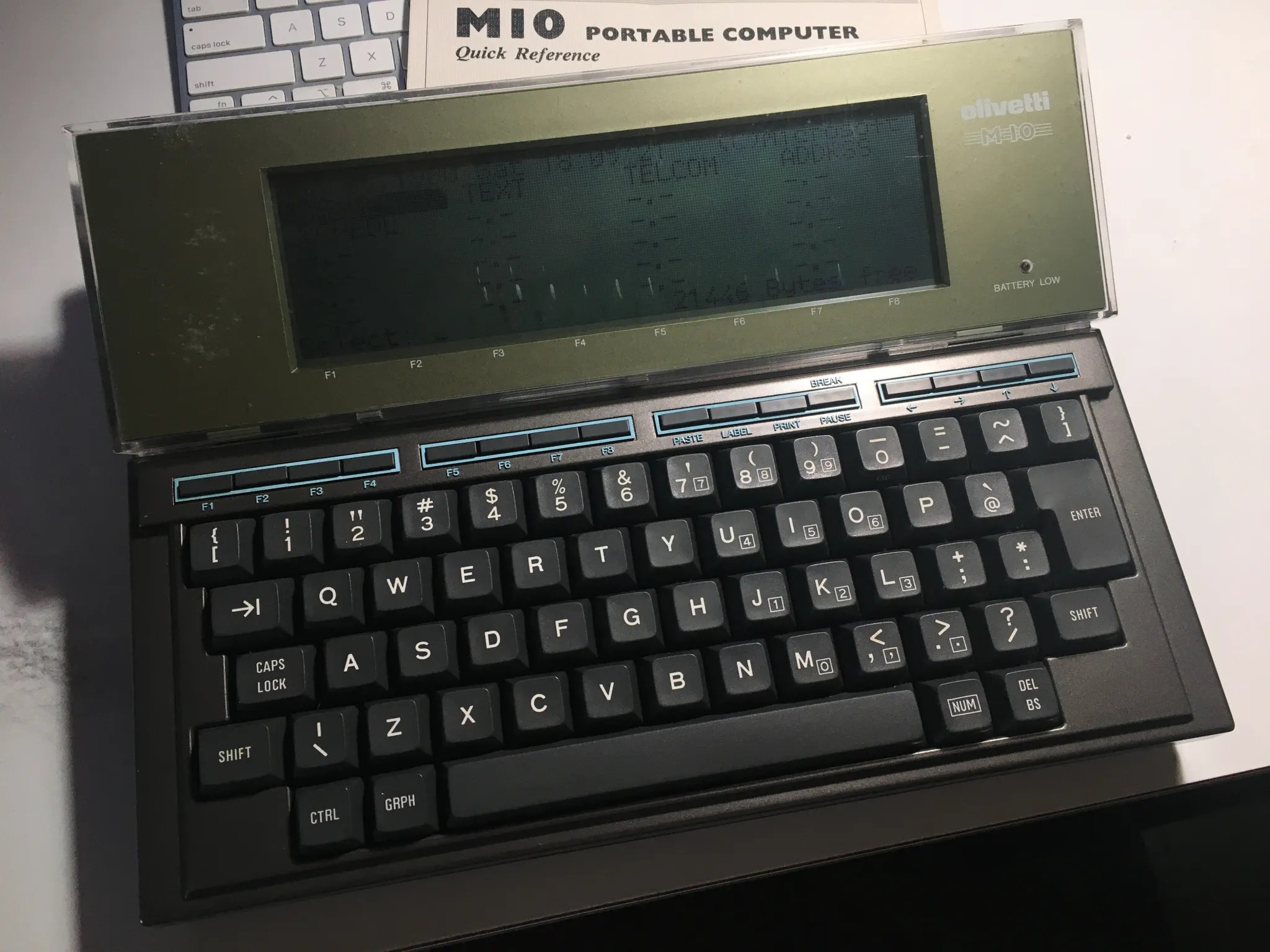
Yes, me too: Our IBM 1620 at WPI in the mid-1960s would have understood BASIC. Ditto the IBM 360 I used at College of the Virgin Islands (where I taught other faculty members the rudimentaries of programming). Also, Wife Dottie’s Olivetti M10 described in “Vintage Digital,” SimanaitisSays, October 29, 2023, has a BASIC 1.0 interpreter.
A.I. Taking Jobs? Prof. Taylor notes, “It is possible that the first profession to be replaced by artificial intelligence will be that of computer programmer. As large language models become more powerful, there are concerns about their possible impact on jobs in fields such as medicine, law and banking, but these are still conversations about possibilities. The situation in programming is different: the technology works, and the jobs are disappearing. The change is happening at speed and has implications not just for those working in software development but for the wider economy and the security of computer systems everywhere.”

Hello, Claude. “A little more than a year ago,” Taylor recounts, “Anthropic released a program called Claude Code, which runs in a window on your screen. It feels old school: there’s no graphical interface, just a prompt. At first you aren’t really sure what to do; there are no visual clues. You just type instructions in English at the prompt. It’s nothing like using an IDE [Integrated Development Environment].”
Taylor continues, “Nor is it like an AI chatbot: it doesn’t just generate replies but actually does things. It will download files, run programs, create code, rearrange existing libraries of software, maintain a repository of programs. It does so based not only on the content of your prompt, but on its analysis of any existing code you share with it, research it does online and knowledge it possesses about how to perform certain tasks. One crucial difference between Claude Code and an AI-assisted IDE is that Claude will test code that it writes or changes it suggests and can fix bugs without the need for oversight.”
As Taylor notes: “Remember this isn’t code written with the assistance of Claude—this is code written by Claude, (my italics, not his).
Claude is Everywhere. Taylor observes, “Claude Code didn’t take off at first, but when it did its success was dramatic. Anthropic’s annual recurring revenue grew from $9 billion in December 2025 to $19 billion in March. In February it was reported that 4 per cent of the code uploaded to GitHub, the world’s largest software sharing platform, was created by Claude Code; the number of uploads had more than doubled in January.”
Writing Code is One Thing, Debugging and Maintaining It Another. “Software engineering isn’t just about writing code,” Taylor notes. “Over its complete lifespan, much more time will be spent on debugging, updating and maintaining the code than was spent on its original creation, and these tasks may be less easily addressed by large language models.”
He cites the Chinese software giant Alibaba comparing eighteen different large language models on their ability to maintain software over time. The best of them “introduced errors in a quarter of the simulations.”
Do I sense hallucinations committed by obsequious A.I.s?
Quick (and Careless) Fixes. Prof. Taylor recounts, “A survey of 211 million lines of code by the technology platform GitClear reveals that poor coding practices are becoming more common, suggesting the use of AI is encouraging a proliferation of quick fixes rather than incremental improvements in an application’s overall design.”
Still a Need for Traditional Coding Knowledge. Taylor relates, “The fervent hope of my colleagues who teach programming is that the effective use of A.I. requires an understanding of how to write code in the traditional way. I suspect it also requires new skills, and an understanding of what the tools can do and of the digital world in which they are enmeshed.”
Tomorrow in Part 2, Prof. Taylor introduces us to Mythos and discusses Anthropic’s moral imperatives. ds
© Dennis Simanaitis, SimanaitisSays.com, 2026


Ah yes the Star Trek game. I remember playing it a few times at university. I’d always get a good chuckle when it would issue a statement like: “Spock makes Doc McCoy and honorary Vulcan by sticking his ears in a pencil sharpener!”
”The best of them “introduced errors in a quarter of the simulations.””
Seems like an unsatisfactory solution to ANY problem, not matter how pedestrian. As bodily risk is involved, those odds become “concerning “!