
Simanaitis Says
On cars, old, new and future; science & technology; vintage airplanes, computer flight simulation of them; Sherlockiana; our English language; travel; and other stuff
ON PLASTICS PART 2
YESTERDAY, ZOË SCHLANGER’S REVIEW OF BETH GARDINER’S PLASTIC INC got us ankle-deep in plastic bits. Today we explore the environmental aspects of this, quite apart from the squishiness.

Health Aspects. Schlanger details in her review, “Some of the clearest consequences of plastics production are showing up in public health. Proximity to fracking wells, which extract ethane to feed plastics plants, has been linked to increased rates of childhood leukemia, heart failure and other maladies. At the other end of the material’s life cycle, degrading splinters of plastic seep into waterways, soil, crops and even the air. At the same time, bisphenols and phthalates — additives used to make plastic durable and flexible — are linked to hormonal disruption, which in turn is linked to cancers, metabolism dysfunction, neuropsychiatric problems and diminished fertility. Gardiner cites one analysis that attributes more than 350,000 heart disease deaths globally to a single phthalate, DEHP.”
Schlanger continues, “Chemical regulation is lethargic, and Gardiner pins significant blame on the American Chemistry Council, an industry group that counts among its members the biggest names in plastics, and which declared in its 2010 tax return that it had helped ‘defeat, amend or postpone’ more than 300 chemical and plastic bills in 44 states.”

Microplastics. This encouraged me to dig deeper into the matter of microplastics, leftover bits of nano- to sub-5mm size. The National Ocean Service, part of the National Oceanic and Atmospheric Administration attacked by Trump, notes, “Research is being conducted. But there’s still much we don’t know. In 2015, the U.S. banned the use of microbeads. But microplastics are still a huge problem. You can help keep plastic out of the ocean. Remember: Reduce. Reuse. Recycle.”

Ocean Microplastics. Wikipedia offers excellent gleaning of microplastic tidbits: “Approximately 35% of all ocean microplastics come from textiles or clothing, primarily due to the erosion of polyester, acrylic, or nylon-based clothing, often during the washing process.”
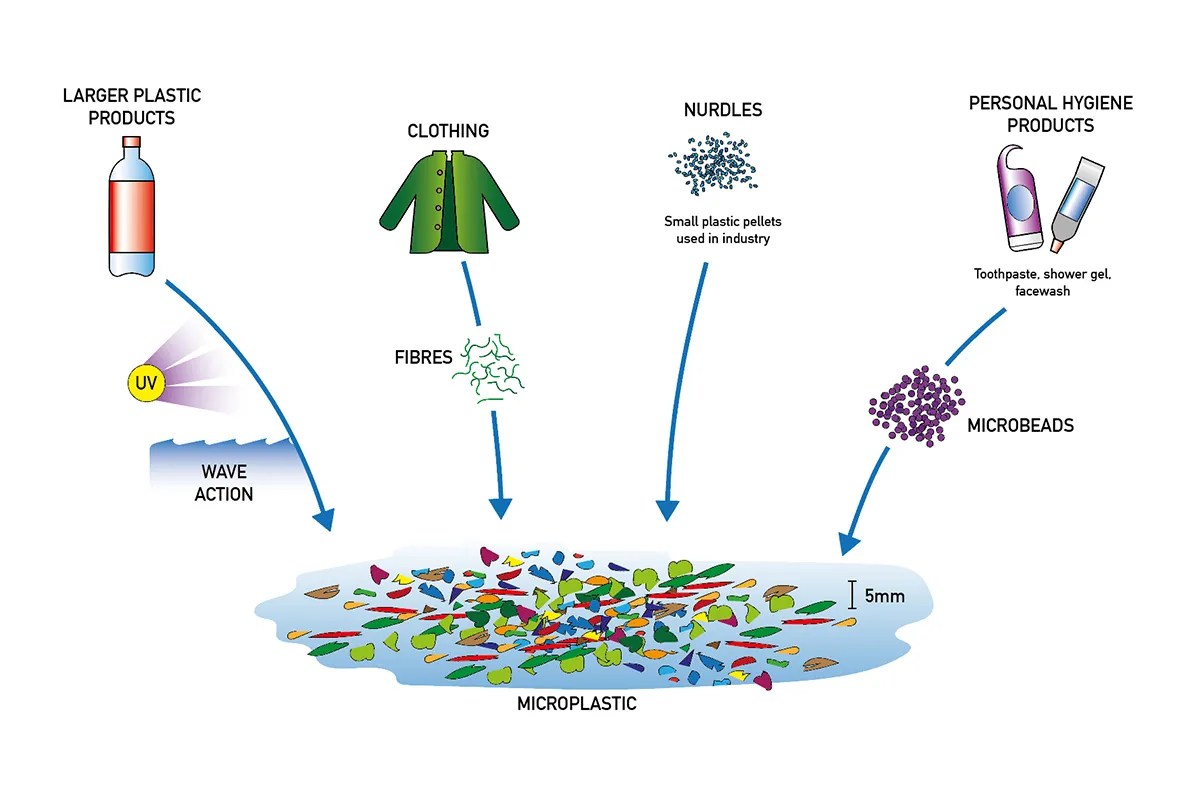
“Primary” microplastics are purposely manufactured. These plastic beads are typically used in facial cleansers and cosmetics. “Secondary” microplastics come from “physical breakdown and mechanical degradation of larger plastic debris.”
“Nanoplastics,” the smallest of particles, “are thought to be a risk to environmental and human health.” Wikipedia recounts, “Due to their small size, nanoplastics can cross cellular membranes and affect the functioning of cells…. Little is known on adverse health effects of nanoplastics in organisms including humans.”
Methodological Challenges. Wikipedia notes, “The high profile studies of microplastics have been contested widely and some have been questioned for accuracy and have been debunked. Studies of the amount of microplastics in brain tissue have been under interrogation since tissue fat is possibly being misattributed to the presence of the plastic polyethylene, exaggerating the studies on the amount of microplastics in tested brains.”
“Fats in human tissue,” Wikipedia cites, “have also been shown to produce the same fumes polyethylene and PVC plastics, causing false positives on the pyrolysis-gas chromatography-mass spectrometry tests for microplastics in human organs.”
What’s more, “Sheds from standard latex and nitrile gloves that are coated with stearate salt can rub off during handling in tests, and since they shed to a similar size and shape as to microscopic polyethylene in the studies, they can deceive the infrared light lab techniques used to scan for microplastics, causing there to appear additional plastic particles per sq-mm in examined organs.”
Thus, let’s reemphasize Schlanger’s point about correlation versus causation and recall “Four Things Logicians Don’t Want You To Know,” a tongue-in-cheek title here at SimanaitisSays, July 16, 2016.
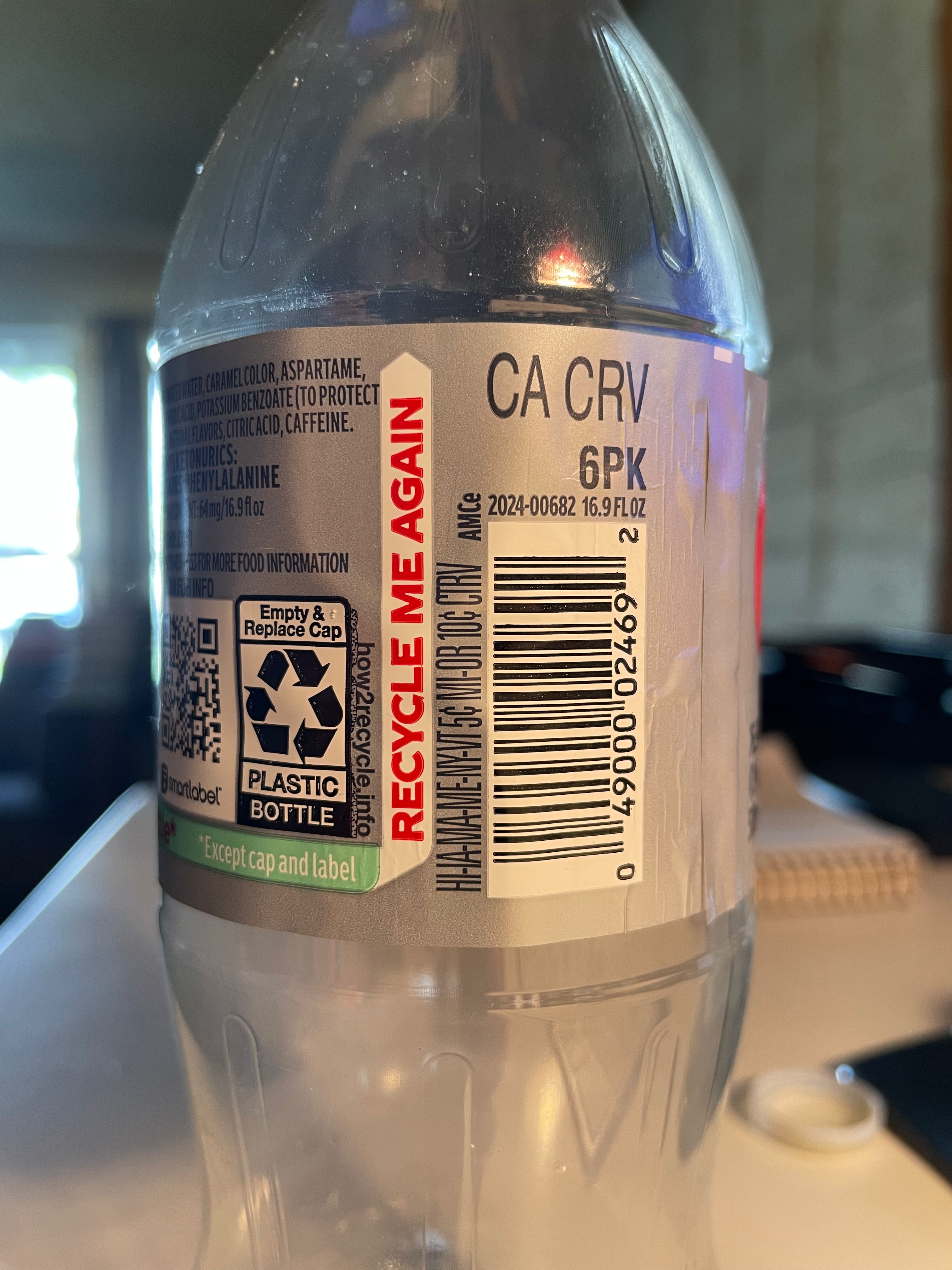
Which brings us, though much better informed, back to where we started. And perhaps time for another daily Diet Coke. ds
© Dennis Simanaitis, SimanaitisSays.com, 2026


PET bottles may in fact be recyclable, not just in theory. But in my town the waste management people explicitly say to trash the cap, not reattach it, because the cap is a different type of plastic that is not easily recycled, and contaminates the batch when left on the bottle. Local CRV recycling places say the same thing. Is the “replace the cap” advice a backdoor attack on recycling by the plastics and beverage people?
Thanks for the thoughtful article. As an aged person with relatively minor experience with the healthcare industry, the prevalence of plastics is mind-blowing, and it’s hard to imagine it being eliminated! I continue to hold out hope that improvements in plastics recycling are successful, especially in healthcare and industry.
Dr. Simanaitis knocks it out of the park again. After overpopulation, don’t know a bigger horror than ubiquitous plastics, inc. a mountain range of them in the Pacific.
The cynical marketing of the DuPont executives on par with that of Big Tobacco aiming their products with hundreds of toxins, 69 of them carcinogenic, at kids.
Our brains are quantum computers in solution. Plastic is an insulator. Like frogs boilt to death in intially tepid water, how do we gauge becoming dumb and dumber, tho’ other factors responsible for the New Yorker reporting US literacy peaking in 2012.