
Simanaitis Says
On cars, old, new and future; science & technology; vintage airplanes, computer flight simulation of them; Sherlockiana; our English language; travel; and other stuff
ON PLASTICS PART 1
TWO QUITE DISSIMILAR THINGS got me thinking about plastics: The first was “The Japanese Have A Word For It,” here at SimanaitisSays, April 3, 2026. The particular word is mottainai 勿体無い, “regret over waste” or “sadness when something is squandered.” Which got me thinking of how the Japanese people’s commendable striving for cleanliness and order also encourages their multiple-layer-plastic packaging of everything from grocery goods to manufactured products. What to do with all the packaging waste?
The second prompting was Zoë Schlanger’s “Life in Plastic: It’s Not Fantastic,” The New York Times, March 4, 2026. Indeed, this second one reappears in The New York Times Book Review, April 12, 2026, a review of Beth Gardiner’s Plastics Inc.: The Secret History and Shocking Future of Big Oil’s Biggest Bet, the title of which really got my attention.
What follows, in Parts 1 and 2 today and tomorrow, are tidbits gleaned from Gardiner’s book, Schlanger’s review, and my usual Internet sleuthing.
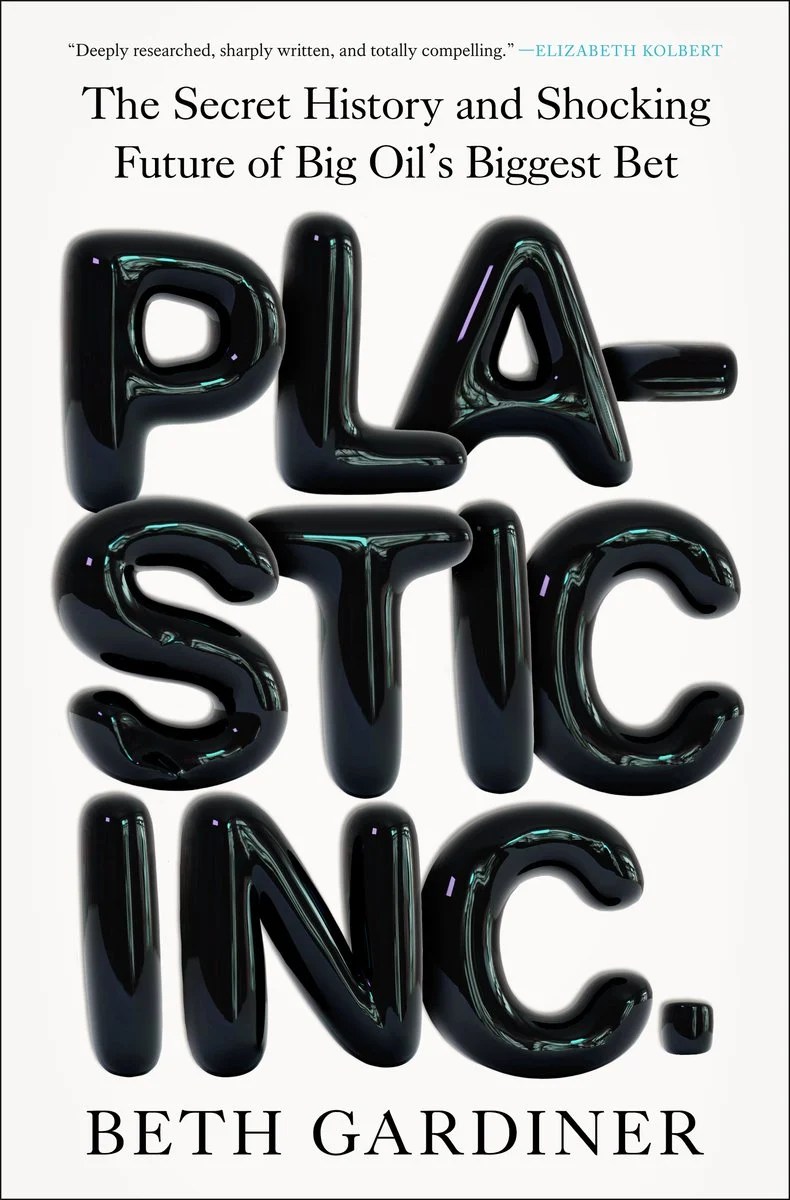
PLASTIC INC,: The Secret History and Shocking Future of Big Oil’s Biggest Bet, by Beth Gardiner, Avery, 2026.
Schlanger opens her review with a paragraph that stuns with its impact: “Last year, researchers at the University of New Mexico studying brain samples from two dozen people who died in 2024 estimated that each person’s brain contained around seven grams of plastic—an entire disposable spoon’s worth. Those who suffered from dementia had more plastic in their brains than those who did not.”
“That’s correlation, not causation,” Schlanger stresses, “and it will be years before scientists understand the health consequences of these synthetic particles in our tissue, but it is worrying all the same. When the researchers compared the 2024 brains with those of people who had died eight years earlier, the more recently deceased contained nearly 50 percent more plastic.”
“How did we get here—to the spoon in our brains?,” Schlanger asks.
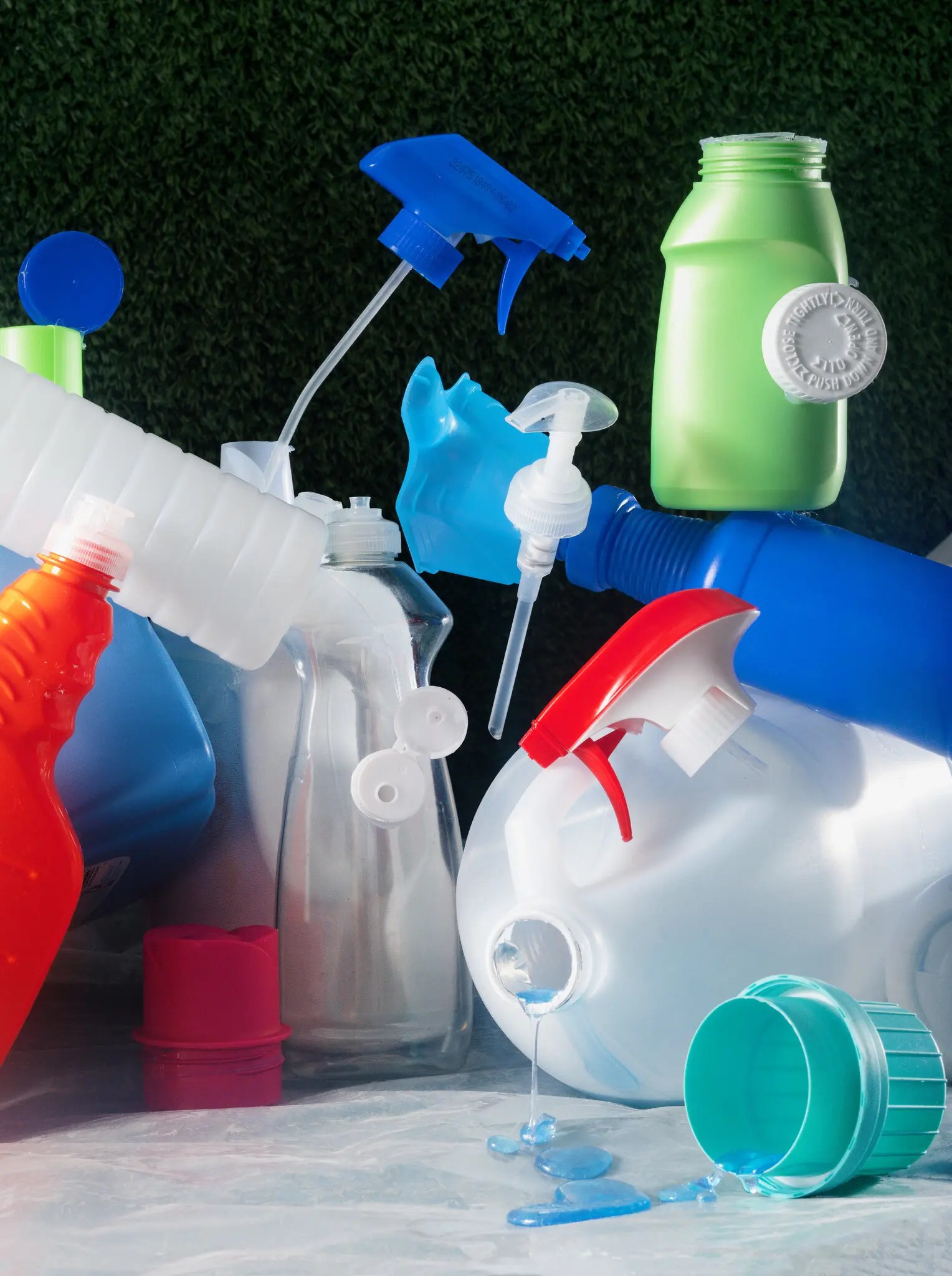
“Plastic took over the globe through decades of intensive marketing, political maneuvering, and flat-out deceit, Beth Gardner maintains in Plastic Inc.” Image by Tonje Thilesen for The New York Times.
Heavy Marketing. Schlanger observes, “Plastics manufacturers had to invent the ‘lucrative idea of disposability,’ Gardiner, an environmental journalist and former Associated Press reporter, writes. In 1945, a vice president at DuPont, an early leader in the business, told his peers that ‘a satisfied people is a stagnant people,’ and they had to ‘see to it that Americans are never satisfied.’ One way was to convince Americans to throw their products away.”
Schlanger continues, “Companies set about coaxing a generation that had endured the Depression and years of wartime thrift that the fairly durable plastic objects flooding the marketplace should be, as one historian Gardiner quotes put it, discarded ‘without a second thought.’ In 1956, the editor of Modern Packaging magazine told industry leaders that ‘the future of plastics is in the trash can.’ ”
Glass As Well. A vintage ad on my favorite SiriusXM “Radio Classics” reminds me of this: It boasted of use-’em-and-toss-’em beer bottles of glass. This was back in the day when ordinarily you’d swap a case of empties for the new case. Instead, “Just dispose of the bottles as you would your usual trash.” Agg!
Recycling? “Recycling plastic,” Schlanger claims, “was a palliative fiction, and a useful one. In 1989, when Minneapolis and St. Paul made national news by banning many kinds of plastic packaging, an industry group sent a member of its ‘strike force’ to Minnesota to promote recycling instead. The ban, Gardiner reports, was never enforced. As of 2017, just 9 percent of plastic waste had been recycled.”
Bottle Bills. “One exception,” Schlanger recounts, “is plastic soda bottles: In theory, these could be recycled efficiently. But Gardiner details how in many cities and states so-called ‘bottle bills’—which would require companies to process used bottles by charging a deposit that consumers would get back upon returning them—have been shot down after lobbying efforts by the industry.”
But Not Always…. Schlanger notes, “So-called ‘extended producer responsibility’ bills are now law in California, Maine, Oregon, Maryland, Minnesota, Washington and Colorado, though these face pushback from industry groups. Such laws would help reverse decades of the biggest scam of all: that this mess is our fault.”
CRV—A Personal Observation. The label of my daily Diet Coke confirms and expands on the concept of beverage container recycling.
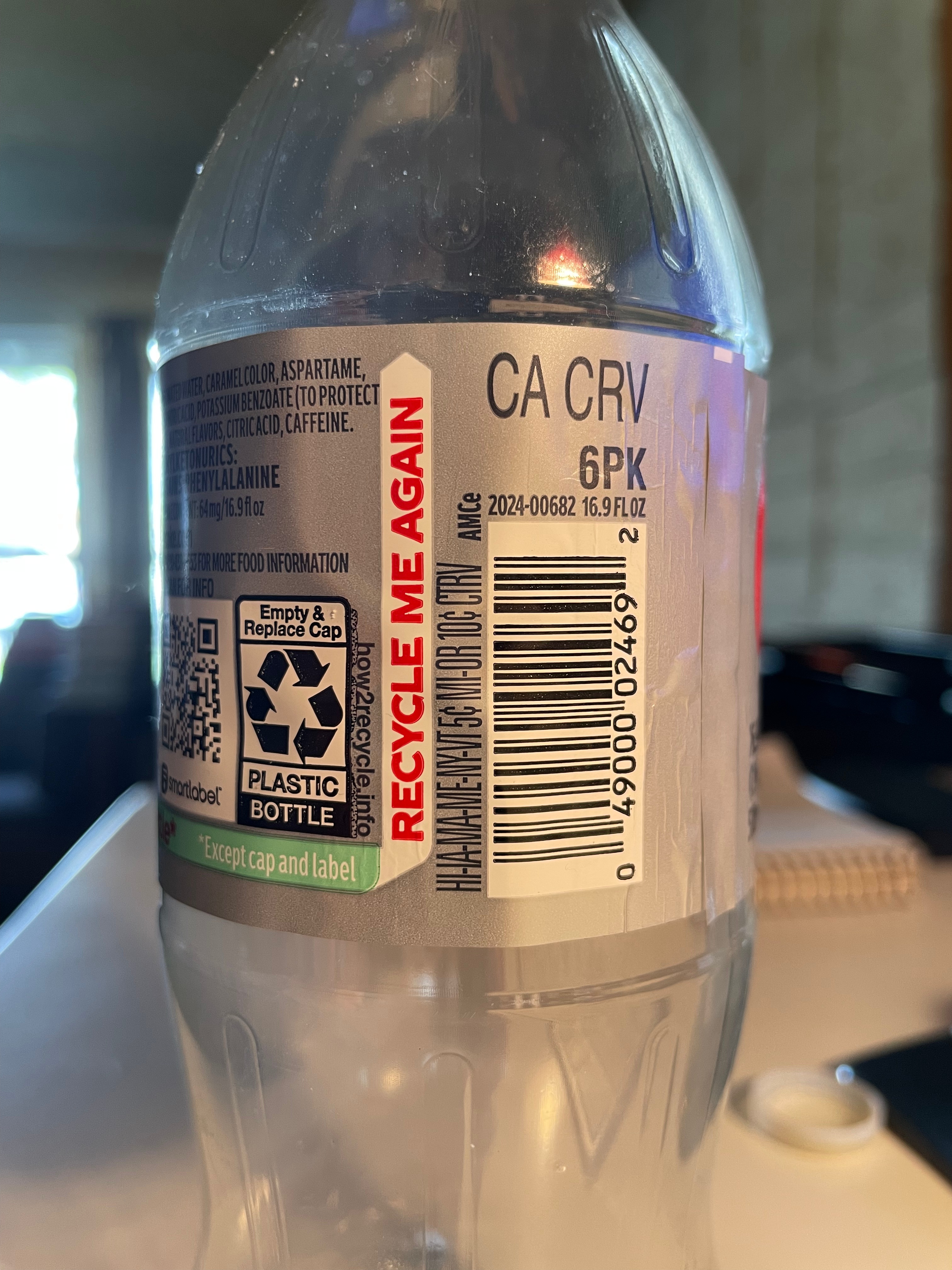
It lists California, Connecticut, Hawaii, Iowa, Maine, Massachusetts, New York, Oregon, and Vermont with RV (Redemption Value) typically 5¢ or 10¢ depending on 16.9 fl oz or 2 L size.
I cannot speak for other states, but my Diet Coke encourages “Empty & Replace Cap” and “RECYCLE ME AGAIN.” I pack the empties in a plastic bag; once brimming, it’s recycled for cash.
Tomorrow in Part 2, author Gardiner, reviewer Schlanger, and we address health hazards—of microplastics, not of my daily Diet Cokes. ds
© Dennis Simanaitis, SimanaitisSays.com, 2026


Very true in all aspects .
I recycle, not for the deposit $ but because I think it’s the right thing to do having worked in waste management during my long career .
My elder brother is very diligent about recycling plastic bottles and aluminum cans, he doesn’t want to bother with anything glass so I put those in my blue bin .
Plastics can and are a good thing but the mindless throwing away of things and not even in the dump is a serious problem .
I’m in my 70’s now and so far so good but I too worry about the micro – plastic in my body and brain .
So much good could be done if the paid for politicians would step up and for example, stop the deferral of milk jugs that are made of the same plastic as the disposable water and juice jugs .
I don’t think this is an issue where kicking the can down the road is wise, sooner than later we’re going to have a serious problem on our collective hands, one that won’t be easily solvable by making another dumpsite near where the poor people live .
-Nate
There are times when plastics make sense. I recall the days of real glass eyeglasses, and the dent in my nose from their weight, so I much appreciate the much lighter plastic lenses I now use. Also the plastic laminate in windshields is much appreciated.
Other uses, especially for overpackaged products is very annoying, both from a waste perspective and the annoying process of liberating said packaged item. The ultimate insult is the special tool that can be purchased to speed up gaining access to these items through the sealed packaging also comes in you guessed it the same impenetrable packaging.