
Simanaitis Says
On cars, old, new and future; science & technology; vintage airplanes, computer flight simulation of them; Sherlockiana; our English language; travel; and other stuff
COLOR—PHILOSOPHICALLY
DEIDRE MASK’S “DOES THIS COME IN PINK MARGARINE? A SURPRISING HISTORY OF COLOR NAMES” caught my eye in The New York Times Book Review, April 26, 2026. In fact, her article reviews the book True Color: The Strange and Spectacular Quest to Define Color—From Azure to Zinc Pink.
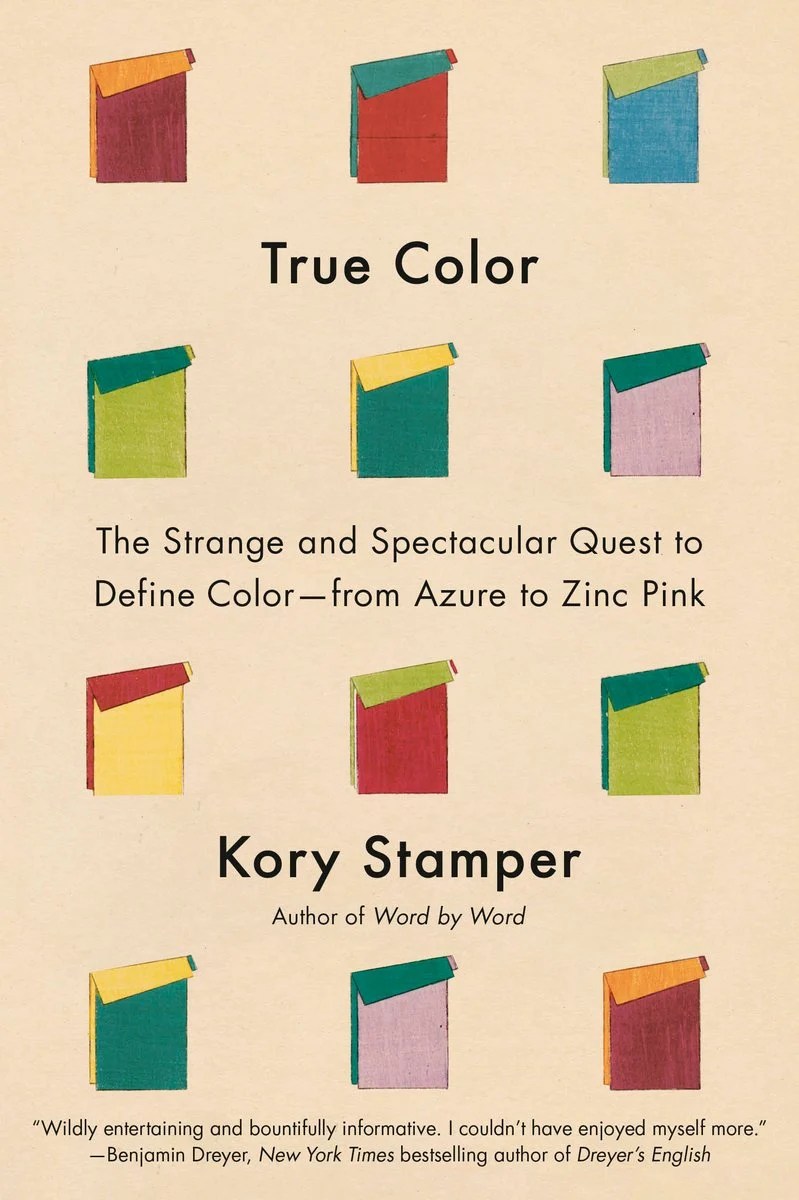
True Color: The Strange and Spectacular Quest to Define Color—From Azure to Zinc Pink, by Kory Stamper, Knopf, 2026.
As noted by IndieBound, “Kory Stamper is a lexicographer who has written dictionaries for nearly thirty years at Merriam-Webster, Cambridge Dictionaries, and Dictionary.com. She is the author of Word by Word. Her writing has appeared in The Guardian, The New York Times, New York magazine, and The Washington Post, and she blogs regularly on language and lexicography at www.korystamper.com.
Impressive word cred, eh? Nor is Deidre Mask unprepared to the task: She’s the author of The Address Book: What Street Addresses Reveal About Identity, Race, Wealth and Power.

Here are tidbits gleaned from Mask’s review of Stamper’s book. As is often the case, the tidbits prompt Internet sleuthing and memories on my part, simply for fun.
Four Months on “God.” Mask describes, “Stamper is something of a rock star in the ‘word-nerd’ universe. Her first book, Word by Word, drew on her experience working at Merriam-Webster to animate the challenging, insidery world of dictionary writers and editors. (While working on the unabridged dictionary, she once spent four months nonstop refining the entry for ‘god.’)”
Your Orange and My Orange. Mask recounts, “Take, for example, ‘orange.’ In The Third [Webster’s Third New International Dictionary, first published in 1961], there’s ‘unique orange’—the orange ‘that is exactly colorimetrically halfway between red and yellow.’ This is different from ‘typical orange,’ and different again from ‘focal’ orange, which, says Stamper, encompasses everything from ‘apricot to creamsicle, to sunset to burnt orange to safety orange to orange peel.’ ”
This prompted me to look up “colorimetrically.” Wikipedia has a particularly illuminating (and extensive) description of color. In its entry on the Visible Spectrum, the spectral colors are identified by wavelength, frequency, and photon energy.
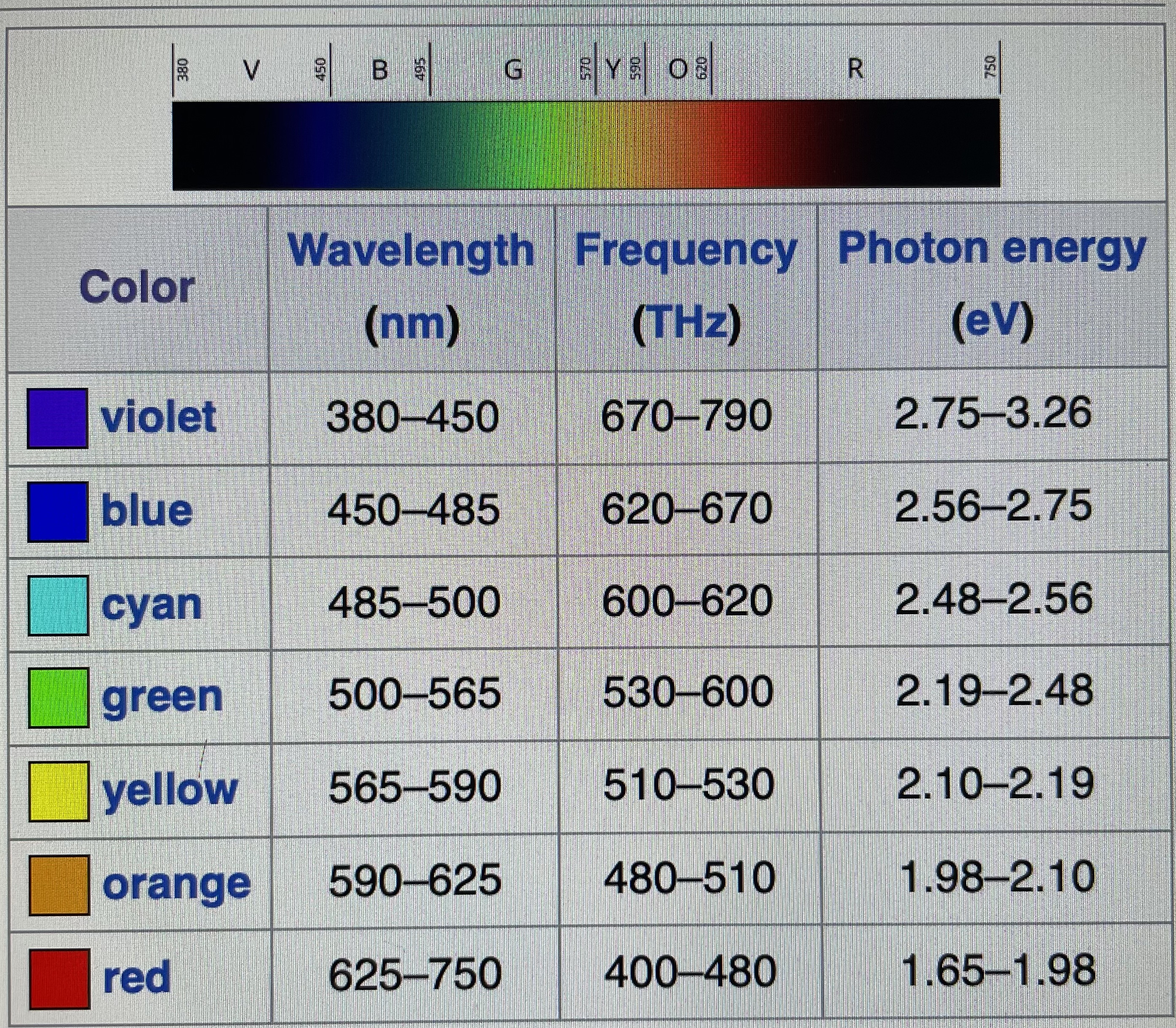
Image from Wikipedia.
Newton’s Opticks. Wikipedia cites, “In the 17th century, Isaac Newton discovered that prisms could disassemble and reassemble white light, and described the phenomenon in his book Opticks. He was the first to use the word spectrum (Latin for ‘appearance’ or ‘apparition’) in this sense in print in 1671 in describing his experiments in optics.”
A Personal Note. My education in physics at WPI was heavily influenced by a high-school teacher’s affinity for photographer. I ended up a whiz at optics, but woefully ignorant of classical mechanics. (There are diagrams of wagons precariously on stairs that still frighten me.)
On the other hand, I also recall my optics lab partner and I writing up our “speed of light” experiment by positing that the aether must have been particularly thick that day.
Coloration and War. Deidre Mask recounts, “Scientists have been tackling the problem of color standardization for generations. It’s a story Stamper tells, in part, through guns and butter. Germany, which in 1914 produced 90 percent of the world’s synthetic dyes, during World War I curtailed shipments and at the same time repurposed many dye works into munitions plants. (The German dye industry supplied the ingredients for chlorine gas, for example.)”
Mask continues, “Color was a surprisingly important tool in war generally—from the shade of gray that allowed ships to escape detection, to the camouflage that allowed the wearer to blend into the background. America’s National Bureau of Standards, whose role was ‘to measure and standardize everything it could,’ was tasked with the job of color. ‘Congress,’ Stamper writes, ‘threw oodles of money at something that, just 10 years earlier, had been considered the province of Parisian couturiers and dress-mad socialites.’ ”
Coloration and Butter. “And then there was butter — or, rather, margarine,” Mask describes. “When margarine was invented in 1869, butter producers weaponized color to defeat the potential usurpers; butter, and only butter, they decided, could be yellow. Big dairy states like New Hampshire mandated that the less expensive new spread be dyed. Generally, it was a lurid bright pink, but appetizing shades like red, brown, blue and black were all proposed. (Margarine manufacturers retaliated by including yellow packets of dye to knead into a white base.)”
This dairy industry finagling continued for years. I remember that yellow button in clear packaging of a white blob that looked disconcertingly like lard.
Getting to Know Lexicographers. Mask quotes Stamper: “ ‘Good lexicographers are, generally speaking, not people people,’ instead spending their days at desks piled with index cards.” However, Mask says, “Stamper, who I imagine is not just a good but an excellent lexicographer, defies this characterization in her lively portrayals of these superficially stodgy-seeming characters. There’s Edward Oakes, the polio-stricken, overworked editor; Philip Babcock Gove, an often irritating, pedantic managing editor; and, perhaps most important, the driven and cheerful color expert Isaac Hahn Godlove.”
Mask continues, “Godlove’s wife, Margaret, who worked on the definitions for $1 an hour, is particularly well drawn as a deeply talented, largely overlooked scientist. All Stamper’s subjects suffer in some way—severe burnout, spousal loss, debilitating scoliosis, burst appendices. And yet, they persist.”
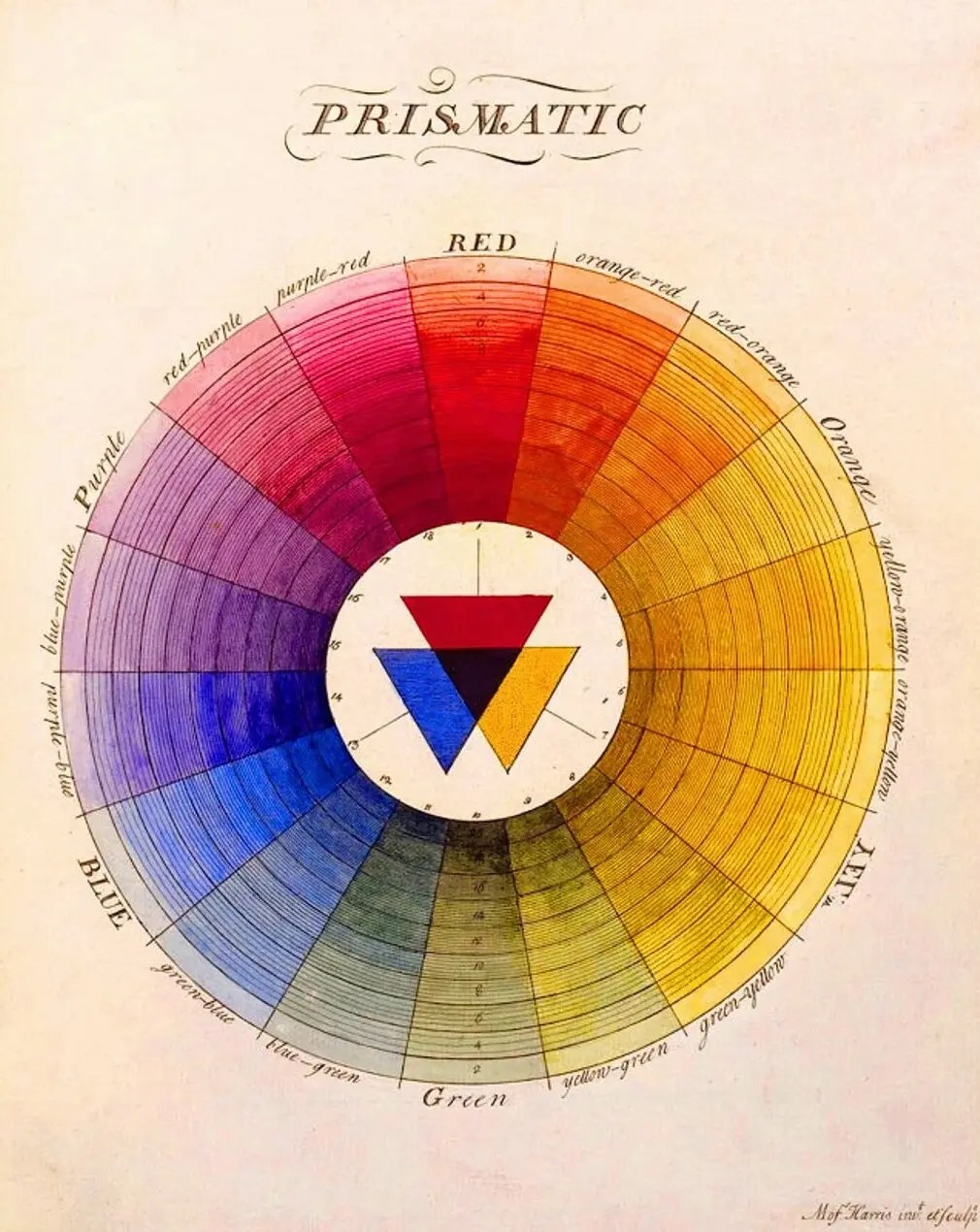
Image by Moses Harris from The New York Times.
Sneakily Philosophical. Mask concludes, “Stamper’s book is about color, but it’s also a sneakily insightful philosophical treatise on what it means to define anything at all. What does color—indeed, what does any word—mean in the abstract? ‘In that way,’ Stamper writes, ‘it’s just like language: It becomes something worth watching only when it’s about something outside itself.’ ”
A heady thought, one well beyond that wagon perched on stairs. ds
© Dennis Simanaitis, SimanaitisSays.com, 2026

