
Simanaitis Says
On cars, old, new and future; science & technology; vintage airplanes, computer flight simulation of them; Sherlockiana; our English language; travel; and other stuff
HAVEN’T WE A WORD FOR IT? PART 1
FRANCIS GOODING’S “ROCKET SCIENCE FOR MONKEYS” is the compelling title of his London Review of Books review of Steven Mithen’s The Language Puzzle: How We Talked Our Way Out Of The Stone Age. The review is also a treasure trove for tidbits about things linguistic; they follow here in Parts 1 and 2 today and tomorrow.

Words and Things They Represent. “The word is not the thing,” Gooding begins. “In spoken language a word is a distinctive sound or series of sounds. It does not have a ‘natural’ relationship to the thing it stands for.” He cites as an example, “… the English word ‘rabbit’ has nothing to do with rabbits, any more than the French and Yoruba words lapin or ehoro do.”
But Onomatopoeic Words Do. “The trouble,” Gooding observes, “is that this may be not completely true. Some words do seem to resemble the thing they describe. Onomatopoeic words, like ‘boom’, ‘click’ or ‘ping’, are the clearest and most familiar case. Linguists call these ‘iconic’ or ‘sound-symbolic’ words.”
Ha. Gooding’s choice of words jogs my memory of “Etymology: Hoist on One’s Own Petard,” SimanaitisSays, April 18, 2018. There, I recall the wonderful French phrase ‘Il ne vaut pas un pet de lapin.’ ‘It’s not worth a rabbit fart.’ ” Note the French word pet is obviously onomatopoeic.
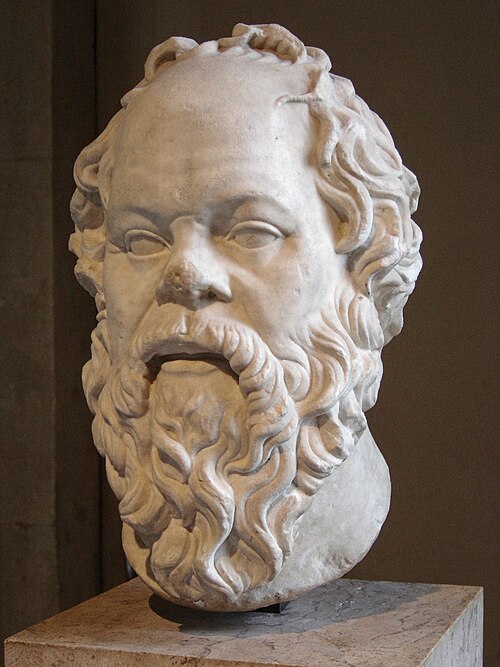
Socrates Gets a Word In. Gooding recounts, “The ancients had similar ideas: in Plato’s Cratylus, Socrates argues that the first names assigned to things would have been given in imitation of their objects, by using the mouth or tongue to mimic their qualities—so something that moves or flows would have been named using the letter ‘r’ because ‘the tongue is most agitated and least at rest in pronouncing this letter,’ while the word for something that was slippery would use the letter ‘l’, since in its pronunciation ‘the tongue glides most of all.’”
Hmm…. (Come to think of it, the sound of “Hmm” reminds me of spinning mental wheels.)
Language, Uniquely Human? Gooding recounts, “So far as we know, true symbolic language is unique to the human species. (On the most generous reading it may go a bit further back in the human lineage. And there is an open question about cetaceans—it was recently discovered that the structure of humpback whale vocalisations is remarkably similar to the organisation of human speech.)”
However, Gooding says, “If you ask why we have been able to make pyramids and spaceships and musical instruments, while no other animal has managed anything of the sort in three billion years, the answer will always cite language as a decisive factor.”

The Language Puzzle: How We Talked Our Way Out of the Stone Age, by Steven Mithen, Profile, 2025.
A Grand Tilt. Gooding relates, “The Language Puzzle is a grand tilt at that seemingly intractable problem. In it, Steven Mithen marshals the disparate factors and fields of research that might give us some clue as to how language evolved, and tries to build a plausible account of how we ended up as the only speaking animal. Of necessity, the book ranges very widely, because the fields that touch on the evolution of language are in no way unified. Mithen draws from palaeontology, archaeology, primatology, the study of animal communication, linguistics, neurobiology, philosophy of mind, evolutionary genetics and more.”
Whew. Tomorrow in Part 2, we’ll see a selection of Mithen’s sources described by Gooding.
© Dennis Simanaitis, SimanaitisSays.com, 2026


Todd Rundgren had a great song about onomatopoeia!