
Simanaitis Says
On cars, old, new and future; science & technology; vintage airplanes, computer flight simulation of them; Sherlockiana; our English language; travel; and other stuff
HAVEN’T WE A WORD FOR IT? PART 2
YESTERDAY, WE BEGAN GLEANING TIDBITS FROM FRANCIS GOODING’S LRB REVIEW of Steven Mithen’s The Language Puzzle: How We Talked Our Way Out of The Stone Age. We continue here in Part 2 with specific examples (including a rhesus monkeys’ association of linguistics and size).
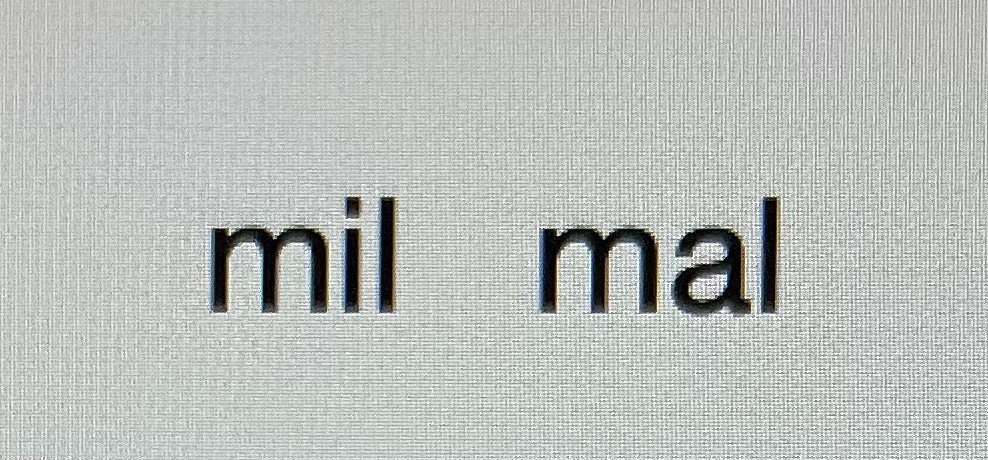
The Nonsense Words ‘mil’ and ‘mal.’ “In 1929 Edward Sapir, an American anthropologist and linguist who had studied under Franz Boas, conducted an experiment in which subjects were told that the nonsense words mil and mal both meant ‘table’, and asked which they thought ‘seemed to symbolise’ a large or small table. Every subject tested picked mal as the word for a large table, and mil for a small table. This was the case whether they spoke English or Chinese, or were children or adults.”
Gooding cites, “… Sapir observed that to enunciate the word mal requires the mouth to open wider, thus suggesting a larger object, while mil requires a closing in of the mouth, suggesting a smaller object. (Socrates, too, picked out this correspondence, noting that the sound of the letter ‘i’ is used to ‘imitate all the smallest things’.)”
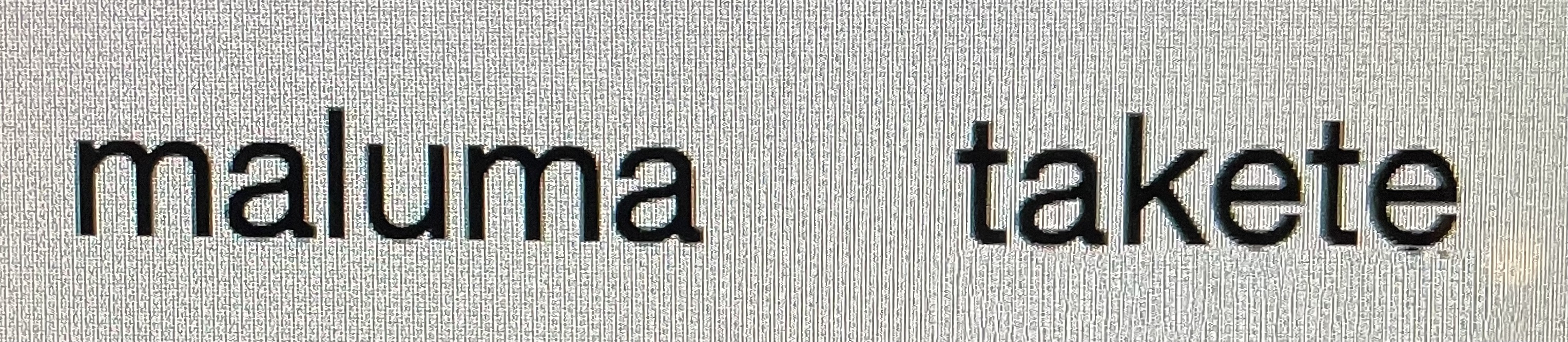
Gooding also cites the German psychologist Wolfgang Köhler who “found that when subjects were asked to say which of the made-up words maluma and takete applied to a spiky shape and which to a round one, they overwhelmingly chose maluma for the round shape and takete for the spiky one. (I tried this on my daughter: she too chose this way, and found it entirely obvious which word went with which shape.)”
Gooding continues, “Köhler thought the explanation for these results lay in the way the mouth and tongue have to be shaped and moved in pronouncing the words: he proposed that the sharp staccato sounds and fast movement of the tongue in saying takete encouraged the choice of the spiky shape while the rounder, softer shape of maluma linked it to the round shape.”
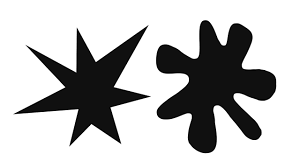
The bouba-kiki test. Image from science friday via SimanaitisSays.
Been there, seen that, sorta. Even baby chicks recognize this, though their specific chirps weren’t cited.
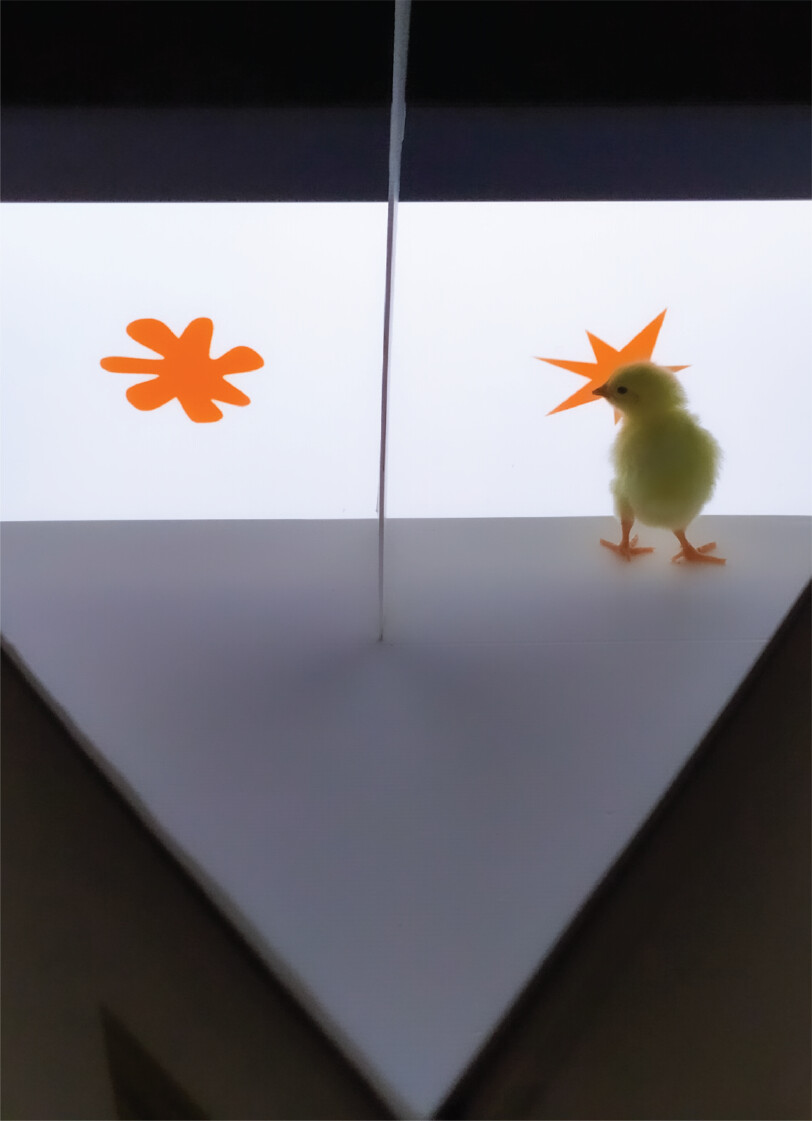
Image from Loconsole et al. via Science.
How Did It All Start? Gooding sums up, “We now see that instead of a prisca lingua created by principal name-givers or people in a state of nature, the process of language acquisition took place over millions of years in the bodies and minds of a series of ancient beings: Homo erectus, Homo habilis, Homo heidelbergensis, Homo neanderthalensis and, finally, the last human standing, Homo sapiens. No doubt there were many others.”
“At some point,” Gooding relates, “perhaps a hominin made a sound that mimicked the movement of a snake or a fish, or a sound that was small like an insect, and eventually these became words; and then a sound that was originally made in imitation of something steadily departed from it in everyday usage, until it was no longer mimicry but was instead an abstract word; and then another abstract word was needed in order to be more specific about how to make a stone tool, and people told stories around the fire, and mothers cooed at babies and so on and so on, until we arrived at modern language.”
The First Sign. “But however the story is told and whatever refinements may be made,” Gooding concludes, “the arrival of the arbitrary sign is the crux, and although we know more than ever about what may have preceded it, what was necessary for it to happen, and what the first sort-of sign may have been, the event itself remains stubbornly out of reach. In the beginning was the word, and the word is lost.”
About those monkeys, Gooding recounts, “It does seem to be the case that rhesus monkeys associate longer, louder sounds with the larger monkeys who make them (though this is surely not rocket science, even for a rhesus monkey)….” And he also notes that chimpanzees—even those few trained to understand human language—‘fail’ the maluma/takete test, just in case you were wondering. ds
© Dennis Simanaitis, SimanaitisSays.com, 2026


Even the words look like their analogies.
mil looks shorter than mal and is physically so in proportional fonts.
takete with its spikey t and k letters looks spikier than maluma with its rounded m shapes.