
Simanaitis Says
On cars, old, new and future; science & technology; vintage airplanes, computer flight simulation of them; Sherlockiana; our English language; travel; and other stuff
FAIRY TALES: CRADLE SCISSORS, SHAKESPEARE, CONAN DOYLE, OSCAR WILDE’S MOTHER, AND A WOMAN IN THE BATH
SOMETIMES, I FEAR, I MISS THE POINT of a book review. In London Review of Books, September 10, 2026, Nick Richardson offers a lengthy (7107 words!) article “Cradle Scissors,” (the title explained here anon). He reviews two books: Briggs’s Dictionary of Fairies: Banshees, Boggarts and Other Folklore Creatures and Fairies: A History.
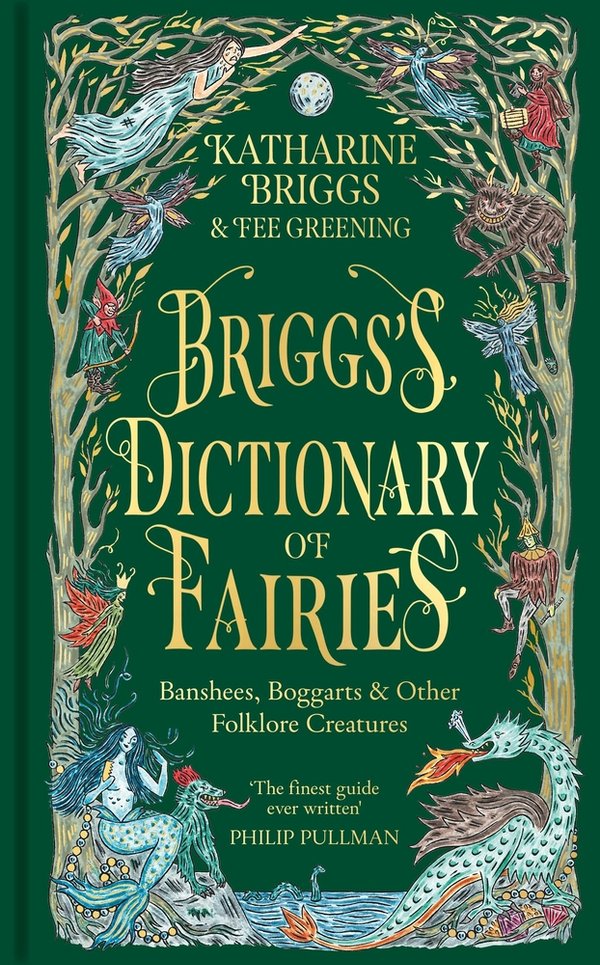
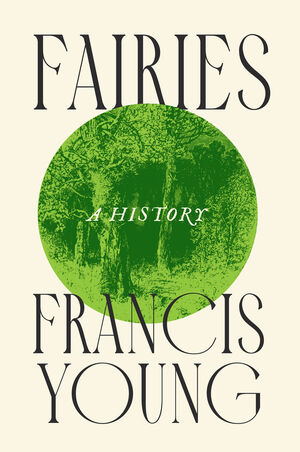
Both, I’m sure, are excellent books, but—as the kid said—were “likely to tell me more about whales than I wanna know.”
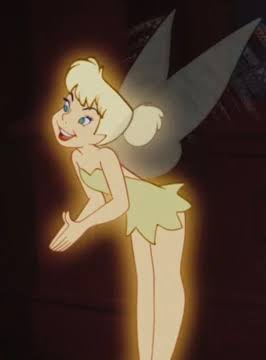
Perhaps my fav fairy: Disney’s Tinkerbell.
Not that I’ve got anything against fairies. Indeed, SimanaitisSays has already touched on the subject. Here I glean special tidbits from Richardson’s LRB piece that flit out at me.

Etymology of the Term. Nick Richardson describes, “It is in the vernacular literature of the medieval period that the word ‘fairy’ and its French equivalent, ‘fée’, first appear. The word derives from the Latin fata, which was used of the Parcae, the three sisters who weave human destiny: the Roman equivalent of the Greek Moirai, kissing cousins of the Norns of Nordic mythology and the Scottish Wyrd Sisters who appear as ‘witches’ in Macbeth.”
Shakespeare and a Changeling Tale. Richardson recounts, “It is a squabble over a changeling—‘a lovely boy, stolen from an Indian king’—that causes the rift between Oberon and Titania at the beginning of A Midsummer Night’s Dream. Shakespeare would have known that the children most at risk from fairies, like his Indian boy, were unchristened.”

And Cradle Scissors. “Precautions were taken,” Richardson relates, “to protect recently born children who had yet to be baptised: an open pair of scissors was hung over them as they slept, or a pin was stuck into their clothes, or their father’s trousers were placed over the cradle.”
Brewing Beer in an Eggshell. Richardson offers, “In a variant on a common changeling story collected by Ella Mary Leather in Folklore of Herefordshire (1912), a soldier returns home from war to find that his brother, born 24 years ago, is still in his cradle. To prove that the child is not in fact his brother, the soldier blows out an egg and begins brewing beer in the empty shell. A cackle comes from the cradle: ‘I am old, old, ever so old … but I never saw a soldier brewing beer in an egg shell before.’ The soldier chases the decrepit fairy out of the house, whereupon it vanishes and the real brother, who has been well looked after in an underground fairy palace, rematerialises.”
I’ve never thought of brewing beer in an eggshell either.
The Cottingley Fairies Scam. Another Richardson recollection: “In 1917, a nine-year-old girl called Frances Griffiths went to stay with her aunt and uncle and her cousin Elsie in the village of Cottingley in West Yorkshire. By the stream that ran along the bottom of the garden, Frances saw tiny, winged fairies and ‘little men’, dressed in green, marching in military formation. Her uncle and aunt didn’t believe her story, so to persuade them the girls borrowed Elsie’s father’s camera and took photographs of themselves by the stream, posing with cardboard cut-outs of fairies they had copied from illustrations in Princess Mary’s Gift Book (a collection of children’s stories published to raise money for the Queen’s Work for Women Fund).”
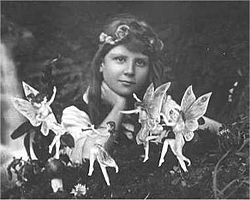
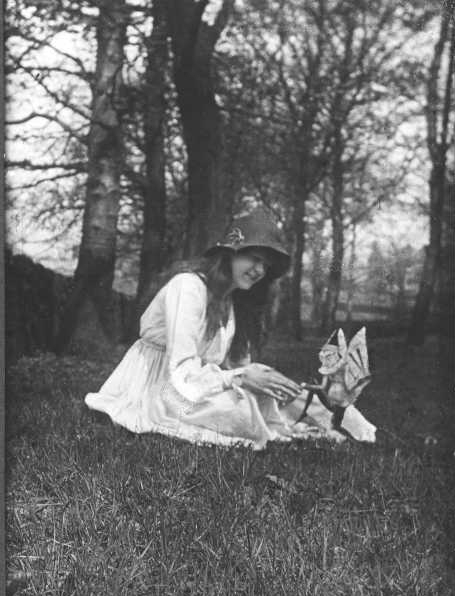
Richardson continues, “The girls had intended to fool only Elsie’s parents, but her mother, believing the photos were genuine, showed them off at a meeting of the Theosophical Society in Bradford…. Frances, Elsie and their photographs became a national sensation.”
Who Else Fell For It? Richardson recounts, “Arthur Conan Doyle, who had been commissioned to write a Christmas article about fairies for the Strand, found out about the photos and made them the centre of his piece.”
Just what you’d expect of a mere literary agent. See “Fairies In The Garden,” SimanaitisSays, July 10, 2016.
Oscar’s Mom’s Tale. Richardson relates that in her compilation of Irish folklore, Ancient Legends, Mystic Charms and Superstitions of Ireland (1887), Jane Wilde (mother of Oscar) offered an “account of an Irish man who had been abducted to be wedded to a fairy. A ‘fairy-man’ promised to bring him back, but after leaving out food for nine days, and an elaborate magic ritual involving the chanting of incantations and much smoke and fire, a shadowy figure appeared and was heard to say: ‘Leave me in peace; I am happy with my fairy bride, and my parents need not weep for me, for I shall bring them good luck, and guard them from evil evermore.’”
“We are left to speculate,” Richardson relates, “as to the way fairies in Ireland might have been used to explain away family scandals, and the role the fairy-men played in hushing them up.”
Wouldn’t You Know: The Fairy Census Website: Richardson reports, “A British historian of folklore, Simon Young, published a Fairy Census in 2014 that collected contemporary eyewitness accounts of fairies. The Fairy Census is now a website to which anyone can submit reports of their own experiences with fairies.”
My Fav: A Woman In Her Bath. Richardson cites, “A long and detailed account, from a Yorkshire woman in her twenties, describes a group of fairies that appeared to her as she lay in the bath. They were ‘dancing around each other, intermingling as if air was flowing through them’. A larger, male fairy appeared, ‘around two feet in height’: ‘He had a smile on his face all the way through, never taking his eyes off me. I must add that the smile was a mischievous one and I felt like he had an arrogance about him that was quite alluring.’ ”
Richardson concludes, “This encounter, one feels, might have blossomed into a fairy love story if someone hadn’t knocked on the bathroom door, causing the fairies to vanish.”
Quel dommage! ds
© Dennis Simanaitis, SimanaitisSays.com, 2026


Fun stuff ;
Too bad today most folks don’t allow themselves much whimsy .
-Nate
Agreed. “Whimsy R Us.”—ds
As charm dissipates, we’re all left bleaker.