
Simanaitis Says
On cars, old, new and future; science & technology; vintage airplanes, computer flight simulation of them; Sherlockiana; our English language; travel; and other stuff
GEORGE HANGER: 4TH (AND LAST) BARON OF COLERAINE, MILITARY BLUNDERER, EARLY FEMINIST (??)
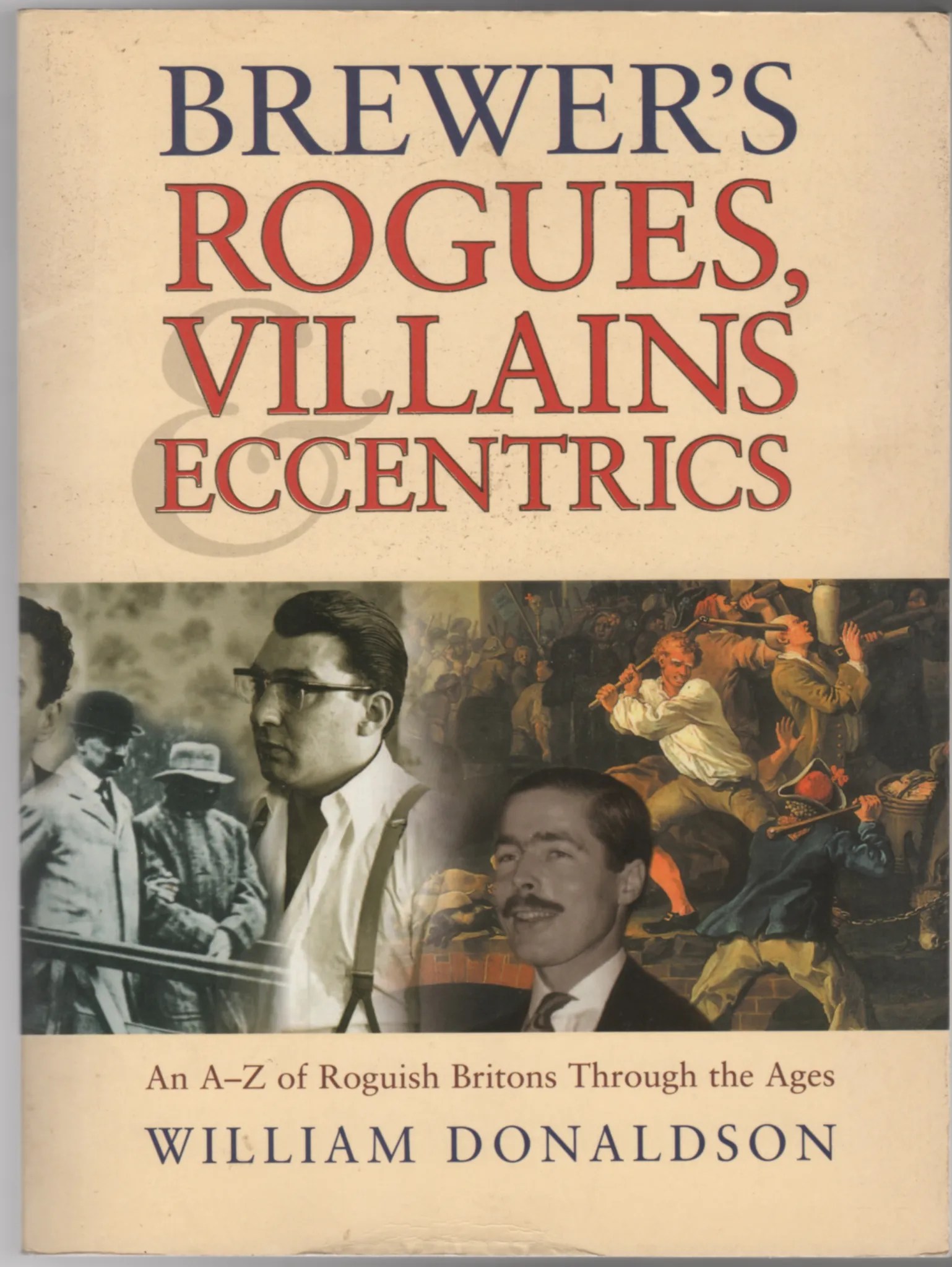
THE SLEEZE MEDIA THESE DAYS ARE REPLETE WITH GOINGS-ON (or non-goings-in) of English Royals (or non-Royals). Leafing again through Brewer’s Rogues, Villains & Eccentrics, I came upon George Hanger, 4th Baron of Coleraine, “gambler, army officer and coal merchant,” and a real piece of work.

George Hanger, 4th Baron Coleraine, 1751–1824, British army officer and writer. Portrait by Thomas Beach via Wikipedia.
Here are tidbits about the Lord Baron gleaned from Brewer’s, together with my usual Internet sleuthing.
Well Bred. Wikipedia recounts, “George Hanger was born into a prosperous family in Gloucestershire, the third son in a family of seven children. His father was Gabriel Hanger, a member of parliament who in 1762 was created Baron Coleraine in the Peerage of Ireland.”
“As a younger son,” Wikipedia continues, “Hanger’s education was geared towards his entering a career of military service. He was sent to Reading School and then Eton before going to the University of Göttingen. After joining the Prussian Army of Frederick the Great, he returned to England and in 1771 purchased an Ensigncy in the 1st Regiment of Footguards.”
Yes, back in those days, military appointments came about through a presentation of cash. Unlike today’s Department of War [sic], where apparently other criteria (race, gender, Wokeness, ass-kissing) enter into matters, one way or the other.
But Perhaps Not Quite Enough Cash. “In the army,” Wikipedia relates, “Hanger gained the reputation of being a womanizer to the detriment of his military duties. In 1776 he purchased a lieutenancy [no doubt pronounced with an “f”], but he resigned his commission in disgust after a more junior officer purchased promotion over him. He then purchased a captaincy in a German Jäger rifle company bound for North America to campaign in the American Revolutionary War.”
Not Uneventful. Brewer’s recounts, “As a young soldier, Hanger fought numerous duels, married a gypsy [“who left him for a tinker,” notes Wikipedia] and was wounded in the American War of Independence.”
Wikipedia Amplifies: “He served as aide-de-camp to Sir Henry Clinton during the siege of Charleston, South Carolina in 1776. Later during the war Hanger returned to British service under the command of Banastre Tarleton in the British Legion as a major and as commander of its light dragoons. In the Battle of Charlotte of 1780, Hanger commanded the legion due to Tarleton’s illness, ordering it to ride into Charlotte, North Carolina without taking precautions to guard against surprise attacks. As a consequence, the legion’s cavalry was badly mauled by Patriot militia that had set up an ambush in the town centre. Hanger was wounded in the battle, which he termed a ‘trifling insignificant skirmish.’ He shortly thereafter fell ill, probably with yellow fever, and was shipped to the Bahamas to recuperate.”
Then Came Bertie. Back to Brewer’s: “At the age of 22 he retired from the army, thereafter devoting himself to drinking, gambling and whoring—occupations that shortly won him the friendship of the Prince of Wales, later George IV.”
Hmm… Drinking? Gambling? Sound familiar?
Brewer’s notes (in a prescient reference to prediction markets), “He would bet on anything, on one occasion laying a wager on the result of a ten-mile foot race between 20 turkeys and 20 geese. The turkeys dropped out after three miles and Hanger lost £500.” Real money back then….
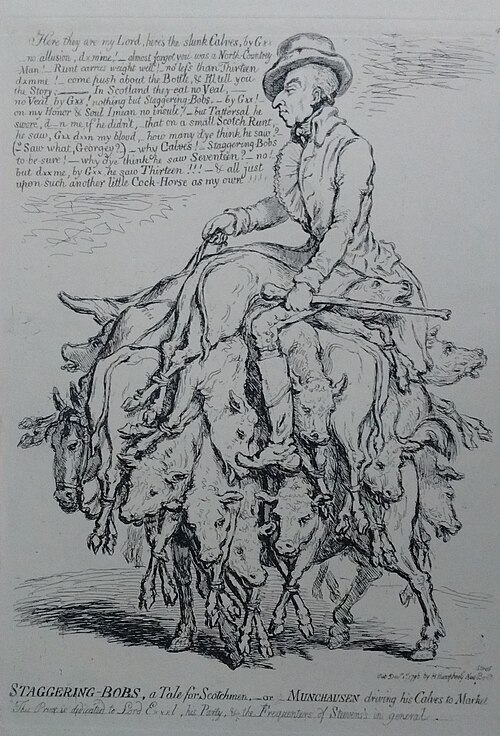
A caricature of Col. George Hanger by James Gillray, published in 1796.
A Prisoner of the “King’s Bench,” But Showing Some Class. Brewer’s observes, “Refusing help from wealthy friends who were prepared to maintain him in style in a private cell [see Ghislaine Maxwell], he suffered the full degradation of life in a debtor’s prison.”
Hanger was in stir from June 1798 to April 1799. “In 1800,” Wikipedia recounts, “he set up a business as a coal merchant. And far from finding his new circumstances a humiliation, he delighted in embarrassing fashionable society by drawing attention to his new and inferior status. ‘Plain George Hanger, if you please.’ This attitude cost him the friendship of the Prince Regent.”
Wouldn’t you know….
A Writing Career—With a Touch of Feminism?? Here, Wikipedia and Brewer’s take somewhat different tacks on Hanger’s writing: “In 1801,” notes Wikipedia, “he published a two-volume autobiography (co-authored by William Combe) The Life, Adventures and Opinions of Col. George Hanger, a freewheeling work describing his early life and his military career in America, interspersed with observations on the King’s Bench Prison and female prostitution. It contains the prediction that one day the northern and southern states ‘will fight as vigorously against each other as they both have united to do against the British.’ His last work, Colonel George Hanger To All Sportsmen (1814), concerned field sports, on which he was an acknowledged authority.”
Er, yes….
By contrast, Brewer’s recounts, “Hanger later became famous for his controversial advice to women set forth in The Life, Adventures and Opinions of Col. George Hanger (1801). He suggests that they should settle affairs on honour by duelling among themselves rather than involving men in their disputes. He recommends, when eloping, that they should depart through a window rather than a door, since ‘this will establish you in your lover’s opinion as a woman of spirit.’ He applauds the fashion for loose gowns, which ‘are admirably suited to conceal pregnancies or for a shop-lifter to hide a bale of goods,’ and he advises clergymen to supplement their income by hiring out blind men to beggar-women, who will find that a genuinely handicapped companion exerts a greater pull on the purse strings than a child or even a dog. Less controversially, he advocates a tax on Scotsmen who spend more than six months of the year south of the border.”
The Last Baron of Coleraine. Wikipedia describes, “On the death of his brother William, the 3rd Baron, in December 1814, the barony of Coleraine descended to Hanger, but he declined to assume the title. He died in London in 1824, whereupon the peerage became extinct.”
The life’s message of George Hanger 4th Baron of Coleraine is, at best, a mixed one. ds
© Dennis Simanaitis, SimanaitisSays.com, 2026


I seem to have missed the details of his internment for debts….
-Nate
I suspect debtors’ prison was from paying for all those military appointments….—ds