
Simanaitis Says
On cars, old, new and future; science & technology; vintage airplanes, computer flight simulation of them; Sherlockiana; our English language; travel; and other stuff
OPERA’S RAZOR EDGES
I ENJOY QUOTING SIR PETER USTINOV: “Opera rides the razor edge of absurdity.” The October 2026 issue of Opera With Opera News offers interesting extremes of scenery and notable examples of August/December and November/February romances.
Des Moines Tosca and King Roger. Steven C. Kemp set a stunning Tosca, Mark Thomas Ketterson noting in Opera and Opera News, with “evocative renderings of Sant’Andrea della Valle and the Castel Sant’Angelo”
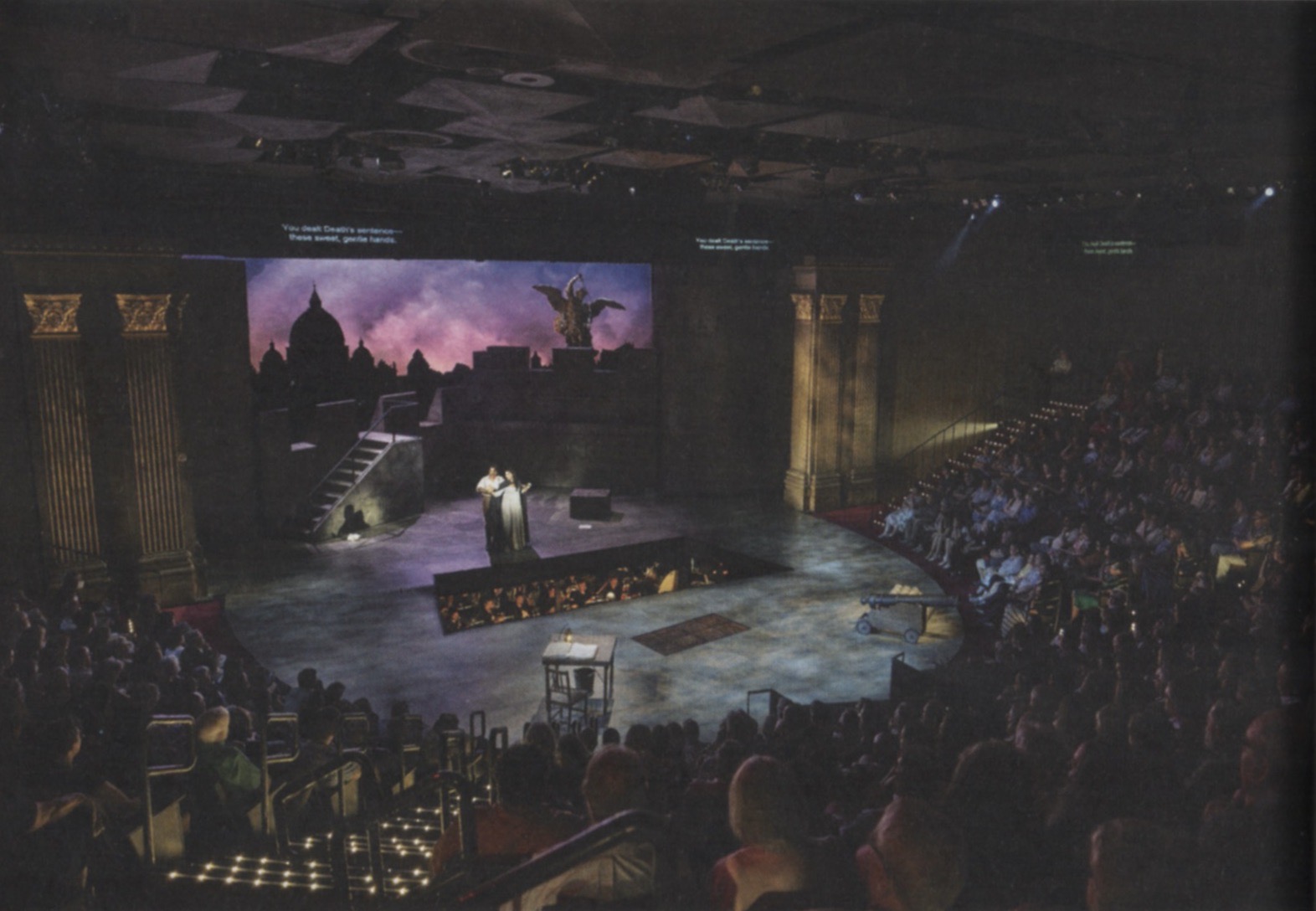
I like the combination of actual scenery combined with projections. Also, its orchestra embedded within a theater-in-the-half-round is notable. I’m reminded of Wagner’s Bayreuth.
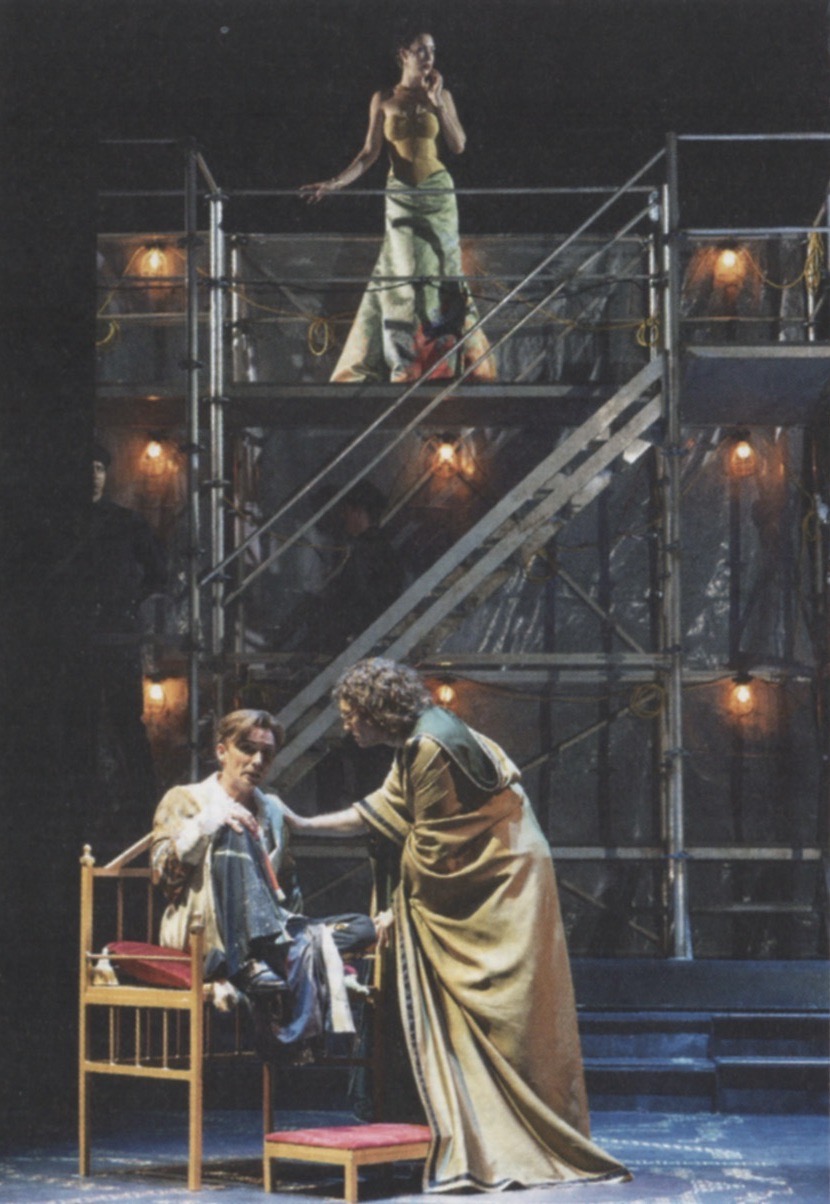
Ketterson describes, “The season’s pièce de résistance, seen on July 12, was a superb mounting of Karol Szymanowski’s rarely encountered Polish-language opera King Roger. Written in 1924, when the world was in a state of fracture and the zeitgeist was consumed with the still-new principles of psychoanalysis, Szymanowski’s tale of an enigmatic shepherd who unsettles the sedate counter of the 12th-century Sicilian King Roger II posits more questions than it answers. The work has been interpreted as a struggle between the id and the superego, or a treatise on political chaos versus social order. For many, it potentially suggests a journey towards one’s full humanity, with all the Dionysian impulses this entails.”
Gee, I couldn’t have said it better myself, though I admit I did recognize the Sicilian King Roger’s Norman heritage.
Garsington Opera’s The Importance of Being Earnest. Emily Arlidge recounts, “Gerald Barry devours Wilde’s cut-glass text, licking the plate clean. The score crackles with chaotic invention, and represents the overwrought underbelly of ‘proper decorum’ fizzling with neurosis and the threat to social hierarchy.”
Hear! Hear! I’m all for it, having recently enjoyed “Oscar Wilde’s Annotations.”
Arlidge observes, “The production crashed into action with Seán Boylan as a capricious Algernon Moncrieff in silky blue pyjamas at a piano perched on spindly legs high above the stage. The whole contraption swayed precariously as he hammered the keys along with Barry’s zigzagging melody.”
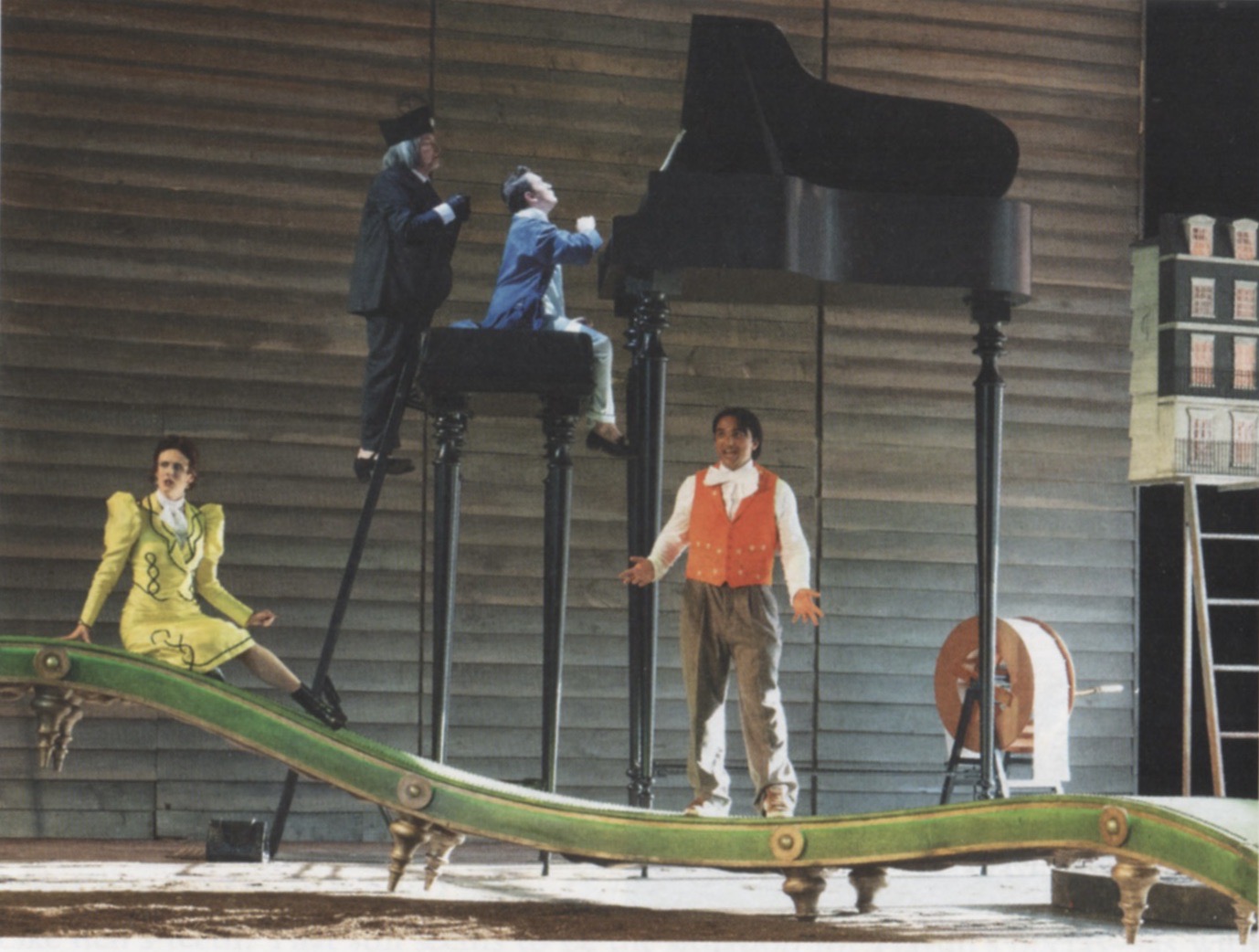
This is when Algernon says, “I don’t play accurately—anyone can play accurately—but I play with wonderful expression. As far as the piano is concerned, sentiment is my forte.”
Aix-en-Provence’s Die Frau ohne Schatten. Jonathan Cross describes, “The much-anticipated blockbuster event of the season was Barrie Kosky’s new production of Die Frau ohne Schatten at the GRAND THÉÂTRE DE PROVENCE with an all-star cast and conductor.” Cross observes that Kosky’s “approach to this challenging work that straddles fairy tale, myth and psychodrama is to treat it as a dreamscape. He leaves the meaning of the central symbol of the shadow open so that instead of it standing merely for motherhood, it belongs in different ways (Freudian, Jungian, spiritual) to each of the five principal characters.”
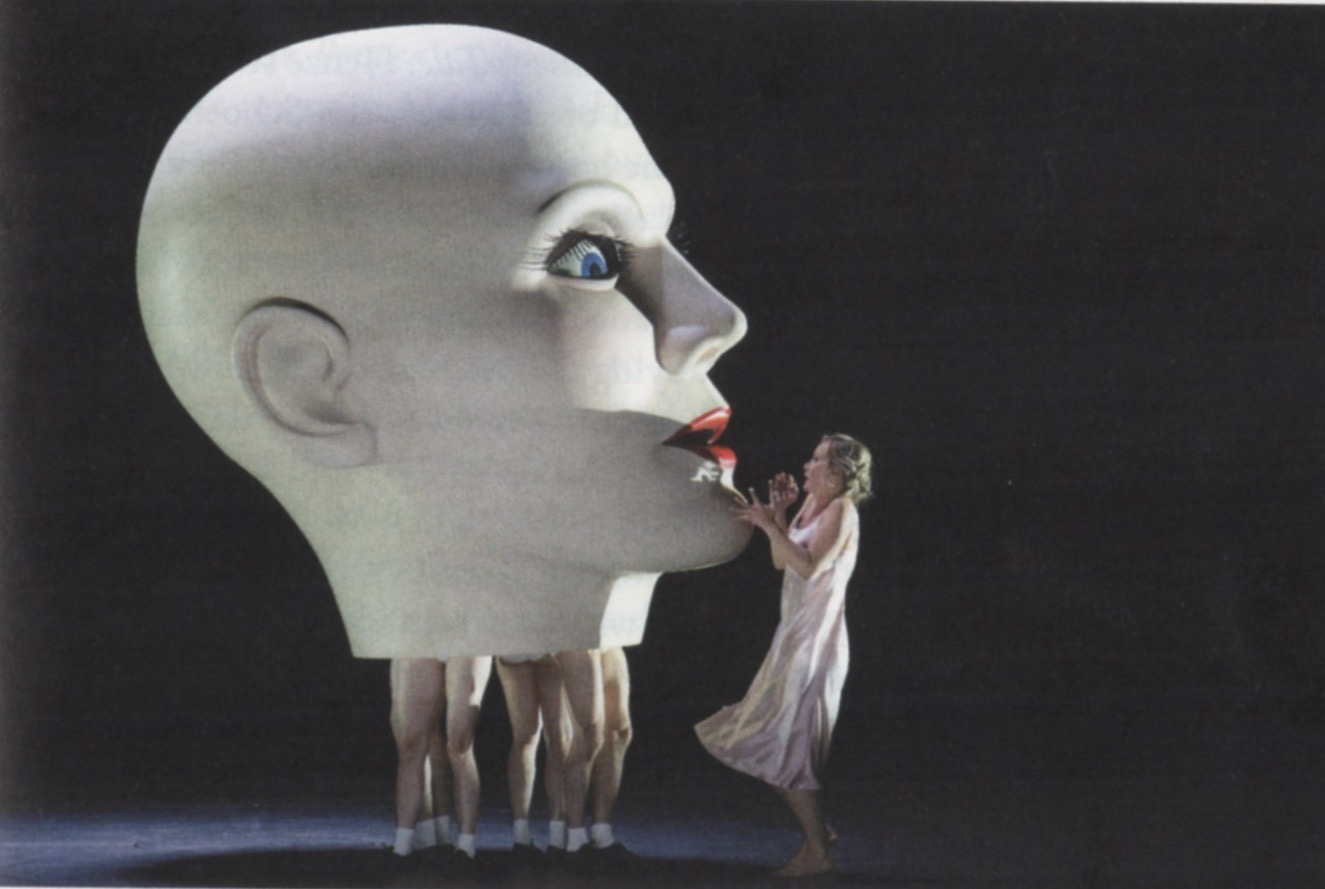
“Thus,” Cross continues, “rather than trying to resolve the work’s contradictions, Kosky—supported by the designers Michael Levine and Victoria Behr—leaves them in play through a sequence of surreal images and coups de théâtre that linger long in the mind’s eye.”
On Iconoclastic Productions. Tim Bullamore recounts, “Sarolta Kodály is ambivalent about the Hungarian State Opera’s 100th anniversary staging of Háry János, the four-act ‘folk opera’ by her late husband, Zoltán Kodály.”
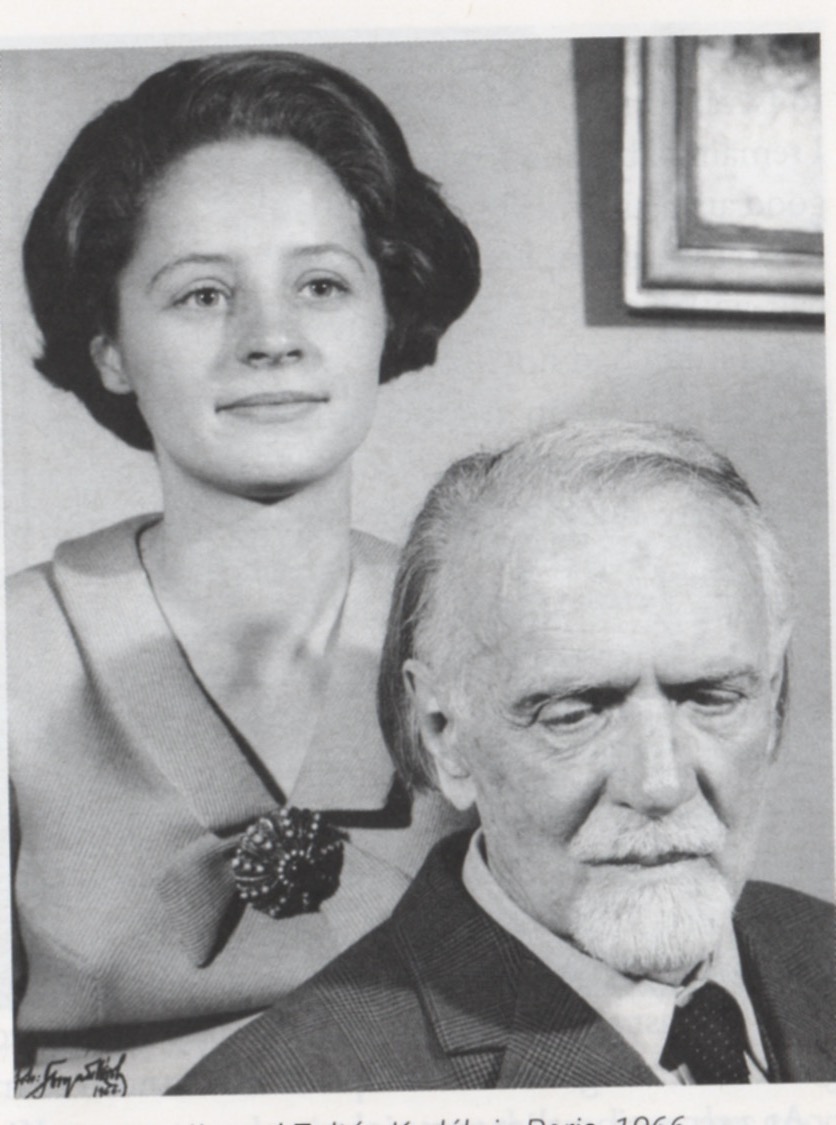
The Kodálys in Paris, 1966. The composer died in 1967 at age 84.
Bullamore quotes Madam Kodály: “I hope for the best, but if they alter the pieces, and I am not terribly happy with this, I will be there if it is good enough. If not, I will be there as well, but I will not show myself.”
“Madam Kodály,” Bullamore notes, “youthful and witty but recovering from a hip injury, is not convinced—perhaps because the publicity depicts a Lycra-clad cyclist pedalling furiously across a gold silhouette backdrop of a sword-carrying uniformed figure on galloping horseback.”
Being as I am a fan of Háry János (see “Don’t Forget the Symphonic Sneeze,” SimanaitisSays, August 19, 2025), I have no problem showing myself regardless of the new production’s unorthodoxy.
August/December and November/February Romances. Not to fall to gossip, Kodály relationships are too charming to ignore: Bullamore recounts that Sarolta was five when her schoolteacher father invited Zoltán and his first wife Emma to stay for six weeks, “a welcome break from the postwar deprivations of Budapest where they had taken refuge in the cellar of the opera house.”
Calendar pages flip by; years pass. In 1958, “Sarolta had been in Budapest only a few weeks when Emma, who was almost 20 years older than Kodály, died on 22 November 1958, aged 95. Thirteen months later, and two days after his 77th birthday, the composer of Psalmus Hungaricus, Dances of Galánta and the ‘Peacock’ Variations married the 19-year-old Sarolta.”
The Kodály Legacy. Bullamore cites Madam Kodály: “He was one of those rare personalities who teach by every gesture. He wanted you to have open eyes and an open mind and if you didn’t have them, he would tell you.”
“Perhaps,” Bullamore concludes, “the centenary staging of Háry János will open more eyes and minds to the music of a great Hungarian composer.” ds
© Dennis Simanaitis, SimanaitisSays.com, 2026

