
Simanaitis Says
On cars, old, new and future; science & technology; vintage airplanes, computer flight simulation of them; Sherlockiana; our English language; travel; and other stuff
ΟΙ ΠΟΛΛΟΙ, PLEBS, THE MASSES PART 1
THE GREEK PHRASE ΟΙ ΠΟΛΛΟΙ APPEARS IN MERRIAM-WEBSTER as hoi polloi meaning “the general populace: masses.” Google Translate renders “the common people” into Latin plebs. Each of these comes to mind after reading Emma Dench’s “How to Keep Count,” London Review of Books, November 5, 2026.

Wikipedia notes that Emma Dench (Judi’s niece) has been McLean Professor of Ancient and Modern History at Harvard University since 2014, and the dean of its Graduate School of Arts and Sciences since 2018. Her LRB piece reviews two books about the Roman Empire, the one catching my eye being Kim Bowes’ Surviving Rome: The Economic Lives of the Ninety Percent.
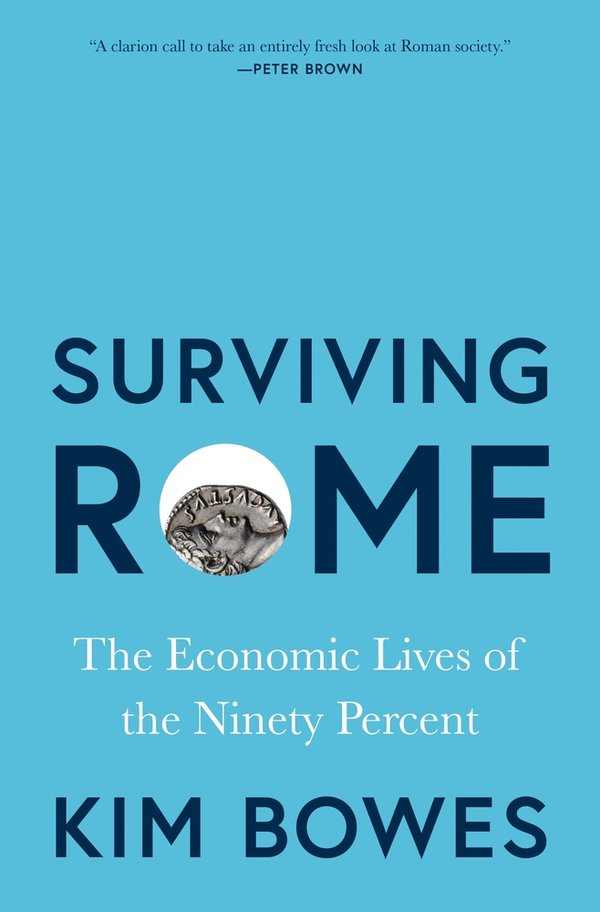
IndieBound recounts, “Focusing on the working majority, Kim Bowes tells the stories of people like the tenant farmer Epimachus, Faustilla the moneylender, and the pimp Philokles. She reveals how the economic changes of the period created a set of bitter challenges and opportunistic hustles for everyone from farmers and craftspeople to day laborers and slaves.”
The Roman Empire As a Model. Emma Dench begins her LRB piece with “The Roman Empire has left its mark on the West as a model of power, governance and society. Since its founding, the United States has styled itself as a republic, complete with Senate, checks and balances; modern European empires attempted infrastructure projects reminiscent of the ancient engineering works that carved straight roads and aqueducts through alien territories, and claimed a similar ‘civilising’ or even God-given mission.”

Hoi Polloi. More of Professor Dench’s cogent thoughts are identified in quotes, gleaned here in Parts 1 and 2 today and tomorrow. My accompanied musings follow sans adornment. But first, let’s pause momentarily for a bit of etymology: M-W observes that “Even though hoi itself means ‘the,’ in English we almost always say ‘the hoi polloi.’ ”
O.K., but its redundancy still irks me.
Also, M-W notes, “Though sharing a syllable and frequently appearing in the same contexts, hoi polloi is not related to hoity-toity, meaning ‘arrogant’ or ‘pretentious.’ ’’
Depicting Hoi Polloi. Dench recounts, “Literature, written almost exclusively by upper-class Roman men, only gets us so far. In rare cases, ordinary people are depicted with realism and even compassion…. More often, ordinary people are only glimpsed; where they are foregrounded, they tend to be treated with disparagement, pity or pomposity.”
“They were, however, made use of in literary works to represent types or values. Roman authors liked to find moral lessons in poverty (especially the picturesque rural kind) and even enslavement.”
Archaeological Initiatives. “These literary portraits formed the backbone of social histories that focused on Roman ‘daily life’, an area that still provides light relief in Latin textbooks. But there are better ways of illuminating the lives of ordinary people in the Roman Empire than through literary texts written by the upper classes. The wide array of ancient source material now available and accessible includes ledger accounts and army logs, notes, letters and notarised documents; there are papyri preserved by the arid conditions of Egypt and, at the other extreme, wooden tablets that survived in the waterlogged, anaerobic conditions of the military fort of Vindolanda on Hadrian’s Wall. Recent archaeological initiatives carried out during the construction of Disneyland Paris, among other projects, have expanded our understanding of rural life in Roman northern Europe to an extraordinary degree.”
Tomorrow in Part 2 we’ll ask “What’s for supper?” and “What’ll I Wear?” ds
© Dennis Simanaitis, SimanaitisSays.com, 2026


? Why couldn’t they have taught me history like this when I was young ? .
I disliked it intensely and discovered decades later that history is fascinating .
-Nate
Nate – I enjoyed history as a youngster, growing up without TV (Dad stationed overseas Post WWII until ’56) but read first Classic Comic Books, then bios, then histories.
I wound up getting belated degrees, four graduate, first in Engineering, Management, then Computer Science … but when offered a Cambridge fellowship, my Don (advisor) talked me into Modern History, largely the 19th century, and that has been BY FAR, the most useful course of study I’ve had.
History ties EVERYTHING together from politics/diplomacy, languages, to math, to all sciences, psych/soc., etc. … even astronomy, meteorology, geology get linked and overlap through historical contexts.