
Simanaitis Says
On cars, old, new and future; science & technology; vintage airplanes, computer flight simulation of them; Sherlockiana; our English language; travel; and other stuff
CELEBRATING OSCAR WILDE ANNOTATIONS PART 1
I HAVE LONG SAVORED THE WIT, ERUDITION, AND STYLE of Oscar Wilde. See “In Praise of Annotated Editions,” November 22, 2013; “The Best of Lines,” April 21, 2017; “In the Wildes of North America,” August 19, 2021; and “The Best Of,” January 2, 2022.
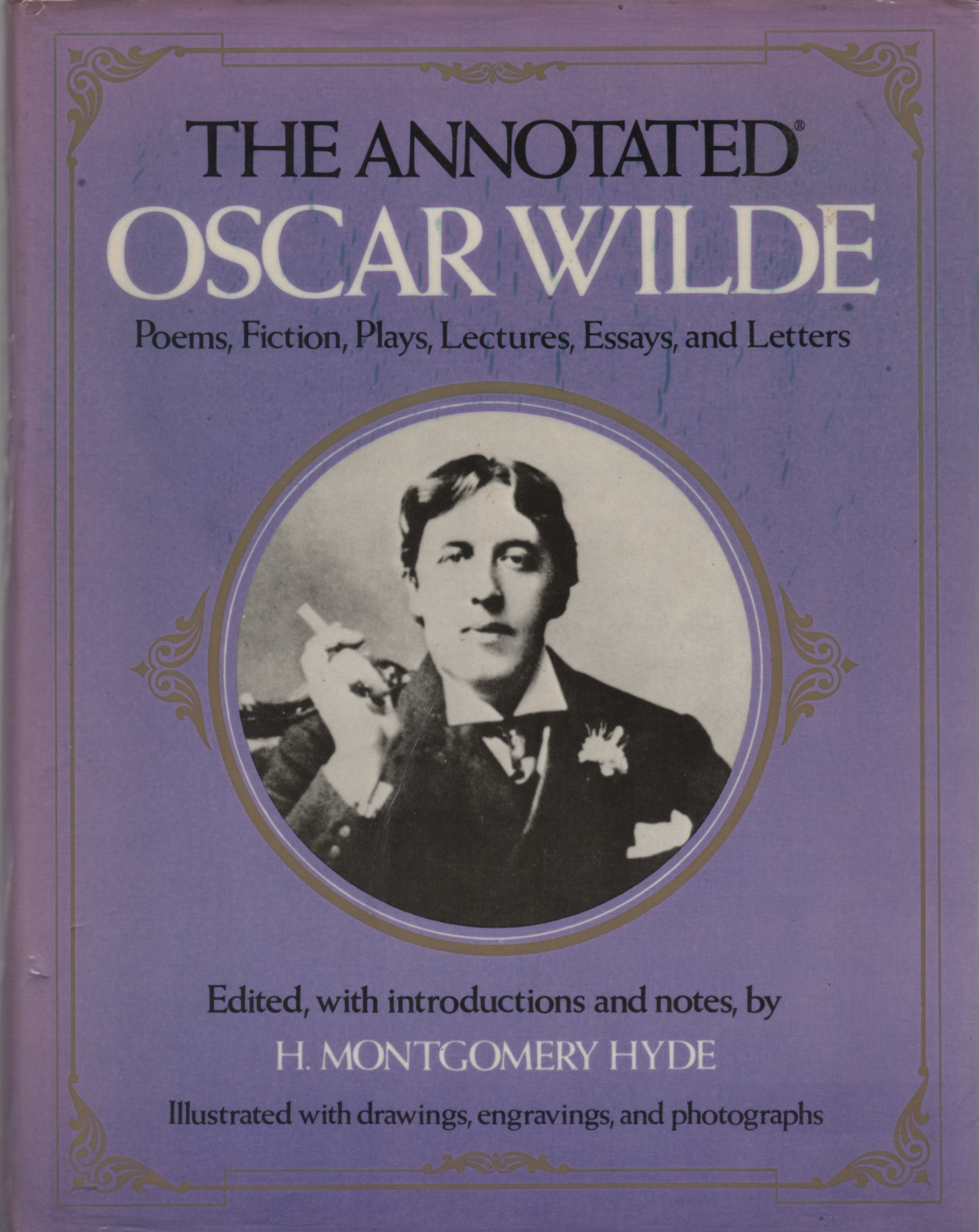
This time around, I glean tidbits from The Annotated Oscar Wilde encouraged by “the best of” lines from Wilde’s The Importance of Being Earnest. Indeed, here in Parts 1 and 2 today and tomorrow, I focus on the annotations (assuming, gentle reader, that you’re already familiar with Wilde’s play).
See, for example, the YouTube version from Shakespeare Audio Archives. (There, Lady Bracknell is portrayed by Joan Plowright; she, one of the personages in Orson’s Shadow.)
Of the Original Production, 1895: “Asked if the play would be a success, Wilde replied, ‘My dear fellow, you have got it wrong. The play is a success. The only question is whether the first night’s audience will be one.’ ”
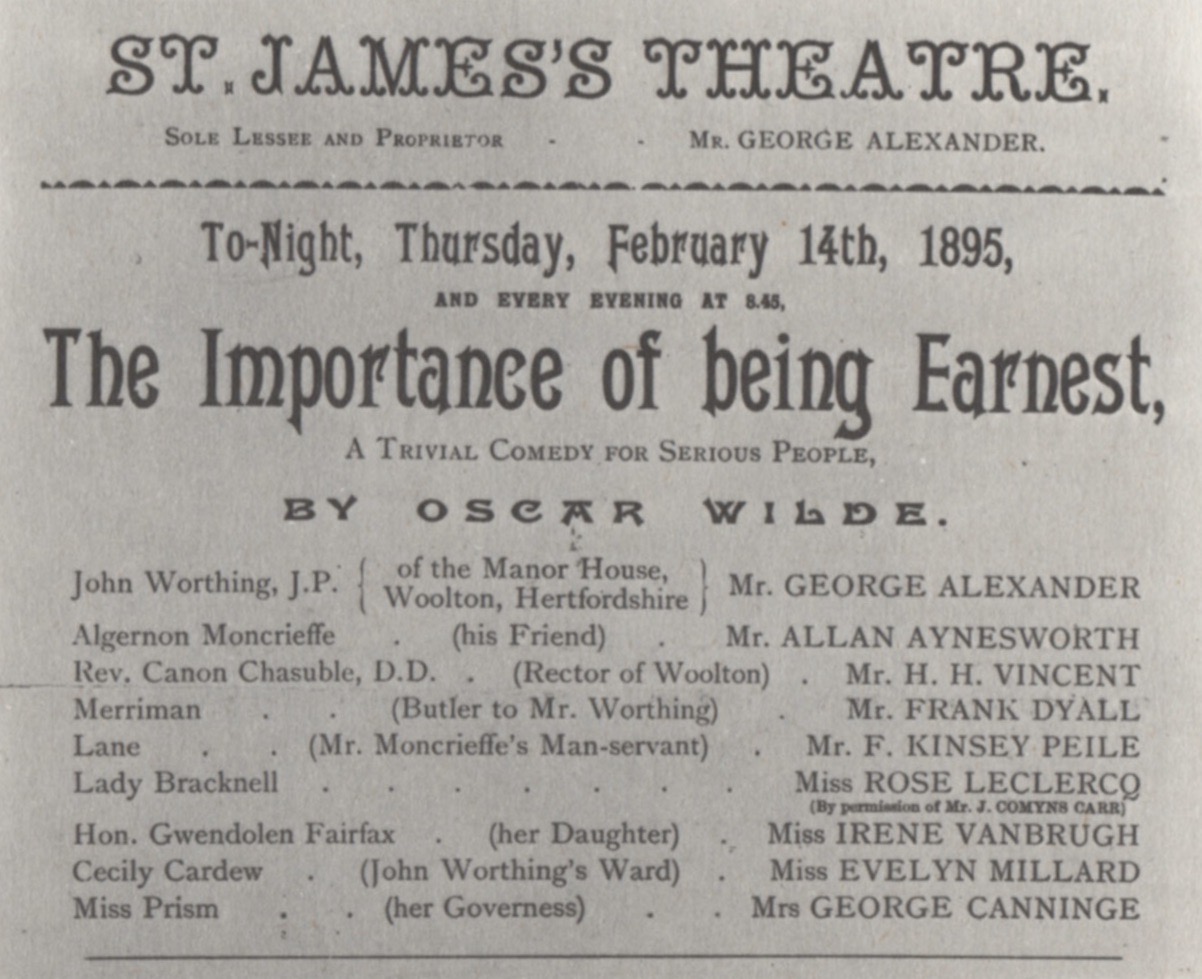
The Play’s Opening Lines—No Annotation Needed: Algernon Moncrieff asks his manservant, “Did you hear what I was playing, Lane?” The manservant says, “I didn’t think it polite to listen, sir.” Algernon describes, “I’m sorry for that, for your sake. I don’t play accurately—anyone can play accurately—but I play with wonderful expression. As far as the piano is concerned, sentiment is my forte. I keep science for Life.”
A good rule, that.
On Victorian Professions: Jack Worthing, J.P., says, “My dear Algy, you talk exactly as if you were a dentist. It is very vulgar to talk like a dentist when one isn’t a dentist. It produces a false impression.” Replies Algernon, “Well, that is exactly what dentists always do.”
The annotation reads, “In these snobbish times, dentists, doctors and people ‘in trade’ were not considered fit to mix socially with the élite of ‘Society.’ ” In a later annotation, “Solicitors (attorneys), unlike doctors, dentists, and people ‘in trade,’ were sometimes accepted socially by ‘Society.’ ” More’s the pity, I’d say.
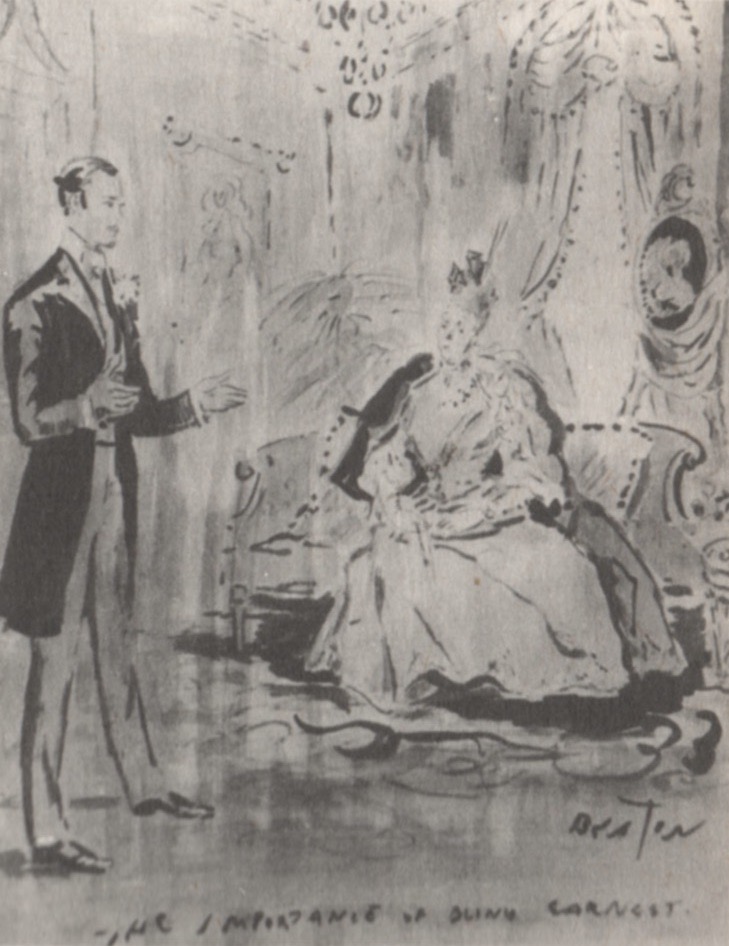
On Various English “Teas.” Algernon (stiffly): “I believe it’s customary in good society to take some slight refreshment at five o’clock….” The annotation: “ ‘Five o’clock tea,’ as opposed to high tea (meat-tea). It was not considered polite to eat much at afternoon tea since the occasion was primarily a pretext for visitors who ‘called’ rather than a meal by invitation.”
Later, Algernon says, “I am greatly distressed, Aunt Augusta, about there being no cucumbers, not even for real money.” Lady Bracknell replies, “It really makes no matter, Algernon. I had some crumpets with Lady Harbury, who seems to me to be living entirely for pleasure now.” The annotation: “English crumpets and muffins were popular at ‘five o’clock’ teas. In America the type of bread known as ‘English muffin’ is more akin to the English crumpet.”
And, I can add, the slang term for a young lady/crumpet came much later: Henry Manney III noting that “The Jaguar XK-E is the finest crumpet collector known to man.” But I stray from Being Earnest.
Hey, this annotation searching is fun. Let’s continue it tomorrow in Part 2. ds
© Dennis Simanaitis, SimanaitisSays.com, 2026

