
Simanaitis Says
On cars, old, new and future; science & technology; vintage airplanes, computer flight simulation of them; Sherlockiana; our English language; travel; and other stuff
NEET TEENS WORLDROUND PART 2
YESTERDAY, WE STARTED ETYMOLOGICAL FUN WITH NEET, “Not in Employment, Education or Training,” encouraged by William Davies’ “Young People Are Different,” London Review of Books. Today in Part 2, we begin—gad!—with a rare Wikipedia mistake in our pursuit of Shakespearean scholarship.
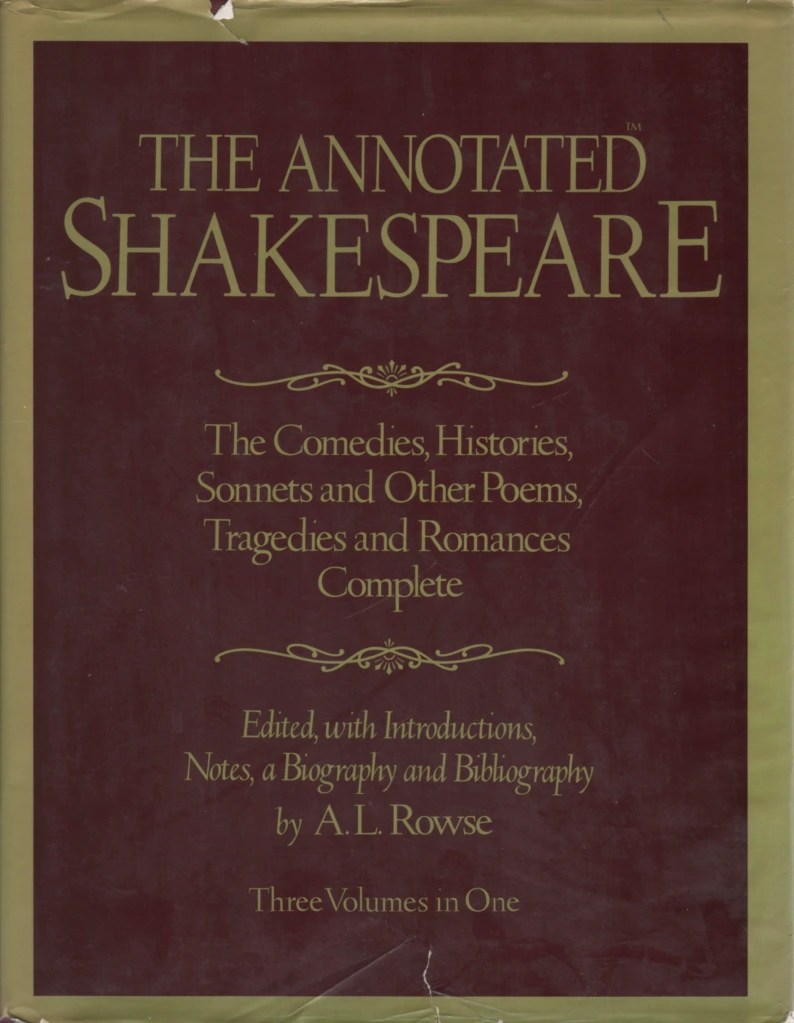
Opps, a Rare Wikipedia Mistake. No less than Rowse’s The Annotated Shakespeare and also Shakespeare Navigator describe that the Nurse’s “to my ‘teen’ ” has nothing to do with its modern use: Rowe says the Shakespearean “teen” meant “Grief.” Shakespeare Navigator, “sorrow.”
Just for fun, I consulted my OED, Compact Edition, 1971. It cites “Teen” as “chiefly north. eng. 1. Angry, vexed, enraged” with a 1375 reference. And “Teen,” “1. To vex, irritate, annoy. 2. to cause grief or sorrow,” reference, 1300.

’Way later in the citation, it mentions “—teen combining element” from O.E. tepe to M.E. téope.” Whence our “teenth.”

Back to Davies and “Neet.” “In the years since,” Davies recounts, “Neet rates have become an international indicator, deployed by the OECD [Organzation for Economic Co-operation and Development] among other bodies to compare national policy successes and failures. The category mutates depending on national data collection practices. In the UK, as elsewhere, it now tends to refer to those between 16 and 24, the expanded age range reflecting the far greater proportion of young people passing through higher education.”
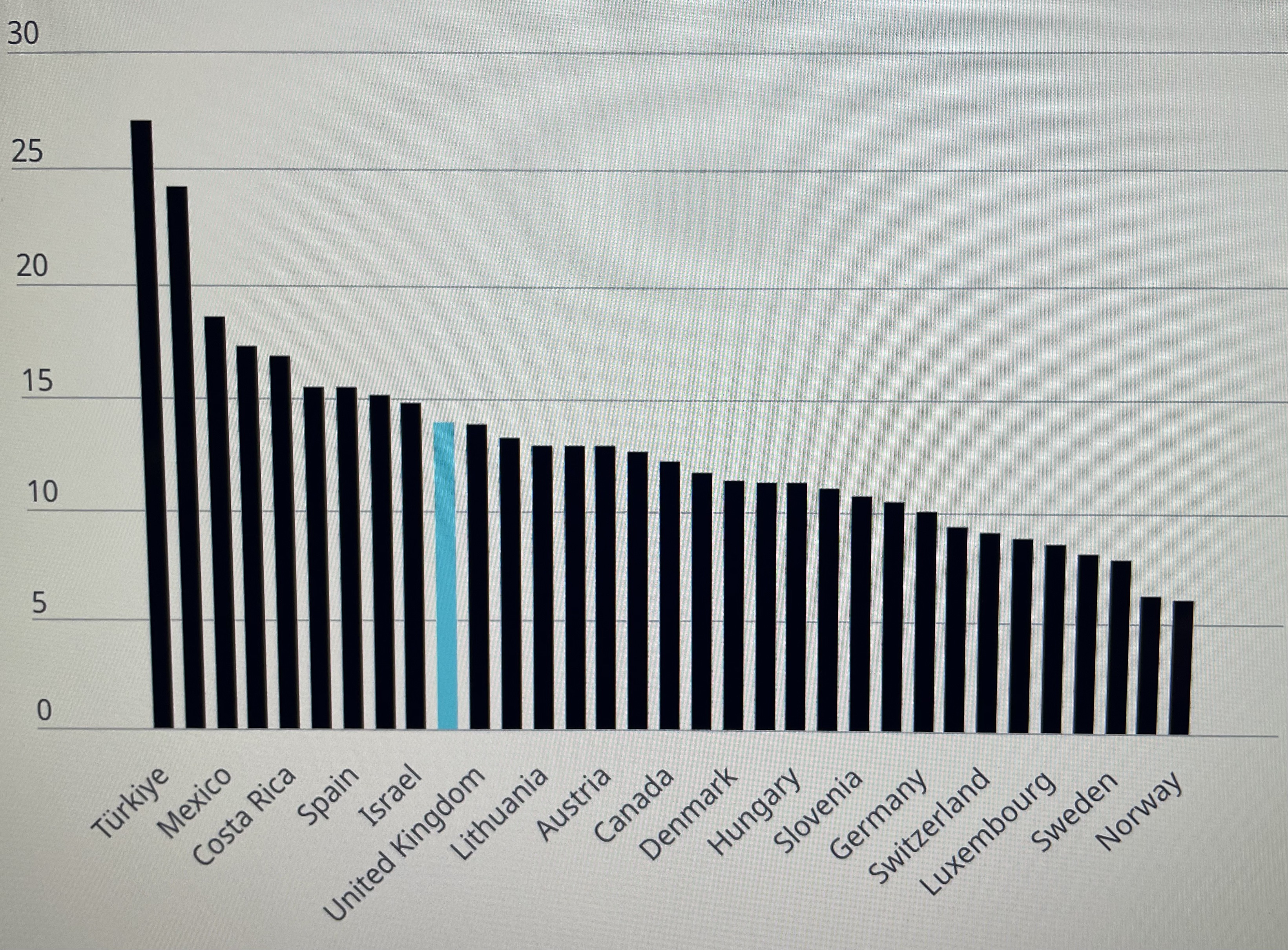
Youth not in enployment, education or training (NEET), % of population Total, from 15 to 29 years, 2025. The United States is the blue column, just to the left of the United Kingdom. Image from OECD.
“In the Neet league tables,” Davies observes, “the Netherlands has consistently had the lowest rate and Turkey the highest. Ireland has been applauded for bouncing back from the doldrums of the Eurozone crisis in the early 2010s. The UK currently languishes in the wrong half of the table, with just over a million people between 16 and 24 not in employment, education or training, 13.5 per cent of the cohort. Leave out 16 and 17-year-olds (most of whom are at school these days) and the figure rises to 16 per cent.”
Different from Those…. Davies describes, “Britain’s particular version of the Neet crisis is in several respects unlike those of thirty or forty years ago. ‘Young people are different from those who came before them,’ as Milburn’s interim report puts it. ‘Not worse. Not lazier. Not less intelligent. But different in ways that have material consequences.’ ”
Davies Concludes: In 2009, Britain ranked 25th in the world for reading, according to the OECD. By 2018, it was up to fourteenth – not bad, given that funding for schools had effectively been frozen in the meantime. But on another OECD metric, the UK was doing far less well. A survey asking 15-year-olds about their ‘sense of belonging’ in school found that, between 2003 and 2022, Britain experienced the sharpest fall of any country in the OECD. Schools were performing ‘better’ according to the measures most popular in Whitehall, but children were becoming lonelier, more anxious, more lacking in a sense of purpose, and less able to express normal teenage frustration in a way that they could expect to be tolerated or forgiven. Grappling with this fact won’t bring the disability benefits bill down in the short term, but it’s an appropriate response to the new consensus that something has gone deeply wrong for British youth.”
And likely so it is with U.S. youth as well. (But at least “grief” and “sorrow” aren’t necessarily among their problems.) ds
© Dennis Simanaitis, SimanaitisSays.com, 2026


Yeah, that bit on Wikipedia was inserted by an account that was banned shortly thereafter. I’ve seen that a lot: the admins kick someone off for vandalism, but don’t fix the damage they did.