
Simanaitis Says
On cars, old, new and future; science & technology; vintage airplanes, computer flight simulation of them; Sherlockiana; our English language; travel; and other stuff
CELEBRATING ARTIST EXTRAORDINAIRE PETER HELCK
BACK IN R&T 1981, SAM POSEY CELEBRATED ARTIST PETER HELCK: “Peter Helck was born in 1893, just in time for the invention of the automobile The first car race, the Paris-Bordeaux-Paris, was held when Peter was two years old. By the time he was a teenager, cars were also in full bloom of their adolescence. Serious travel, though, was by railroad or steam-ship—cars were still too loud, too unreliable and too plain dangerous to be good for much beyond sport and adventure. But they were on their way.”
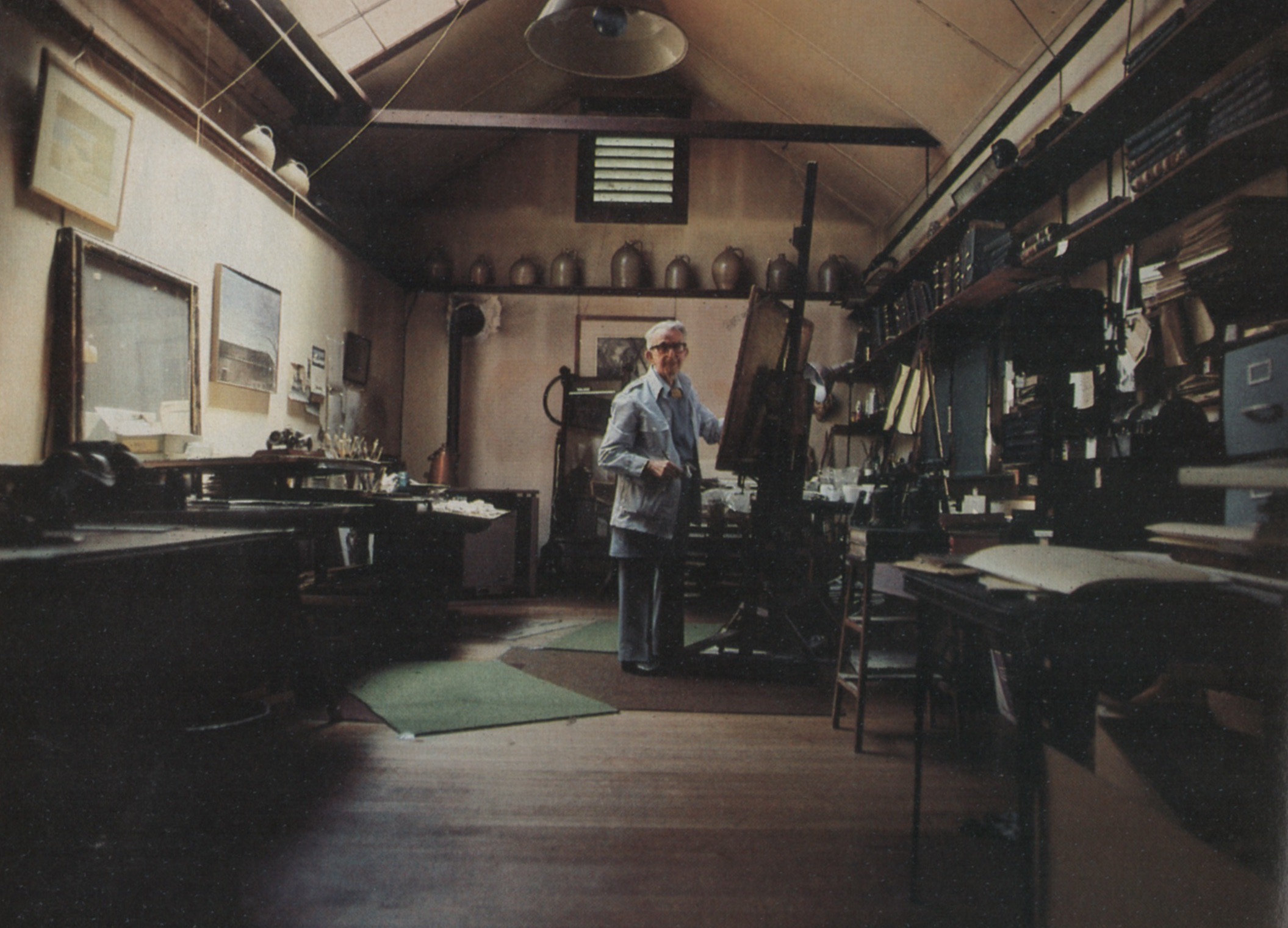
Aligned With the Automobile. And Peter held the automobile in high regard—for the rest of his life. Wikipedia notes, “Peter Helck (1893 – 1988) was an American illustrator specialized in depicting racecars. Helck estimated that he had produced more than 600 sketches, drawings and paintings during his career.”
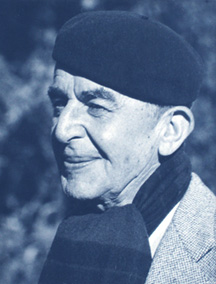
Here are tidbits and illustrations gleaned from Sam’s article, an accompanying “Salon,” and my “Peter Helck—The Enthusiast’s Artist,” SimanaitisSays, June 25, 2014.
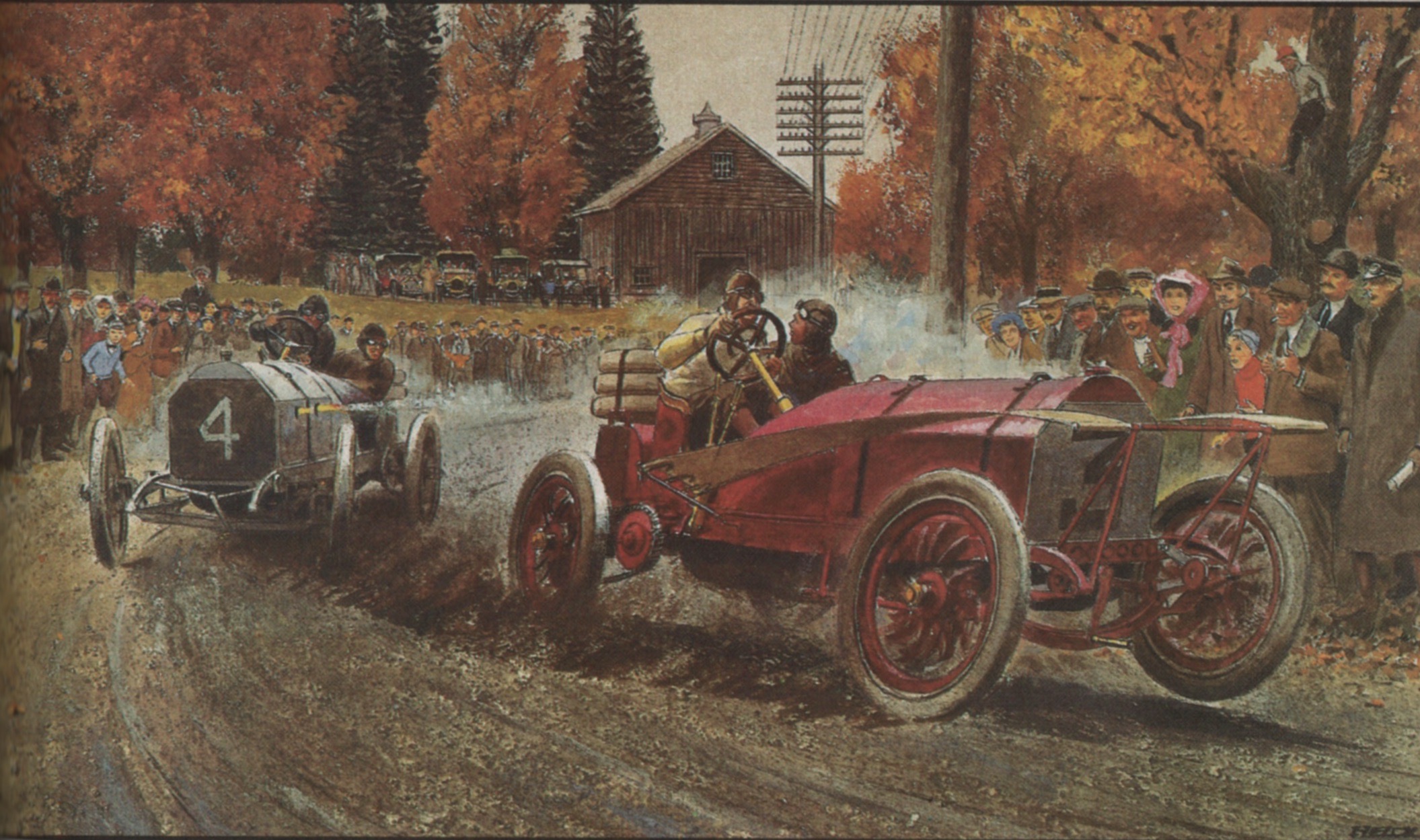
“This was the first race Peter Helck ever attended,” Sam noted. “By lap 3 the pair was even and Lancia finally got by Jenatzy. In 1906 the faster cars were already hitting almost 100 mph on the straight turnpike sections.”
Edouard Montaut, an Inspiration. Sam quotes Peter: “I was spellbound when I saw the racing posters by the French artist Edouard Montaut.” Sam notes that, “Elements of Montaut’s style, which featured speeding cars dramatically juxtaposed for compositional effects with backgrounds of spectators and grandstands, would eventually appear in Peter’s work.”
Locomotives Too. Sam recounts, “Reflecting his interest in machinery, which included an infatuation with steam locomotives, Peter naturally gravitated toward clients such as General Electric, the New York Central Railroad, Timken Bearings and Caterpillar Tractor. ‘I never had any flair for doing those fancy fashion models anyway,’ he says.”
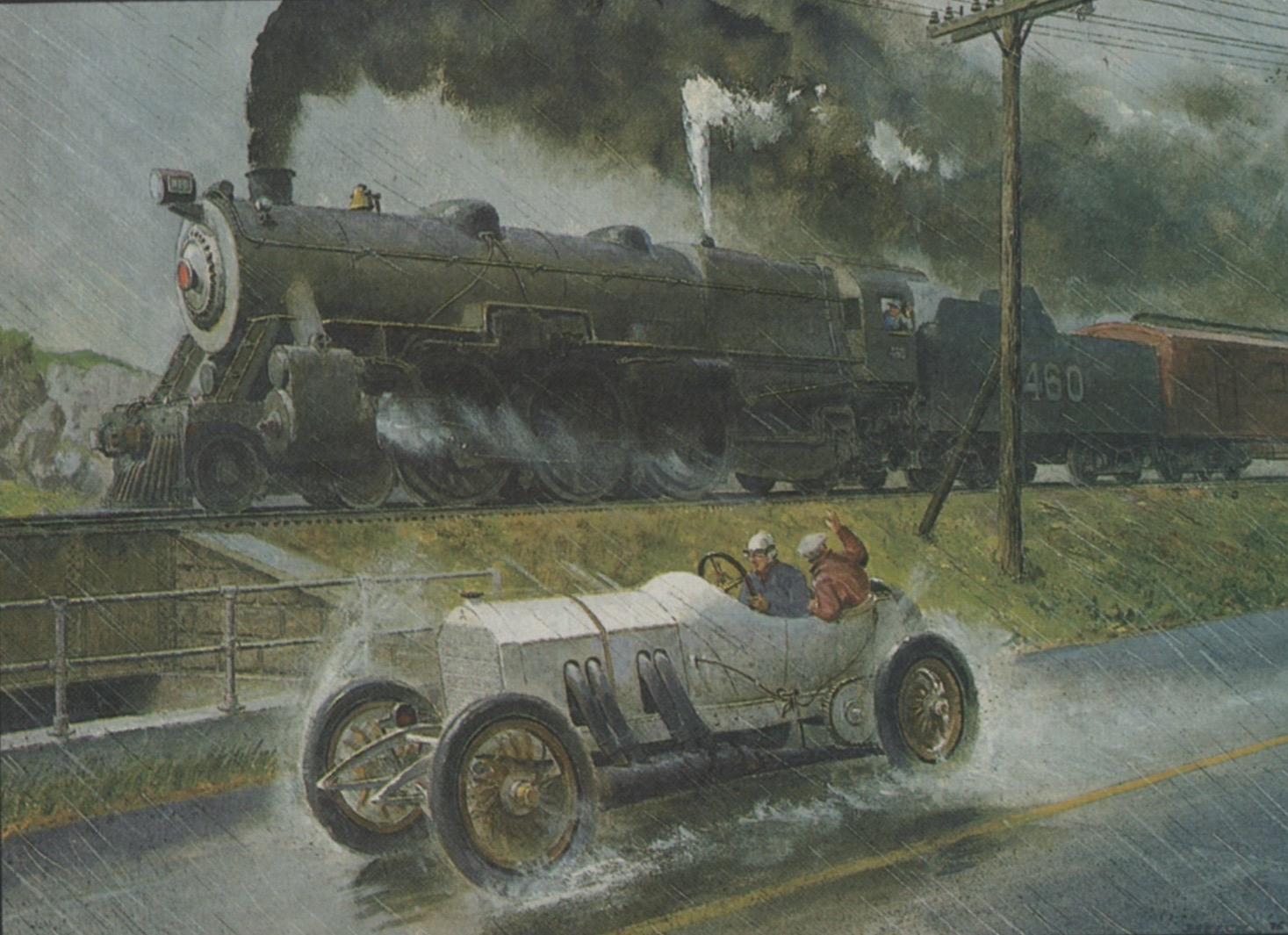
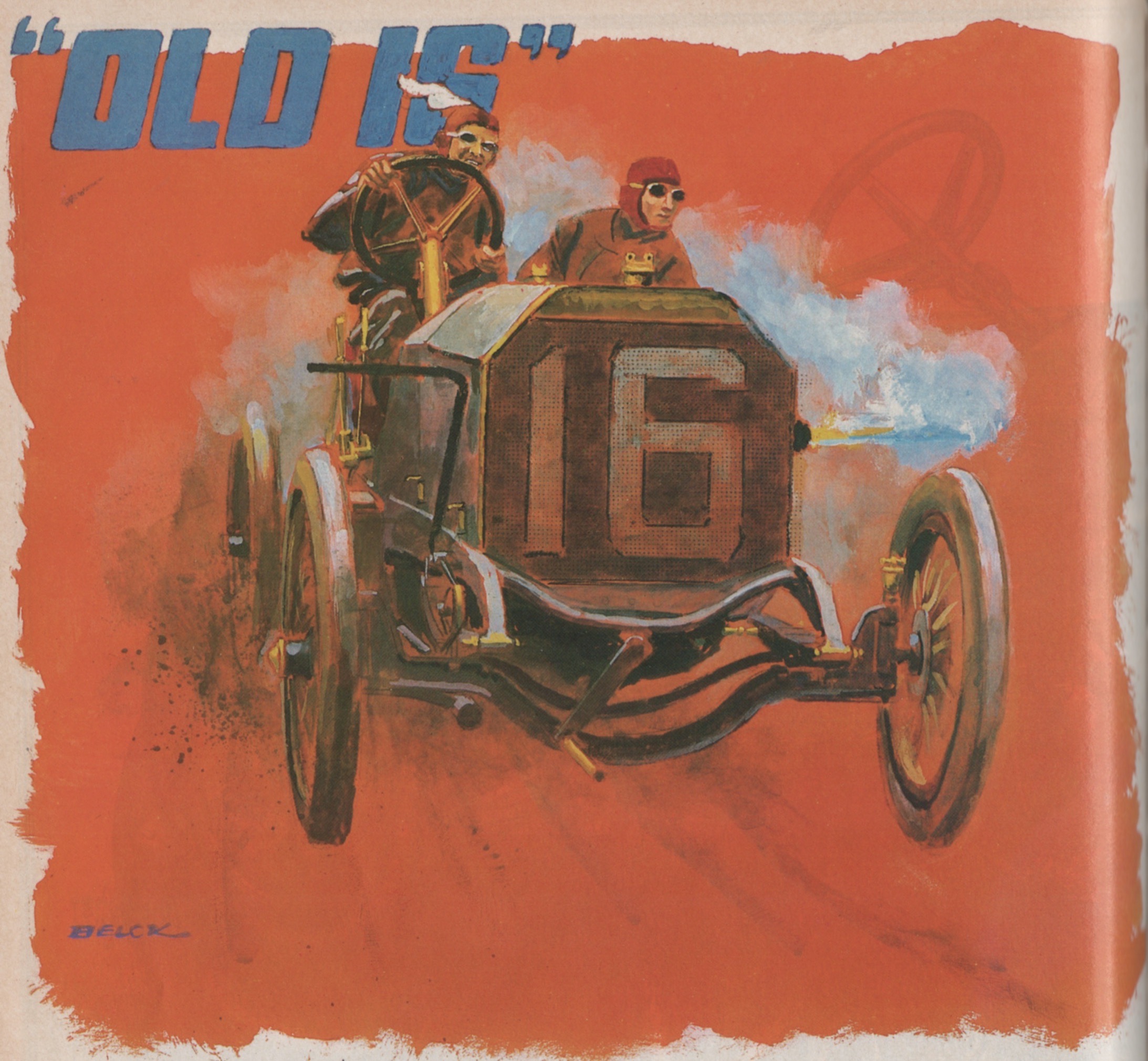
Old 16. Sam recounts, “In 1944 he received an assignment which would prove to be a turning point in his career. ‘It was a Friday afternoon. I was in my studio in New York, getting ready to leave for the station to come back up here in the country for the weekend. The phone rang and it was Bernard Geis, the art director from Esquire. He said the magazine was going to run a series of paintings commemorating great moments in American sports. Did I have any ideas? I told him I’d be in his office first thing Monday morning.’ ”
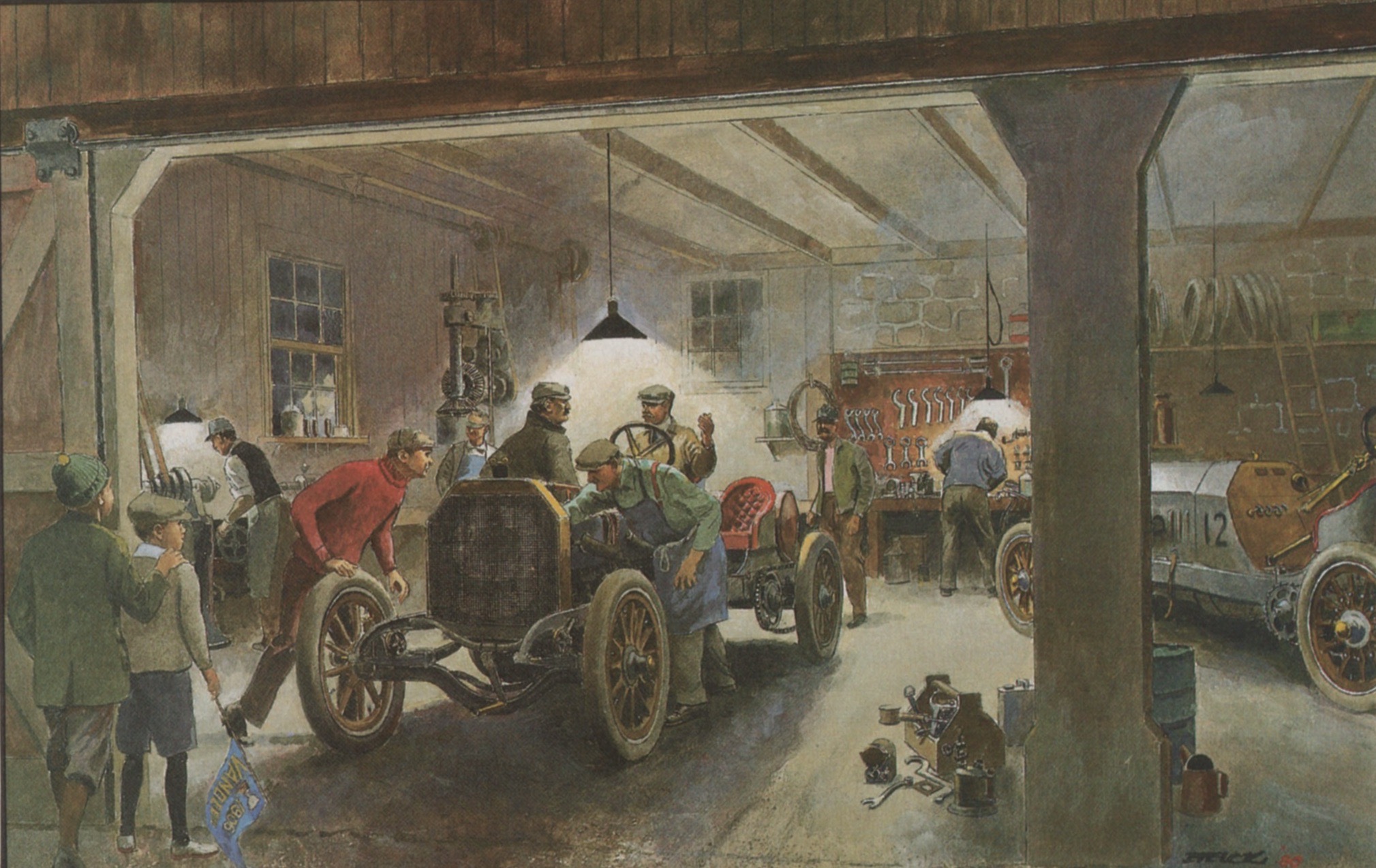
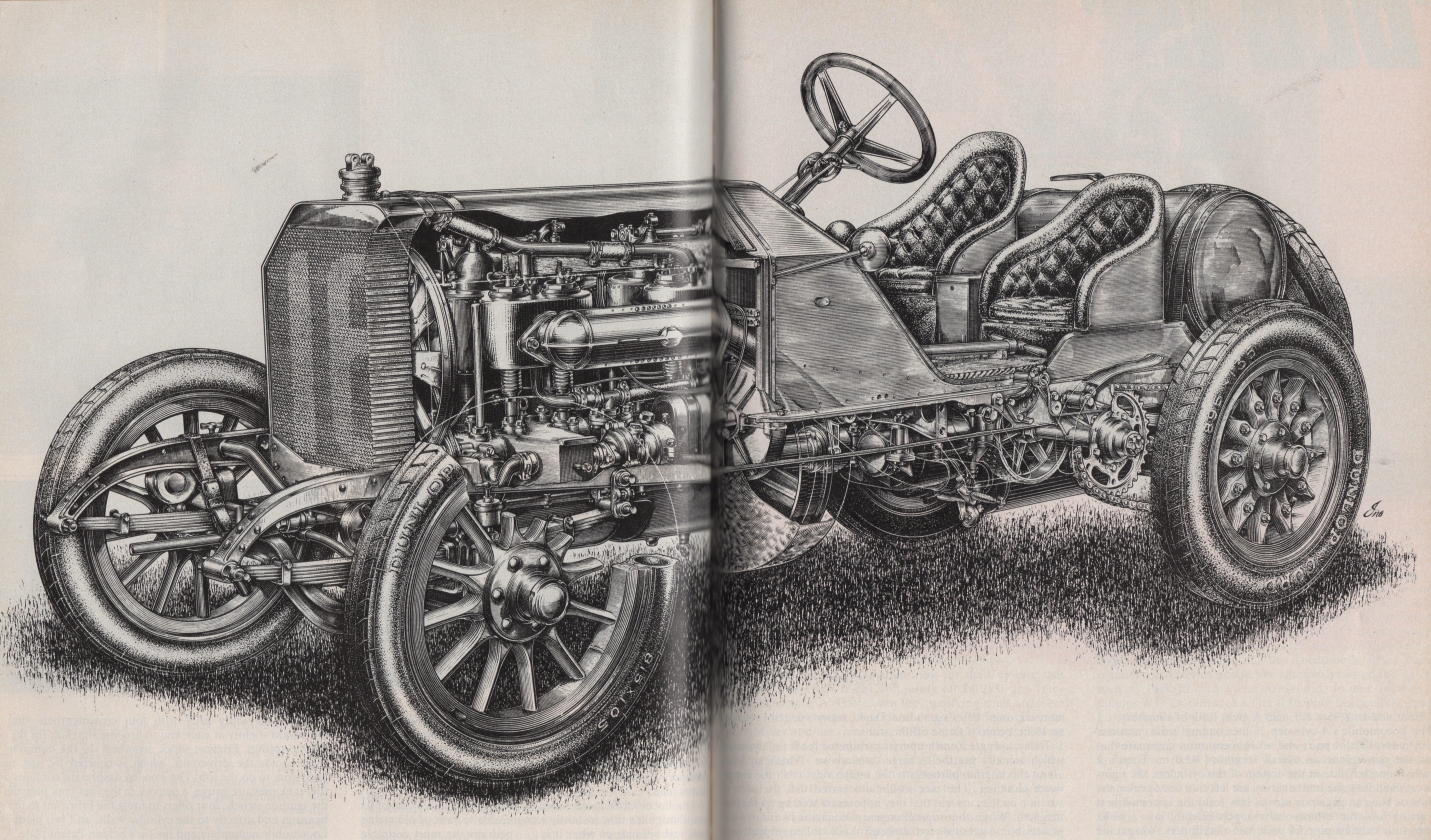
“Two years before,” Sam recounted, “Peter had bought Old 16. Now it occurred to him that the Locomobile’s triumph at the Vanderbilt cup was in every way a great moment in America sports…. At least not directly, but the Old 16 painting and the others that followed (Helck did a total of eight for the magazine, all on racing subjects) gave him a reputation for automotive work…. Peter’s racing paintings were catching the groundswell of America’s postwar fascination with antique and vintage cars, and commissions from enthusiasts and collectors poured in.”
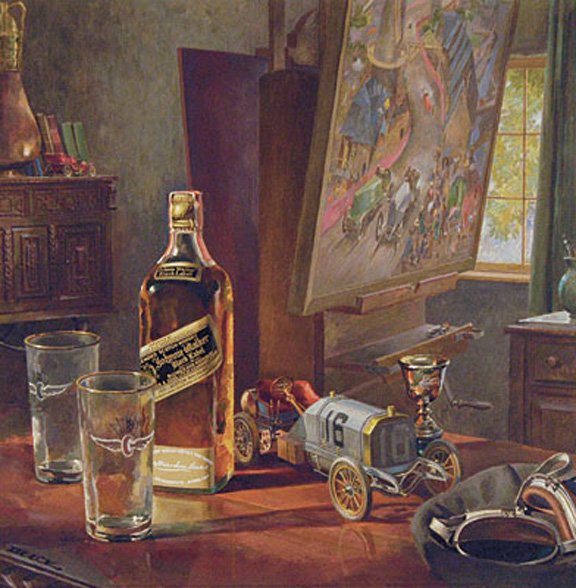
“Champion”—Johnny Walker Ad, by Peter Helck.
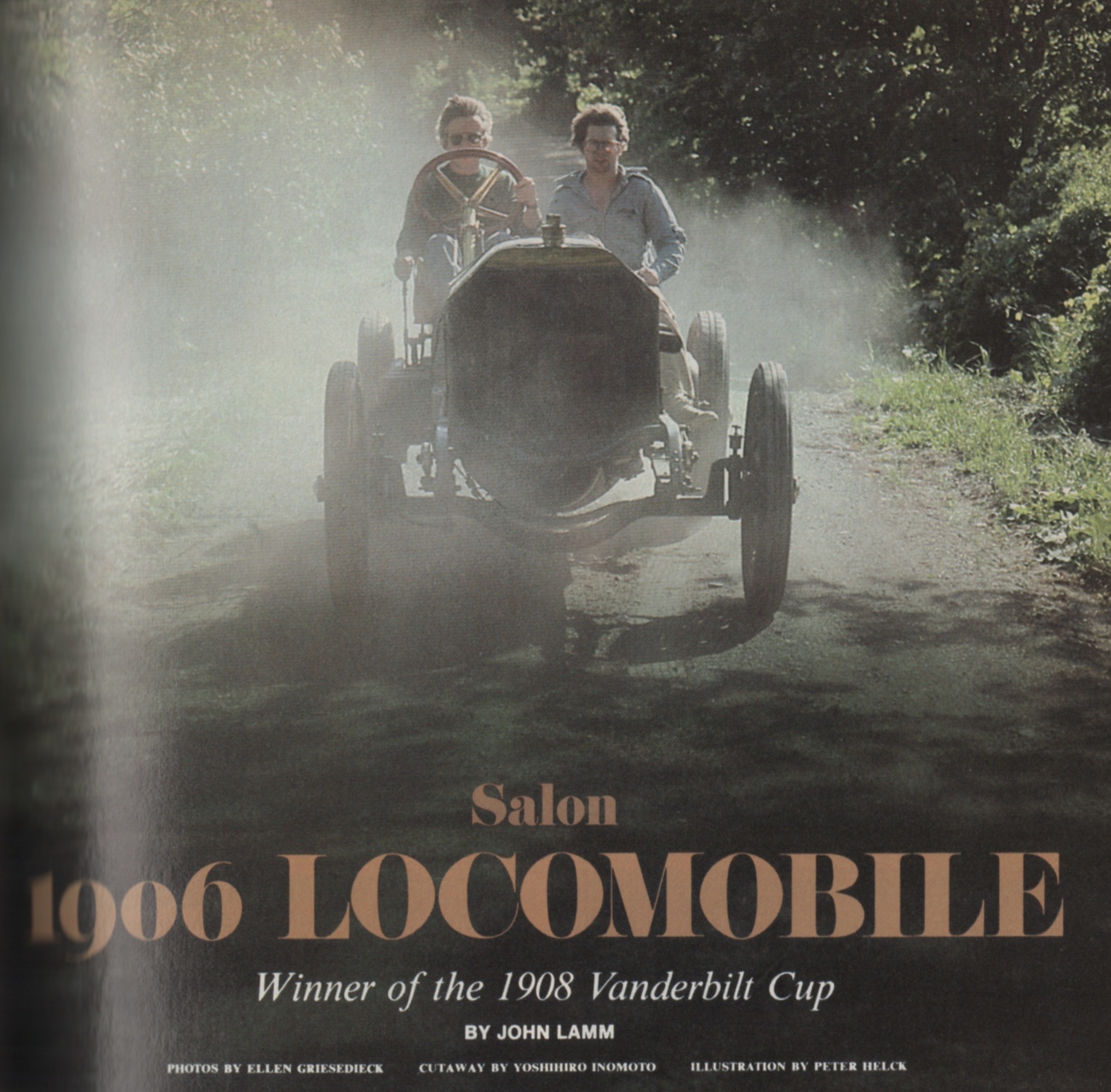
An R&T “Salon” As Well. R&T April 1981 was multiply blessed with Old 16 images by photographer John Lamm, by Peter himself, and even a fine cutaway by the equally famed Yoshihiro Inomoto. The following are from R&T, “Salon: 1906 Locomobile,” April 1981.
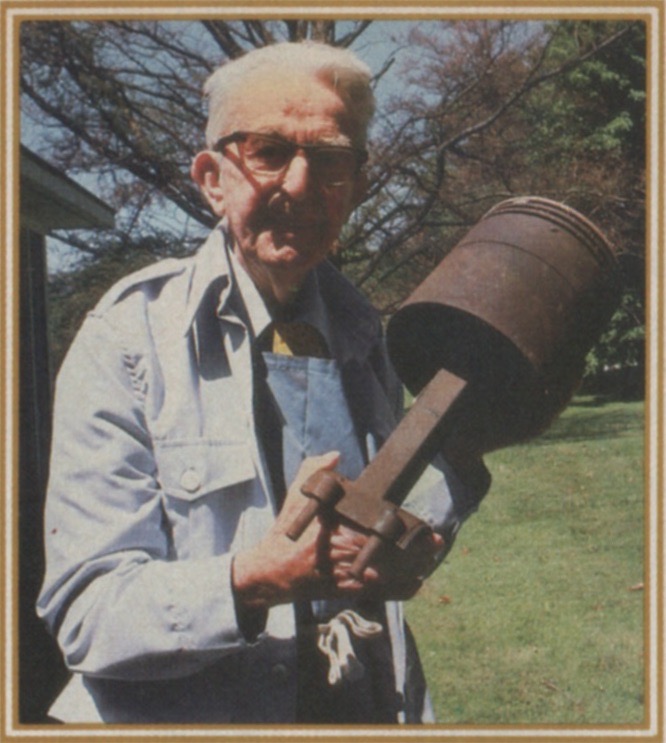
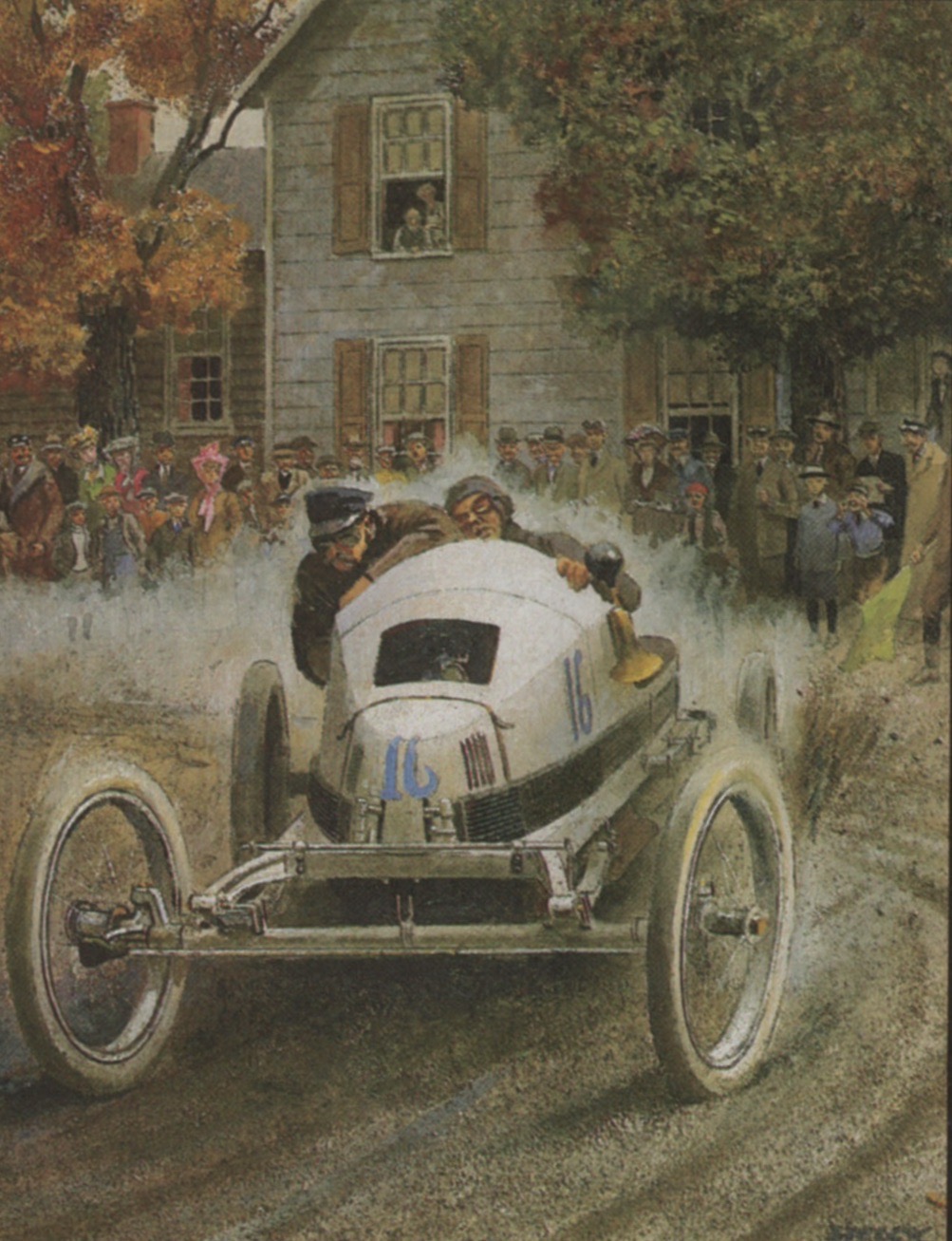
The Packard Gray Wolf—A Helck Illustration, an R&T Tale, and a SimanaitisSays Caveat. Peter depicted this action scene from the 1904 Vanderbilt Cup race. Sam noted, “Peter was attracted by the appearance of the Gray Wolf, one of Packard’s few early attempts at a race car.”
As I wrote in “An Editor’s Delight—And A Disclosure,” April 13, 2016, “This brings me to a matter based on an old R&T joke of running from drugstore to drugstore with a red pencil to correct an error in the magazine. The need for this, thankfully, was rare. One I recall was when an article on the Packard Gray Wolf was titled Gray Fox. Maybe this was honoring Lil Fox, rest her soul, the associate art director or maybe not…”

Out of this grew two SimanaitisSays protocols: “First, if a reader corrects something, I insert a bracketed update within the item, perhaps with date if the item is a long-standing one. The second revision protocol is an instant one, while I’m still abed. A typo may be caught. A minor change of wording might take place. And, one hopes, the inappropriate Fox is replaced by a Wolf. All within the first 20 minutes or so after the item’s online debut. So, I confess to readers throughout the world: For the archival SimanaitisSays.com, read it after 6:25 a.m. U.S. Pacific.”
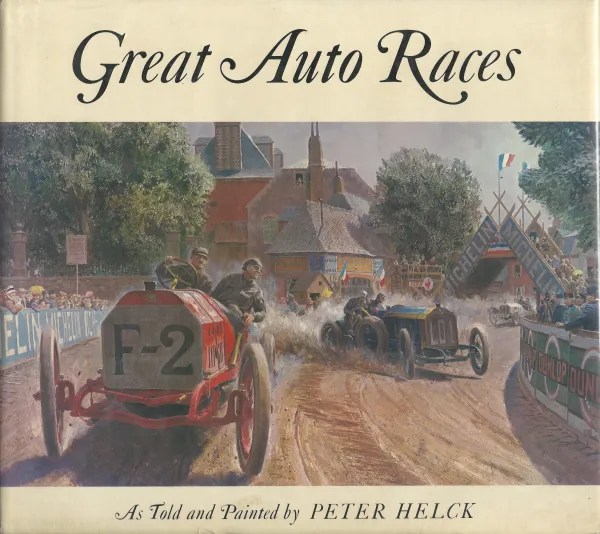
And one can enjoy the artistry of Peter Helck any time, thanks to Sam Posey’s “Peter Helck,” John Lamm’s “Salon: 1906 Locomobile,” and Peter Helck’s own Great Auto Races. ds
© Dennis Simanaitis, SimanaitisSays.com, 2026


Peter Helck has long been my favorite American automotive artist. and over the years I’ve been lucky enough to own a few of his sketches, a signed photo, and an original painting of Willie Haupt in a Chalmers—the first supercharged race car—winning and setting a record in the 1908 Giant’s Despair hillclimb. The painting had once served as the cover art for the Antique Automobile Club of America’s magazine, and I own it only because it had a ridiculously low price in an online auction. If I could attach a photo, I would, but I’ll send it to you, Dennis.
Helck was a unique gift to us vintage autoholics and railfans alike.