
Simanaitis Says
On cars, old, new and future; science & technology; vintage airplanes, computer flight simulation of them; Sherlockiana; our English language; travel; and other stuff
FENDER-BENDERS ’WAY UP THERE PART 1
HANNAH RICHTER REPORTS “PLANNED SATELLITE MEGACONSTELLATIONS Could Generate Runaway Space Debris,” AAAS Science, August 7, 2026. Richter warns, “Modeling suggests infamous ‘Kessler syndrome’ would make the swarms unsustainable.”

Geez, just when I thought I’d had enough with syndromes…. Here, in Parts 1 and 2 today and tomorrow, are tidbits gleaned from Hannah Richter’s analyses.
A 10-Fold Increase. Richter describes, “Sixteen thousand satellites currently whiz above our heads on a 3D space superhighway. To the consternation of astronomers and dark-sky lovers, that number may increase 10-fold within the next decade as operators launch internet and telecoms satellites en masse. If SpaceX CEO Elon Musk gets his way, the number could breach 1 million not long after.”
A New Study. Richter continues, “A new analysis posted to the preprint server arXiv last week, however, suggests those plans face a physical limit, stemming not from the number of satellites, but from the space junk generated as they collide. The study finds that the swarms of satellites, known as constellations, would reach a threshold known as Kessler syndrome—a runaway proliferation of debris that would make the swarms themselves unsustainable. And those predictions come from evaluations of individual constellations, without accounting for existing satellites or the hundreds of thousands of other planned satellites.”
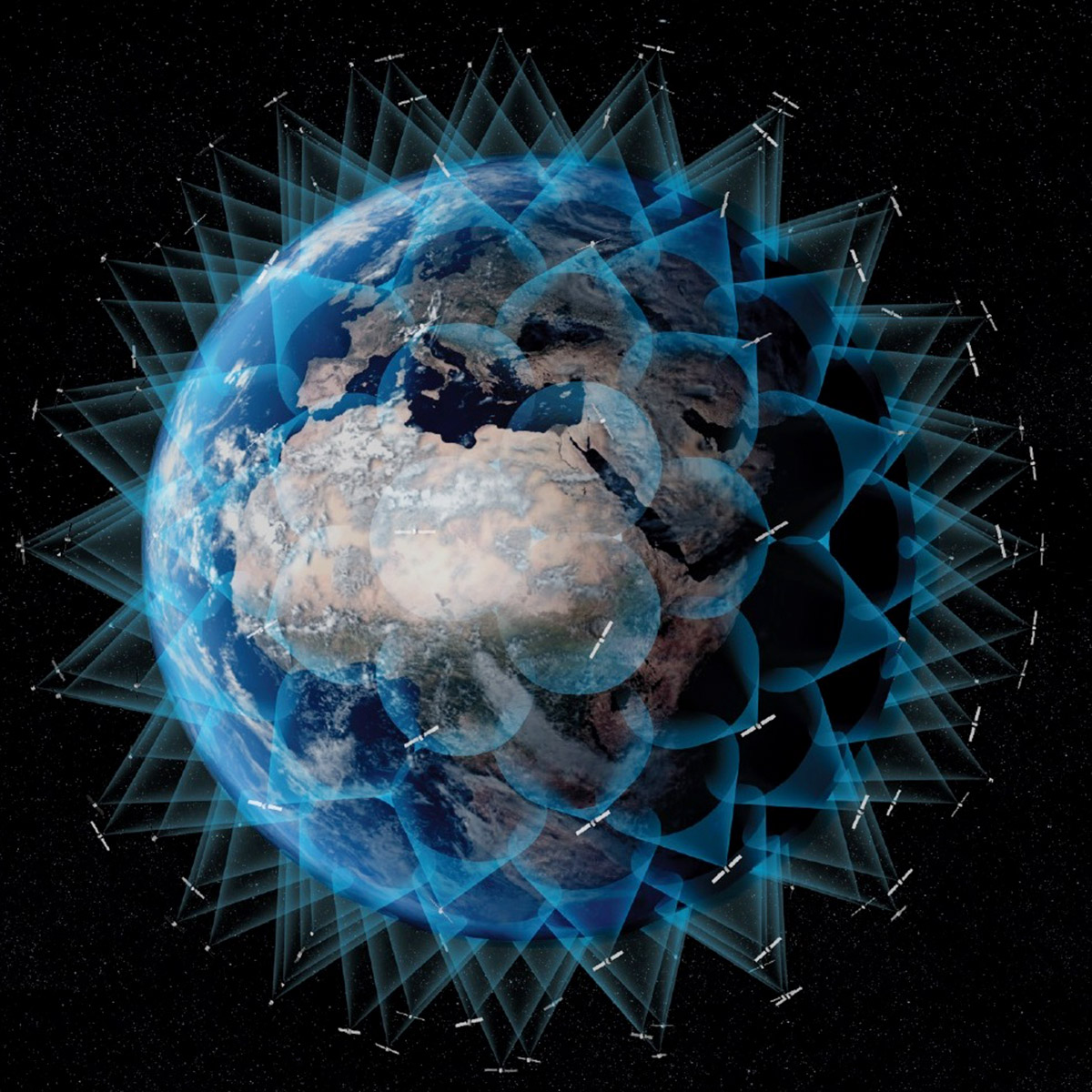
Donald Kessler’s Proposal. Richter describes, “Kessler syndrome, proposed in 1978 by NASA astrophysicist Donald Kessler, describes a scenario in which the collisions between spacecraft produce space junk faster than what falls naturally out of the atmosphere because of drag. Over time, that leads to an exponentially increasing amount of debris, posing threats to other satellites, limiting safe launch windows for future spacecraft and astronauts, and jeopardizing human infrastructure when the debris falls back to Earth.”
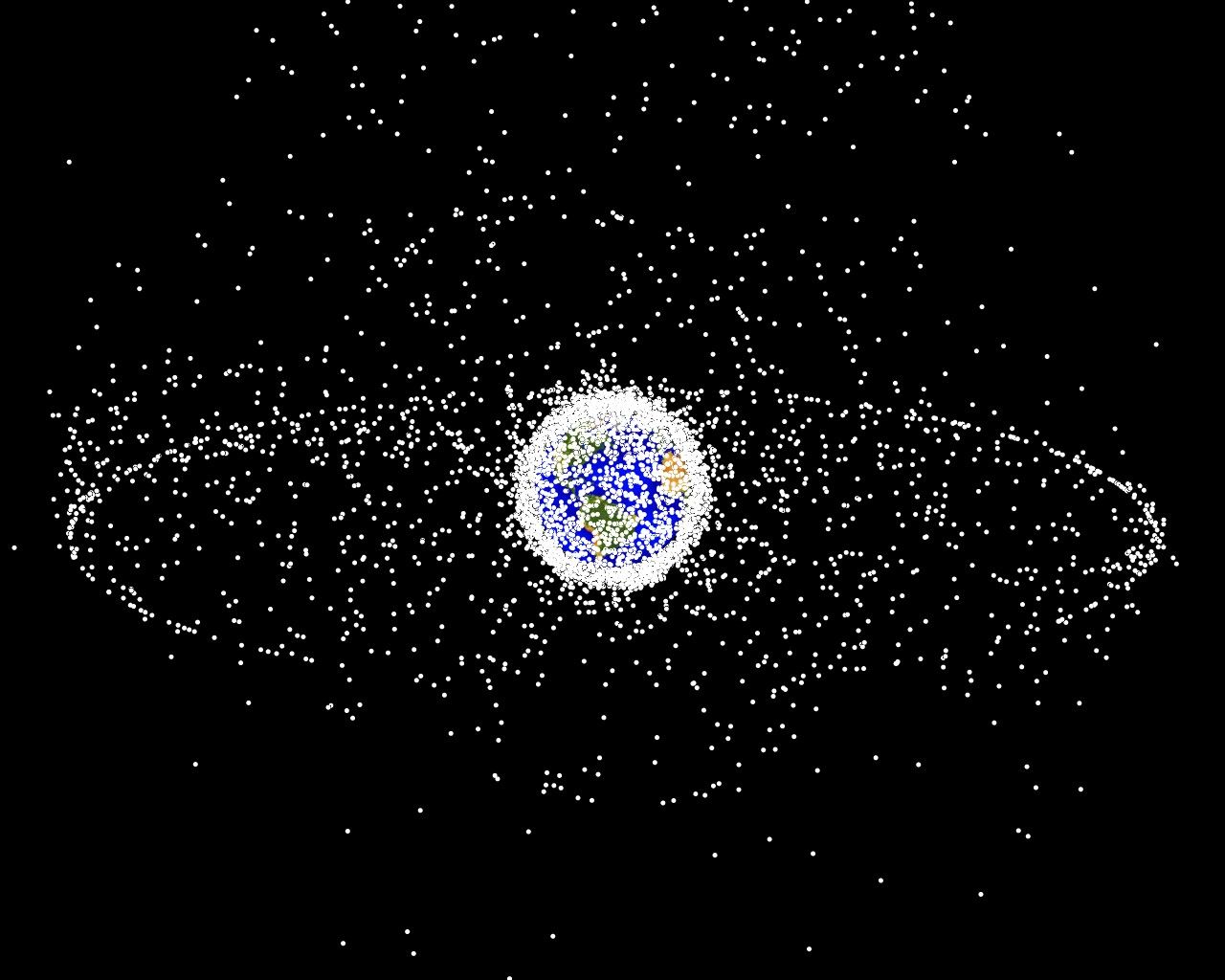
“When Kessler defined his eponymous syndrome,” Richter notes, “megaconstellations were far-future fantasies—not serious proposals being touted by publicly traded companies and weighed by government regulators. So Hugh Lewis [author of the arXiv paper], a space debris scientist at the University of Birmingham and a past collaborator of Kessler’s, wanted to see how today’s commercial satellite proposals fared against this dystopian threshold.”
Lewis’s Methodology. Richter continues, “Lewis compiled data from the Federal Communications Commission, the European Space Agency (ESA), and longtime satellite-tracking astronomer Jonathan McDowell on 16 planned or deployed satellite constellations. He fed the known properties of each constellation’s satellites—such as their numbers, orbits, sizes, and lifetimes—into a simple model that tracked how often a satellite or any resulting space junk passed through a single point in the atmosphere, to determine how quickly those objects’ modeled orbits decayed with atmospheric drag. He also considered two factors that could slow the generation of space junk: how well the planned satellites could maneuver away from potential collisions and whether they were designed to fall back safely to Earth when their lifetimes ended.”
Tomorrow in Part 2 we continue Richter’s analyses with an astounding tidbit about space avoidance maneuvering. ds
© Dennis Simanaitis, SimanaitisSays.com, 2026

