
Simanaitis Says
On cars, old, new and future; science & technology; vintage airplanes, computer flight simulation of them; Sherlockiana; our English language; travel; and other stuff
A RUSH OF GOLD GLEANINGS PART 1
KATHRYN SCHULZ OFFERS “THE GOLD RUSH AND THE MAKING OF MODERN AMERICA,” The New Yorker, October 26, 2026. It’s a review of Nathaniel Philbrick’s The Rush: California Gold, the Civil War, and the Making of the Modern World in which Schulz asks, “What can the history of the action-packed gold rush actually tell us?”

As a kinda spoiler, Schulz disagrees at times with Philbrick’s seeing “links between eighteen-fifties California and the current A.I. boom.” Nevertheless, here in Parts 1 and 2 today and tomorrow are tidbits galore gleaned about this, some in favor of Philbrick’s thesis, others less so.
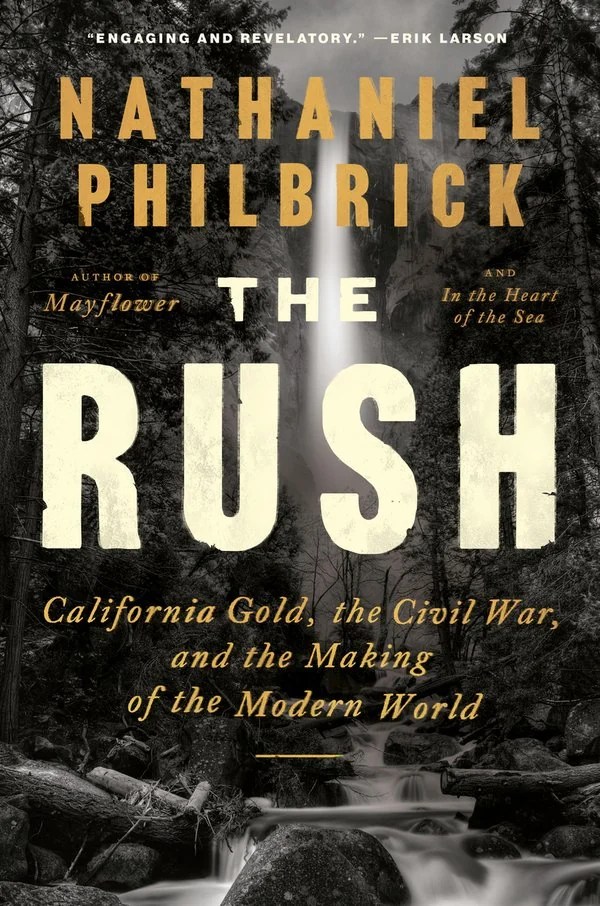
The Rush: California Gold, the Civil War, and the Making of the Modern World, by Nathaniel Philbrick, Viking, 2026.
Two Dominant Themes. Kathryn Schulz observes, “ ‘The Rush’ is a sprawling book, characters and stories spilling out everywhere, as dense with claims as the goldfields it describes. Of these, two emerge as dominant. The first, which is woven throughout the book—albeit in the strict sense that it keeps appearing and disappearing—is that the discovery of gold in California set off a mad scramble for wealth, land, labor, and power that contributed to the onset of the Civil War and then helped determine its outcome.”
“The second,” Schulz continues, “is that what mattered most about the gold rush was not the gold but the rush. The headlong haste with which those Nantucket whalers picked up their lives and went West was representative, Philbrick argues, of a new and distinctly American appetite for speed, novelty, and transformation, one that has defined our character and shaped our future from the time of the forty-niners to the planned Anthropic I.P.O.”
A Little Rickety. “ ‘The Rush,’ ” Schulz says, “is not particularly convincing about either of these claims. This is partly because both are a little rickety and partly because they are too different to comfortably coexist in a single book: one is about history and causality, the other is about psychology and culture. Mostly, though, it is because Philbrick keeps veering off into a larger, messier, less instrumentalized account of the gold rush and its aftermath.”
Indeed, it is this “larger, messier, less instrumentalized account” that attracts my gleanings and research.
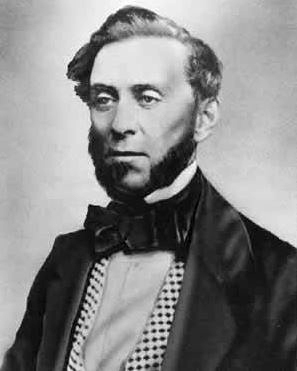
Samuel Brannan, 1819–1889, American settler, businessman, and journalist.
Samuel Brannan’s Winning Strategy. For example, here’s a tale oft told, this time with a twist: Schulz recounts, “At the time, Brannan was the leader of San Francisco’s Mormon community, though no one who subsequently knew him would have called him godly. When he heard about the discovery at Sutter’s Mill, he did not head toward the mountains. Instead, he bought up every pick and shovel he could lay his hands on, then paraded through town waving around gold dust and telling anyone who would listen where to find it. In short order, Philbrick writes, San Francisco was half empty and ‘Brannan was on his way to becoming a millionaire.’ When Brigham Young caught wind of all this and asked his West Coast emissary to remit the appropriate tithe, Brannan supposedly told him to have God send the receipt. That was the end of his stint as a Mormon.”
Ha. Tomorrow in Part 2, “California, Here We Come,” though it was a lot more complex back in 1849. ds
© Dennis Simanaitis, SimanaitisSays.com, 2026

