
Simanaitis Says
On cars, old, new and future; science & technology; vintage airplanes, computer flight simulation of them; Sherlockiana; our English language; travel; and other stuff
EINSTEIN’S ANNUS MIRACULOSUS PART 2
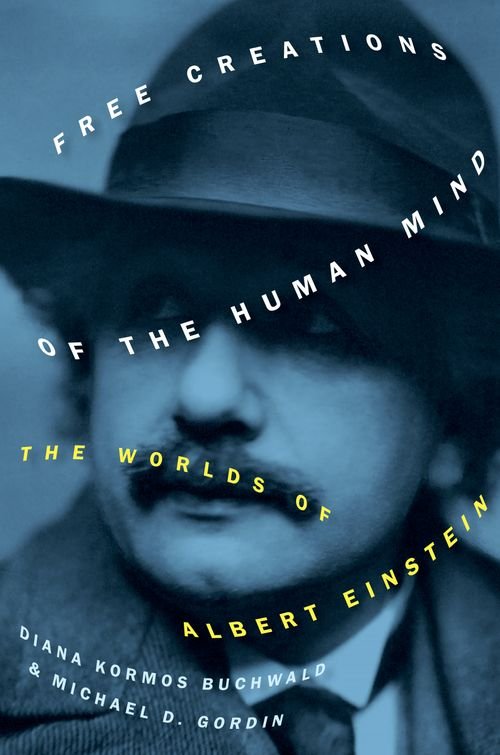
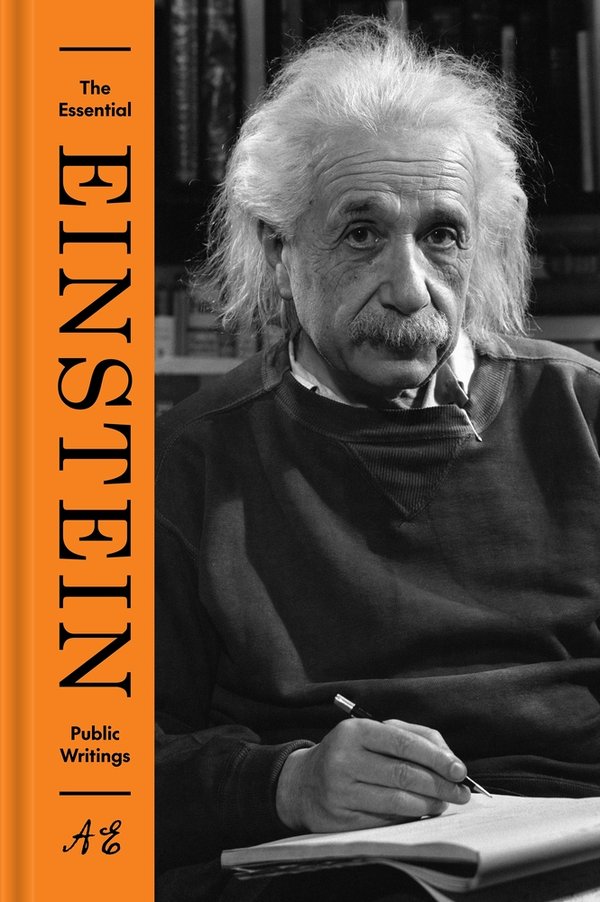
RAY MONK’S “EINSTEIN’S MIRACLE YEAR” encouraged our celebrating relativity theory and its fascinating implications in reviewing three recent books: Free Creations of the Human Mind: The Worlds of Albert Einstein; The Essential Einstein: Scientific Writings; and The Essential Einstein: Public Writings. We continue here in Part 2 by following Einstein’s suggestion: “We must abandon Euclidian geometry.”
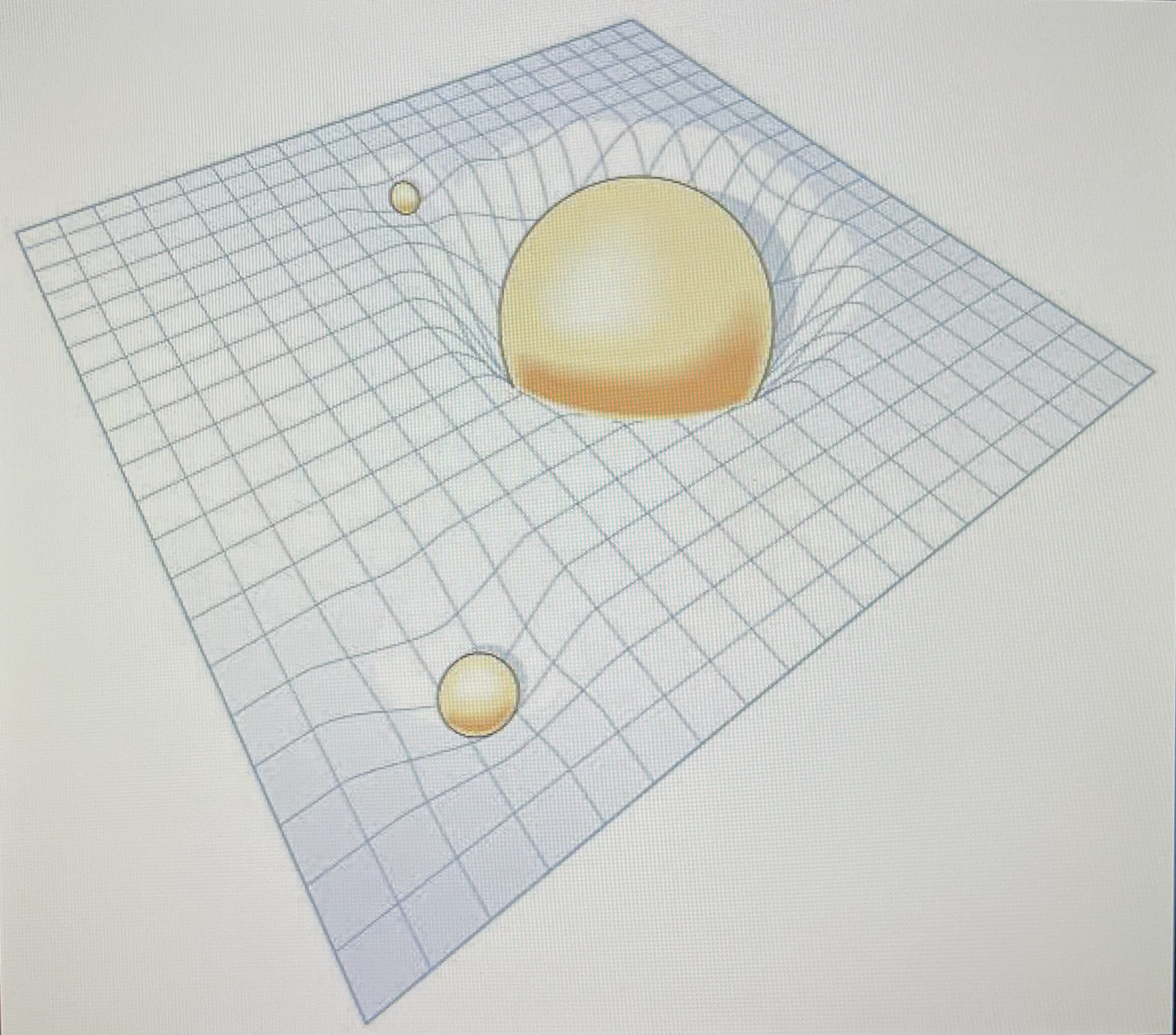
Monk notes in his LRB review, “In a non-Euclidean ‘elliptic’ geometry, parallel lines can meet one another, and the angles of a triangle add up to more than 180 degrees. This is, in other words, the geometry of curved space. Think, for example, of the surface of a sphere, like the Earth. If you were to plot the shortest distance between two points on the globe, say from London to Sydney, that line—by definition a straight line— would trace the curvature of the sphere.”
Not an Apple Falling, But Space Curving. “This led Einstein to a bold new imagining of gravity,” says Monk. “Instead of conceiving it as a force exerted by large objects on smaller ones—pulling the Earth towards the Sun, for example, or the Moon towards the Earth [or Newton’s apocryphal apple]—he pictured it as geometry, as the curvature of space (or, more correctly, of spacetime).”
“The Earth,” Monk describes, “is not pulled towards the Sun by an invisible force; it is moving in a straight line through space that has been curved by the Sun.”
Measuring the Curvature. Monk recounts, ‘It wasn’t until 1915 that Einstein arrived at a fully worked-out version of his ‘simple thought’ from eight years earlier, by which time he had achieved significant status as a professor at the University of Berlin. The mathematics he needed for the theory was extremely difficult and he sought the help of his old friend from Zurich Polytechnic Marcel Grossmann, who had become the head of the mathematics department there.”
“In 1916,” Monk continues, “Einstein published ‘The Foundations of the General Theory of Relativity’, the first comprehensive account of the new theory. It is an extremely long paper, most of it incomprehensible to a layperson, but at the end he makes a very specific prediction in terms that anyone can grasp. If his theory is right, he says, then ‘a ray of light going past the sun undergoes a deflection of 1.7 arcseconds.’ ”
A What? Fortunately, LRB provides a footnote: “An arcsecond is a unit of angular measurement. A circle can be divided into 360 degrees. Each degree can be divided into sixty arcminutes, and each arcminute into sixty arcseconds. One arcsecond is therefore 1/3600 of a degree, or the angle in 1/1,296,000 of a circle.”
A Solar Eclipse Helps. Monk describes the 1919 experiment: “One way to test this prediction would be to measure the deflection of light reaching us from stars behind the sun. The problem is that under normal conditions such observations are impossible: the light from the stars is undetectable in the Sun’s glare. Except, that is, during a total solar eclipse, when the Moon passes in front of the Sun, greatly reducing the glare. Such an eclipse was due in the summer of 1919.”
“In May,” Monk recounts, “the English astronomer Arthur Eddington led an expedition to the island of Principe in the Gulf of Guinea to take pictures of the eclipse. Once developed, printed and analysed, the photographs confirmed Einstein’s prediction that starlight would be deflected 1.7 arcseconds by the Sun.”
As The Times noted, “Newtonian Ideas Overthrown.” As Monk recounts, “No longer simply an eminent scientist, Einstein was suddenly an international celebrity.” ds
© Dennis Simanaitis, SimanaitisSays.com, 2026


Hard to believe Einstein did this fabric of space-time description over a hundred years ago. Great post, Dennis!
Agreed, Einstein’s life’s work was astounding.
Thanks for your kind words; Monk and the authors did the work. All I did was share.—ds