
Simanaitis Says
On cars, old, new and future; science & technology; vintage airplanes, computer flight simulation of them; Sherlockiana; our English language; travel; and other stuff
VIVA EL MICROPLANO!
MEXICO ENJOYS “the distinction of being the first country to have employed aeroplanes in actual warfare.” So says the authoritative Jane’s All the World’s Aircraft, 1919
What’s more, with stabilization of the Constitucionalista regime in 1915, an Aviation Department was established as part of the Mexican War Office, and an aircraft factory soon followed. TNCA (Talleres Nacionales de Construcciones Aeronáuticas, National Aeronautics Construction Workshops, began operation in Valbuena, 20 miles north of Mexico City, in November 1915.
Italian-born Francisco Santarini served as superintendent of the workshop; Capt. Juan Guillermo Villasana, as its technical director. Villasana and Colonel Alberto Salinas Carranza, known as the founder of Mexican military aviation, were both kin of the country’s president at the time, General Venustiano Carranza.
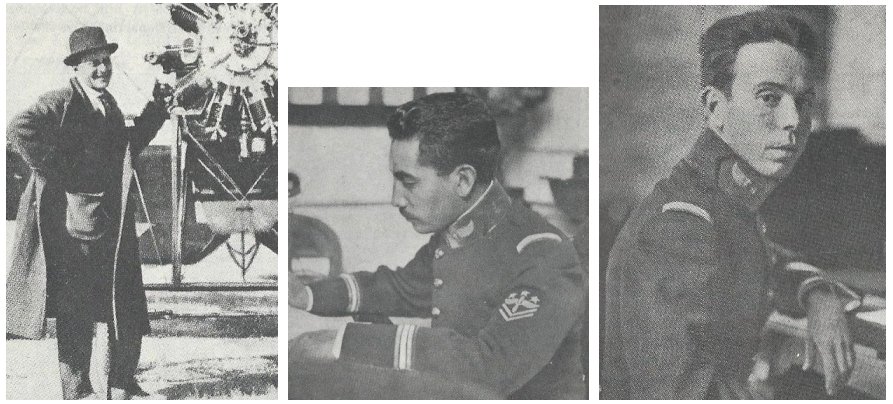
At left, TNCA superintendent Santarini; center, its technical director Villasana; right, founder of Mexican military aviation Salinas Carranza. These and other images from Janes All the World’s Aircraft 1919.
The workshop built French Blériot and Morane-Saulnier aircraft under license. It also designed and built its own propellers, the Anahuac, and engines, the Aztatl, a variant of the European Anzani. Anahuac and Aztatl are words of Aztec origin. The first, “land between the waters,” is Mexico’s central highlands plateau. The second is Aztec for snowy egret.
In February 1918, TNCA produced an aircraft of its own design, the Microplano Veloz, (veloz is Spanish for “fast”).
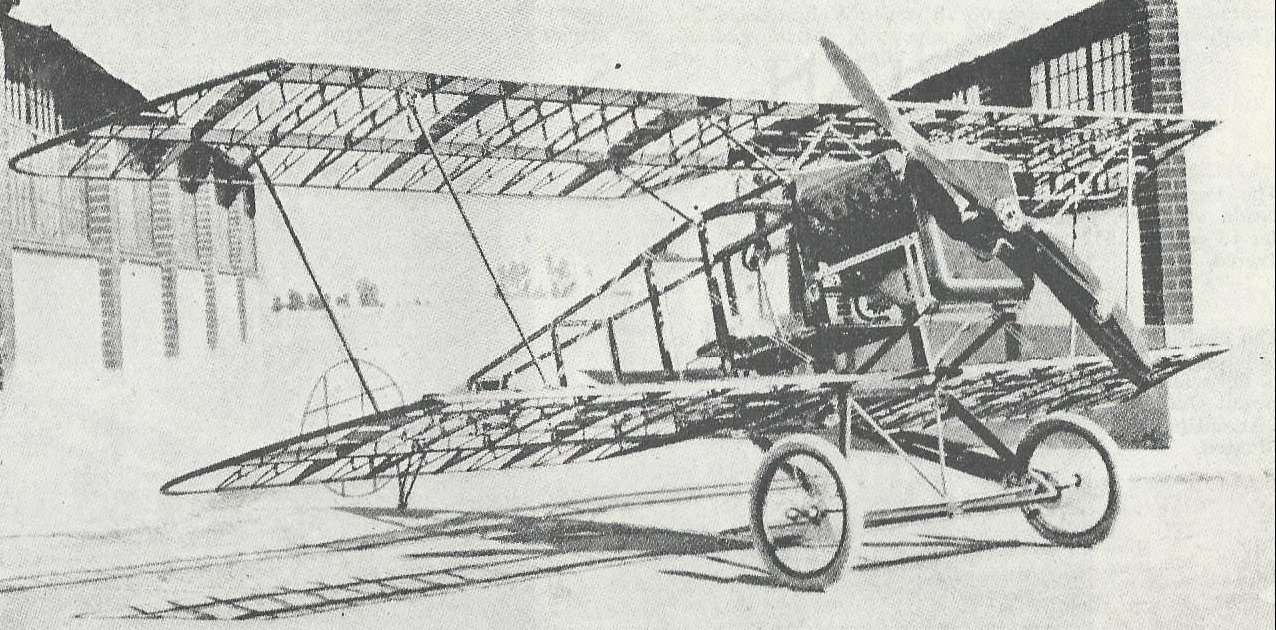
The Microplano Veloz prior to its doped-fabric covering.
The Microplano was a single-seat fighter of biplane configuration. Its upper span of 8.0 meters (26.2 ft.) suggested the aircraft’s Microplano name. By contrast, a Piper Cub’s wingspan is 35 ft.
Conventional in many ways, the Microplano design is set apart by its tail’s circular rudder (sans fixed vertical stabilizer) and one-piece elevators (i.e., no fixed horizontal tail surfaces either). Also, though most of the aircraft’s framing was wood, the tail structure was metal.
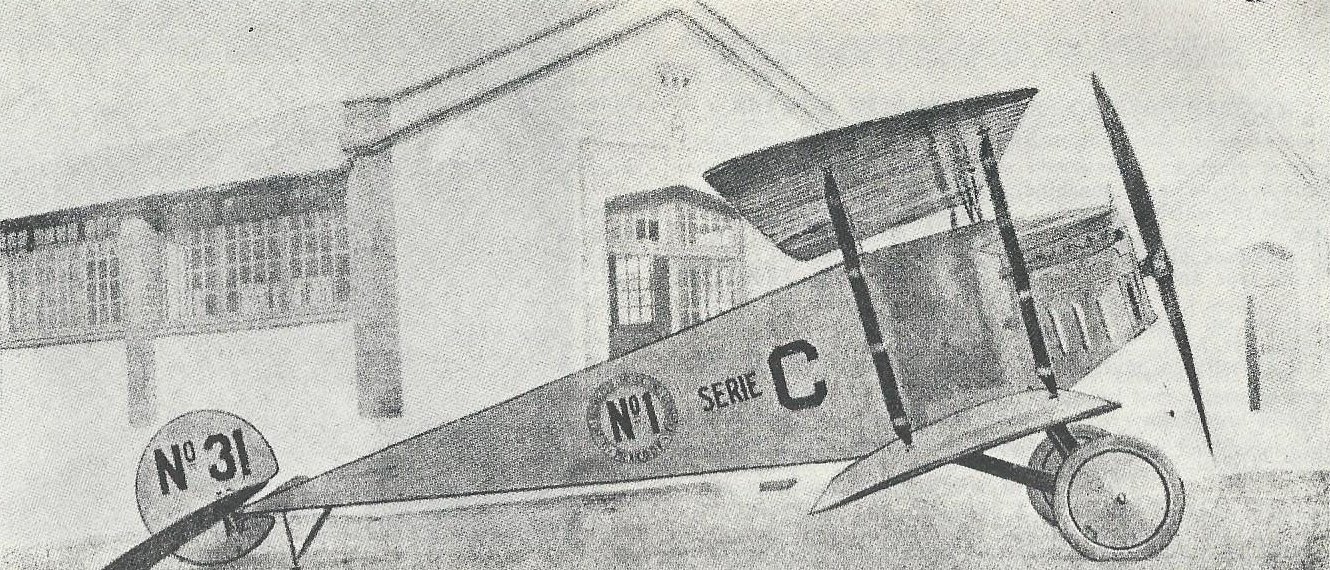
The Microplano, posed in front of Building No. 8 of TNCA.
A 150-160-hp water-cooled V-8 Hispano-Suiza engine built under license provided the Microplano’s power. Its “airscrew,” as propellers were called in those days, was a TNCA-designed Anahuac.
A top speed of 190 – 220 km/h (around 125 mph) was cited, though it’s not clear to what extent the Microplano was actually flown.
The journal of Mexican military aviation, Tohtli, reported the aircraft did participate in a May 5, 1918, parade celebrating the anniversary of Mexico’s victory over French forces in the Battle of Puebla in 1862.
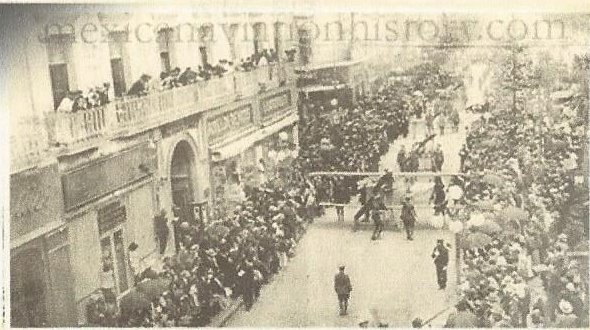
The Microplano takes part in Mexico City’s May 5 parade, 1918. Image from Tohtli, Mexican Aviation History, http://goo.gl/KEr9t9.
The aircraft was towed by marchers through the city, which included a roll past President Carranza and guests on the palace balcony. The journal observed that TNCA staff members marching the parade route were “feted with flowers and loud applause.”

Microplano modeling plans by Mark Allison. Image from Plans & 3-Views International, compiled by Bill Hannan, Hannan’s Runway, 1990.
In initial testing in mid-1918, the Microplano proved less than stable, likely owing to its original wing warping. Ailerons for lateral control were incorporated only later. Also, vertical and horizontal stabilizer surfaces were added to the tail for enhanced control of yaw and pitch.
Its test pilot Amado Paniagua had graduated the year before from Mexico’s Military Aviation School. Only 18 years old, he was known for his flying skills and fearlessness. Paniagua perished in an air crash as part of a military action in Vera Cruz on November 3, 1918; he had less than 29 hours of flight in his logbook.
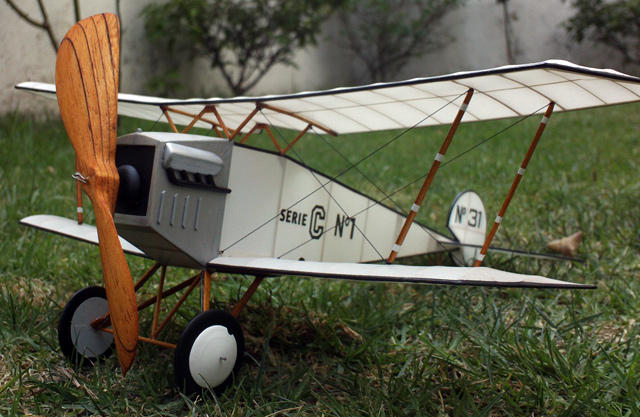
Model of the Microplano Veloz by Walt Mooney, 1973. Image from http://goo.gl/IVeBdR.
Today, Calle Amado Paniagua is located not far from Mexico City’s Plaza Aviacion. And the Microplano Veloz is a fascinating subject for modelers of vintage aircraft. ds
© Dennis Simanaitis, SimanitisSays.com, 2015


Hello!, I’m Marco Antonio Guillermo from Mexico, I’m the builder of the “Microplano Velóz in the picture, I was surprised to see my pic and model in your site, feel so good thanks!
In fact, I’m building another free fly Microplano Velóz with the changes made by the TNCA on 1921 with differences in rudder, stab, ailerons, etc.
You can follow the building work in my site Aeromodelismo Retro in Facebook.
Regards!
Marco
Dear friend, it is a pleasure to read an article related to the planes built in Mexico, such as the Veloz Microplate.
The history of the workshops is bigger, since in the aircraft were built such as Sonora, Tololoche, Quetzalcoatl and more.
a greeting