
Simanaitis Says
On cars, old, new and future; science & technology; vintage airplanes, computer flight simulation of them; Sherlockiana; our English language; travel; and other stuff
WHAT ARE ALL THOSE PEOPLE DOING ON THE OPERA STAGE?
“CHORUS LINES” IS THE WELL-WROUGHT TITLE for Rupert Christiansen and Henrietta Bredin’s article in Opera With Opera News, September 2026. Here are tidbits gleaned from this informative piece.

The Pounds and Pence/Dollars and Cents of Mass Song. Christiansen and Bredin recounts, “They are plural and yet singular, one and many; they are the chorus, and what they contribute to opera is as emotionally and viscerally powerful as anything that come out of the throat of a star tenor or soprano soloist.”
“Yet,” our Opera pair note, “as management seeks to balance red-faced accounts through strategic cuts and frugal economics, the chorus is seen as the lowest-hanging fruit, deemed ripe for the chop. This is especially true of that increasingly-endangered phenomenon, the permanent-house chorus.”
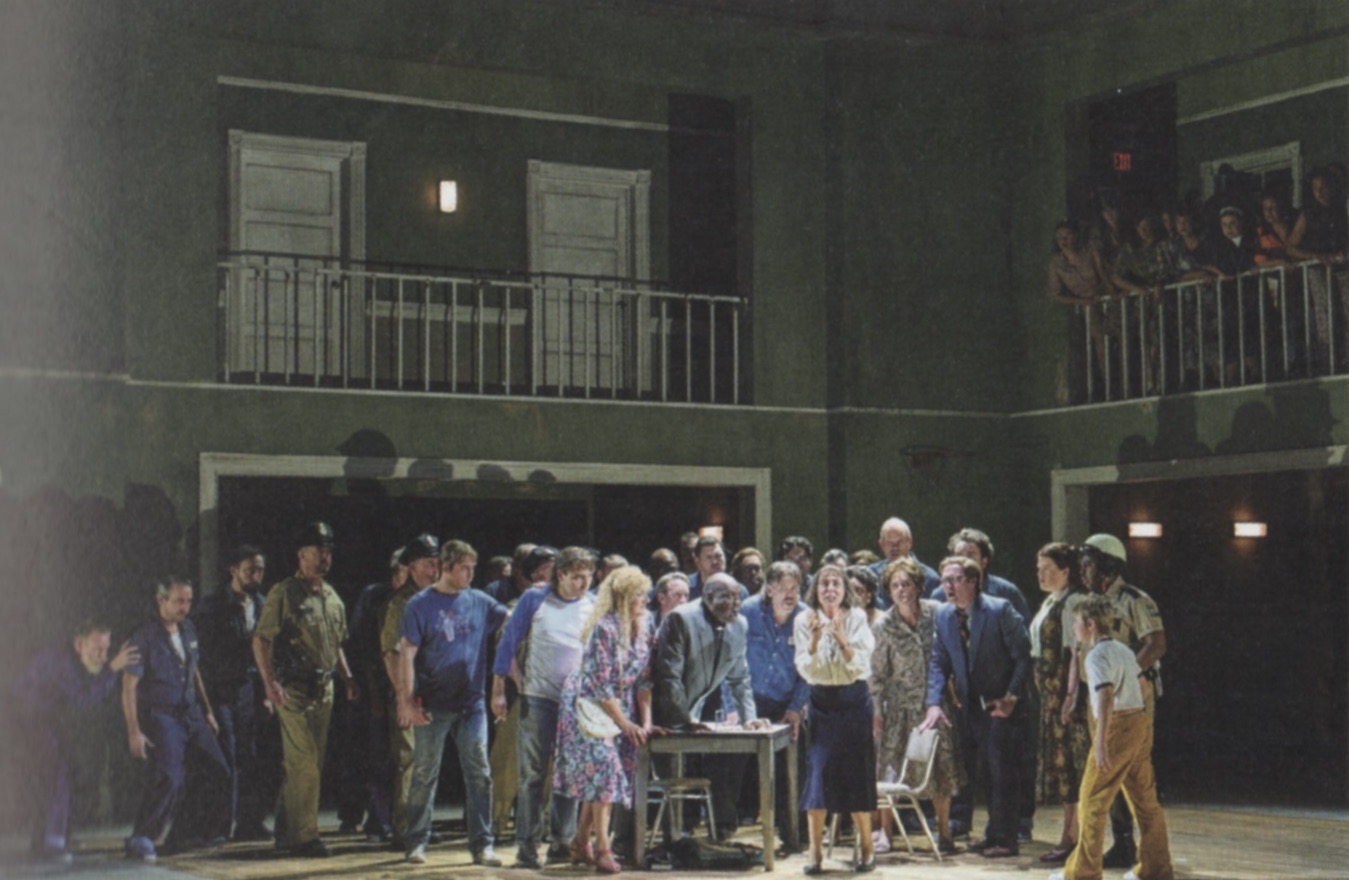
Choruses in Opera Past. Christiansen and Bredin offer historical perspective: “Choruses in the madrigal style feature strongly in the earliest operas, notably Monteverdi’s Orfeo, but by the middle of the 17th century they had virtually vanished from the Italian tradition. What are described in the scores of Handel’s operas as ‘choruses’ consist of only one final brief number, sung collectively by the soloists.”
I’m reminded of the final “all ends happily but for the evil Don” apologia to censors a century later.
Traditional choruses,” our Opera duo relate, “formed a prominent part of the French tragédies lyriques of Lully and Rameau, as well as the neo-Classical ‘reform’ operas of Gluck in the 1760s, where they were regarded as descendants of the chorus of Greek drama.”
Opera Chorus’s Acme. “The heyday of the opera chorus,” Christiansen and Bredin recount, “was the mid 19th century, however, when the model of grande opéra dominated the French, Italian, German and Russian schools.” These “required major houses to employ choruses of 60 to 100 in order to stage such masterpieces as Guillaume Tell, Les Troyens, Aida, Die Meistersinger, and Boris Godunov.”
Not All From the Church Choir. Our Opera pair report, “In his pioneering studies The Opera Industry in Italy from Cimarosa to Verdi and Singers of Italian Opera, John Russell explains that although the better sort might be recruited from church choirs, chorus singers were generally considered low-life and troublesome, ‘notorious cooks, street vendors, minor artisans and the like who sang part-time; few could read music.’ ”
“Paid only labourers’ wages and prone to vice backstage,” Christiansen and Bredin write, “the choruses were also prone to wildcat strikes: On several occasions their disruptive behavior led them to be imprisoned en mass.”
I’ve been tempted to lock up those interminably complaining Hebrews in Saint-Saens’ Samson et Dalila. They sure do go on.
And Then, Whew, Comes Verismo. Our Opera duo observe, “By the end of the 19th century, when the verismo movement was promoting something closer to a more intimate dramatic naturalism, the idea of everyone on stage singing the same thing simultaneously became less plausible and the chorus’s prominence diminished.”
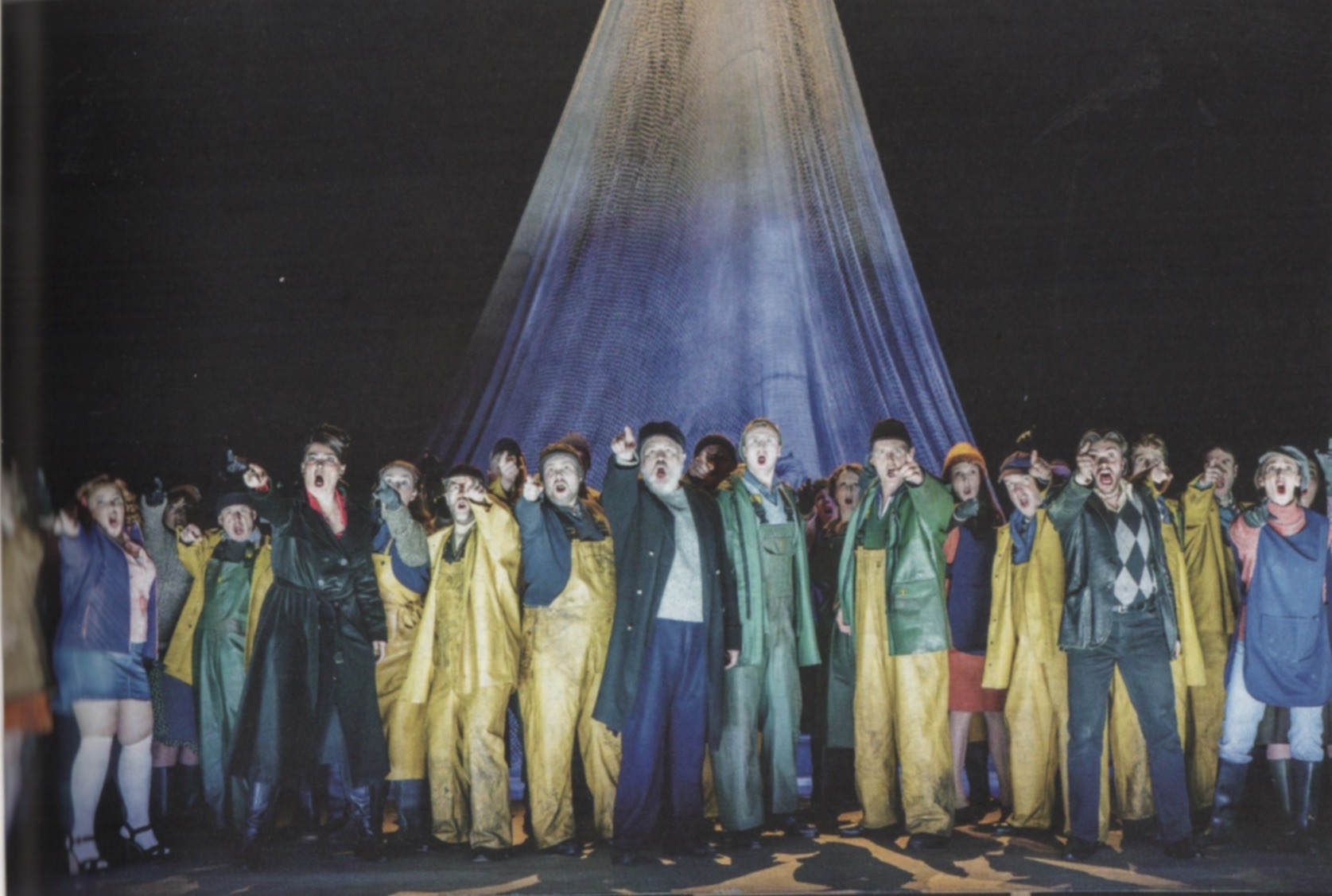
“Younger composers,” Christiansen and Bredin note, “would be bolder. In 1935 Gershwin made a thrilling attempt in Porgy and Bess to use a chorus to depict the entire community of Catfish Row—an experiment believed to have influenced Britten when he came to conceive Peter Grimes and the fishing village in which it was set.”
The Chorus Today. “More recently,” Christiansen and Bredin observe, “both John Adams and Philip Glass have brought the chorus to the forefront again in works such as The Death of Klinghoffer and Satyagraha, which are as much oratorios as operas.”
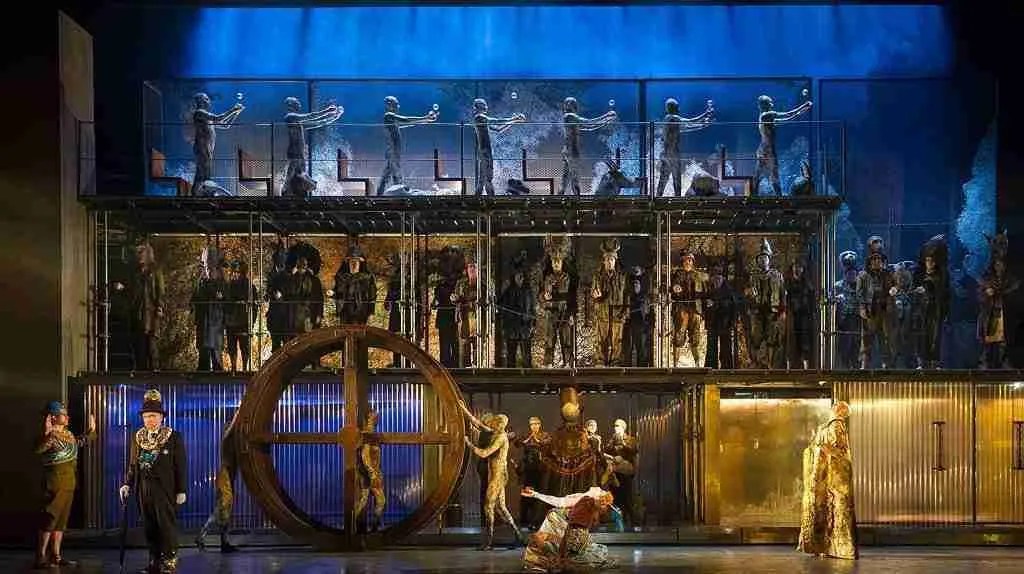
I recall vividly the chorus aligned on a grid behind the action of Akhnaten. And loved it.
Our Opera Duo’s Conclusion. “Choruses may be expensive,” they admit, “but they are essential—-one of the fundamental building blocks of the art form. A great chorus can be assembled and groomed by an experienced chorus master for a single season or even a single production, but it should be emphazied that this is contingent on the availability of those prepare to work for very little or even nothing. The superior principle of a salaried in-house chorus, providing depth and experiences as well as permanent jobs in the industry, is one that needs to be staunchly defended.”
The chorus—and I—respond heartedly in agreement. ds
© Dennis Simanaitis, SimanaitisSays.com, 2026


A (medical) hiatus. Enjoy reading old favorites until I start writing again.
Thanks for your readership.—ds
Trust it’s only routine service, not major overhaul.
Hello Dennis, how are you, keeping well I hope, I have been getting your emails since not long after I stopped taking R&T when it was ruined, the last email I have from you is 19th August , are you taking a break or have I somehow unsubscribed or something, if so could you please add me back to your list , best wishes from Keith Powell.
Hello, Gentle Readers,
I’m back at home after a seven-day hospital stay with a surge of Guillain-Barre Syndrome. Details to come in an item here in time.
Goal, briefly, is a home return of strength.
Thanks for your readership.—ds
Thumbs up and best wishes for a successful recovery, Dennis!
You’re supposed to write about human foibles and ailments … not try them out!!Be brief and be healthy, alter Freund!
Cheers, Bob
Ha. Thanks, Bob. How typical of me: an obscure malady, en francais aussi.