
Simanaitis Says
On cars, old, new and future; science & technology; vintage airplanes, computer flight simulation of them; Sherlockiana; our English language; travel; and other stuff
THE ART OF WAR PART 1
NO, I’M BEING MUCH MORE LITERAL than Sun Tzu’s 5th-century B.C. military treatise of this title. I’m prompted by recent mention of three notable works of art: the visit of the Bayeux Tapestry back to its country of origin (and its topic: the 1066 Norman Conquest); the celebration of Washington Crossing the Delaware depicting his Continental Army’s victory on December 25-26, 1776; and the approaching 90th anniversary of Picasso’s Guernica depicting the Nazi bombing of this city in Spain’s Basque region. Here, in Parts 1 and 2 today and tomorrow, are tidbits gleaned about each from a variety of news and Internet sources.

Bayeux Tapestry, 1070s. Wikipedia describes, “The Bayeux Tapestry is an embroidered cloth nearly 70 metres (230 feet) long and 50 centimetres (20 inches) tall that depicts the events leading up to the Norman Conquest of England in 1066, led by William, Duke of Normandy, challenging Harold II, King of England, and culminating in the Battle of Hastings.”

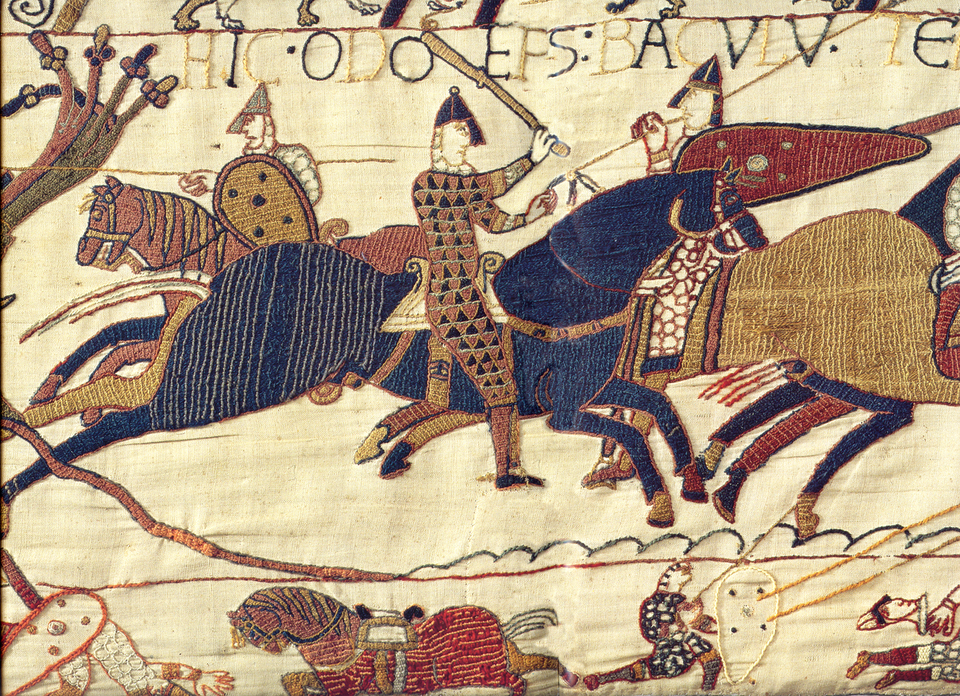
Techincally, Not a Tapestry. Wikipedia continues, “The cloth consists of 58 scenes, all with Medieval Latin tituli, embroidered on linen with coloured woollen yarns. It is likely that it was commissioned by Bishop Odo of Bayeux, William’s half-brother, and made for him in England in the 1070s…. The designs on the Bayeux Tapestry are embroidered rather than in a tapestry weave, so it does not meet narrower definitions of a tapestry.”
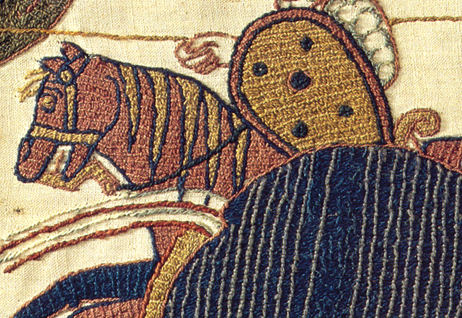
A Complex History. First reference to this work of art came in 1476, listed in the Bayeux Cathedral inventory. It survived the Huguenots sack in 1562, and a next reference came in 1774. Wikipedia recounts, “Antoine Lancelot sent a report to the Académie Royale des Inscriptions et Belles-Lettres concerning a sketch he had received about a work concerning William the Conqueror. He had no idea where or what the original was, although he suggested it could have been a tapestry.”
The Bayeux Tapestry barely survived the French Revolution (it was nearly sacrificed as covering for military wagons) and hid out during the Franco-Prussian War.
Himmler, the Gestapo, Bletchley Park. Wikipedia brings matters more or less up to date: “On 27 June 1944 the Gestapo took the tapestry to the Louvre, and on 18 August, three days before the Wehrmacht withdrew from Paris, Himmler sent a message (intercepted by Bletchley Park) ordering it to be taken to ‘a place of safety,’ thought to be Berlin. It was only on 22 August that the SS attempted to take possession of the tapestry, by which time the Louvre was again in French hands. After the liberation of Paris, on 25 August, the tapestry was again put on public display in the Louvre, and in 1945 it was returned to Bayeux, where it is exhibited at the Musée de la Tapisserie de Bayeux.”

The Bayeux’s Traveling Gear. Katie Razzall, Culture and Media Editor, The British Museum, recounts, “Bayeux Tapestry Arrives in the U.K. For First Time in 900 Years Under Police Guard,” BBC, July 9, 2026.

Katie Razzall describes, “To ensure it travelled safely – and without damage—the folding stand, which the tapestry has been kept on since it was taken down from display in Bayeux last year, was put inside a crate, with temperature and humidity regulation. That crate was then placed into an outer cage, in which metal springs acted as shock absorbers to protect it from bumps in the road.”

“The work travelled across the Channel on the Eurotunnel before making its way to central London in the dead of night. The heavy-looking crate, encased in an aluminium frame, was lowered out of the lorry in front of a select crowd including the French ambassador to the UK and the director of the British Museum.”
Its British Museum Visit. The tapestry will be on display from September 10, 2026 to July 11, 2027. Wikipedia observes, “Tickets for the first four months of the exhibition… sold out within 24 hours, with more than 80,000 people queuing online.”

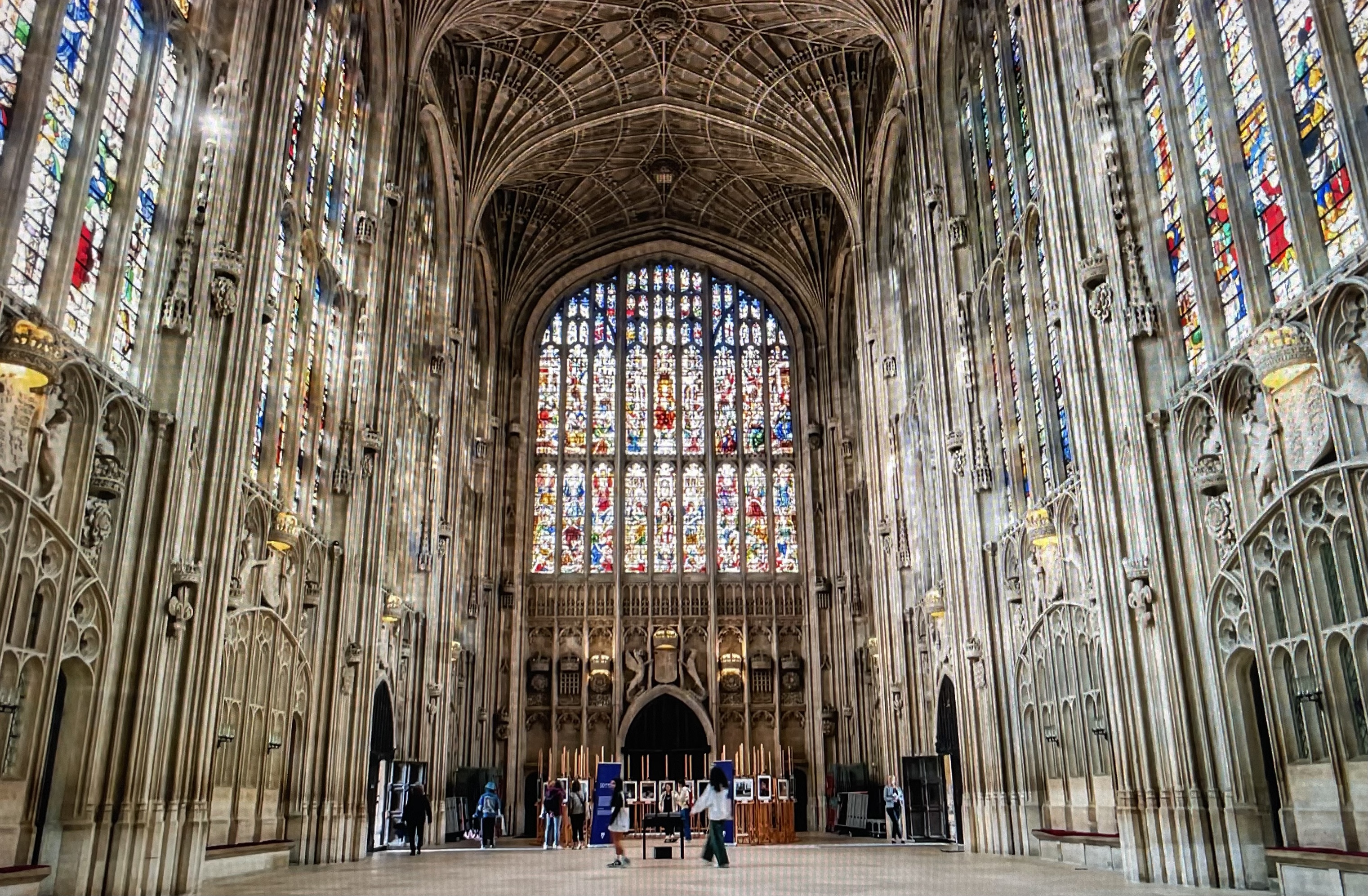
Furthermore…. By the way, Jonathan Jones describes counter offerings to the Bayeux Tapestry’s £33/40 minutes: “Never Mind The Bayeux! Here’s Some Other Great Medieval Art—And It’s Free,” The Guardian, June 30, 2026.
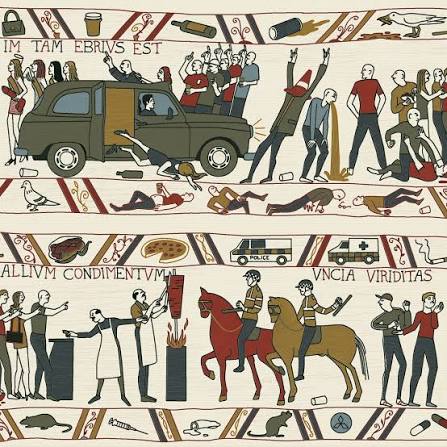
And, altogether different, there’s Jim’ll Paint It, responding to “Please could you paint a Friday night at pub kicking out time, with all the fights, kebabs, and throwing up in gutters, but in the style of the Bayeux Tapestry?”
Tomorrow in Part 2, we’ll discuss two other works of art, Washington Crossing the Delaware and Guernica, each with wartime tales to tell. ds
© Dennis Simanaitis, SimanaitisSays.com, 2026
Related
Information
This entry was posted on July 17, 2026 by simanaitissays in And Furthermore... and tagged "Bayeux Tapestry Arrives in the U.K. For The First Time in 900 Years Under Police Guard" Katie Razzall "BBC", "Bayeux Tapestry" (Bletchley Park intercepted message helped survival), "Bayeux Tapestry" 58 separate scenes (230 ft. long), "Bayeux Tapestry" celebrating Norman Conquest 1066, "Bayeux Tapestry" commissioned by Bishop Odo of Bayeux, "Bayeux Tapestry" embroidery (not precisely tapestry), "Bayeux Tapestry" survived Huguenot sack/French Revolution/Franco-Prussian War/Himmler/Gestapo (with aid of Bletchley Park intervention), "Never Mind The Bayeux! Here's Some Other Great Medieval Art And It's Free" Jonathan Jones "The Guardian".Shortlink
https://wp.me/p2ETap-lQlCategories
Recent Posts
Archives
- October 2026
- September 2026
- August 2026
- July 2026
- June 2026
- May 2026
- April 2026
- March 2026
- February 2026
- January 2026
- December 2025
- November 2025
- October 2025
- September 2025
- August 2025
- July 2025
- June 2025
- May 2025
- April 2025
- March 2025
- February 2025
- January 2025
- December 2024
- November 2024
- October 2024
- September 2024
- August 2024
- July 2024
- June 2024
- May 2024
- April 2024
- March 2024
- February 2024
- January 2024
- December 2023
- November 2023
- October 2023
- September 2023
- August 2023
- July 2023
- June 2023
- May 2023
- April 2023
- March 2023
- February 2023
- January 2023
- December 2022
- November 2022
- October 2022
- September 2022
- August 2022
- July 2022
- June 2022
- May 2022
- April 2022
- March 2022
- February 2022
- January 2022
- December 2021
- November 2021
- October 2021
- September 2021
- August 2021
- July 2021
- June 2021
- May 2021
- April 2021
- March 2021
- February 2021
- January 2021
- December 2020
- November 2020
- October 2020
- September 2020
- August 2020
- July 2020
- June 2020
- May 2020
- April 2020
- March 2020
- February 2020
- January 2020
- December 2019
- November 2019
- October 2019
- September 2019
- August 2019
- July 2019
- June 2019
- May 2019
- April 2019
- March 2019
- February 2019
- January 2019
- December 2018
- November 2018
- October 2018
- September 2018
- August 2018
- July 2018
- June 2018
- May 2018
- April 2018
- March 2018
- February 2018
- January 2018
- December 2017
- November 2017
- October 2017
- September 2017
- August 2017
- July 2017
- June 2017
- May 2017
- April 2017
- March 2017
- February 2017
- January 2017
- December 2016
- November 2016
- October 2016
- September 2016
- August 2016
- July 2016
- June 2016
- May 2016
- April 2016
- March 2016
- February 2016
- January 2016
- December 2015
- November 2015
- October 2015
- September 2015
- August 2015
- July 2015
- June 2015
- May 2015
- April 2015
- March 2015
- February 2015
- January 2015
- December 2014
- November 2014
- October 2014
- September 2014
- August 2014
- July 2014
- June 2014
- May 2014
- April 2014
- March 2014
- February 2014
- January 2014
- December 2013
- November 2013
- October 2013
- September 2013
- August 2013
- July 2013
- June 2013
- May 2013
- April 2013
- March 2013
- February 2013
- January 2013
- December 2012
- November 2012
- October 2012
- September 2012
- August 2012

