
Simanaitis Says
On cars, old, new and future; science & technology; vintage airplanes, computer flight simulation of them; Sherlockiana; our English language; travel; and other stuff
VIEWS FROM MCGUFFEY ECLECTIC READERS, SOME EVEN PROGRESSIVE PART 1
THE BROTHERS WILLIAM HOLMES AND ALEXANDER HAMILTON MCGUFFEY edited a series of Readers for grades 1-6. As noted by Wikipedia, these Eclectic Readers “were widely used as textbooks in American schools from the mid-19th century to the early 20th century, and are still used today in some private schools and homeschooling…. About 120 million copies of McGuffey’s Readers were sold between 1836 and 1960, placing its sales in a category with the Bible and Webster’s Dictionary. Since 1961, they have continued to sell at a rate of some 30,000 copies a year.”
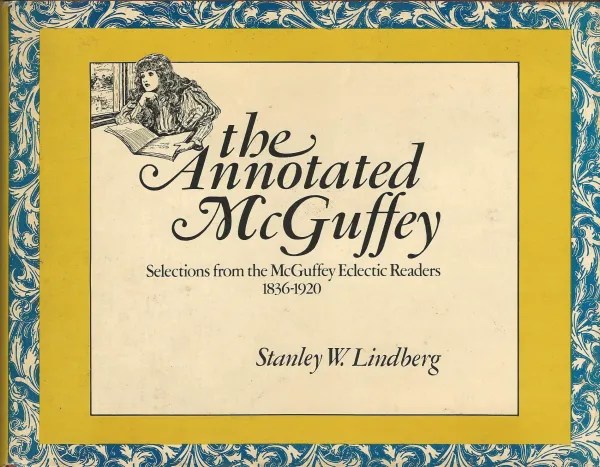
The Annotated McGuffey: Selections from the McGuffey Eclectic Readers 1836-1920, commentary by Stanley W. Lindberg, Van Nostrand Reinhold, 1976.
My principal source is The Annotated McGuffey: Selections from the McGuffey Eclectic Readers, 1836–1920, as featured “In Praise of Annotated Editions,” SimanaitisSays, November 22, 2013. Back then, I focused on Lesson XI from the Eclectic First Reader: “Boys at Play.”
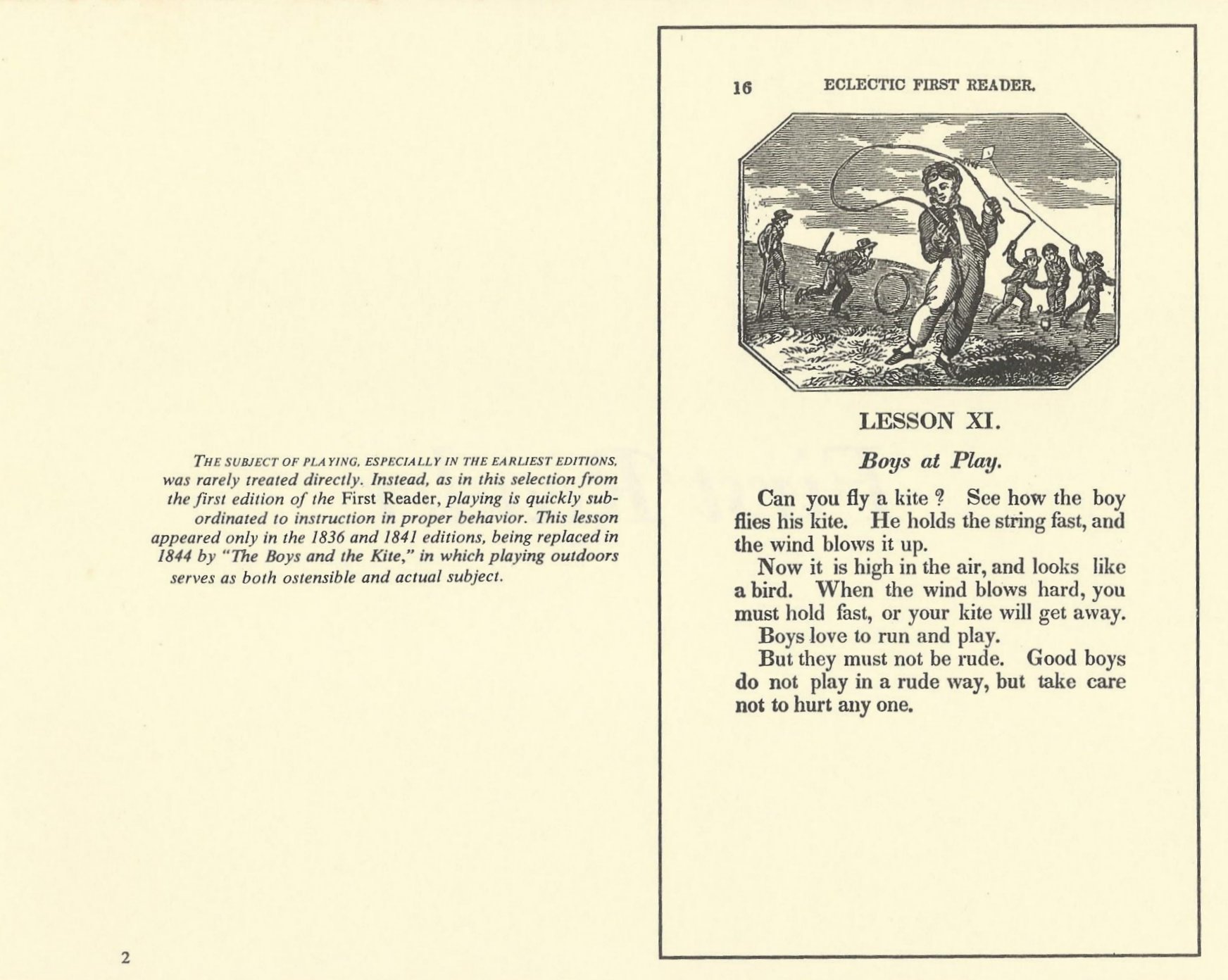
This and following images from The Annotated McGuffey.
In Parts 1 and 2 today and tomorrow, I glean tidbits from these Readers, some of them striking a particularly progressive note about Native Americans.
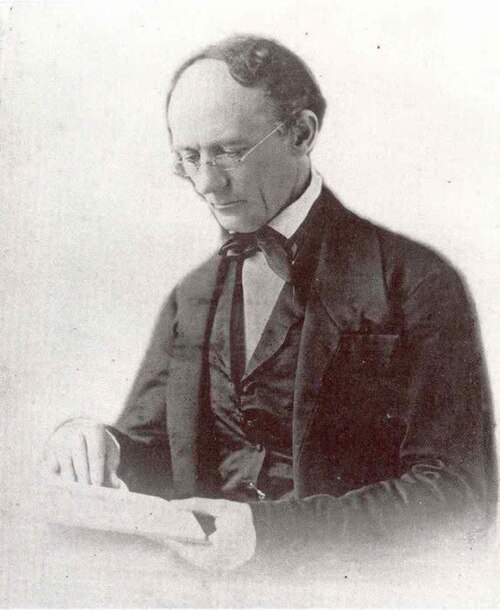
William Holmes McGuffey, 1899–1873, American college professor and president, best known for McGuffey Readers.
Fifth Reader: Lesson XVI. Prospects of the Cherokees. “This speech,” Stanley Lindberg writes, “was probably written in the 1830’s after the Cherokees had unsuccessfully appealed to the United States Supreme Court for an injunction to restrain the State of Georgia from interfering with the Cherokees or imposing their laws on the tribe.”
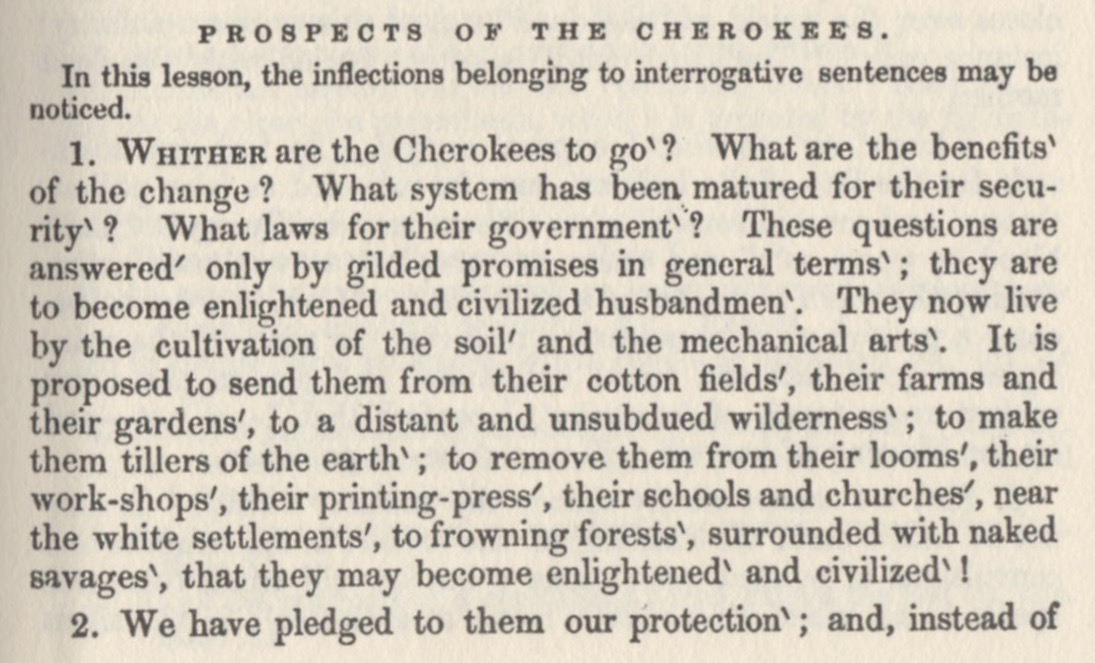
“This particular passage,” Lindberg observes, “may have been selected by Alexander because its oratorical nature suited well the intent of the Fifth Reader in which it appeared (1844). But the inhumane treatment of the Indians was clearly a concern of both McGuffey brothers, and there is less hyperbole in this passage than might appear. The Age of Jackson accounted for a staggering number of Indian graves.”
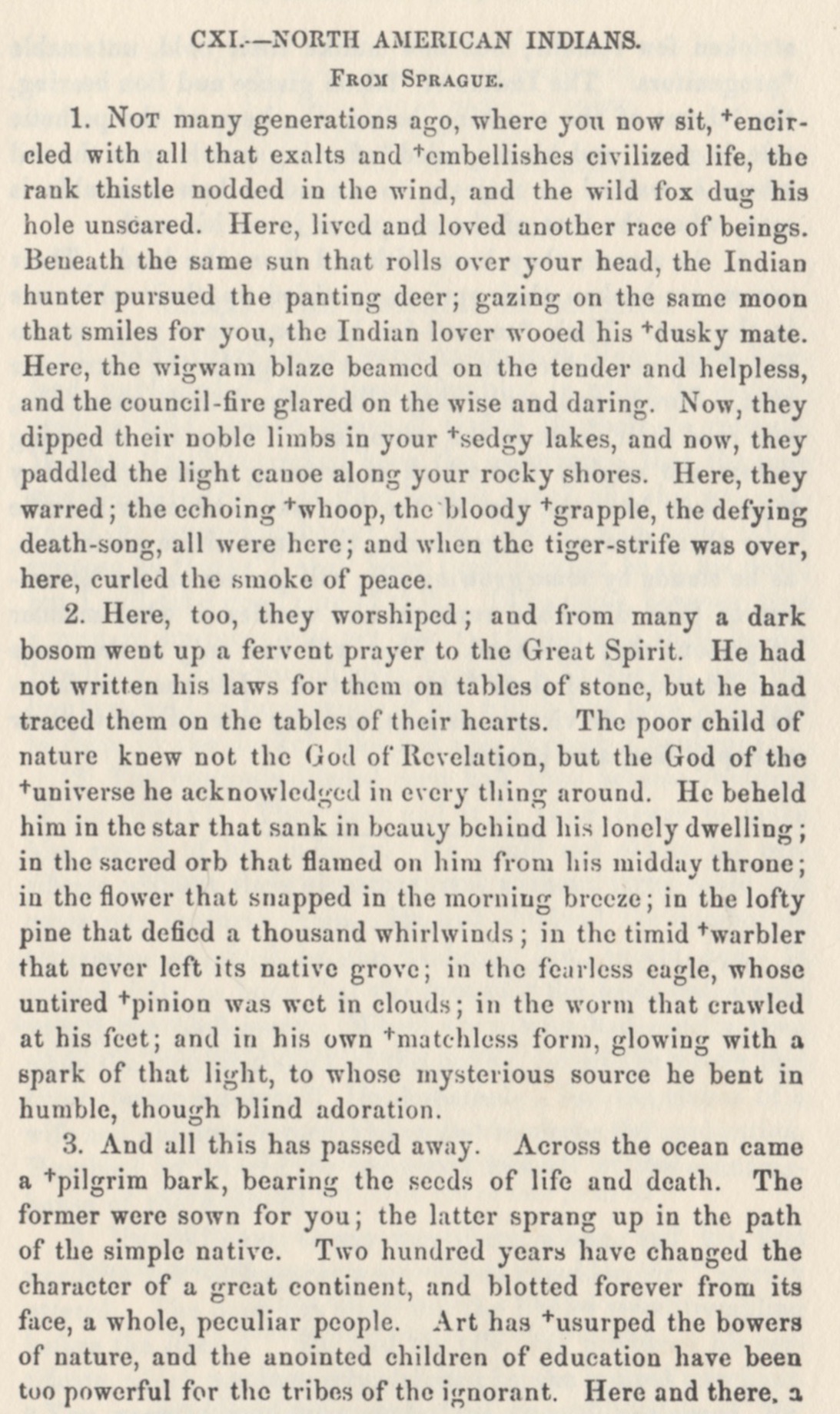
New Sixth Reader: CXI.—North American Indians. From Sprague. Lindberg recounts, “Charles Sprague (1791–1875) was the author of the earlier selection entitled ‘Prospects of the Cherokees.’ In that piece he was speaking more directly to a specific historical event, whereas here he romanticizes in a general vein. Stressing the theistic element of a pantheism he paints an attractive portrait of the Noble Savage as they supposedly once lived—and then bemoans the inevitable extinction of the Indian race.”
The Whole Family. The Miami University McGuffey House and Museum’s website recounts, “When McGuffey first came to Oxford [Ohio], he found a pioneer village with only a few log and frame houses and one solitary brick house at the northeast corner of South (Collins) and South Main streets. There was a stump-dotted campus, containing ‘the college edifice’ and a plain little red house for the President. The new professor took his meals at the Oxford Hotel, on East High Street, at the corner of East Park Place. At the other end of the block lived Charles Spining, a merchant.” The latter’s sister Harriet came to visit, met Professor McGuffey, they fell in love, and were married on April 3, 1827.”
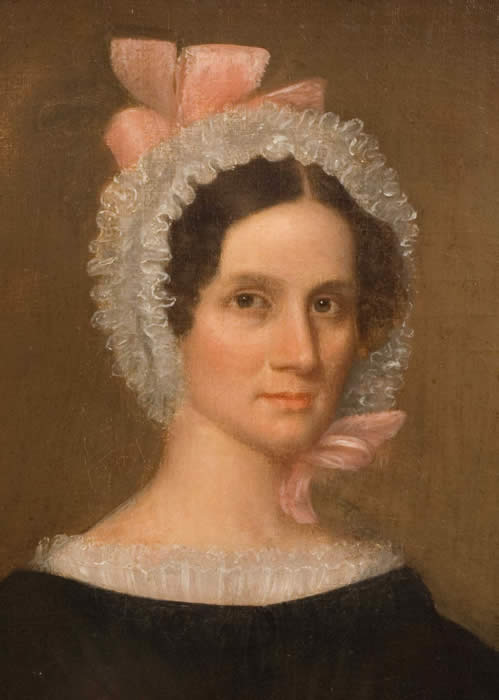
Above, Harriet Spining (some sources: Spinning) McGuffey, 1804–1850, first wife of William Holmes McGuffey. Image from McGuffey House and Museum, Miami University. Below, Alexander Hamilton McGuffey, William’s younger brother and editor of the fifth and sixth series of McGuffey Readers.
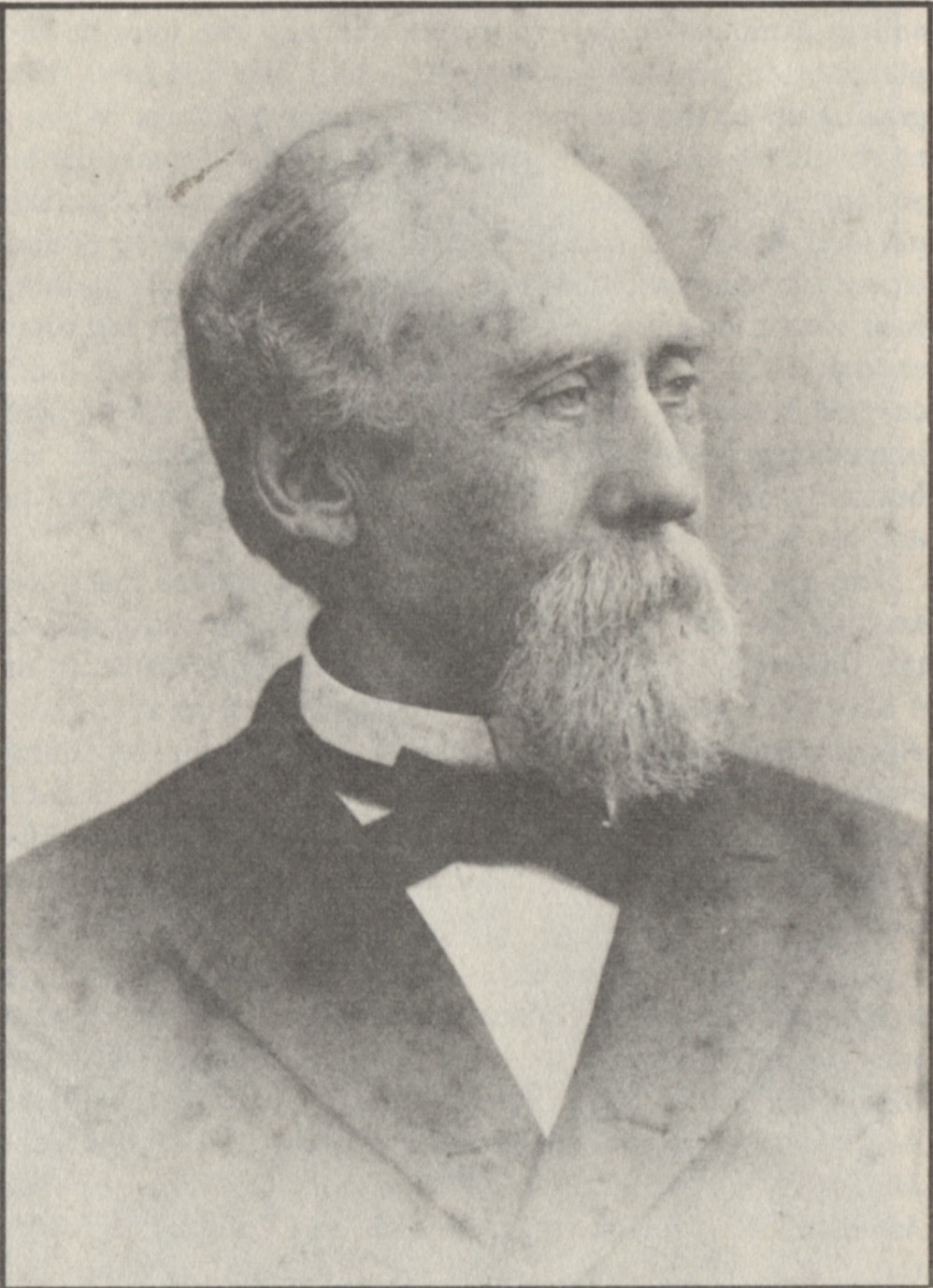
Lindberg observes, “Although most of the credit for the Readers has been given to William Holmes McGuffey, a surprising amount of the work was actually done by his brother, Alexander Hamilton McGuffey (1816–1860). Also, notes Lindberg, “according to family legend, Harriet was compiler of the Eclectic Primer.”
Tomorrow in Part 2, the McGuffeys address how the world was made (with a notable revision of date). ds
© Dennis Simanaitis, SimanaitisSays.com, 2026

