
Simanaitis Says
On cars, old, new and future; science & technology; vintage airplanes, computer flight simulation of them; Sherlockiana; our English language; travel; and other stuff
HOW TO SAY “VROOM” IN VULGATE LATIN? PART 2
FASCINATING IMAGES—ONE FEATURING POPE LEO XIV—attracted me to the Ferrari Luce. Today in Part 2, Automotive News’s Luca Ciferri reports on this car’s redefining ultrahigh performancee for the prancing horse. However, enthusiasts might ask what’s to replace the fabled Ferrari “Whirrrrr and Vroom” in an EV world.

An Electronic Vroom. Luca Ciferri reports from Rome: “Unlike some automakers, Ferrari refused to add a fake internal-combustion engine roar to the full-electric Luce, but it still wanted to give customers an audible ‘acoustic stance.’ To do so, Ferrari is leveraging mechanical noise from the Luce’s four electric motors that spin at a maximum of more than 30,000 rpm, as well as other components.”
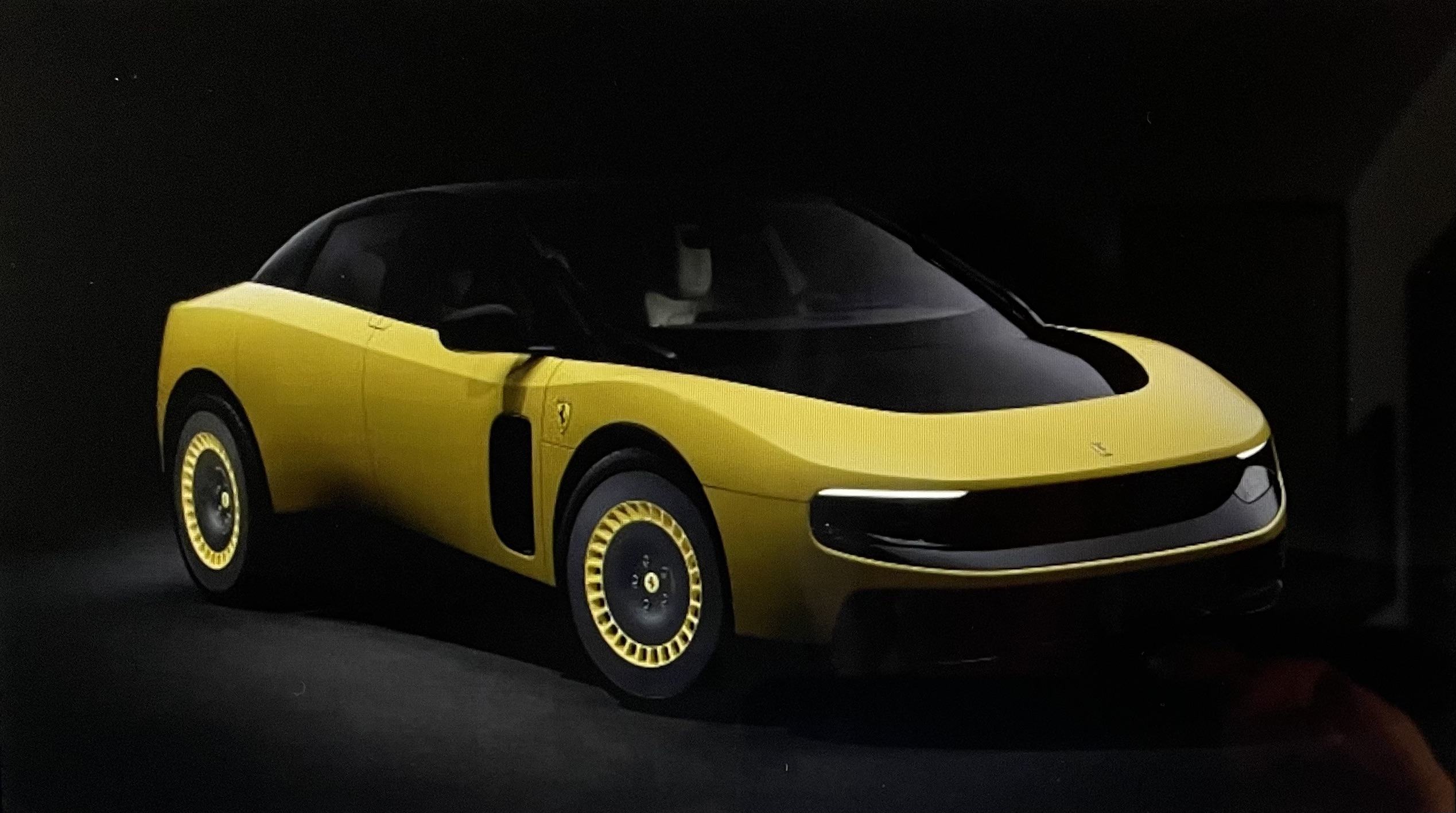
Ferrari Luce. Image from Ferrari via Automotive News.
Ciferri describes, “Signals from an accelerometer installed in the rear axle are processed by a filtering and equalization system into sounds audible inside and outside the car. Ferrari said the sounds are rooted in the physics of rotating machinery and retain a continuous harmonic structure.”
Layered Acoustics. Ciferri continues, “The sound output has two layers. The first layer forms the core of the internal sound, amplifying it outside the car to generate a natural sound wavefront distributed proportionally between the front and rear axles according to the torque delivered. In this way the car can be heard from the outside as it approaches and passes by.”
“The second layer,” Ciferri notes, “is amplified inside the cabin, where the driver can switch from maximum sound intensity, when Performance driving mode is selected, to near-silence in Range mode, where power output is more than halved to 429 hp and top speed is limited to 280 kph (174 mph), and the Luce uses only the rear electric motors to save energy and extend range.”
Other Automotive Noises. “Can You Hear Me Now?,” SimanaitisSays, May 15, 2014, addressed the controlled fury of Formula 1 racing and its acoustic properties. No recent cars have equalled the intensive high revving of the several decades ago.
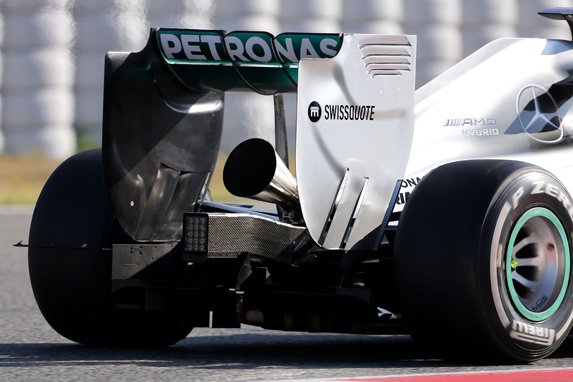
A Mercedes-Benz AMG Petronas F1 car fitted with a megaphone exhaust (an experiment in reducing backflow).
In his Automotive News report, Ciferri describes, “EVs can be tuned to produce a range of sounds, some mandated by law to alert pedestrians at low speeds, while others are meant to mimic combustion engines.” He then offers several examples:
“The Hyundai Ioniq 5 N has an active sound system in which shifts are accompanied by three sounds—an ICE [ed: inappropriate abbreviation these days?] engine and exhaust, and two futuristic EV sounds—through eight internal and two external speakers.”
Indeed, I recently heard the specific reversing of a Hyundai EV. Though utterly different in character, it reminded me of the charming ladies’ tooting accompanying Japanese bus maneuvers.
“Porsche,” Ciferri notes, “has equipped the Taycan with Electric Sport Sound, which minimizes ‘disturbing noises from the drive architecture’ while amplifying ‘harmonious, emotive sounds matching what the car is doing.’ The result is ‘a clear electrical statement but unquestionably the sound of a genuine Porsche,’ the automaker said.”
“The Dodge Charger Daytona Scat Pack has a Fratzonic Chambered Exhaust system, as Dodge calls it, that is meant to capture the visceral sound and feel of its performance-driven persona.”
“And the Fiat Abarth 500e has a sound generator as an option that is synched to the electric motor’s performance, reproducing the sound of an Abarth gasoline engine.”
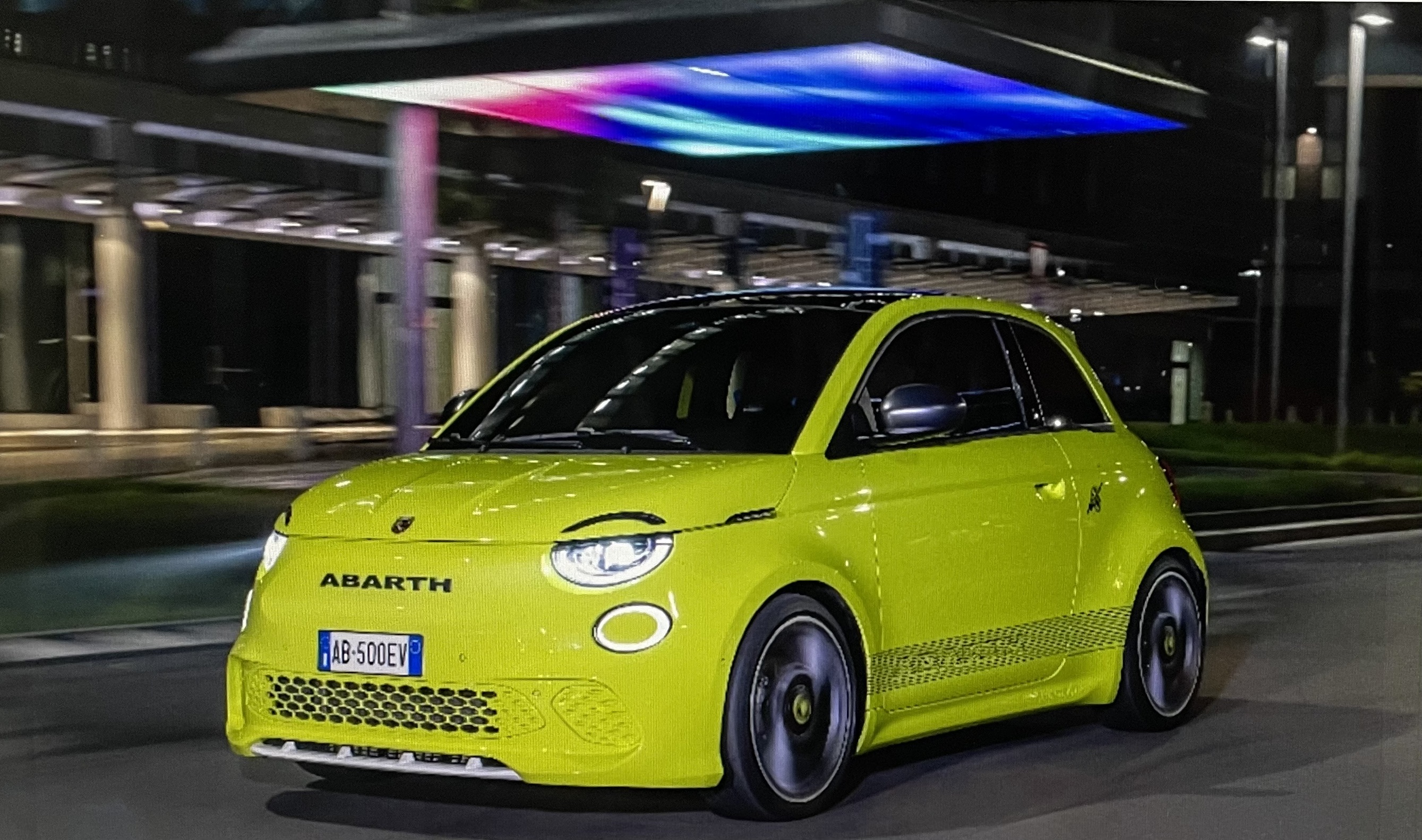
This last one appeals to me. Though I’m still wondering about “Vroom” in Vulgate Latin. ds
© Dennis Simanaitis, SimanaitisSays.com, 2026

