
Simanaitis Says
On cars, old, new and future; science & technology; vintage airplanes, computer flight simulation of them; Sherlockiana; our English language; travel; and other stuff
D.J. SIMS GOT THINGS RIGHT, SORTA
IT WAS MORE THAN A HALF-CENTURY AGO (AGG!?) that a math professor at the College of the Virgin Islands on St. Thomas submitted a freelance piece to R&T.
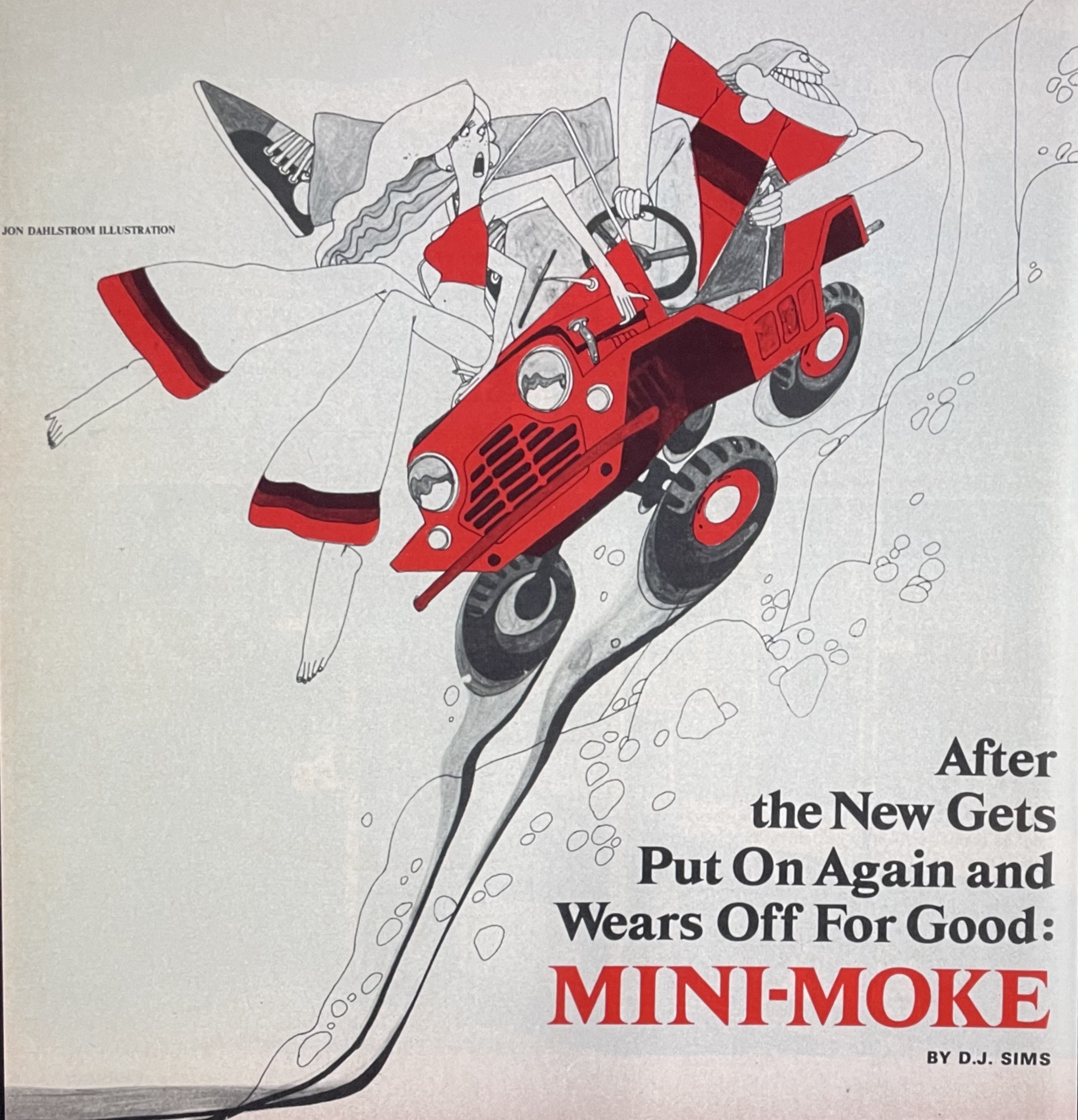
Image by Jon Dahlstrom from R&T, August 1973.
D.J. Sims, as he chose as nom de plume, wrote it as a parody of R&T’s car-restoration series at the time. It just goes to show you what math professors do in the summer when they tire of researching dynamical systems theory, which the author has referred to as “differential equations without the dirty bits.”
This part-time gig continued for the rest of the ’70s with occasional book reviews for the magazine evolving into significant technical articles. Eventually, R&T must have gotten fed up with all the editorial postage (this, of course, was antediluvian pre-email). Thus, when engineering editor John Dinkel got bumped to full editor, R&T hired Dennis Simanaitis as J.D.’s enged replacement. To this day, I retain this enged handle to my aol (one of only a few people, apparently, still using the service).
Here are tidbits gleaned from the era, with Internet sleuthing applied to anything passed off as facts back then. Curiously, D.J. Sims got things right, sorta.
August 1973: Moke Research. “One never buys a Moke new,” D.J. observed. “Because of the marque’s endearing mechanical charms, there are always scads of us scrambling to move up to a VW, which pretty well sums up both Mokes and us.”
“The island I currently call home,” D.J. recounted, “is roughly the size of Manhattan and its topography is suggested well by imagining a gigantic sheet draped over the latter, skyscrapers and all.” D.J./I owned this first Mini-Moke for 1428 miles (and, yes, gentle reader, there was to be a second Moke). Figure 1428 miles as kinda 42 laps of Manhattan.
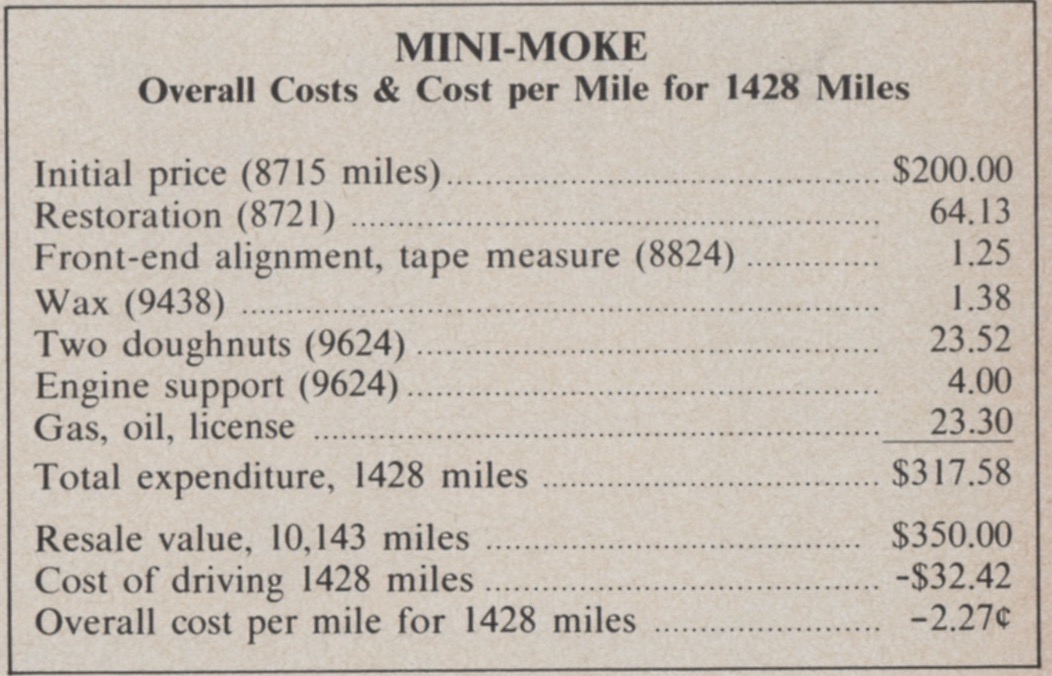
The article concluded, “It seems that Mini cost me a total of -$32.42, which says, in effect, that I was being paid about 2¢ per mile for driving her. In retrospect, that seems just about right.”
May 1978: Materials: “Weight reduction’s the theme,” the article began, “and automotive materials are the instruments. Plenty of dissonance too, with the four Cs of avant garde automotive design—Corporate Average Fuel Economy, Crashworthiness, Clean Air, and Cost. Expect a real crescendo by 1985; each automaker’s fleet has to meet CAFE’s 27.5 mpg, and downsizing alone won’t get them there.”
Illustration by Dana Stewart from R&T, May 1978.
The materials discussed were steels, aluminum, plastics, reinforced plastics, and advanced composites. A chart identified the overall picture, with the last material obviously exhibiting the most question marks.
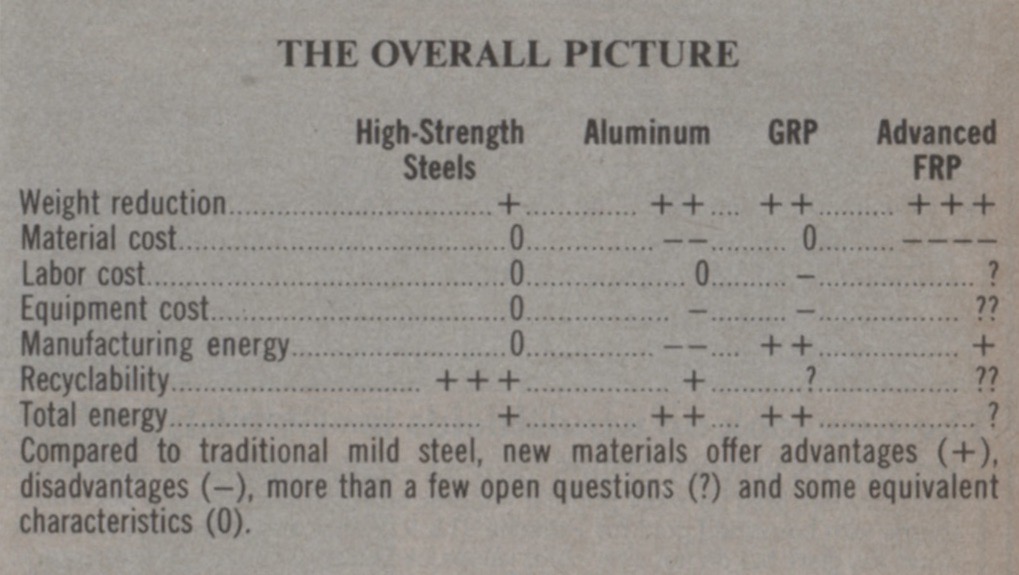
Questions remained about “deformability of traditional structures (read: ‘steel ones’)… And there’s also fuel economy and petroleum issues. To a great extent, this is where we all came in—the four Cs of CAFE, Crashworthiness, Clean Air, and Cost. One thing is certain: The automobile’s next decade is going to be an interesting one indeed.”
In fact, what with Trump and his warped reality, these issues remain relevant.
September 1978: “Brighter headlights are coming,” I wrote in R&T “Of Immediate Interest,” “and what’s more, we won’t be outlaws for using them.” Background: The headlight industry had locked the U.S. into traditional sealed-beams, despite a goodly portion of the world evolving into halogen illumination. “By 1981,” I wrote, “much of the new car fleet will be running halogens as part of more efficient electrical systems.”
“We’ll have to see,” I observed, “how the sealed-beam halogens compare. In any event, there’s a bright side to all this: With new car adoptions, high-volume production production is likely to bring halogen prices down.”
Gone were 98¢ drugstore replacements for failed traditional sealed beams. And, eventually, halogen-bulbed styled headlight fixtures were to replace them anyway.
October 1978. Still freelancing (still at the Society of Automotive Engineers), I was commissioned by R&T to do a major research article on synthetic lubricants.
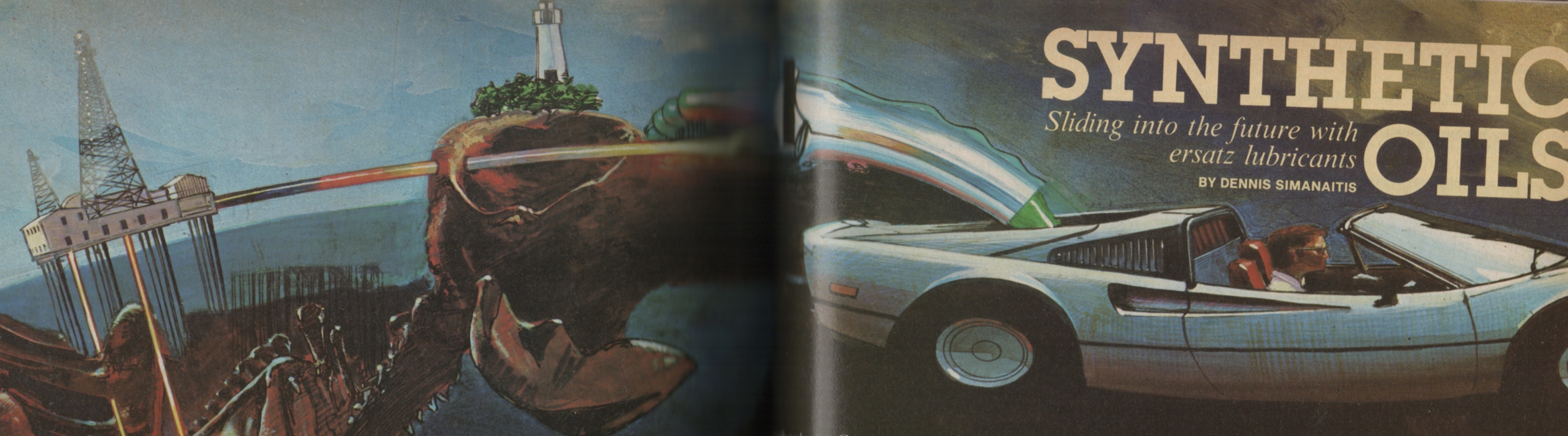
I observed, “The government, the lubricant producers, and the automakers are getting their act together, and the result will be a whole new class of fuel-efficient engine oils.”
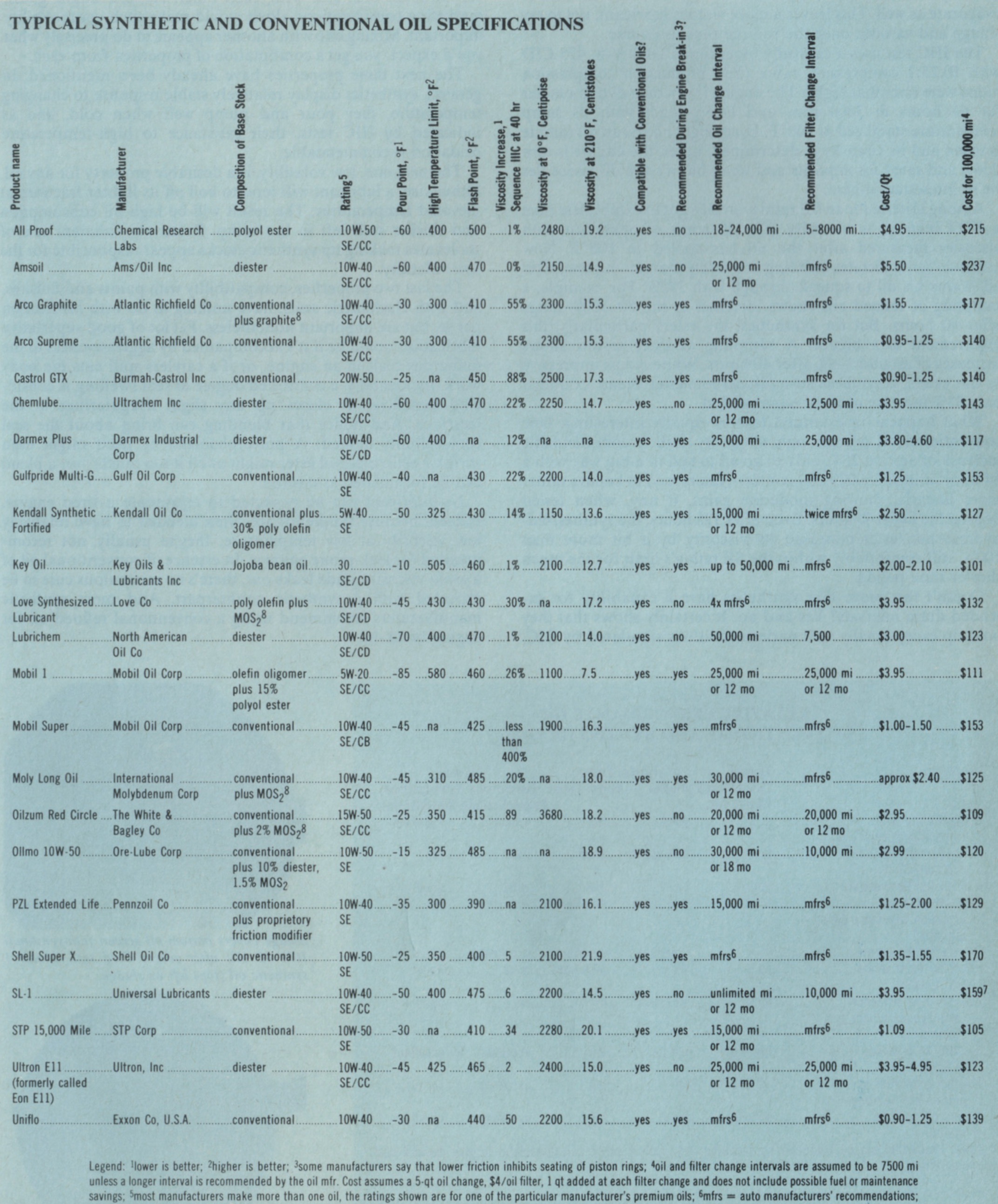
This and the following image from R&T, October 1978.
R&T committed an entire page to comparisons of conventional and synthetic oils, ranging from All Proof’s synthetic poly ester, to Castrol’s conventional, to Mobil 1’s synthetic olefin oligomer + 15% poly ester, to Mobil Super’s conventional, to Uniflo’s conventional.
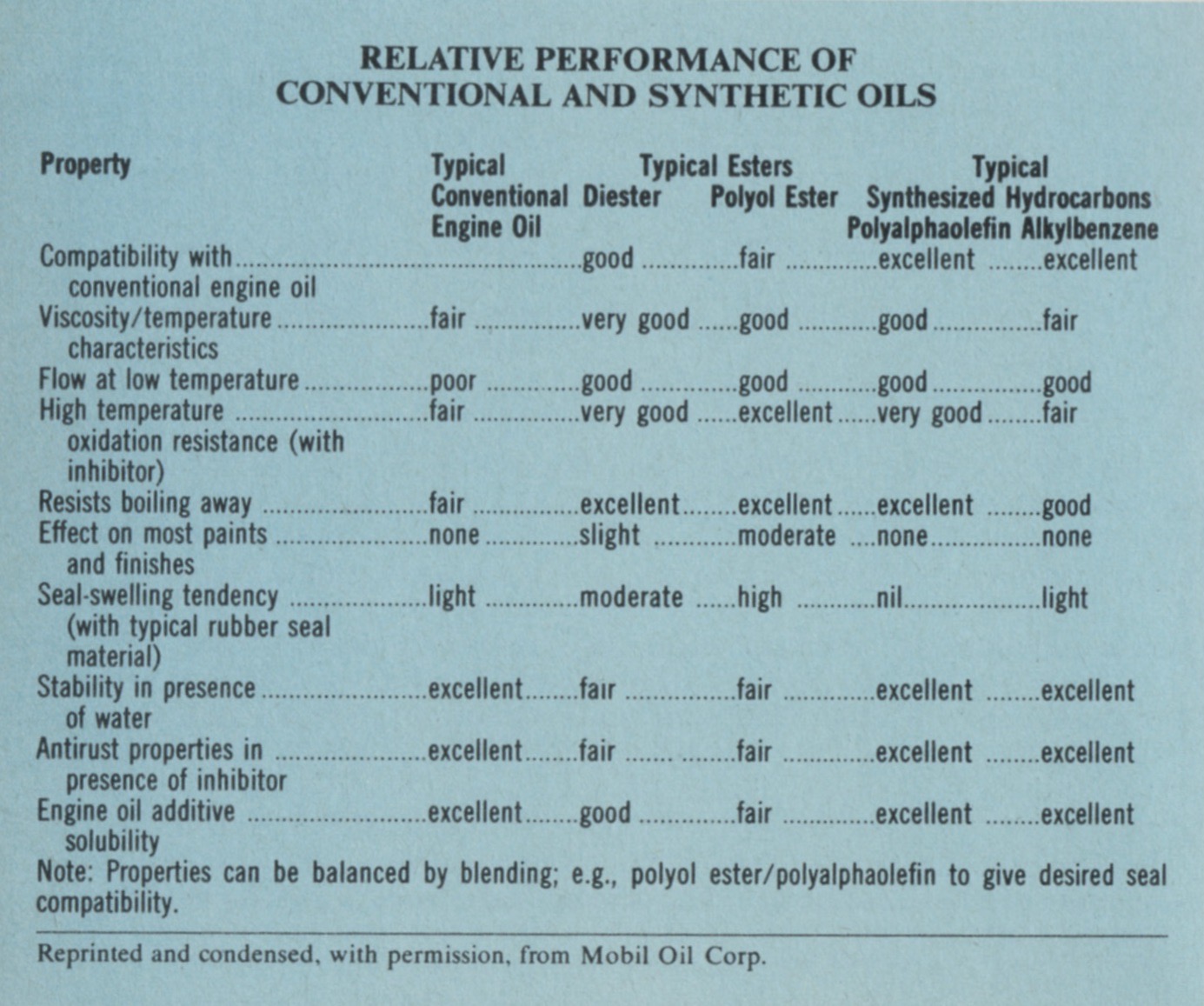
Mobil also shared in-house analyses of relative performance of conventionals and synthetics.
“To close on a harmonious note,” I observed, “these fuel-efficient lubricants are well attuned to several other dominant themes in powerplant design.”
And to end on a personal note: Largely based on its resistance to oxidation degradation, I’ve used Mobil 1 synthetic in all my cars since that research.
Not a bad start for D.J. Sims, eh? ds
© Dennis Simanaitis, SimanaitisSays.com, 2026
 Simanaitis Says
As mentioned earlier, I am going through my thousand of old sports car magazines, including R&T. Removed the Mini Moke for my collection, ans ALL your writings.
Whatever happened to old D.J.?
What ever happened to Key Oil (the jojoba bean derivative in your synthetic oils list)? Sounded like a wonderful idea at the time (made use of a drought-tolerant weed, not petroleum-derived). But the only “Key Oil” I can find now is a distributor (not manufacturer) in KY-TN area.