
Simanaitis Says
On cars, old, new and future; science & technology; vintage airplanes, computer flight simulation of them; Sherlockiana; our English language; travel; and other stuff
IN PRAISE OF THE COMMON PART 1
BEING THE ANGLOPHILE I AM—SHAKESPEARE, MARLOWE, Morgans, Dellows, and White Stilton with Apricots—I was attracted to Turner Classic Movies’ recent showing of This Happy Breed.
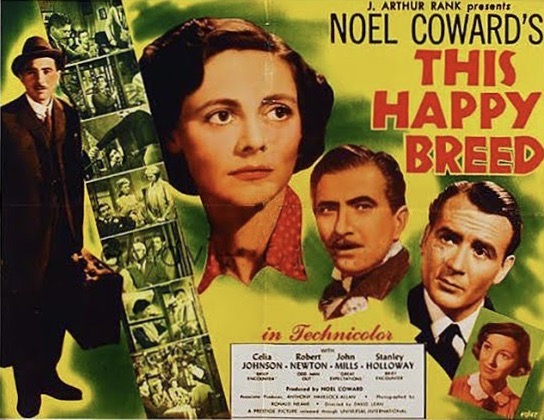
This Happy Breed, based on the Noël Coward play, starring Robert Newton, Celia Johnson, and Stanley Holloway; directed by David Lean; produced by Noël Coward, 1944/1947; the latter, its U.S. release.
The New York Times’ Bosley Crowther noted in April 14, 1947, “Why its release here should be tardy is a puzzler to us. For This Happy Breed (is) an absorbing and affecting panorama of English life…. the story of… a plain and inconsequential family living in one of those plain little houses in a row in a plain and inconsequential London suburb between 1919 and 1939.”
What follows here in Parts 1 and 2 today and tomorrow are tidbits gleaned from my viewing, plus my usual Internet sleuthing about this flick and its production.
Good Sturdy Common Folk. Indeed, the inconsequential nature, the commonality of these sturdy British people, evokes the movie’s charm as well as its title. Wikipedia recounts, “The title, a reference to the English people, is a phrase from John of Gaunt‘s monologue in Act II, Scene 1 of William Shakespeare’s Richard II. In 1944, it would have resonated with British audiences.” Just as its wonderful iambic pentameter resonates with me:
“This fortress built by Nature for herself/ Against infection and the hand of war,/ This happy breed of men, this little world,…/ This blessed plot, this earth, this realm, this England.”
Another Celebration of Commonality. I’m reminded of Aaron Copland’s Fanfare for the Common Man, also reappearing as the theme for the fourth movement of his Symphony No. 3. Like Coward’s play and the movie, Copland’s work was a product of wartime solidarity.
More on Commonality. Let’s not give away This Happy Breed’s plot. (I went in not knowing it, just as you might wish to do). Instead, let’s discuss that inconsequential nature of the Gibbons family—Frank, his wife Ethel, their three children Reg, Vi and Queenie, his widowed sister Sylvia and Ethel’s mother—beginning with their settling into a rented house in a South London suburb in 1919.
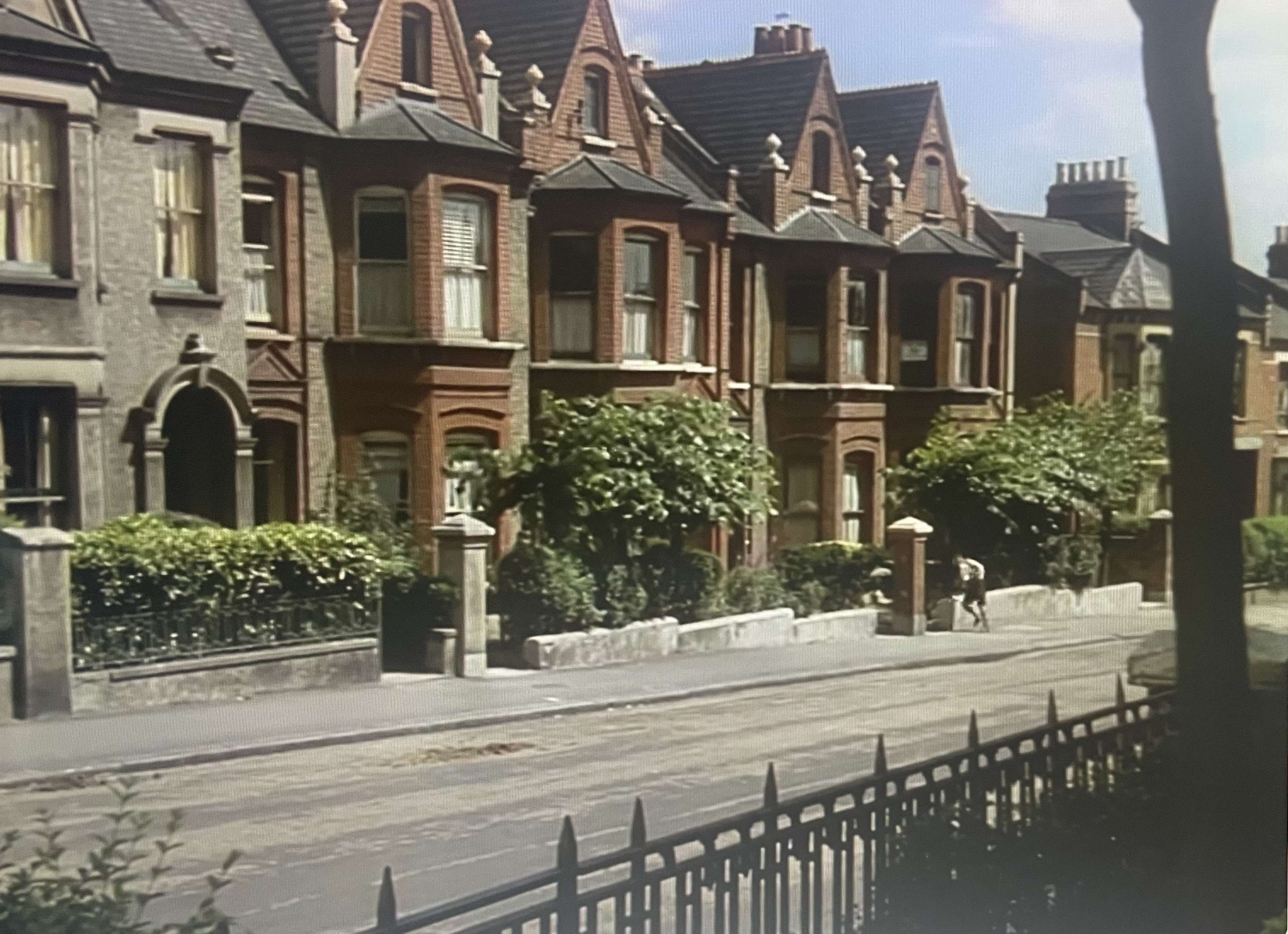
This and following images are screen grabs from Lucky Dip Cinema‘s YouTube of This Happy Breed.
A Clash of Class? Wikipedia describes, “Coward had played Frank Gibbons on stage, and he wanted to reprise the role on screen. [Director David] Lean felt the playwright’s public persona of witty sophistication was so far removed from his humble lower class origins that audiences would be unable to accept him as Gibbons, and he initially offered the role to Robert Donat instead.” Wikipedia continues, “Donat refused the role because he objected to the final speech delivered by his character in the stage version. As he explained in a letter to Coward: ‘Rightly or wrongly, I believe it is just that very political irresponsibility that got us into another war.’ ”
£500 Quaffs. “The role,” recounts Wikipedia, “was given to Robert Newton, whose reputation for alcoholism led the producers to require Newton to sign a contract relinquishing £500 of his £9,000 salary, every time his drinking caused a delay in production. According to the film’s cameraman Ronald Neame, by the end of filming, Newton had forfeited his entire salary, although the producers forgave him and paid his full fee.”
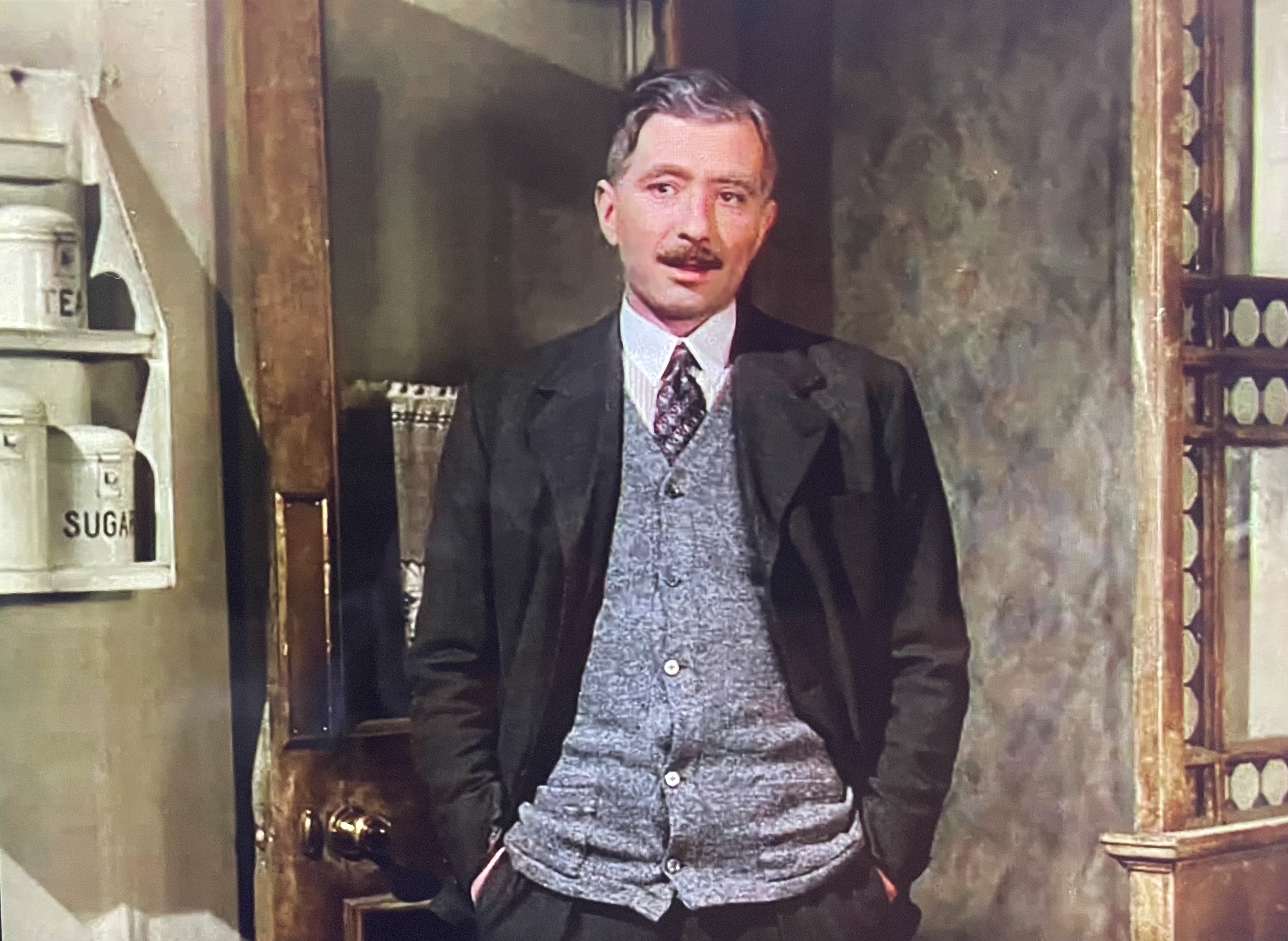
Newton, by the way, was to create another memorable role as Long John Silver in Walt Disney’s version of Treasure Island (1950), a flick also shot in the U.K.
Tomorrow in Part 2, the Gibbons’ conventionality continues with a next-door neighbor’s familiar face, a radio operated by a crystal, a movie that talks to its audience, Frank driving a London double-decker, Queenie winning a Charleston dance contest, and other time-capsule happenings. ds
© Dennis Simanaitis, SimanaitisSays.com, 2026

