
Simanaitis Says
On cars, old, new and future; science & technology; vintage airplanes, computer flight simulation of them; Sherlockiana; our English language; travel; and other stuff
PERUSING AUTOMOTIVE NEWS PART 2
YESTERDAY WE STARTED CATCHING UP WITH TIDBITS from recent numbers of Automotive News. We continue here in Part 2 with topics range from Jaguar’s Formula E success, to Mercedes’ commitment to EVs, to an essay proposing EV optimality (despite what, why, or whether Trump thinks otherwise).
Formula E Victories = More Buyers? John Possumato offers a Guest Commentary: “Will Jaguar’s Formula E Victory Translate into Buyers for its Ultrapremium Electric Reboot?,” Automotive News, March 31, 2026.
Possumato recounts, “Jaguar returned to global motorsports in 2016 as the first automaker to join the all-electric Formula E Championship. Since then, Jaguar TCS Racing has accumulated more than 20 race wins and over 50 podium finishes, culminating in the 2024 ABB FIA Formula E Teams’ World Championship and Manufacturer’s Trophy, the brand’s first world championship title since winning the World Sportscar Championship in 1991.”
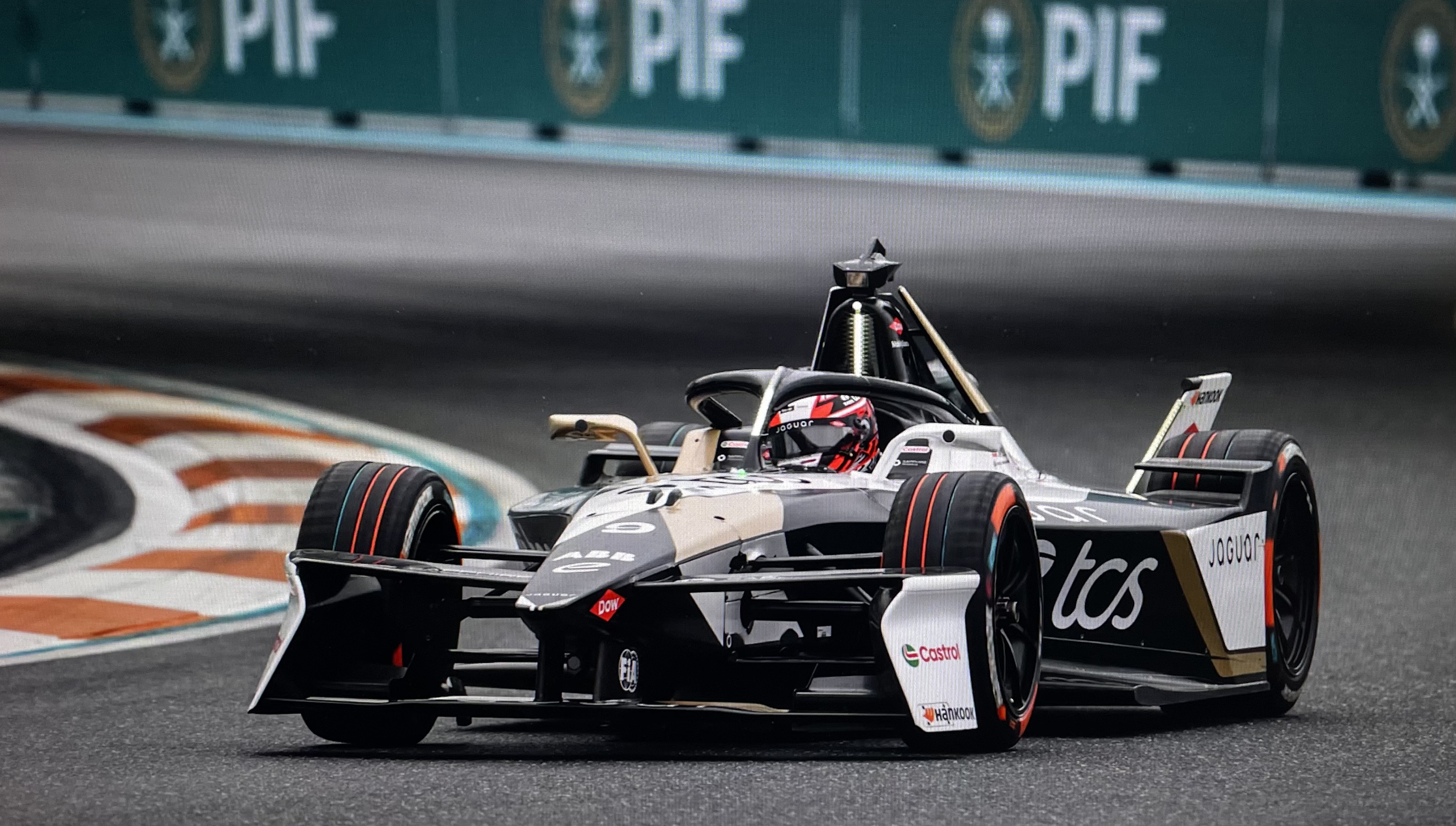
At the 2026 Miami E-Prix, Jaguar driver Mitch Evans charged from ninth on the grid to victory. Image from Jaguar via Automotive News.
“For those of us who follow Formula E,” Possumato observes, “the series has become a global proving ground for electric performance, with races in Sao Paulo; Jeddah, Saudi Arabia; Tokyo; Monaco; Madrid; and Miami showcasing both technology and brand positioning in the EV era.”
Time For Tesla Semis? Laurence Iliff describes “Why Tesla Semi Truck Could Succeed Where The Cybertruck Failed,”Automotive News, April 6, 2026: “Tesla built its wildly styled Cybertruck to disrupt the full-size pickup segment and steal share from Detroit’s cash cows. It failed. Now the EV maker has a fresh shot at electrifying another corner of the truck market with its big-rig Semi. The Class 8 truck, set to enter volume production this quarter, targets a different kind of buyer than the lifestyle pickup: fleets that measure costs per mile in fractions of a cent over a truck’s million-mile lifespan.”
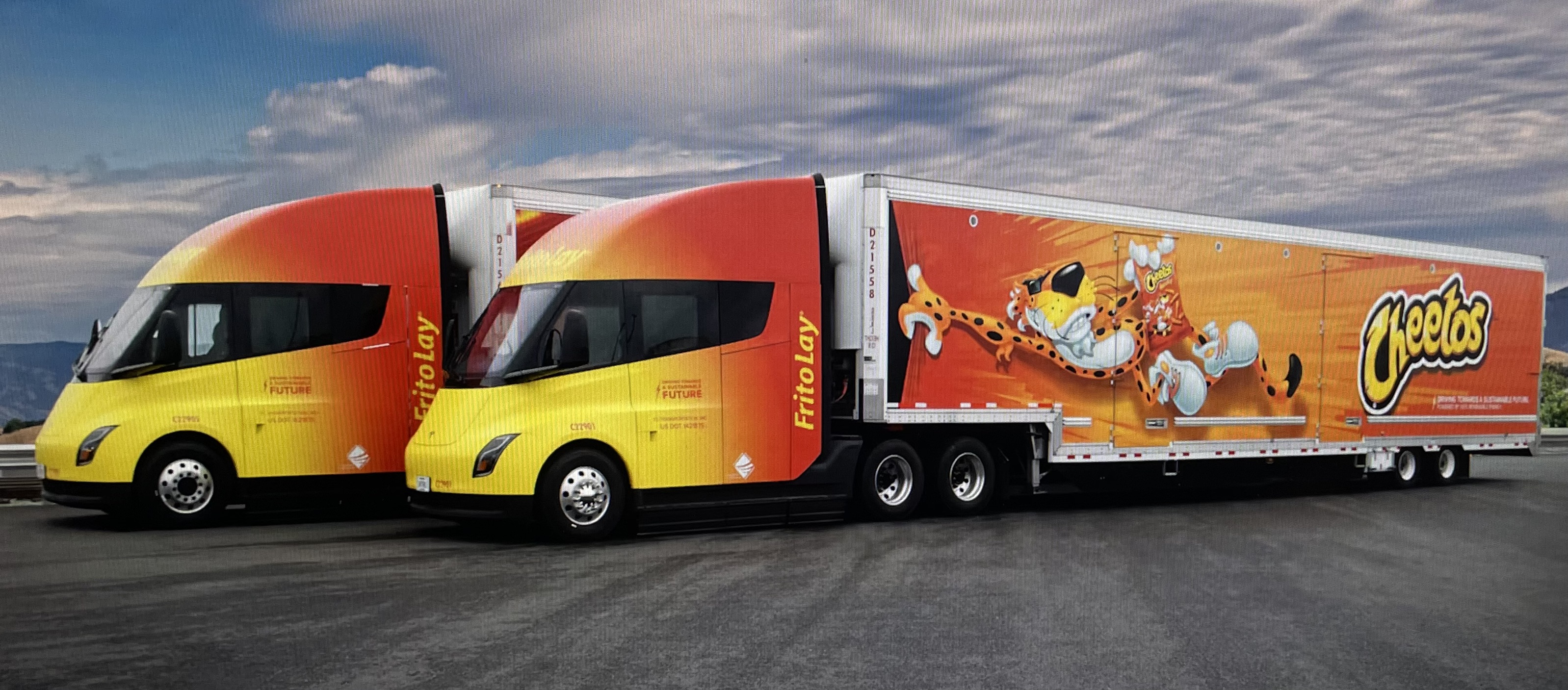
Tesla Semi battery-electric Class 8 trucks are being used by Pepsico North America. Image from Pepsico North America via Automotive News.
Illif observes, “The Tesla Semi starts around $300,000, according to fleet operators. That compares to about $175,000 for a comparable diesel truck, meaning Tesla must close that gap through savings in fuel, maintenance and uptime. PepsiCo and DHL are among the fleets that have announced Semi deployments after pilot testing. Tesla also uses its trucks to haul batteries between its Nevada and California factories.”
M-B: “No Choice” But to Forge Ahead With EVs. Urvaksh Karkaria reports in Automotive News, April 2, 2026, “While other automakers cancel some electric vehicles, Mercedes-Benz is plowing forward with its bet on battery technology. The German luxury brand plans to deliver multiple EVs in the U.S. in the next three years, including a trio of AMG performance models and zero-emission variants of its volume GLC crossover and E-Class sedan.”
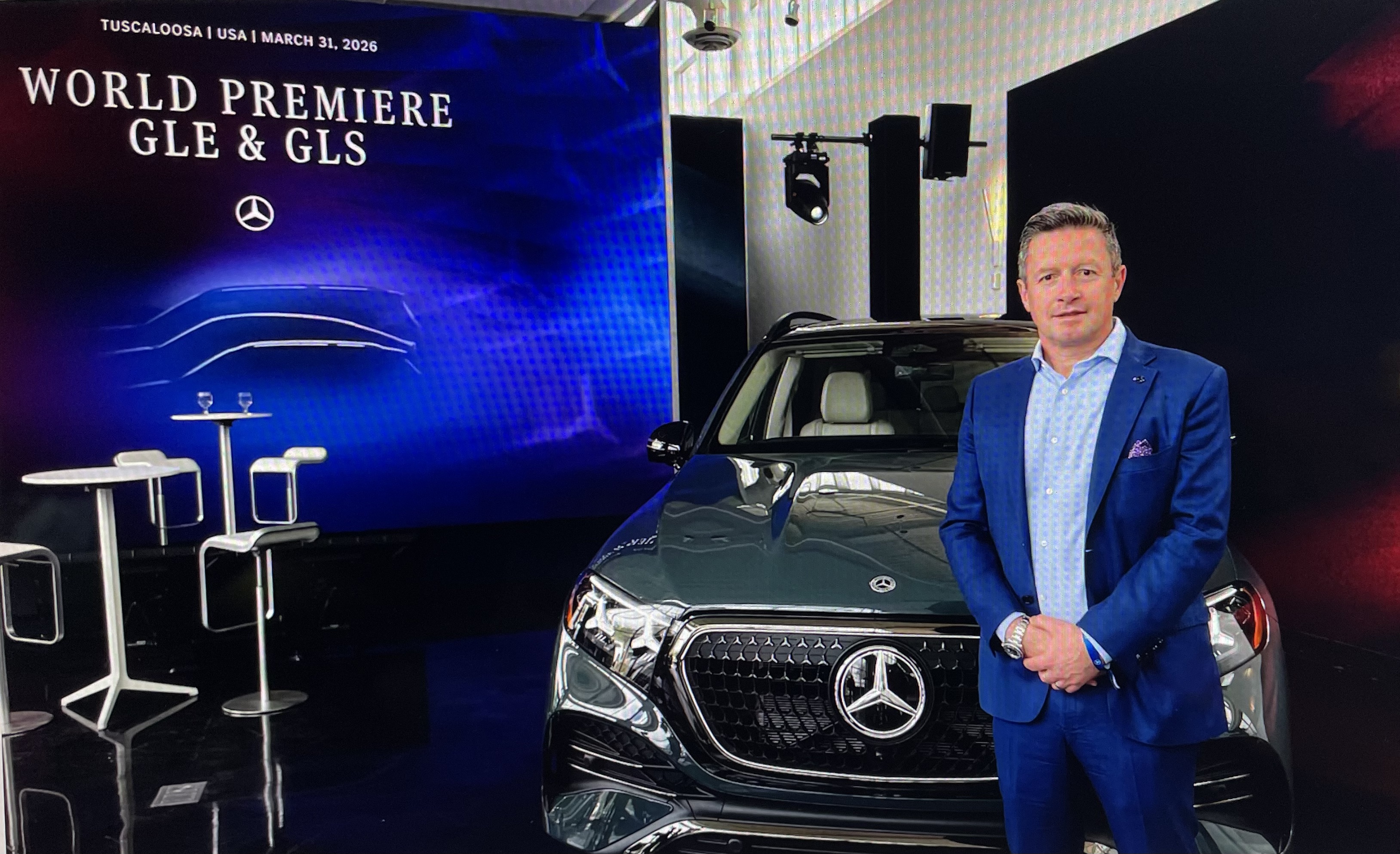
“Mercedes-Benz USA CEO Adam Chamberlain expects EVs to account for 10 to 15 percent of the automaker’s retail sales next year as supply improves and new, higher-volume models launch.” Image and caption by Urvaksh Karkaria/Automotive News.
Karkaria continues, “Mercedes-Benz USA CEO Adam Chamberlain said bailing on EVs is not an option given the stringent government mandates the automaker has to comply with overseas. “There is no choice” globally, Chamberlain said, citing Europe’s requirement that EVs account for half of vehicles sold by 2030 and China’s 60 percent target.”
Choosing Optimal Architecture. Jerry Hirsch, Managing Editor, Content, offers “Why EV Architecture Makes Better Cars, Regardless of Politics,” Automotive News, April 8, 2026.
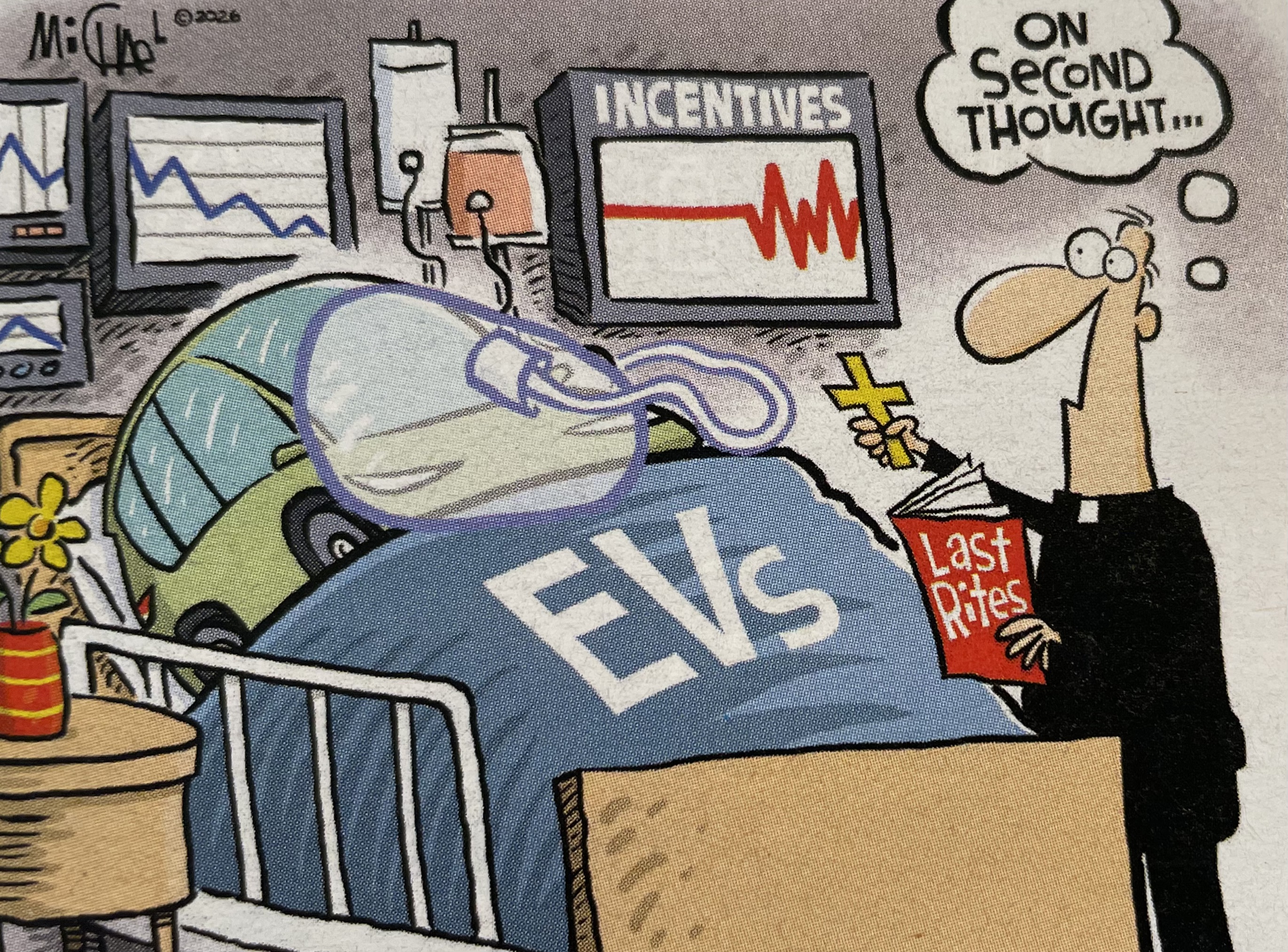
Illustration from Automotive News, April 12, 2026.
“Do you prefer a rotary dial telephone limited to your home’s copper wiring,” Hirsch posits, “or a pocket computer that does voice, video and Internet, leverages artificial intelligence and goes everywhere with you? That’s the choice America’s legacy automakers face as they refocus on combustion engines, embracing the Trump administration’s fossil fuel-based industrial policy. It’s going to work and generate good profits for a while, but long term, it’s a losing strategy.”
EV Cooling. As one example of EV’s optimal architecture, Hirsch cites, “Electric vehicles already use liquid cooling systems for batteries. That same infrastructure can manage heat from high-performance electronics. In contrast, combustion engine vehicles would need separate cooling systems to support many of those components. Additionally, internal combustion vehicles would require major electrical system upgrades to power some chips enabling AI onboard the vehicle.“
Fully Electric Brake-by-Wire. “This ‘dry’ system,” Hirsch describes, “removes all the hydraulics that run through vehicles, eliminates brake fluid replacement and scraps about 20 pounds of weight. The electric system stops vehicles more quickly than conventional disc brakes. It requires less steering input to keep a vehicle from skidding during emergency braking in hazardous situations. The digital architecture optimizes smart driver-assist systems. It can control braking forces at each wheel.”
Hirsch notes that such a system could be adopted to conventional vehicle architecture, but it works best “in a fully digital vehicle with an electric architecture.”
A Tough Pill to Swallow. Hirsch concludes, “It’s becoming clear that automakers retrenching on combustion engines will eventually deprive consumers of the one thing they really want: better cars.”
A tough pill to swallow, particularly if one is aligned with the fossil-fuel industry. ds
© Dennis Simanaitis, SimanaitisSays.com, 2026

