
Simanaitis Says
On cars, old, new and future; science & technology; vintage airplanes, computer flight simulation of them; Sherlockiana; our English language; travel; and other stuff
BAYREUTH EXULTATIONS—AND BLUES
“WILL THE REAL BAYREUTH PLEASE STAND OUT,” SimanaitisSays, March 27, 2016, offered details of the Richard-Wagner-Festspielhaus. Here, a decade later in celebrating Bayreuth’s 150th anniversary, Opera with Opera News offers “Summers With Wagner,” as specialists from the opera world share insights about this fabled venue.

Tidbits following are gleaned from this article, with a goodly number of exultations—as well as an entertaining hoot of a critic’s view.
A Profound Cultural Impact. Gundula Kreutzer, Professor and Chair of the Music Department, Yale University, recounts, “The Bayreuth Festspielhaus stands as a unique testament to Richard Wagner’s exceptional artistic vision, ingenuity and perseverance; and his festival has had a profound cultural (and political) impact ever since its inauguration in 1876. Yet… I wonder about the tradition of limiting the festival to Wagner’s ‘mature’ operas. This year, I am heartened by the inclusion of his earlier Rienzi. Wagner was, of course, notoriously interested in the ‘music of the future.’ ”
Professor Kreutzer Professor continues, “For me, the most fascinating aspect of the Festspielhaus is its fabled acoustics enabled by the sunken orchestra pit (whose details were worked out not by Wagner but by his chief technician, Carl Brandt).”
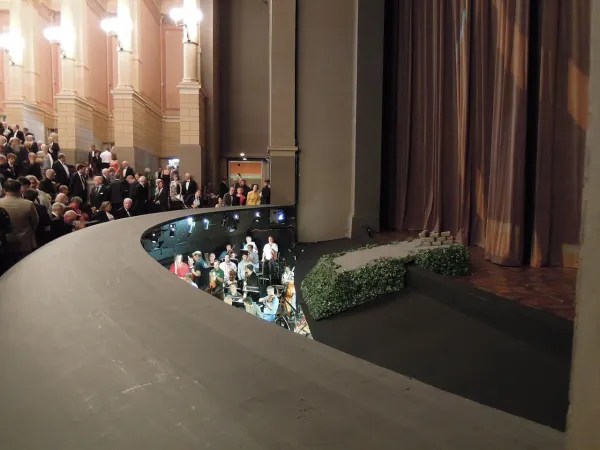
The conductor and orchestra are completely hidden from Bayreuth opera-goers. Image by Friera
“Would it not be interesting,” the professor posits, “to experience new works at Bayreuth that specifically harvest the theatre’s unique audiovisual conditions? I could imagine, for instance, a competition for shorter pieces leading to a showcase that might in turn yield a commission for a full-length stage work.”
Wagnerians vs. Wagner Fans. Antonia Munding is a Berlin-based writer and critic who observes that Bayreuth “exists somewhere between worship and rabble-rousing, between incense and a chorus of boos. Wagner himself wrote, ‘Kinder, macht Neues! Neues! Neues! und abermals Neues!’ (‘Children! Create something new! Something new! And again something new!’)
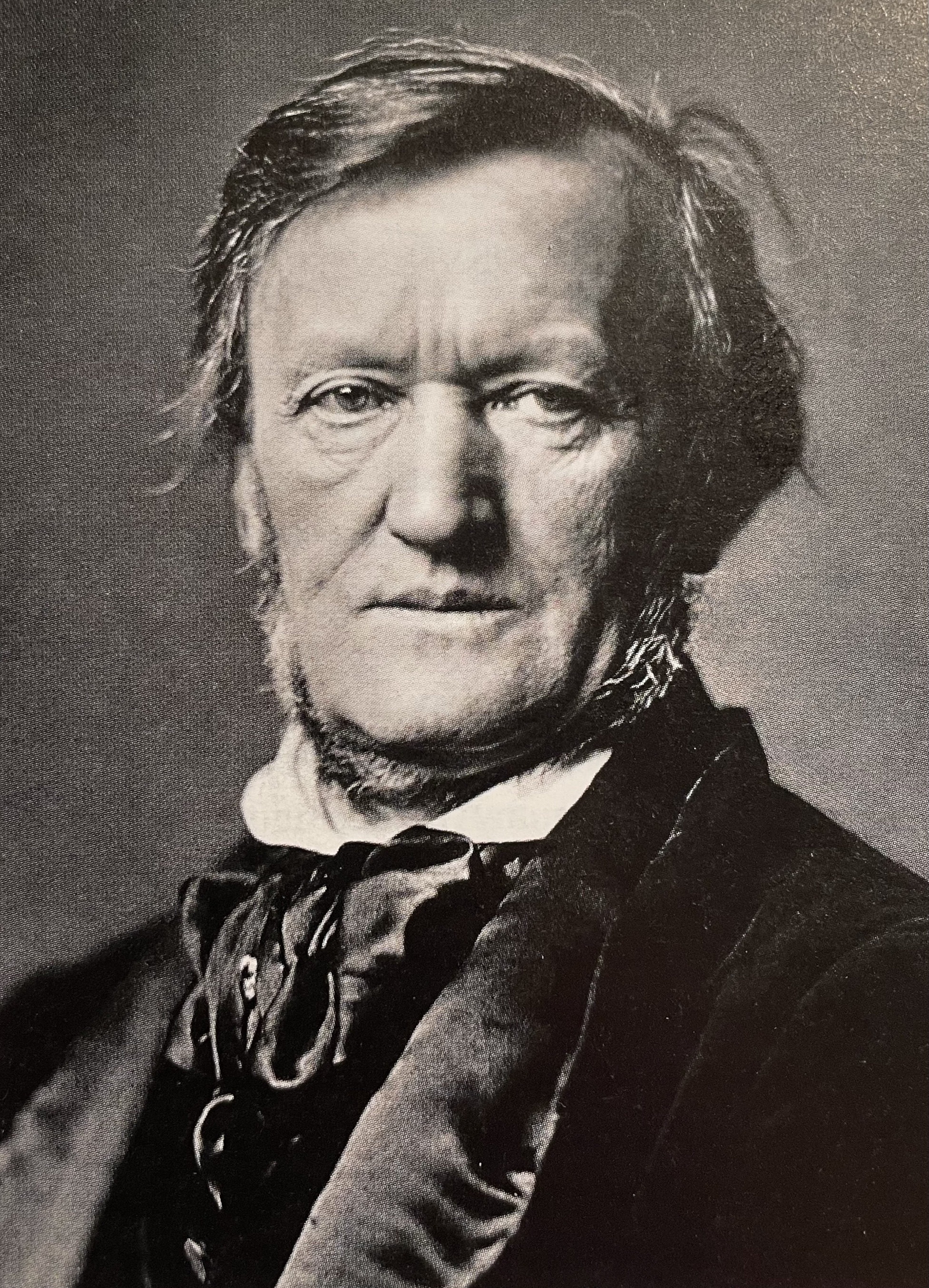
Munding recounts, “Two members of the audience have been sitting besides each other for 150 years. On the one side we have the Wagnerian. He knows the score by heart and his opinions are cast in bronze; and he knows how Wotan ought to sound—though Wagner himself was never quite sure on that subject. On the other side we have the Wagner fan, who bathes in the leitmotifs as if in a limitless river.”
Yes, I confess to being a fan. And I always dread when any Ring des Nibelungen character sings, “Let me tell you how we got into this fine mess….”
Memorable Women. “And then,” Munding notes, “there are the women. Brünnhilde, Isolde, Kundry, Senta, Waltrute, Erda—figures of such complexity and gravitas that it makes one wonder how such a notorious egomaniac came to invent them.”
To this day, I recall a particularly foxy Gutrune in the Valery Gergiev Ring Cycle performed at Opera Pacific back in 2006.
Brushing Past Old Ghosts and Formidable Ghouls. Opera director Keith Warner describes, “Bayreuth is of almost mythical proportions to me: the ‘greats’ who have worked there, the productions, the history, good and bad.”
“Especially as a director,” he says, “one needs to know what events have been, and are still being, born there. Daily you brush past old ghosts and formidable ghouls of our profession, stalking the halls, sitting alongside you as you rehearse.”
Warner recalls “The morning after any first night of a new production at Bayreuth (unique as ever), the team have to sit in front of the world’s press and explain themselves: death by firing squad loaded with huff and puff.”
An Entertaining Huff and Puff. Manuel Brug is a music critic for Die Welt. One senses he’s having good fun with his opinions: “I don’t like Bayreuth in summer,” he says of the venue about 175 miles north of Munich. “It’s either muggy and humid or cold and wet. You can get there only by a diesel train, which tends to run late. The hotels are awful and overpriced, the food is a joke, even if you like Franconian bratwurst. There is a beautiful park in front of the Festspielhaus, but in 150 years no picnic culture has established itself there, as it has in Glyndebourne, for example.”
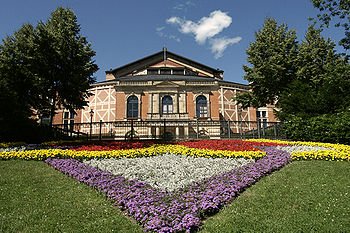
A perfectly lovely setting, going to waste on Bayreuth’s Green Hill. Image from Opera and Opera News.
“The festival theatre,” Brug advises, “has no air conditioning; the seats are the worst in the world. You have to show your tickets and ID every time you enter. There is no centre aisle—you have to constantly squeeze past annoyed, smelly, sweaty Wagnerians who will then immediately take off their dinner jackets and shoes in the dark. It always starts at 4pm, so you can’t do anything else during the day. If there’s a fire, everyone will die.”
Geez, talk about Götterdämmerung!
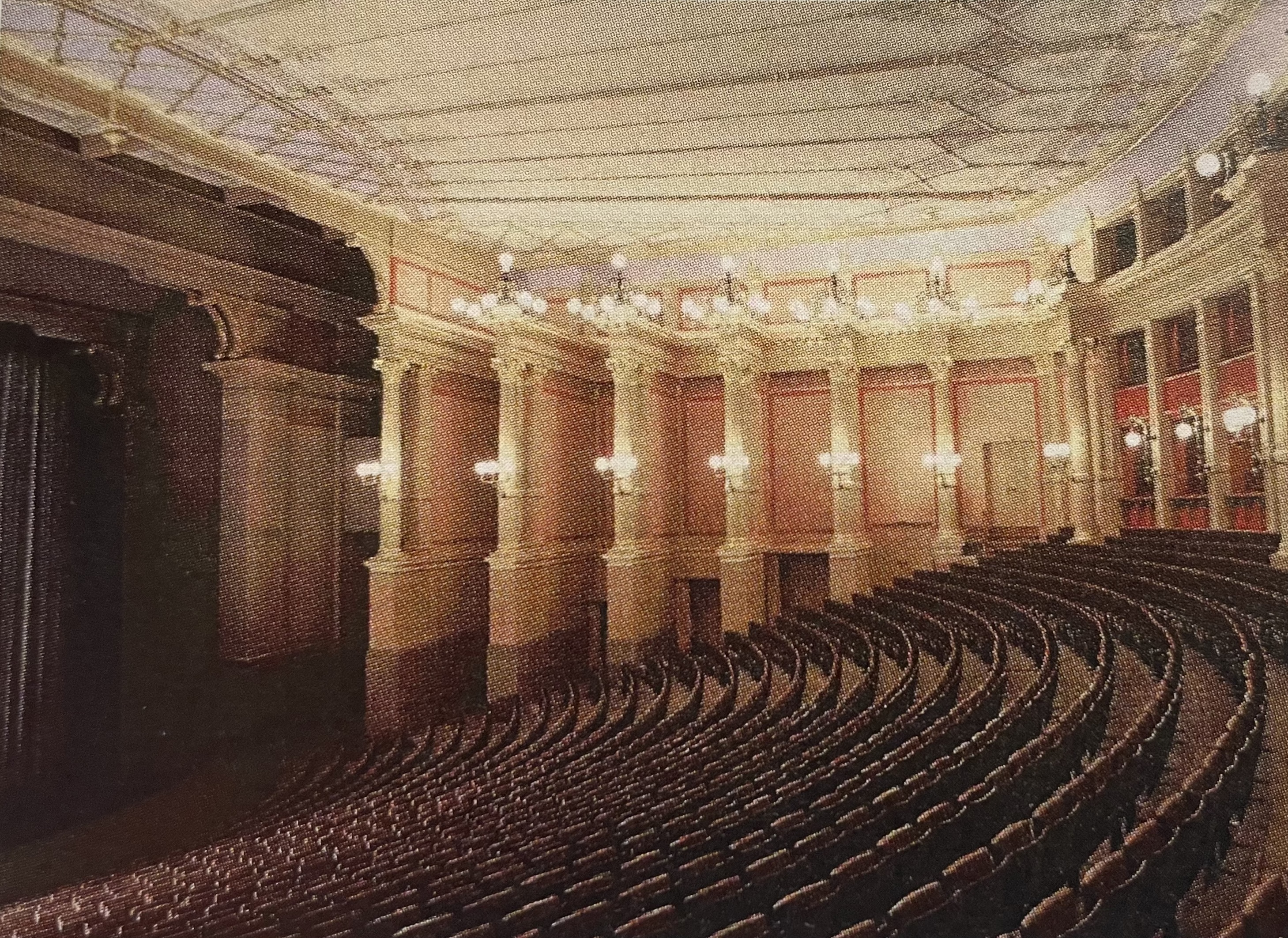
“And yet…,” Brug admits, “Where else in the world of opera does one experience such a thrill at the beginning, when the first note from the mystischer Abgrund sounds, even if one knows every note of the ten pieces performed there? Where else can one sit in a theatre that was conceived by the composer himself and is still special and unique today?”
And have you noticed how often our commentators employ this word “unique” to describe Bayreuth?
Brug summarizes, “It has survived war, inflation, the Nazis, Hitler and the Wirtschaftswunder [Germany’s post-WWII economic miracle]. It has risen again and again, adjusts its crown and carries on. It is loved and hated, but once again it is overbooked. People want such a crazy experience.”
If only we could picnic as they do at Glyndebourne. ds
© Dennis Simanaitis, SimanaitisSays.com, 2026
 Simanaitis Says