
Simanaitis Says
On cars, old, new and future; science & technology; vintage airplanes, computer flight simulation of them; Sherlockiana; our English language; travel; and other stuff
HOW’S NORWAY DOING WITH EVS? PART 1
DEMOGRAPHICS AS WELL AS GOVERNMENT SUBSIDIES have a lot to do with Norway’s love affair with electric vehicles. Here, in Parts 1 and 2 today and tomorrow, are tidbits gleaned from two fact-filled sources, Jack Ewing’s “In Norway, the Electric Vehicle Future Has Already Arrived,” The New York Times, September 17, 2023; and David Zipper’s “Why Norway—the Poster Child for Electric Cars—is Having Second Thoughts,” Vox, October 31, 2023; together with my usual Internet sleuthing and personal views.

Norway’s Transition from Rural to Urban/Suburban. “Historically,” Zipper notes in Vox, “Norway has been mostly rural; as recently as 1960, half the nation’s population resided in the countryside. But as the postwar economy boomed, Norwegians migrated to cites, and especially to their fast-growing, sprawling suburbs (much as Americans did at the time). They also fell hard for the automobile.”
It helped, of course, that Norway’s principal export was and continues to be North Sea petroleum.
Then along came environmental awareness of automotive pollution. Zipper observes that motor vehicles generate “nearly a 10th of global CO2 emissions,” with transportation in the United States as an example being our “single largest source of greenhouse gas emissions.”
Norway’s Short-Lived EV Industry. “By the 1990s,” Zipper recounts, “the automobile was Norway’s indispensable vehicle. It was then that Norwegian entrepreneurs launched two early electric car startups, Buddy and Think. Though their models were clunky and inefficient by today’s standards, the companies spurred excitement that Norway could become a global hub of EV production.”
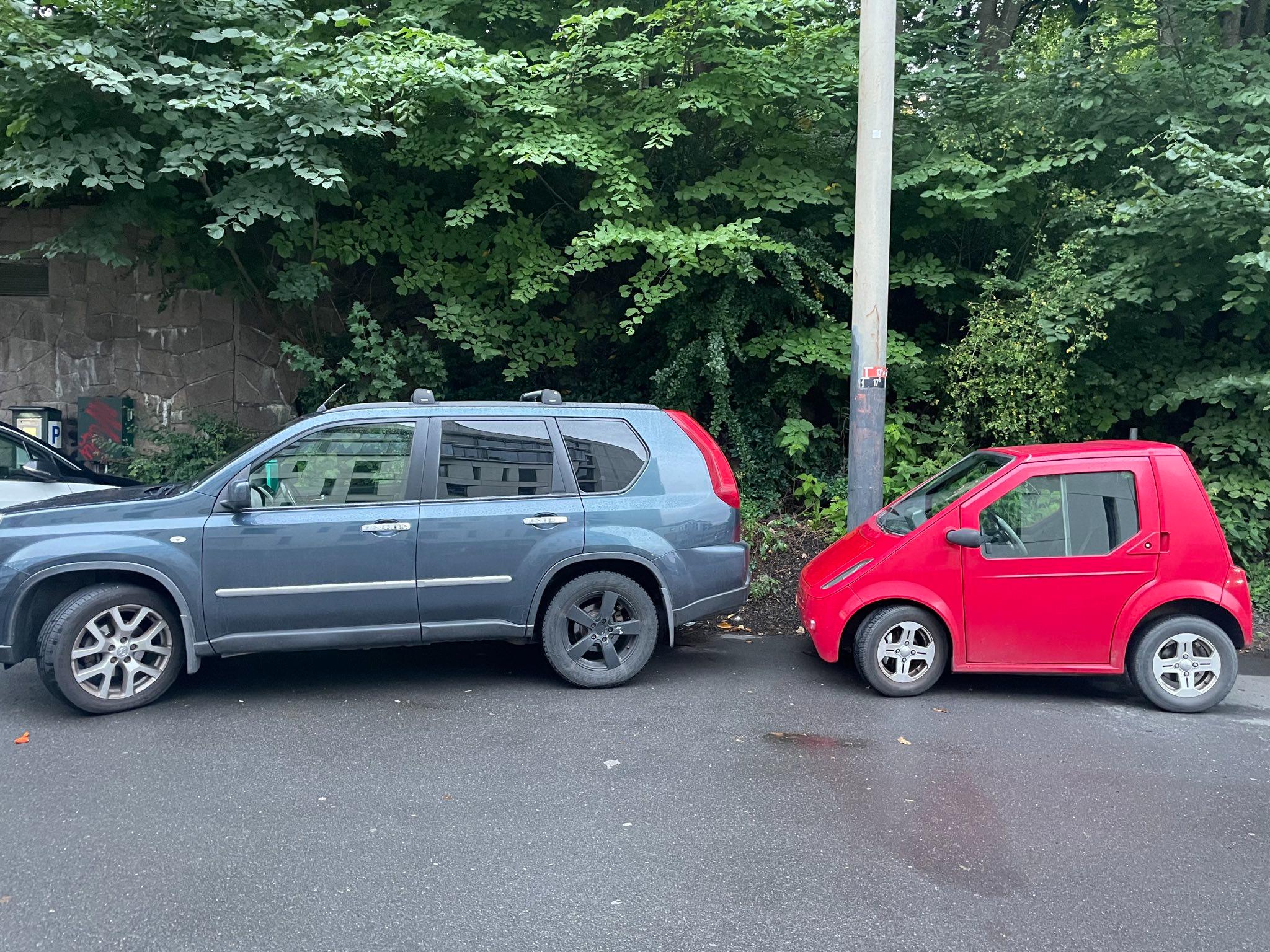
A vintage Buddy parked in Oslo. Image by David Zipper for Vox.
Neither Buddy nor Think exists today, despite Ford’s brief involvement (1999–2003) with the latter. Wikipedia notes that Think “filed for bankruptcy on June 22, 2011, for the fourth time in 20 years.”
Despite Government Chipping In. “Seeking to give the carmakers a tailwind,” Zipper notes, “the Norwegian government exempted EVs from the country’s steep taxes on car purchases, which today add an average of $27,000 to each sale. Even better, EV owners—who at the time were few and far between—would not pay for tolls, parking, or ferries (over all those fjords) anywhere in the country.”
Spiffs Sure Worked for Consumers. Zipper recounts, “Norway’s incentives have unquestionably reshaped the country’s car market and reduced carbon emissions. EVs’ share of new vehicle sales surged from 1 percent in 2014 to 83 percent today. Around one in four cars on Norwegian roads is now electric, and the country’s surface transportation emissions fell 8.3 percent between 2014 and 2023.”

Norway, an Observatory. Jack Ewing writes in The New York Times, “About 110 miles south of Oslo, along a highway lined with pine and birch trees, a shiny fueling station offers a glimpse of a future where electric vehicles rule. Chargers far outnumber gasoline pumps at the service area operated by Circle K, a retail chain that got its start in Texas. During summer weekends, when Oslo residents flee to country cottages, the line to recharge sometimes backs up down the off-ramp.”
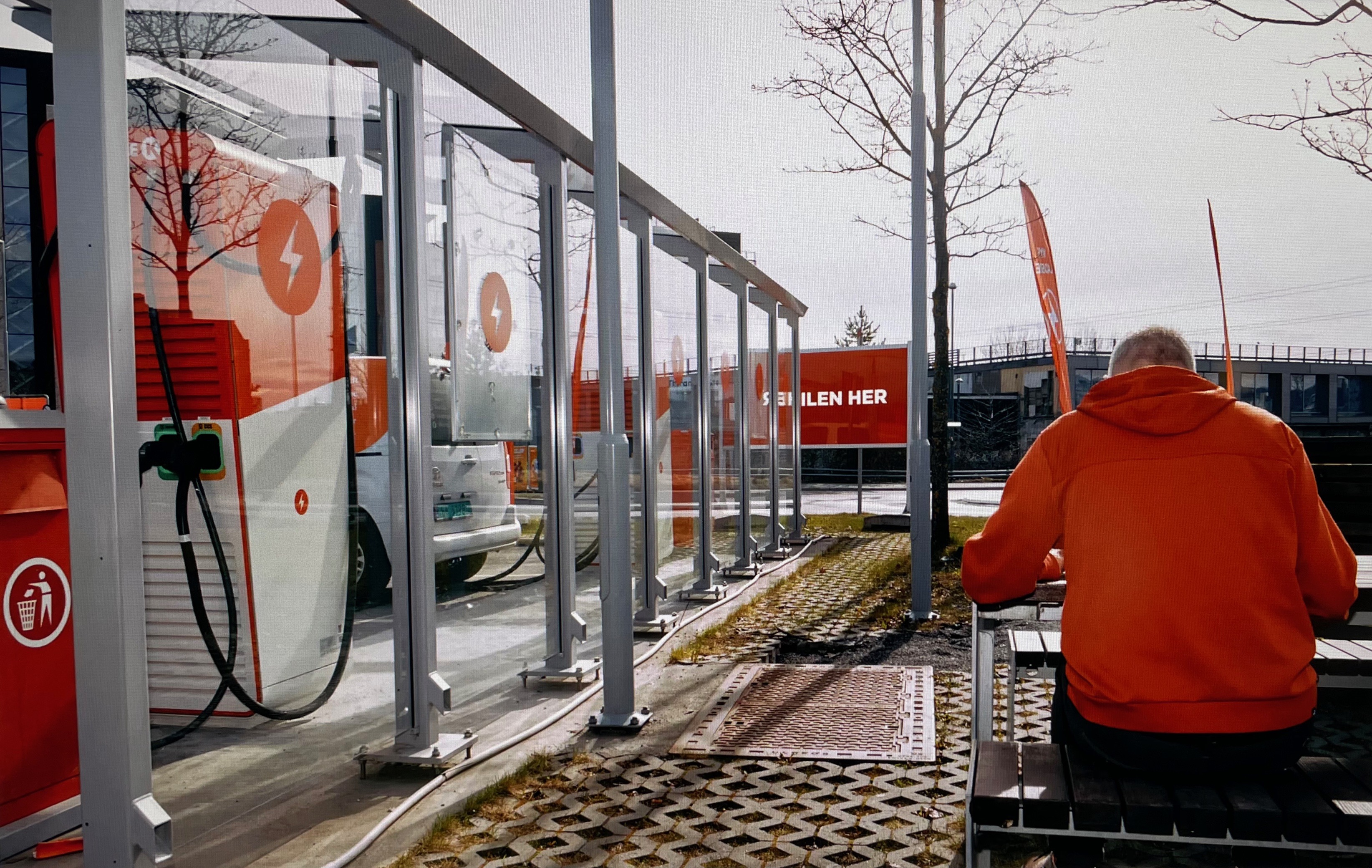
Circle K bought gas stations that had belonged to a Norwegian government-owned oil company. Image by David B. Torch for The New York Times.
Ewing notes that Norway is “at the vanguard of the shift to battery-powered mobility. It has also turned Norway into an observatory for figuring out what the electric vehicle revolution might mean for the environment, workers and life in general. The country will end the sales of internal combustion engine cars in 2025.”
Tomorrow in Part 2, we’ll continue with analyses by Ewing and Zipper. The challenges are more complex than just queues at charging stations. ds
© Dennis Simanaitis, SimanaitisSays.com, 2024


The Circle K charging network in Norway is an interesting example. I think their European entry was focussed on EVs from the beginning. Unfortunately, their NA business plan has been slow to adapt to EVs. But then, so have we as consumers. The strongest initiatives in Canada emanate from Quebec (Circle K’s owners are located there). Quebecers are very progressive people in many ways, and also have, like Norway, an abundance of hydroelectric power.
https://electricautonomy.ca/charging/2022-05-25/couche-tard-public-charging-network-canada/
Newer 7-11s in my neighborhood now have chargers, too, and their initially high per-kwh prices haven’t changed while the big networks have jacked theirs up. 7-11’s are now relatively affordable. Still better to charge at home…