
Simanaitis Says
On cars, old, new and future; science & technology; vintage airplanes, computer flight simulation of them; Sherlockiana; our English language; travel; and other stuff
DE SEVERSKY—A REAL FIGHTER
TODAY’S TITLE is multi-tasking. There’s Alexander de Seversky, the Russian-American aviation pioneer. And there’s his P-35, a precedent-setting aircraft that showed the best and worst of government procurement processes. The airplane also played a role in a Clark Gable flick. De Seversky was a World War I hero, married a socialite pilot, promoted strategic air power, had an adventurous life and came to endow a mansion (the elegance of which I was to experience years later).
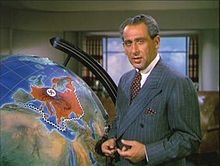
Alexander Nikolaievich Prokofiev de Seversky, 1894 – 1974, Russian-American aviation pioneer, inventor, author of Victory through air power, 1942.
De Seversky was born into Russian nobility in 1894. His father was one of the first Russians to own an airplane, a modified Bléroit XI, which he taught Alexander to fly before his son was 14.
On his first World War I combat mission in 1915, De Seversky was shot down and lost a leg from his injuries. Considered unfit for further combat, he nonetheless showed up unannounced at an air show and demonstrated his aerial abilities. Tsar Nicholas II intervened and De Seversky returned to combat duties.
He broke his other leg in a 1917 accident with a horse-drawn wagon, served briefly in Moscow and then returned to combat again. By war’s end, De Seversky had flown 57 missions and was awarded Orders of St. George, St. Vladimir, St. Stanislaus and St. Anne.
De Seversky was appointed a naval attaché in the U.S. in 1918. What with Russia torn by revolution (and his tsarist connections), he wisely decided not to return.
At first, De Seversky operated a Manhattan restaurant, then offered his services to the U.S. War Department. He also earned patents for several inventions, including one for air-to-air refueling and another for a gyroscopically stabilized bombsight.
In 1923, De Seversky married Evelyn Olliphant, a New Orleans socialite (also a pilot) and started the Seversky Aero Corporation. He became a U.S. citizen in 1927, was commissioned a major in the U.S. Army Air Corps Reserve in 1928 and saw his company go bankrupt a year later.
The company reorganized as Seversky Aircraft Corporation in 1932. He and other Russian expat engineers designed the Sev-3, eventually a progenitor of a family of advanced aircraft including the P-35 and, in time, the Republic P-47 Thunderbolt.
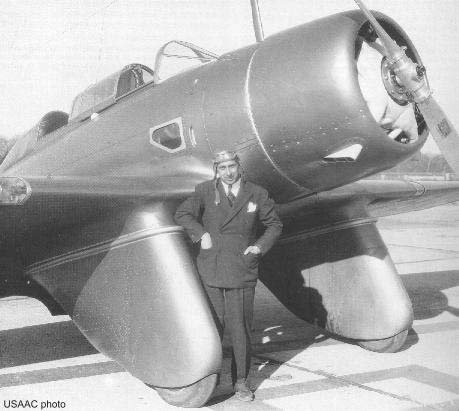
De Seversky and his Sev-3XAR in 1934.
In 1935, the U.S. Army Air Force set a pursuit-aircraft competition between Seversky and Curtiss. What with government dealings and all, there was a year’s delay in entries, during which Vought Aircraft also got into the action.
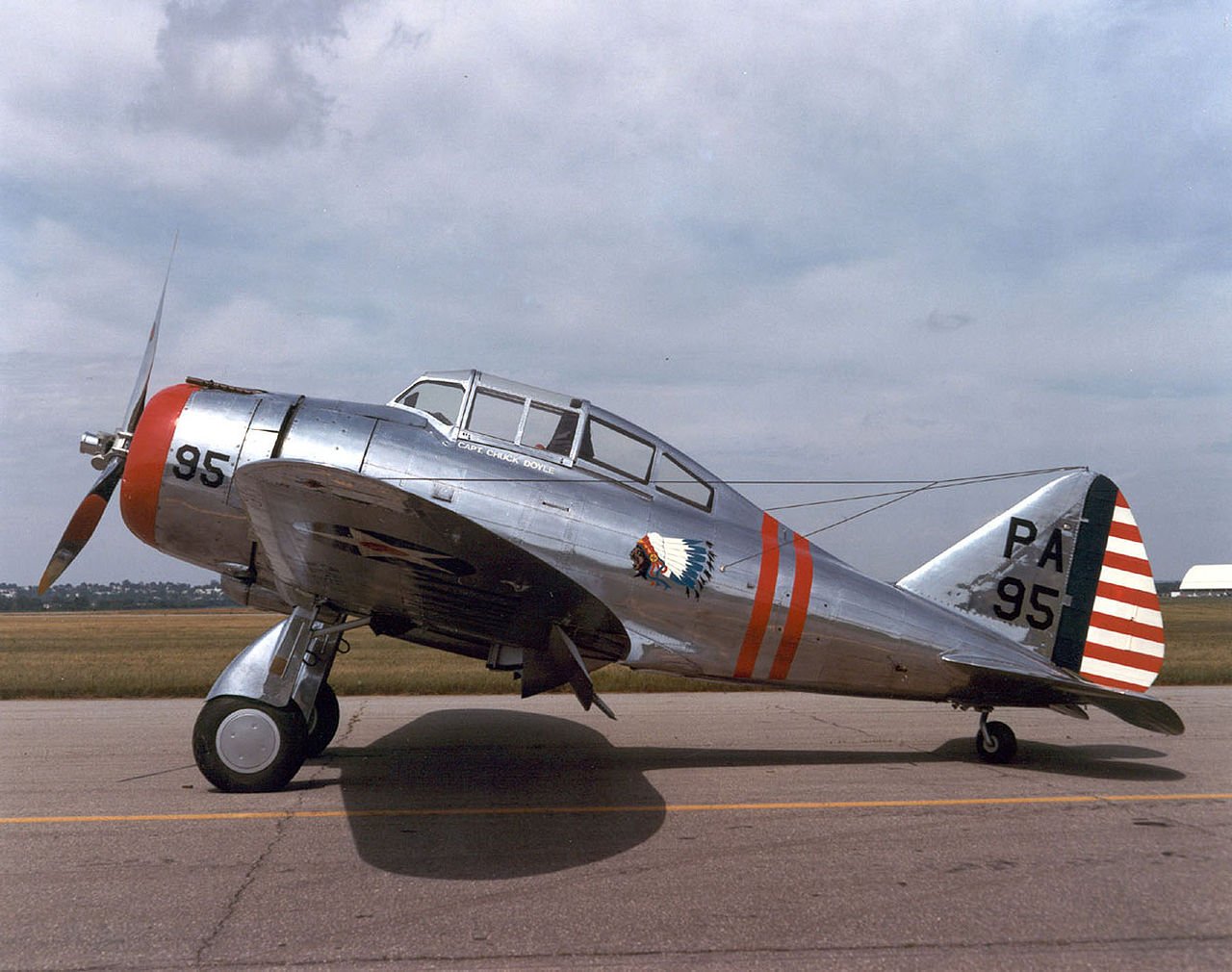
Seversky P-35 of the U.S. Army Air Force’s 94th Pursuit Squadron.
The Seversky P-35 won the competition; this, despite being the most costly and under-performing. No matter, it was still the USAAF’s first fighter with enclosed cockpit, retractable landing gear and all-metal construction.
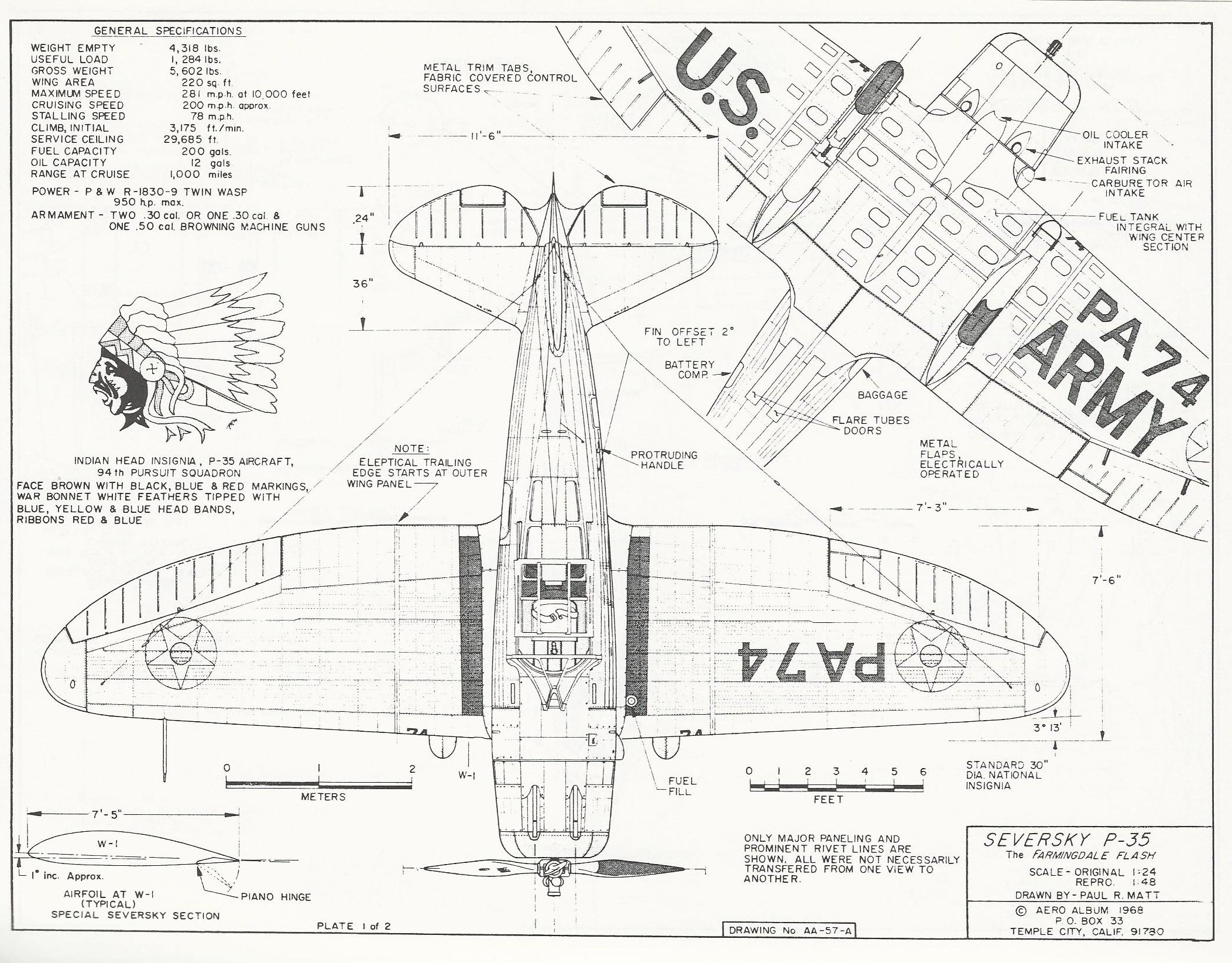
Details of a Seversky P-35, The Farmingdale Flash, a sibling of the aircraft pictured above. Illustrations from Paul Matt Scale Airplane Drawings, Volume 2, by Paul Matt, Aviation Heritage, 1991.
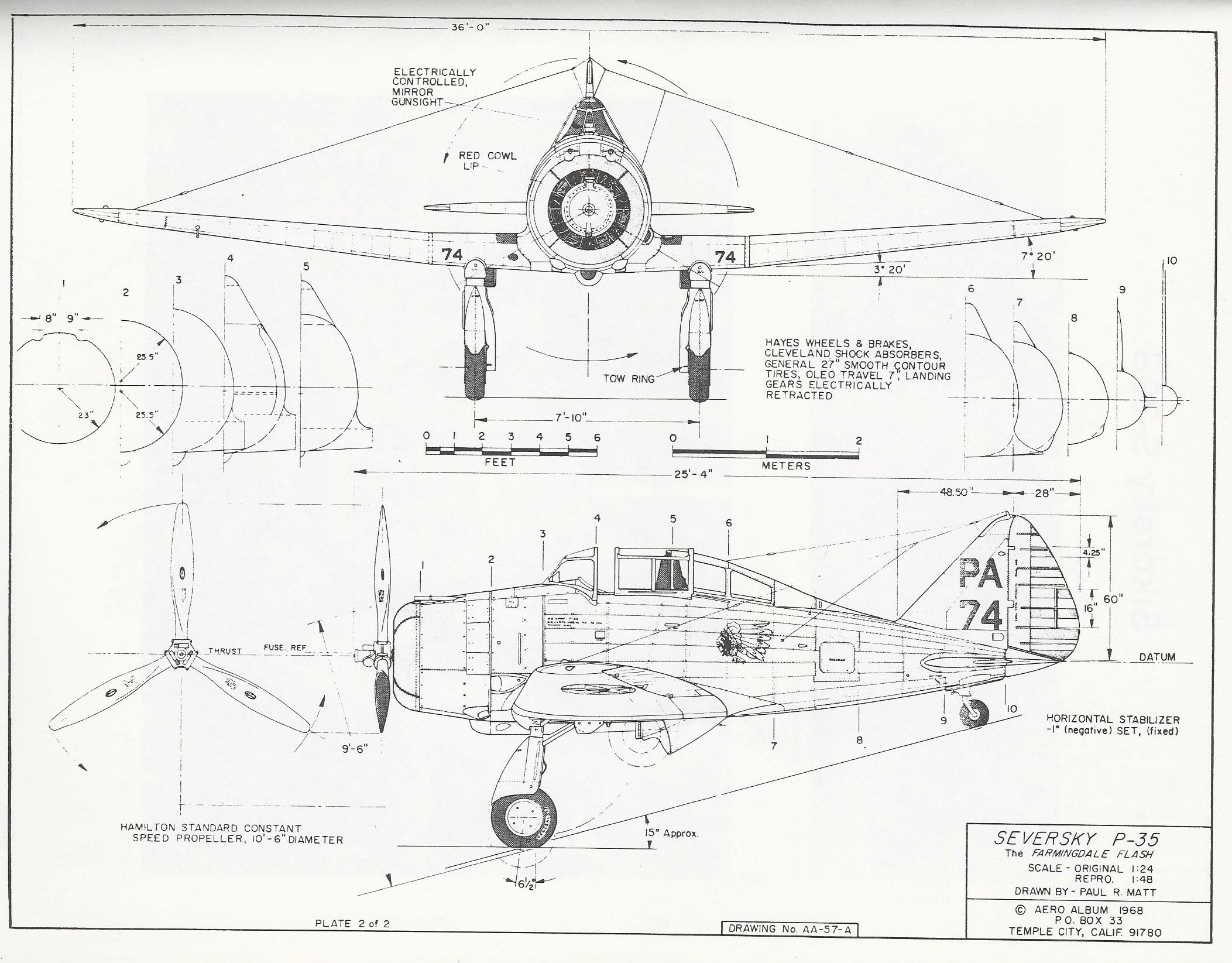
Seventy-seven P-35s were ordered; 76 were delivered, the first of which flew in May 1937. The USAAF sought more fighters that year and promptly ordered 210 Curtiss P-36s.
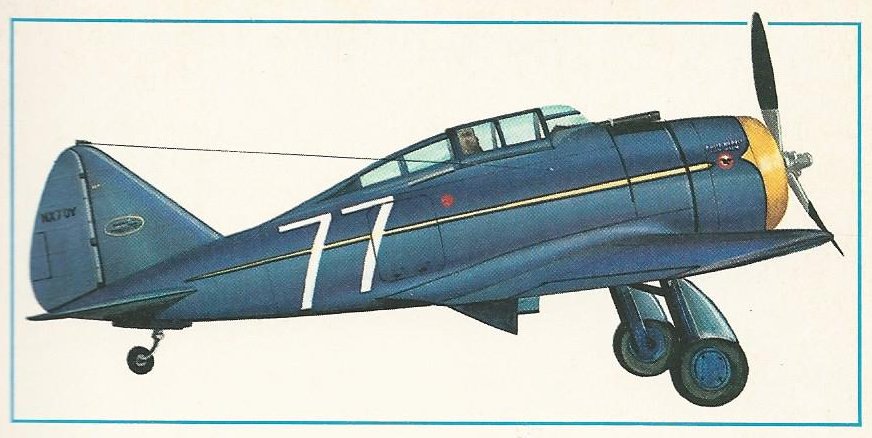
Seversky Sev-2S racer. Image from World Aircraft Commerical, 1935-1960. by Enzo Angelucci and Paolo Matricardi, Rand McNally, 1979.
Not to be outmaneuvered, De Seversky countered with demilitarized P-35s commissioned for the cross-country Bendix Trophy race. Frank Fuller, Jr. and his Sev-2S dominated the 1937 Bendix with a winning 258.2 mph average and finished second in the 1938 event, which aviatrix Jackie Cochran won in another Sev-2S. Fuller won again in 1939 at an average 270.9 mph.
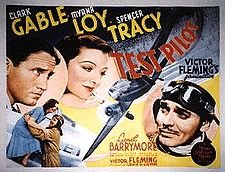
Test Pilot, 1938, one of MGM’s top money makers that year.
A P-35 also had a role as the “Drake Bullet” in Test Pilot, a 1938 movie starring Clark Gable, Myrna Loy, Spencer Tracy and featuring Lionel Barrymore.
De Seversky, renowned as a pitchman for his company, peddled P-35s on a European tour in 1938 – 1939. Sweden ordered an initial 15 of them, then another 45, then another 60.
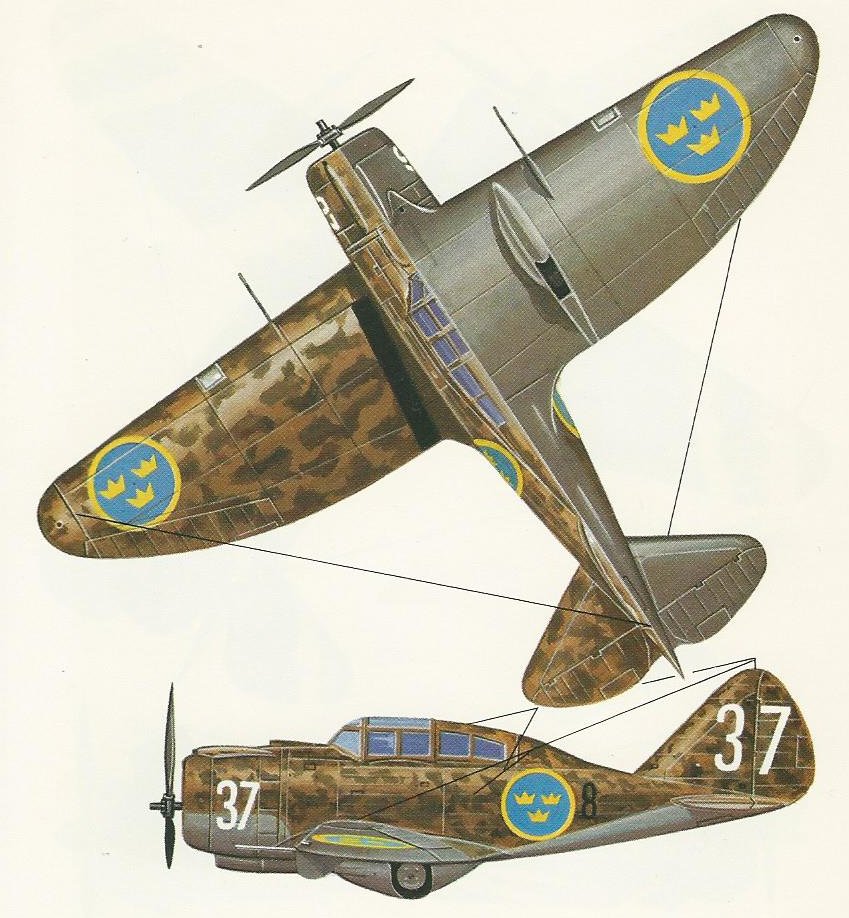
Seversky EP-106 (J9) in Svea Flygflottilj, c. 1939 – 1940. Image from Fighters Between the Wars, 1919-39, Including Attack and Training Aircraft, by Kenneth Munson, Macmillian Company, 1970.
Alas, while Seversky was gallivanting around Europe, his Board of Directors tossed him out and, in September 1939, formed Republic Aviation Corporation. It took three years to straighten things out.
During World War II, Seversky was an influential advocate of strategic air power, his mentor in this Brig. Gen. Billy Mitchell. Post-war, Seversky was a founder and trustee of New York Institute of Technology, established in 1955.
In 1972, the Institute acquired the Alfred I. du Pont mansion in Old Westbury, Long Island, New York. It was named and continues as the de Seversky Conference Center.
In 1983, I completed a Professional Management Program run by the CBS School of Management, held at the de Seversky Conference Center. At the time, this was a highly innovative program with computer simulations of business interactions.
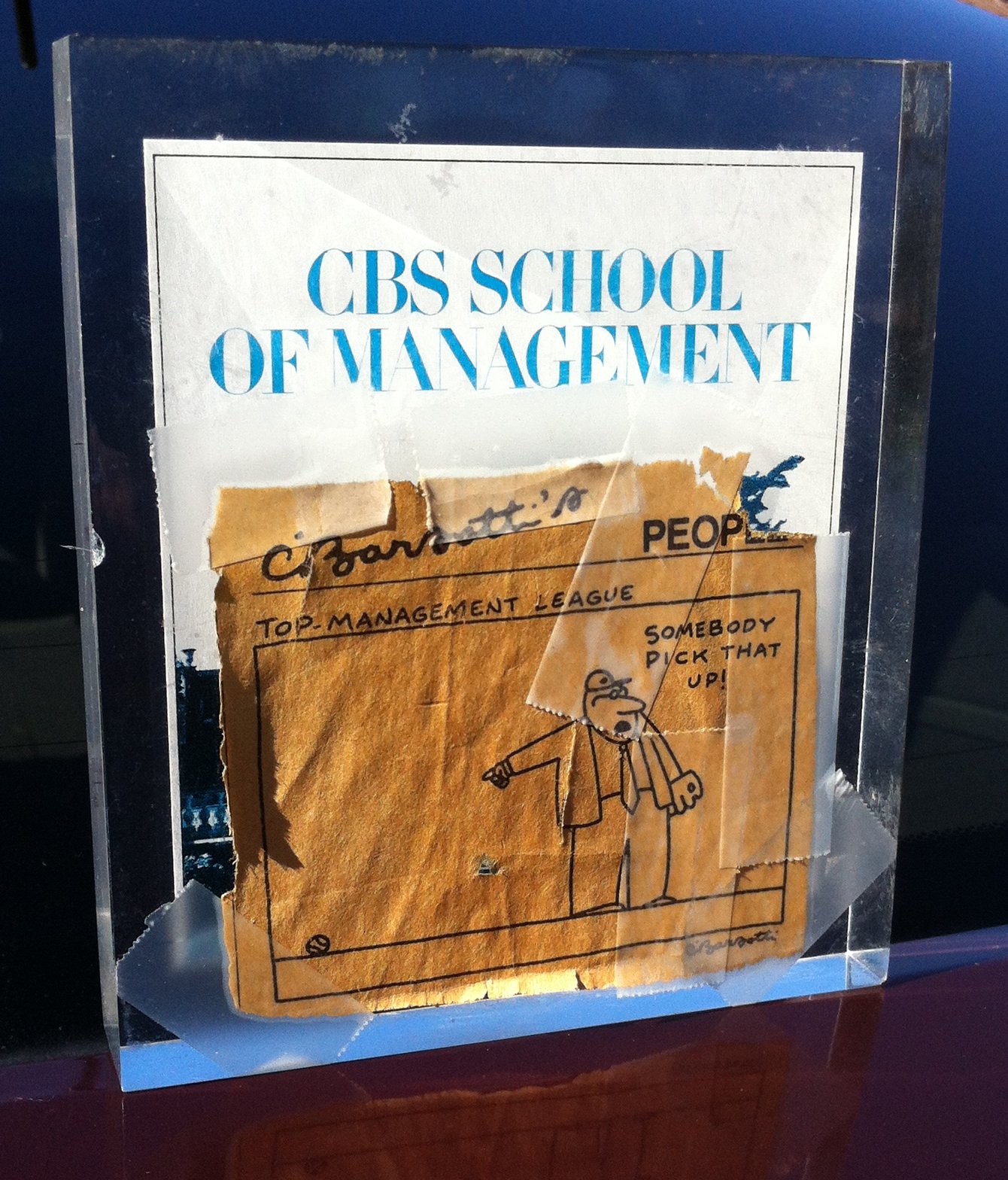
This evidently paved the way for my future success. ds
© Dennis Simanaitis, SimanaitisSays.com, 2015

