
Simanaitis Says
On cars, old, new and future; science & technology; vintage airplanes, computer flight simulation of them; Sherlockiana; our English language; travel; and other stuff
BEN FRANKLIN’S WISDOM
ADAM LIPTAK POSITS “WERE THE CONSTITUTION’S AUTHORS a Little Too Optimistic?,” The New York Times. The article’s subhead: “The nation’s founding document has a blind spot. Trump is making it visible.”

Liptak, chief legal affairs correspondent of The New York Times, begins, “The men who drafted the Constitution knew they were playing with fire when they created a novel and powerful new office: the president of the United States.”
Then he cites Benjamin Franklin at the Constitutional Convention in June 1787: “The first man put at the helm will be a good one. No body knows what sort may come afterward. The executive will be always increasing here, as elsewhere, till it ends in a monarchy.”
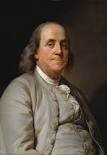
Benjamin Franklin, 1706–1790, American polymath, Founding Father.
How prescient was Ben Franklin in predicting a Donald J. Trump!
Here are other tidbits gleaned from Liptak’s cogent essay:
Striking a Balance. Liptak observes, “The framers were not blind to the danger that they were creating a new kind of king, and the Constitution they adopted a few months later tried to strike a balance in inventing what was then a wholly novel office. They wanted a president who was decisive, responsive and responsible. But they also sought to establish a constitutional structure able to constrain a president who aspired to be a monarch.”
“The Constitution’s framers were doubtless brilliant,” Liptak says, “and the document they drafted has endured. It is the oldest written national constitution still in force anywhere in the world. But, as the nation commemorates its 250th anniversary, some constitutional scholars say the second Trump presidency is calling into question whether the nation’s founding charter and sacred text truly provides the balance the founders wanted.”
TrumpWorld. Liptak observes, “President Trump has used the power of the federal government to bully universities, law firms and news outlets; undermined the independence of the Justice Department by instructing it to prosecute his political enemies; defied Congress by impounding money it had instructed him to spend; flouted countless court orders; and cut off funding to states led by Democrats.”
“That list is hardly exhaustive,” Liptak notes. To which I add Trump and Netanyahu’s trumped-up Middle East War (to take the heat off the Epstein papers and to cover dwindling numbers). And the $1.776 billion enhancement of his retribution funding. And other executive actions yet to come, far beyond those imagined by our Founding Fathers.
Franklin’s Prediction Met Elsewhere. Liptak describes, “And while other aspects of the Constitution have been quite influential, few modern democracies followed its vision of executive power. The exceptions were mostly in Latin America, where strong presidencies created in the 19th century often degenerated into dictatorships.”
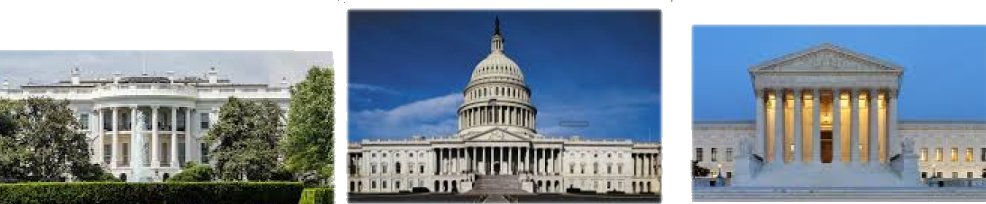
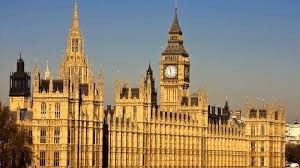
Parliament—An Alternative Model: Liptak explains, “Parliamentary models, in which the executive—there, the prime minister—emerges from and is accountable to the legislature, are more common. In a parliamentary system, the executive and the legislature are in dialogue rather than structural opposition. Prime ministers generally do not serve fixed terms and may be removed by a vote of no confidence.”
Seeking a Sweet Spot. By contrast, Liptak notes, “The framers rejected that model for something new. They were looking for a sweet spot. They wanted a president less powerful than the king they had rebelled against but more effective than the state governors of the time, who were all but powerless, or prime ministers, who were creatures of the legislature.”
Conflicting Founding Fathers—Madison vs. Hamilton. Liptak quotes James Madison: “A national Executive must also be provided. I have scarcely ventured as yet to form my own opinion either of the manner in which it ought to be constituted or of the authorities with which it ought to be cloathed.”
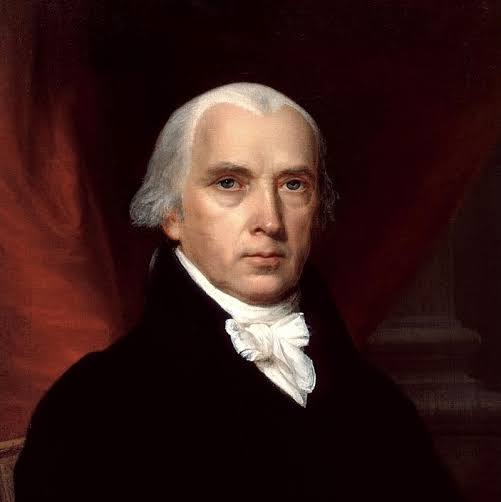
“Hamilton,” by contrast, Liptak notes, “was another matter. At the convention, he argued for a president who would serve for life and have absolute veto power over legislation.” Indeed, Liptak quotes Hamilton: “Energy in the Executive is a leading character in the definition of good government.”
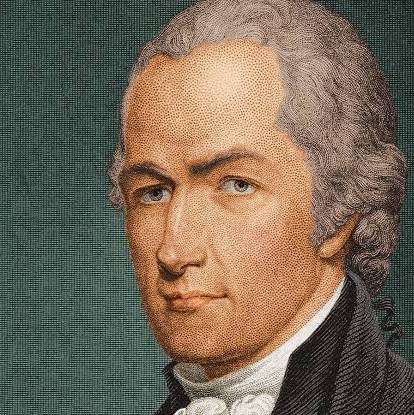
“In those same papers,” Liptak cites, “Madison acknowledged that ‘the accumulation of all powers, legislative, executive and judiciary, in the same hands’ may ‘justly be pronounced the very definition of tyranny.’ ”
Hurrah Madison!
There Are Few Checks on a Demagogue. Liptak observes, “The framers believed that the threat of impeachment and removal would be a decisive check on the president…. But they failed to anticipate a development that would make impeachment improbable: the rise of political parties.”
He continues, “The rise of political parties, to say nothing of the current extreme polarization between them, has made other forms of congressional supervision of the president vanishingly rare. There have been four presidential impeachments in the history of the United States, of Andrew Johnson, Bill Clinton and, twice, Donald J. Trump. In none of the four cases did the Senate muster the required two-thirds vote to convict.”
More’s the pity.
And thanks, Adam Liptak, for bringing these points to our attention. Do read his complete article. ds
© Dennis Simanaitis, SimanaitisSays.com, 2026

