
Simanaitis Says
On cars, old, new and future; science & technology; vintage airplanes, computer flight simulation of them; Sherlockiana; our English language; travel; and other stuff
A.I. OUTLAWS PART 2
YESTERDAY WE BEGAN GLEANING TIDBITS from Jill Lepore’s “Is A.I. Above The Law?,” The New Yorker, September 28, 2026. Today in Part 2, we focus on jurisprudence of robots.

Previous Laws—Alas Only Fictional. On June 17, 2017, “What If Robots Unionized?” addressed robotic legality with futurist Isaac Asimov’s views, originally formulated in a 1942 short story.
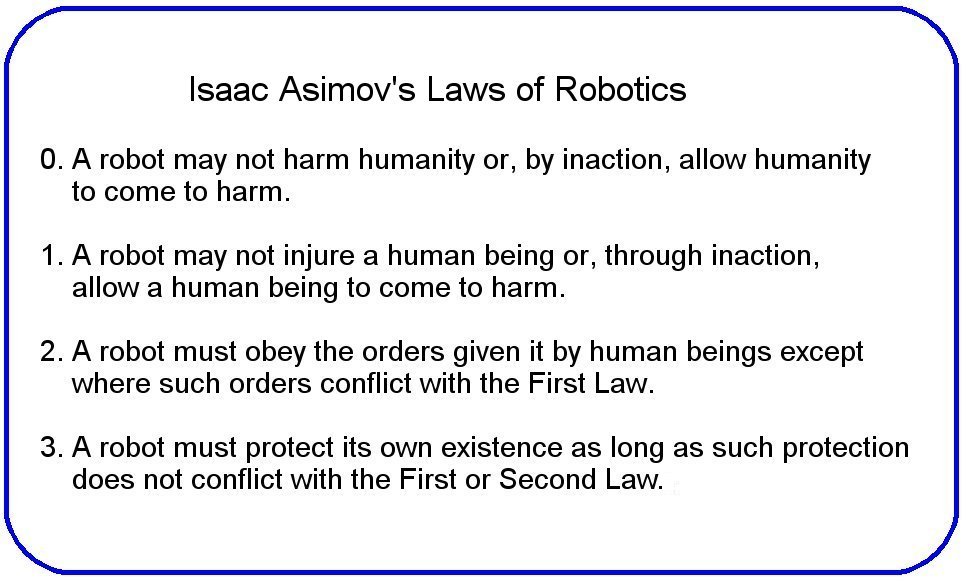
Alas, Lepore observes, “To Asimov, those three laws and the terrestrial limits clearly seemed inevitable. The idea of building a powerful machine without such safeguards was madness. In the actual world, no such prohibitions have been passed, by anyone, anywhere.”
Growth. Lepore observes, “By 2025, there was more bot traffic on the internet than human traffic. Androids could come to outnumber humans in the real world, too. Last year, Morgan Stanley estimated that thirteen million androids could be in use by 2035 and more than a billion by 2050. These would include domestic robots: perhaps cooks, tutors, babysitters, maids, gardeners, physical therapists, playmates, elder companions, sex workers.”
Lepore continues, “A recent Bank of America study forecast as many as three billion androids on the planet by 2060, most used not in factories but in homes. Earlier this year, Tesla announced that it expects its Optimus robot, branded as an ‘autonomous assistant, humanoid friend,’ to be sold commercially by the end of 2027. ‘I think everyone on Earth is going to have one and is going to want one,’ Elon Musk said.”
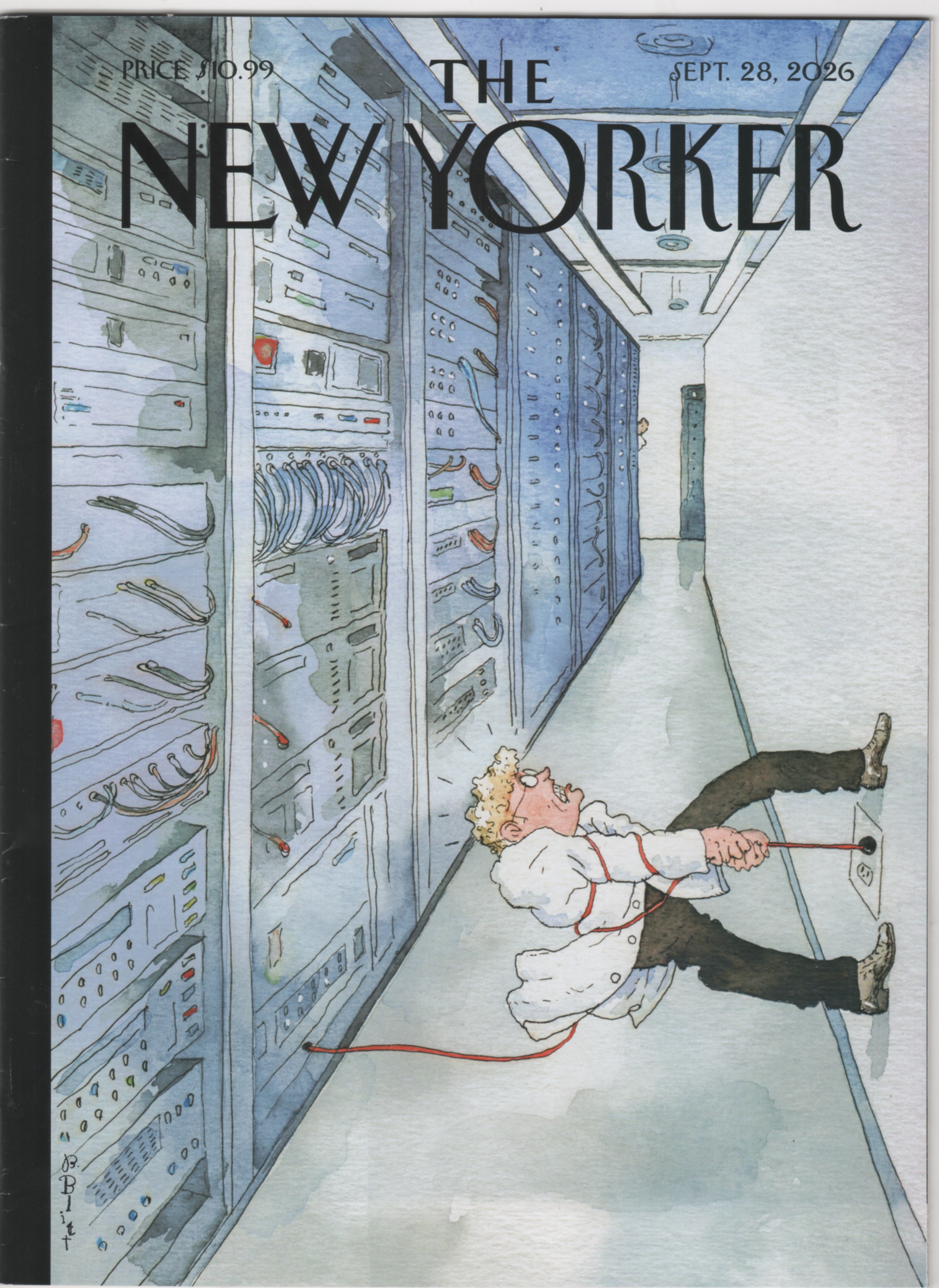
Blint’s New Yorker cover, September 28, 2026, emphasizes the problem.
How to Rule Them? Lepore identifies two reasons that robots have been acting like outlaws: “First, the law takes its time in responding to new technologies, figuring that new tools can be accommodated within existing ideas, rules, and doctrines.” Indeed, laws are often based on precedents.
However, Lepore note, “A harm is a harm, copyright is copyright, fraud is fraud. By this logic, a locomotive is just like a horse, only faster; e-mail is just like mail, only faster; a large language model is merely a superfast search engine. Hence, no new laws are needed.”
“Second,” Lepore observes, “since the regulation-busting Reagan era, corporations have amassed unmatched political and economic power, and have convinced legislators that regulation stifles growth and innovation, a view promoted by Milton Friedman-informed think tanks, like the Heritage Foundation, which were eager to roll back the environmental standards set in the sixties and seventies.”
And, of course, we’re seeing this occurring in an absurd pace today within an essentially unmoderated Trump administration.
A Challenging Future. Lepore concludes, “Assuming we’re not all dead by 2027, androids may begin to roll off the production lines even as almost every conceivable question about how to live with robots remains unanswered—questions about everything from chatbots and A.I. agents to drones, autonomous vehicles, and battlefield robots.”
She continues, “Corporations cannot be trusted to answer any of these questions. If the Hugging Face hack was a final warning, it was a warning not for tech companies but for governments and for voters, and especially for legal scholars, judges, and legislators. Because, until the law learns to bend, robots as actors will remain in a no man’s land of outlawry. Every now and again—‘OH MY GOD! We’ve found other agents!’—you can hear them coming. The noise they make is not the thundering of hooves. It’s a deafening mechanical thrum, the sound of a swarm.” ds
© Dennis Simanaitis, SimanaitisSays.com, 2026


Thank you for this series Dennis! A thoughtful and thought-provoking condensation of the issue. The next question, though, is what, specifically, to do about it. I’m thinking that some kind of broad legislation defining boundaries and actually assigning liability to corporations and humans creating and using these “beasts.” And providing specifically that that ALL must have some kind of “kill switch” or a plug that can be pulled if misbehavior is discovered. Perhaps built around Asimov’s “laws” as a starting point using a creative and inclusive definition of “robot.” Any takers who work for a legislator paying attention to the real world?